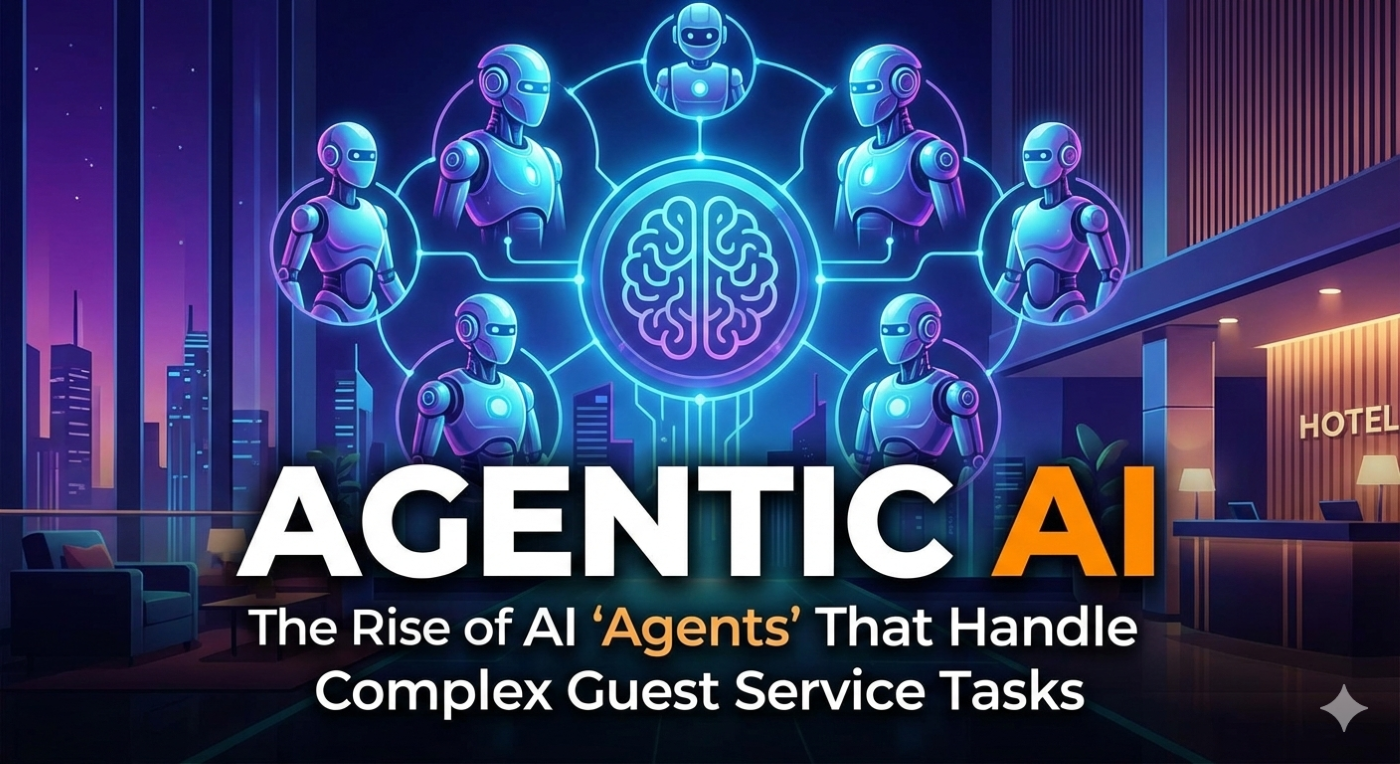
The hospitality industry has always revolved around service, personalization, and human connection. However, as guest expectations grow more complex and operational pressures increase, hotels are turning to advanced technologies to enhance service delivery. Among the most transformative innovations shaping the future of hospitality is Agentic AI—intelligent AI “agents” capable of autonomously handling complex guest service tasks.
Unlike traditional chatbots that simply respond to predefined questions, agentic AI systems can reason, plan, make decisions, and take action across multiple systems. These AI agents are redefining how hotels manage guest interactions, operations, and experiences at scale. This article explores the rise of agentic AI in hospitality, its benefits, applications, challenges, and long-term impact on guest service.
Understanding Agentic AI in Hospitality
Agentic AI refers to artificial intelligence systems designed to operate with a degree of autonomy. These AI agents are goal-oriented, context-aware, and capable of completing multi-step tasks without constant human input.
In hospitality, agentic AI goes beyond answering questions. It can:
- Understand guest intent
- Access multiple hotel systems
- Coordinate actions
- Learn from outcomes
- Adapt responses over time
This marks a significant shift from reactive automation to proactive service intelligence.
How Agentic AI Differs from Traditional Chatbots
Traditional hotel chatbots are rule-based and limited in scope. They respond to specific keywords and often fail when conversations become complex.
Agentic AI, on the other hand:
- Understands context and nuance
- Handles multi-turn conversations
- Executes tasks across departments
- Learns guest preferences
- Makes real-time decisions
This allows AI agents to deliver seamless and personalized guest experiences.
Why Agentic AI Is Gaining Momentum in Hospitality
Several industry trends are driving the adoption of agentic AI:
Rising Guest Expectations
Modern guests expect instant, personalized, and consistent service across digital and physical touchpoints.
Labor Shortages
Staffing challenges have pushed hotels to find ways to maintain service quality with fewer resources.
Operational Complexity
Hotels manage multiple systems—from PMS and CRM to housekeeping and revenue management. AI agents help connect these systems efficiently.
24/7 Service Demand
AI agents provide continuous support without fatigue, ensuring round-the-clock service availability.
Key Applications of Agentic AI in Guest Service
Agentic AI is transforming guest service across the entire guest journey.
1. Intelligent Reservations and Booking Management
AI agents can:
- Handle complex booking inquiries
- Recommend room types and packages
- Adjust reservations based on availability
- Apply loyalty benefits
- Upsell relevant services
These agents understand guest preferences and business rules, increasing conversion rates and revenue.
2. Personalized Pre-Arrival Experience
Before arrival, AI agents can:
- Confirm guest preferences
- Arrange airport transfers
- Schedule spa or dining reservations
- Provide destination recommendations
This creates a personalized experience before the guest even steps into the hotel.
3. Seamless Check-In and Check-Out
Agentic AI can manage:
- Contactless check-in
- Digital room key distribution
- Identity verification
- Automated billing and check-out
This reduces wait times while improving operational efficiency.
4. In-Stay Guest Support and Issue Resolution
During the stay, AI agents act as virtual concierges by:
- Handling room service requests
- Coordinating housekeeping
- Troubleshooting in-room issues
- Managing service recovery
- Escalating complex cases to staff
AI agents ensure faster resolution and consistent service quality.
5. Proactive Service and Predictive Support
Agentic AI can anticipate guest needs by analyzing behavior and data patterns.
Examples include:
- Offering late check-out proactively
- Suggesting dining options during peak hours
- Notifying maintenance before equipment fails
Proactive service enhances guest satisfaction and loyalty.
6. Multilingual and Cultural Support
AI agents can communicate in multiple languages and adapt tone based on cultural context, ensuring inclusivity for global guests.
This capability eliminates language barriers and enhances guest comfort.
Operational Benefits of Agentic AI for Hotels
Beyond guest service, agentic AI delivers measurable operational advantages.
Improved Efficiency
AI agents automate repetitive tasks, allowing staff to focus on high-value interactions.
Cost Optimization
Reduced manual workload helps control labor costs without sacrificing service quality.
Consistency Across Touchpoints
AI agents deliver standardized service aligned with brand guidelines.
Data-Driven Insights
Agentic AI continuously learns from interactions, providing insights into guest preferences and service gaps.
Enhancing Human-AI Collaboration
Agentic AI is not designed to replace human hospitality professionals but to support them.
Empowering Staff
AI agents handle routine requests, freeing staff to deliver empathetic, high-touch service.
Reducing Burnout
Automating repetitive tasks improves employee well-being and job satisfaction.
Augmented Decision-Making
AI provides real-time recommendations to staff, enhancing service quality.
The future of hospitality lies in human-AI collaboration, not automation alone.
Challenges and Considerations in Implementing Agentic AI
While agentic AI offers significant benefits, hotels must address certain challenges.
Data Privacy and Security
AI agents require access to sensitive guest data. Robust cybersecurity and compliance with data protection regulations are essential.
System Integration
Successful deployment requires seamless integration with existing hotel systems.
Change Management
Staff training and cultural acceptance are critical to ensure smooth adoption.
Maintaining the Human Touch
Over-reliance on AI can risk depersonalization. Hotels must strike the right balance.
Ethical and Responsible Use of Agentic AI
Ethical AI practices are crucial in hospitality.
Hotels should ensure:
- Transparency in AI interactions
- Clear escalation to human staff
- Bias-free decision-making
- Guest consent and data protection
Responsible AI builds trust and protects brand integrity.
The Role of Agentic AI in Revenue Growth
Agentic AI contributes directly to revenue optimization by:
- Upselling personalized services
- Improving booking conversion
- Reducing service recovery costs
- Enhancing guest loyalty
AI agents can identify revenue opportunities without being intrusive.
Preparing Hotels for Agentic AI Adoption
To successfully adopt agentic AI, hotels should:
- Define clear use cases
- Start with pilot implementations
- Train staff alongside technology
- Continuously monitor performance
- Collect guest feedback
Strategic implementation ensures long-term success.
The Future of Agentic AI in Hospitality
As AI technology continues to evolve, agentic AI will become more intuitive, emotionally aware, and adaptive.
Future developments may include:
- Emotionally intelligent AI agents
- Fully autonomous guest journey management
- Deeper integration with smart hotel ecosystems
- Predictive experience design
Hotels that adopt agentic AI early will gain a competitive edge in delivering exceptional guest experiences.
Conclusion
Agentic AI represents a powerful shift in how hotels deliver guest service. By enabling intelligent, autonomous, and proactive AI agents, hospitality businesses can meet rising guest expectations while improving operational efficiency and staff satisfaction. When implemented responsibly and thoughtfully, agentic AI enhances—not replaces—the human essence of hospitality.
At Booksmart, we believe agentic AI will play a defining role in shaping the future of guest service. Hotels that embrace this technology today will be better positioned to deliver seamless, personalized, and memorable experiences in the hospitality landscape of tomorrow.
Leave a Reply