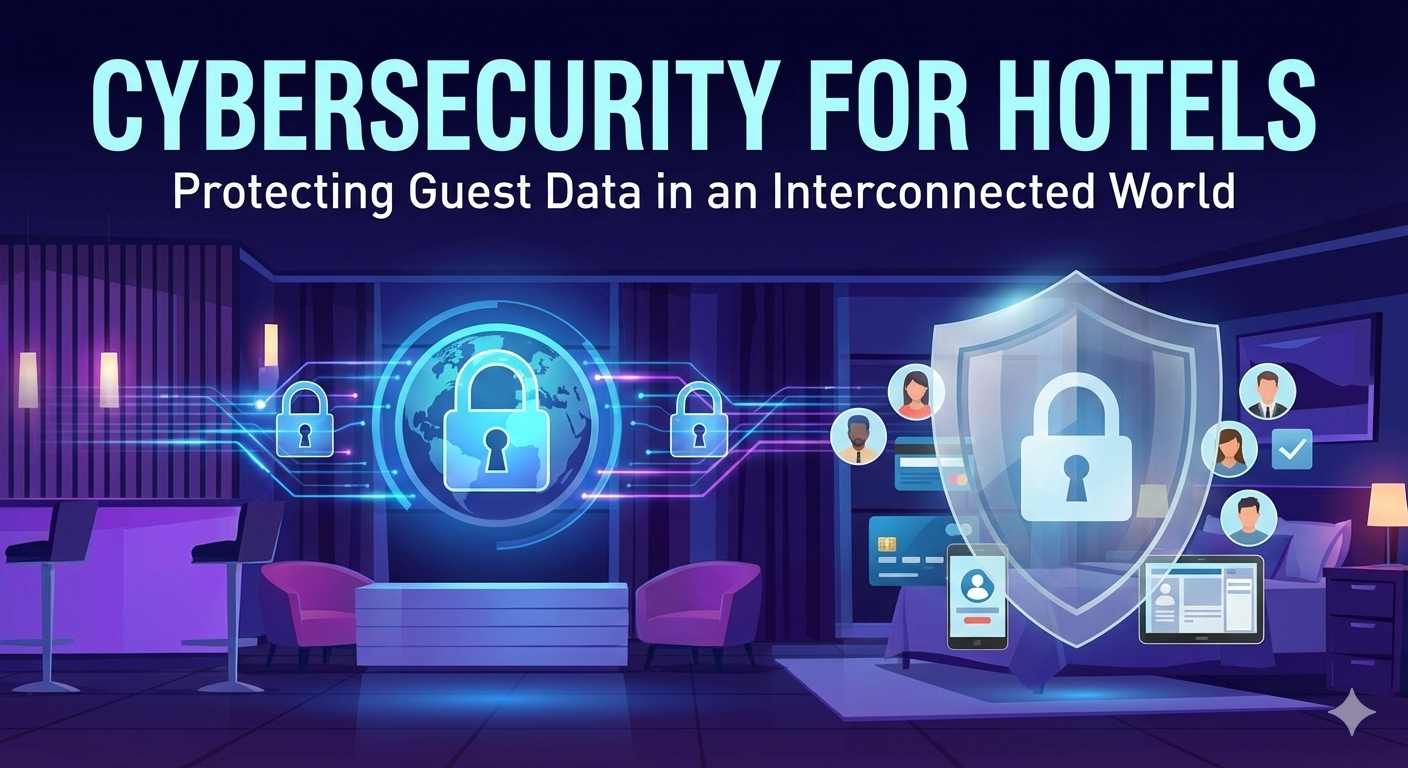
In today’s digital-first hospitality landscape, hotels are no longer just places to stay—they are data-driven ecosystems. From online reservations and mobile check-ins to smart rooms and loyalty programs, hotels collect and manage vast amounts of sensitive guest information. While this digital transformation enhances convenience and personalization, it also exposes hotels to growing cybersecurity risks.
As cyber threats become more sophisticated and interconnected systems more complex, protecting guest data has become a critical responsibility for hotels. Cybersecurity is no longer an IT issue alone—it is a core element of guest trust, brand reputation, and operational resilience. This article explores why cybersecurity matters in hospitality, the key risks hotels face, and best practices for safeguarding guest data in an increasingly connected world.
The Growing Importance of Cybersecurity in Hospitality
Hotels handle a wide range of sensitive information, including:
- Personal identification details
- Payment and credit card data
- Passport and visa information
- Contact details and travel preferences
- Loyalty program data
With digital touchpoints spread across websites, mobile apps, property management systems (PMS), and third-party platforms, hotels have become attractive targets for cybercriminals. A single data breach can result in financial losses, legal penalties, reputational damage, and long-term loss of guest trust.
In an industry built on relationships and confidence, cybersecurity is essential to maintaining credibility.
Why Hotels Are Prime Targets for Cyberattacks
Several factors make hotels especially vulnerable to cyber threats.
High Volume of Guest Data
Hotels process thousands of transactions daily, making them data-rich environments.
Interconnected Systems
Hotel operations rely on multiple integrated systems, including:
- PMS and CRS
- Point-of-sale (POS) systems
- Guest Wi-Fi networks
- Smart room technologies
- Third-party booking platforms
Each connection increases potential entry points for attackers.
24/7 Operations
Round-the-clock operations often limit downtime for system maintenance and updates.
High Staff Turnover
Frequent onboarding of new employees can increase the risk of human error and weak security practices.
Common Cybersecurity Threats Facing Hotels
Understanding threats is the first step toward prevention.
1. Data Breaches
Unauthorized access to guest information can occur through:
- Weak passwords
- Unpatched systems
- Compromised third-party vendors
Data breaches often lead to severe legal and reputational consequences.
2. Phishing and Social Engineering Attacks
Hotel staff are often targeted through fake emails or messages designed to steal login credentials or financial information.
3. Ransomware Attacks
Cybercriminals may lock hotel systems and demand payment to restore access, disrupting operations and guest services.
4. Insecure Guest Wi-Fi Networks
Unprotected Wi-Fi networks can be exploited to intercept data or gain access to internal systems.
5. Third-Party Vendor Risks
Hotels rely heavily on external vendors. Weak security practices by one vendor can compromise the entire ecosystem.
The Impact of Cybersecurity Failures on Hotels
A cybersecurity incident affects more than just IT systems.
Loss of Guest Trust
Guests expect their personal information to be handled securely. A breach can permanently damage confidence.
Financial and Legal Consequences
Fines, lawsuits, compensation costs, and system recovery expenses can be substantial.
Operational Disruption
Cyberattacks can disable reservations, payments, and essential services.
Brand Reputation Damage
Negative publicity spreads quickly, especially in the digital age.
Best Practices for Cybersecurity in Hotels
Protecting guest data requires a proactive, multi-layered approach.
1. Establish a Strong Cybersecurity Strategy
Hotels should develop a comprehensive cybersecurity framework that includes:
- Risk assessment
- Data protection policies
- Incident response plans
- Regular system audits
Cybersecurity should be aligned with overall business strategy.
2. Secure Hotel Networks and Systems
Network Segmentation
Separate guest Wi-Fi from internal systems to reduce attack exposure.
Regular Software Updates
Ensure all systems are patched and updated to address vulnerabilities.
Firewalls and Intrusion Detection
Deploy advanced security tools to monitor and block unauthorized access.
3. Protect Payment and Financial Data
Hotels must comply with payment security standards and use:
- Encrypted payment systems
- Tokenization of credit card data
- Secure POS terminals
Financial data protection is critical to reducing fraud risks.
4. Strengthen Employee Awareness and Training
Human error remains one of the biggest cybersecurity risks.
Hotels should:
- Train staff to recognize phishing attempts
- Enforce strong password policies
- Limit access based on roles
- Promote a culture of cybersecurity awareness
Well-trained employees are the first line of defense.
5. Implement Access Controls and Authentication
Limiting system access reduces risk.
Best practices include:
- Role-based access control
- Multi-factor authentication (MFA)
- Regular access reviews
Only authorized personnel should access sensitive data.
6. Secure Smart and IoT Devices
Smart room technology enhances guest experience but also introduces new risks.
Hotels should:
- Secure IoT devices with strong authentication
- Regularly update firmware
- Monitor device activity
IoT security is essential in modern hospitality environments.
7. Manage Third-Party Vendor Risks
Hotels must ensure that vendors follow strong security practices.
Steps include:
- Conducting vendor security assessments
- Including cybersecurity requirements in contracts
- Monitoring third-party access regularly
Shared responsibility protects the entire ecosystem.
8. Encrypt Guest Data
Encryption ensures that data remains unreadable even if accessed illegally.
Hotels should encrypt:
- Data in transit
- Data at rest
- Backup systems
Encryption is a fundamental layer of data protection.
9. Develop a Cyber Incident Response Plan
Preparation minimizes damage during an attack.
An effective response plan includes:
- Clear roles and responsibilities
- Communication protocols
- Coordination with legal and regulatory bodies
- Guest notification procedures
Quick, transparent action builds trust even during crises.
10. Monitor and Audit Systems Continuously
Continuous monitoring helps detect threats early.
Hotels should conduct:
- Regular vulnerability assessments
- Penetration testing
- Security audits
Proactive monitoring reduces exposure to cyber risks.
The Role of Leadership in Hotel Cybersecurity
Cybersecurity requires leadership commitment.
Hotel management must:
- Allocate resources for security initiatives
- Support training and awareness programs
- Prioritize data protection in decision-making
A top-down approach ensures cybersecurity is embedded across the organization.
Cybersecurity as a Competitive Advantage
Hotels that demonstrate strong cybersecurity practices gain:
- Increased guest confidence
- Better compliance standing
- Stronger brand reputation
- Long-term business resilience
Data protection can be a differentiator in guest decision-making.
The Future of Cybersecurity in Hospitality
As technology evolves, cybersecurity strategies must adapt.
Future trends include:
- AI-driven threat detection
- Zero-trust security models
- Enhanced data privacy regulations
- Greater focus on cyber resilience
Hotels that invest in future-ready cybersecurity will be better prepared for emerging threats.
Conclusion
In an interconnected world, cybersecurity is a fundamental pillar of hospitality success. Protecting guest data is not just a technical obligation—it is a promise of trust, safety, and responsibility. By adopting robust cybersecurity practices, training employees, securing interconnected systems, and preparing for potential incidents, hotels can safeguard their operations and maintain guest confidence.
At Booksmart, we believe that strong cybersecurity is essential for building resilient, trustworthy hospitality brands. In a digital age where data is as valuable as service, protecting guest information is not optional—it is essential.
Leave a Reply