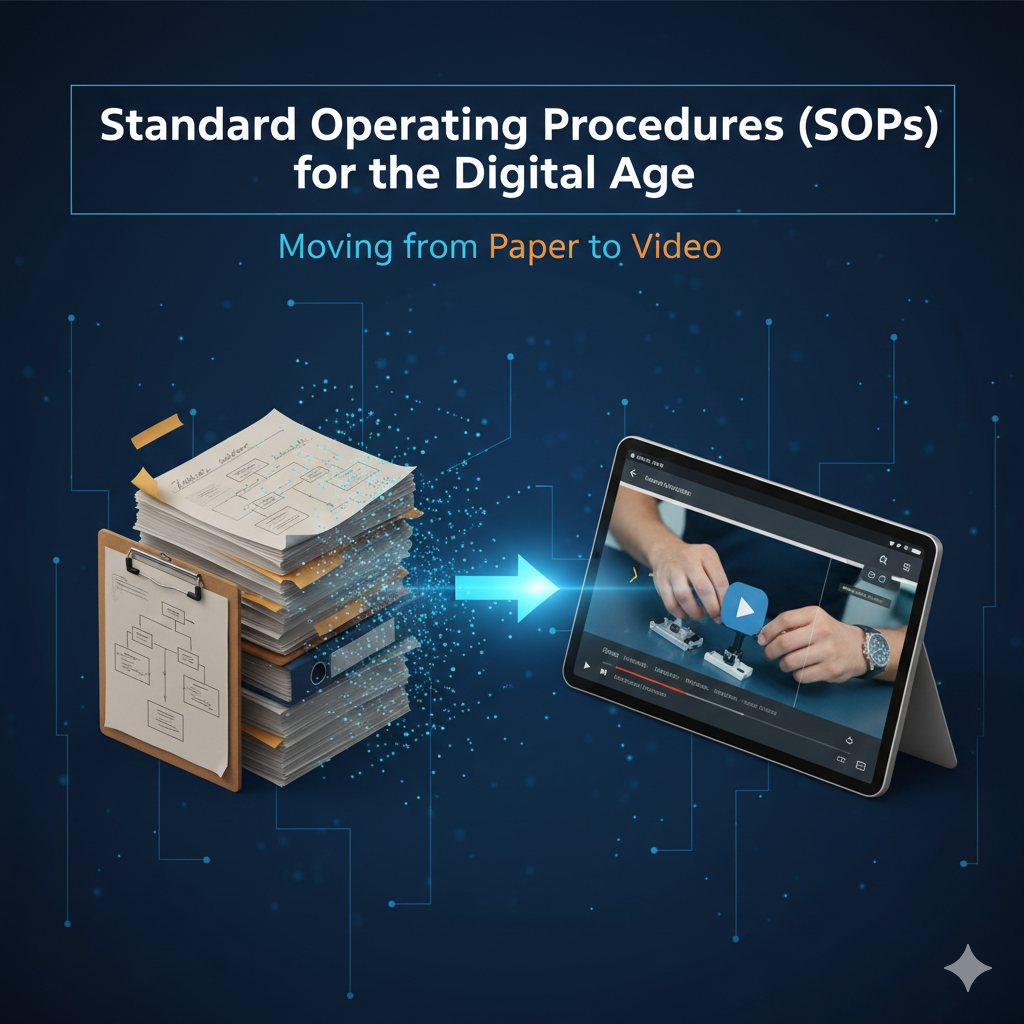
Standard Operating Procedures (SOPs) have long been the backbone of organizational consistency, quality control, and compliance. Traditionally, these procedures have lived in thick binders, printed manuals, or static PDF files—often outdated, rarely read, and easily forgotten. In today’s fast-paced, digital-first world, this approach is no longer effective.
As workplaces become more dynamic, remote, and technology-driven, organizations are rethinking how knowledge is created, shared, and retained. One of the most powerful shifts taking place is the move from paper-based SOPs to video-based SOPs. This transformation is redefining training, performance, and operational excellence across industries.
This article explores why SOPs must evolve, the advantages of video-based SOPs, and how organizations can successfully make the transition in the digital age.
Why Traditional SOPs Are No Longer Enough
Paper-based SOPs were designed for a different era—one with stable teams, slower change cycles, and limited digital tools. Today’s realities expose their limitations.
Low Engagement and Retention
Employees often find written SOPs:
- Time-consuming to read
- Difficult to interpret
- Hard to apply in real-life situations
Studies consistently show that people retain far more information through visual and auditory learning than through text alone.
Rapid Operational Changes
Processes change frequently due to:
- New technology
- Updated regulations
- Evolving customer expectations
Printed SOPs become outdated quickly, leading to confusion and inconsistency.
High Staff Turnover
Industries such as hospitality, retail, and logistics face frequent employee turnover. Re-training new hires using lengthy manuals is inefficient and ineffective.
The Rise of Video-Based SOPs
Video SOPs use short, clear, visual demonstrations to explain how tasks should be performed. Instead of reading instructions, employees watch the process in action, making learning more intuitive and practical.
Video SOPs can include:
- Screen recordings
- Live demonstrations
- Voiceover explanations
- Step-by-step visual guides
This format aligns naturally with how modern teams learn and work.
Why Video SOPs Work Better
1. Improved Knowledge Retention
Visual learning dramatically increases comprehension and memory. Employees can:
- See exact movements and techniques
- Understand context instantly
- Reduce misinterpretation
Video SOPs minimize errors caused by unclear instructions.
2. Consistency Across Locations
For organizations with multiple sites or departments, video SOPs ensure:
- Uniform service standards
- Consistent quality
- Reduced dependency on local trainers
Every employee receives the same instruction, every time.
3. Faster Onboarding and Training
New employees can become productive faster by:
- Watching SOPs at their own pace
- Revisiting videos when needed
- Learning without constant supervision
This reduces training costs and trainer workload.
4. Easy Updates and Scalability
Updating a video SOP is far simpler than reprinting manuals. Organizations can:
- Edit or replace specific videos
- Instantly share updates
- Maintain version control
This agility is essential in the digital age.
Humanizing SOPs Through Video
One of the greatest advantages of video SOPs is their ability to humanize processes.
Real People, Real Context
Seeing actual team members perform tasks builds:
- Trust
- Relatability
- Confidence
Employees learn not just what to do, but how and why it matters.
Reducing Anxiety and Errors
Clear demonstrations reduce uncertainty, especially for complex or safety-critical tasks. Employees feel supported rather than judged.
Use Cases Across Industries
Video SOPs are transforming operations in many sectors.
Hospitality
- Housekeeping standards
- Front desk procedures
- Food safety and service
- Emergency protocols
Retail
- Visual merchandising
- POS operations
- Customer service scenarios
Manufacturing
- Equipment handling
- Safety procedures
- Quality checks
Corporate and Remote Teams
- Software workflows
- Compliance processes
- IT and cybersecurity protocols
Overcoming Resistance to Change
Transitioning from paper to video SOPs can face resistance.
Common Concerns
- “Videos are expensive to produce”
- “Employees won’t watch them”
- “We already have SOPs”
However, modern tools make video creation affordable and accessible, and engagement rates are consistently higher than text-based content.
Best Practices for Creating Effective Video SOPs
1. Keep Videos Short and Focused
Microlearning works best. Aim for:
- 2–5 minutes per video
- One task per SOP
This keeps attention high and learning manageable.
2. Use Simple, Clear Language
Avoid jargon. Speak as if explaining to a new team member on their first day.
3. Show, Don’t Just Tell
Demonstrate every step visually. Close-up shots and real scenarios enhance clarity.
4. Add Captions and Accessibility Features
Subtitles support:
- Multilingual teams
- Hearing-impaired employees
- Quiet viewing environments
Inclusive design maximizes reach.
5. Organize SOPs in a Digital Library
Host videos on:
- Learning management systems (LMS)
- Internal portals
- Mobile-friendly platforms
Easy access ensures consistent usage.
Integrating Video SOPs with Digital Tools
Video SOPs become even more powerful when integrated with:
- Mobile devices
- QR codes at workstations
- AI-driven learning platforms
Employees can scan, watch, and perform tasks in real time.
Compliance and Documentation in the Digital Age
A common concern is whether video SOPs meet compliance requirements.
The answer is yes—when managed properly.
Audit-Friendly Benefits
- Timestamped updates
- Version tracking
- Proof of training completion
Video SOPs often provide better documentation than paper manuals.
Measuring the Impact of Video SOPs
Organizations adopting video SOPs report:
- Reduced training time
- Fewer operational errors
- Improved employee confidence
- Higher customer satisfaction
Analytics can track:
- Video views
- Completion rates
- Knowledge gaps
Data-driven insights help refine training continuously.
The Future of SOPs
As technology advances, SOPs will become even more interactive.
Emerging trends include:
- AI-powered SOP recommendations
- Augmented reality (AR) task guidance
- Voice-activated SOP access
- Personalized learning paths
The future of SOPs is dynamic, visual, and human-centered.
Conclusion
Standard Operating Procedures are no longer static documents—they are living tools that shape performance, safety, and service quality. Moving from paper-based SOPs to video-based SOPs is not just a technological upgrade; it is a cultural shift toward clarity, consistency, and empowerment.
At Booksmart, we believe that effective SOPs should work with people, not against them. By embracing video-based SOPs, organizations can bridge knowledge gaps, accelerate learning, and build confident teams ready for the demands of the digital age.
Leave a Reply