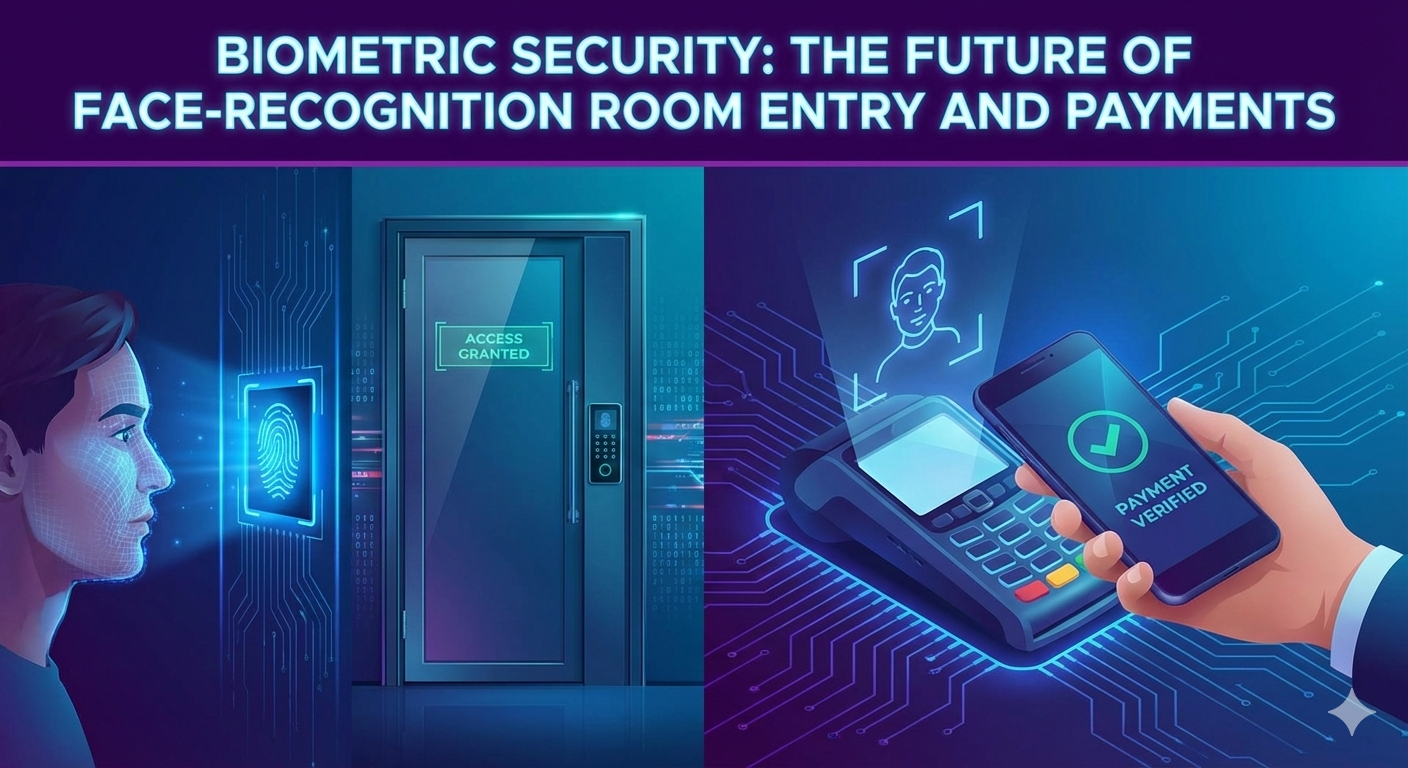
The hospitality industry is undergoing a rapid technological transformation. As hotels embrace smart systems to enhance guest convenience and operational efficiency, biometric security is emerging as one of the most promising innovations. From face-recognition room entry to biometric-based payments, hotels are exploring ways to deliver frictionless, secure, and personalized experiences.
In an era where guests value speed, safety, and seamless service, biometric technology offers a compelling solution. This article explores how biometric security is shaping the future of hospitality, its benefits, challenges, and what hotels must consider when adopting face-recognition-based room access and payment systems.
Understanding Biometric Security in Hospitality
Biometric security uses unique physical or behavioral characteristics to verify identity. Unlike traditional security methods such as keys, cards, or PINs, biometric identifiers are difficult to replicate or steal.
Common biometric technologies include:
- Facial recognition
- Fingerprint scanning
- Iris recognition
- Voice recognition
In hospitality, facial recognition is gaining traction due to its non-intrusive nature and compatibility with contactless service models.
Why Hotels Are Turning to Biometric Solutions
Hotels operate in an environment where guest security and convenience must coexist. Traditional access and payment systems present several challenges:
- Lost or stolen key cards
- Shared PIN codes
- Fraudulent transactions
- Time-consuming verification processes
Biometric security addresses these issues by providing a secure, fast, and personalized alternative.
Face-Recognition Room Entry: Redefining Access Control
One of the most promising applications of biometric security is face-recognition-based room entry.
How It Works
Face-recognition systems use AI-powered cameras to:
- Scan a guest’s facial features
- Compare them with stored biometric data
- Grant or deny access in real time
This process happens within seconds, eliminating the need for physical keys or mobile devices.
Benefits of Face-Recognition Room Entry
Enhanced Security
Facial features are unique and difficult to duplicate, significantly reducing unauthorized access.
Improved Guest Convenience
Guests can access their rooms hands-free, without worrying about key cards or smartphones.
Reduced Operational Costs
Hotels save on card replacement, lock maintenance, and front desk workload.
Contactless Experience
Face-recognition aligns with health-conscious and hygiene-focused travel preferences.
Biometric Payments: A New Era of Secure Transactions
Biometric payment systems allow guests to authorize transactions using facial recognition instead of cards or cash.
Applications in Hotels
- Restaurant and bar payments
- Spa and wellness services
- Room service charges
- Retail and minibar purchases
Payments are directly linked to the guest’s profile, enabling seamless billing.
Advantages of Biometric Payments
Fraud Prevention
Biometric authentication reduces identity theft and unauthorized transactions.
Faster Transactions
Payments are completed in seconds, improving guest satisfaction and operational efficiency.
Personalized Service
Biometric systems can identify guests instantly, enabling personalized offers and loyalty benefits.
Enhancing the Overall Guest Experience
Biometric security is not just about protection—it is about creating a smooth and memorable guest journey.
Seamless Check-In and Check-Out
Facial recognition can automate:
- Identity verification
- Room assignment
- Check-in and check-out processes
This reduces queues and improves first impressions.
Personalized Interactions
Recognizing guests allows hotels to:
- Greet them by name
- Recall preferences
- Deliver tailored experiences
Personalization builds emotional connection and loyalty.
Operational Benefits for Hotels
Beyond guest convenience, biometric security delivers operational advantages.
Reduced Front Desk Workload
Automated access and payments free staff to focus on high-value guest interactions.
Improved Access Management
Hotels can easily control and monitor room access, staff entry, and restricted areas.
Data-Driven Insights
Biometric systems generate valuable data on guest behavior, helping hotels optimize services.
Privacy and Ethical Considerations
Despite its benefits, biometric security raises legitimate privacy concerns.
Data Protection and Consent
Hotels must:
- Obtain explicit guest consent
- Clearly explain how biometric data is used
- Allow opt-out options
Transparency is essential to building trust.
Secure Data Storage
Biometric data should be:
- Encrypted
- Stored securely
- Accessed only by authorized systems
Hotels must comply with data protection laws and ethical standards.
Avoiding Bias and Misuse
Facial recognition systems must be tested to avoid:
- Demographic bias
- False positives or negatives
- Discriminatory outcomes
Responsible implementation is critical.
Challenges in Implementing Biometric Security
While promising, biometric adoption presents challenges.
High Initial Investment
Hardware, software, and system integration require significant investment.
Guest Acceptance
Some guests may be uncomfortable with biometric technology due to privacy concerns.
Technical Limitations
Lighting conditions, camera quality, and system accuracy must be carefully managed.
Best Practices for Hotels Adopting Biometric Security
To ensure successful implementation, hotels should follow best practices:
- Start with pilot programs
- Offer biometric access as an option, not a requirement
- Educate guests and staff
- Partner with reputable technology providers
- Regularly audit and update systems
A guest-first approach ensures smooth adoption.
The Role of Biometric Security in Contactless Hospitality
The demand for contactless services continues to rise. Biometric security supports this trend by enabling:
- Touch-free access
- Cashless payments
- Reduced physical interaction
This aligns with modern guest expectations and health-conscious travel behaviors.
Future Trends in Biometric Hospitality Solutions
Biometric technology will continue to evolve.
Future developments may include:
- Multi-modal biometrics (face + voice)
- Emotion-aware AI systems
- Integration with smart room technology
- Enhanced personalization through biometric insights
As technology matures, biometric security will become more accurate and widely accepted.
Biometric Security as a Competitive Differentiator
Hotels that adopt biometric solutions early can:
- Position themselves as innovators
- Attract tech-savvy travelers
- Strengthen brand trust
- Enhance operational efficiency
Innovation in security often translates into improved guest loyalty.
Conclusion
Biometric security represents the future of secure, seamless, and personalized hospitality experiences. Face-recognition room entry and biometric payments offer a powerful combination of convenience and protection, redefining how guests interact with hotel services. While privacy and ethical considerations must be addressed carefully, responsible implementation can unlock significant value for both guests and hotels.
At Booksmart, we believe biometric security is not just a technological advancement—it is a strategic investment in trust, efficiency, and the future of hospitality. As hotels continue to evolve in an interconnected world, biometric solutions will play a pivotal role in shaping safer and smarter guest experiences.
Leave a Reply