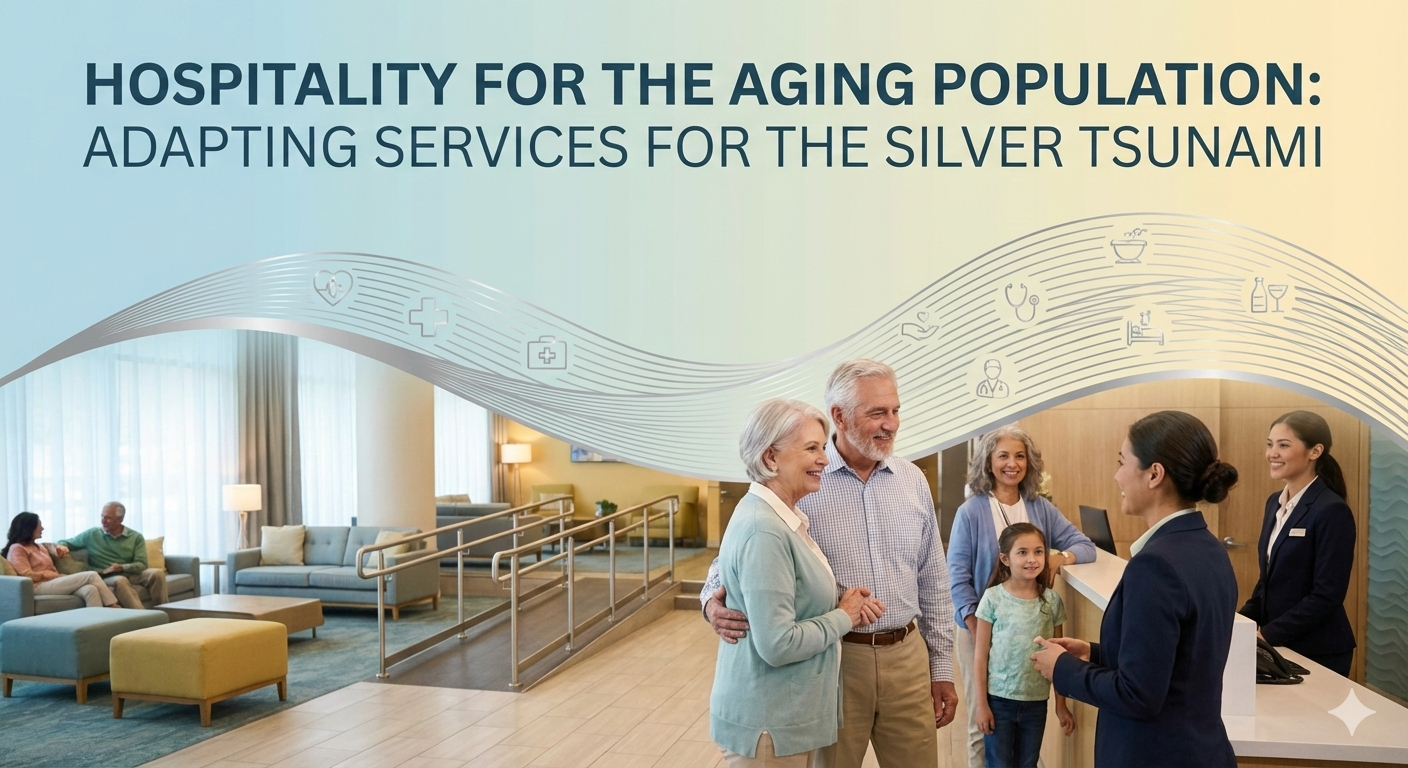
The global hospitality industry is standing at the edge of a powerful demographic shift known as the Silver Tsunami—the rapid growth of the aging population. By 2050, people aged 60 and above are expected to outnumber younger generations in many regions. This transformation is redefining travel preferences, service expectations, and hotel design across the world.
Older travelers today are healthier, wealthier, and more experience-driven than ever before. They travel not just for leisure, but for wellness, connection, learning, and purpose. For hospitality brands, this presents a massive opportunity—provided they adapt thoughtfully and inclusively.
This article explores how hotels and hospitality providers can evolve their services, spaces, and strategies to meet the needs of aging guests while creating dignified, enriching, and memorable experiences.
Understanding the Silver Tsunami in Hospitality
The aging population is not a niche segment—it is a dominant and growing market. Baby boomers and seniors:
- Travel more frequently
- Stay longer
- Spend more per trip
- Value comfort, safety, and meaningful experiences
Unlike younger travelers seeking speed and novelty, older guests prioritize ease, reassurance, personalization, and well-being.
Hospitality for aging guests is not about limitation—it is about thoughtful design and empathetic service.
Changing Travel Preferences of Older Guests
To serve aging travelers effectively, hotels must understand what truly matters to them.
Comfort Over Complexity
Simplicity in navigation, room controls, and service access is essential.
Health and Wellness Focus
Access to wellness amenities, nutritious dining, and medical assistance influences booking decisions.
Cultural and Emotional Connection
Older travelers often seek heritage, storytelling, local interaction, and nostalgia-driven experiences.
Longer Stays
Many seniors prefer slow travel, extended vacations, or seasonal stays.
Designing Age-Friendly Hotel Spaces
Physical spaces play a crucial role in creating inclusive hospitality.
Accessible Room Design
Hotels should offer:
- Step-free entry
- Non-slip flooring
- Wider doorways
- Walk-in showers with grab bars
- Adjustable lighting
- Easy-to-reach switches and controls
Accessibility should feel elegant, not clinical.
Public Areas That Encourage Ease
Common spaces should include:
- Comfortable seating with armrests
- Clear signage with large fonts
- Adequate lighting
- Quiet zones for relaxation
Thoughtful design reduces fatigue and enhances enjoyment.
Service Adaptations for Aging Guests
Service excellence for older travelers requires empathy and attentiveness.
Personalized Check-In Experiences
Avoid rushed, digital-only processes. Offer:
- Assisted check-in
- Clear explanations
- Paper-based alternatives when needed
Choice is key.
Staff Training in Age Sensitivity
Hotel teams should be trained to:
- Communicate patiently
- Recognize mobility or hearing needs
- Offer assistance discreetly
- Avoid stereotypes or assumptions
Respect and dignity define great senior hospitality.
Health, Safety, and Wellness Services
Well-being is central to hospitality for aging guests.
On-Demand Medical Support
Hotels can partner with:
- Local clinics
- Telemedicine providers
- On-call nurses or doctors
This reassurance significantly boosts confidence and comfort.
Wellness-Oriented Amenities
Popular offerings include:
- Gentle fitness programs (yoga, stretching, aqua therapy)
- Spa treatments for joint and muscle care
- Quiet meditation spaces
Wellness is preventive, not reactive.
Dining Experiences Tailored for Older Guests
Food plays a major role in guest satisfaction.
Nutritionally Balanced Menus
Hotels should offer:
- Low-sodium and diabetic-friendly options
- Clearly labeled dietary information
- Smaller portion choices
Nutrition and pleasure must coexist.
Comfortable Dining Environments
- Adequate lighting
- Noise control
- Comfortable seating
- Flexible dining hours
Dining should feel relaxed and social.
Technology That Empowers, Not Overwhelms
Technology must enhance, not complicate, the guest experience.
Simplified Digital Tools
- Large-font interfaces
- Voice-assisted room controls
- Easy-to-use TV remotes
Optional tech, not forced adoption.
Human Backup Always Available
No matter how advanced the system, older guests value knowing that a real person is always accessible.
Meaningful Experiences for the Silver Traveler
Older travelers seek depth over volume.
Cultural and Learning Experiences
- Guided heritage walks
- Cooking classes
- Art and music workshops
- Storytelling sessions
Experiences should stimulate curiosity and connection.
Social Engagement Opportunities
Loneliness is a real concern for aging populations.
Hotels can offer:
- Group activities
- Community dining tables
- Cultural evenings
Hospitality can foster belonging.
Safety and Security Considerations
Safety is a top priority for aging guests.
Proactive Safety Measures
- Emergency call buttons in rooms
- Well-lit corridors
- Clearly marked exits
- Staff trained in emergency response
Safety should be visible yet unobtrusive.
Marketing Hospitality to the Aging Population
Reaching older travelers requires a thoughtful approach.
Authentic Messaging
Avoid portraying seniors as fragile. Instead, highlight:
- Freedom
- Comfort
- Discovery
- Confidence
Respectful storytelling builds trust.
Multi-Channel Communication
- Websites with clear navigation
- Phone support
- Print brochures
- Email communication
Accessibility applies to marketing too.
Economic Opportunity of the Silver Tsunami
The aging population represents one of the most financially powerful travel segments.
Benefits for hotels include:
- Higher lifetime customer value
- Repeat stays
- Brand loyalty
- Word-of-mouth referrals
Inclusive hospitality is also smart business.
The Future of Age-Inclusive Hospitality
As populations age, age-friendly design will become mainstream, not specialized.
Future trends include:
- Hybrid hospitality and wellness resorts
- Senior-focused travel communities
- Multi-generational travel experiences
- Personalized long-stay programs
Hotels that adapt early will lead the next era of hospitality.
Conclusion
The Silver Tsunami is not a challenge—it is an invitation to rethink hospitality with empathy, inclusivity, and foresight. By adapting services, spaces, and experiences for aging guests, hotels can create environments that honor comfort, dignity, and joy at every stage of life.
At Booksmart, we believe the future of hospitality lies in human-centered design. As the world grows older, the most successful hospitality brands will be those that understand one simple truth: great hospitality has no age limit.
Leave a Reply