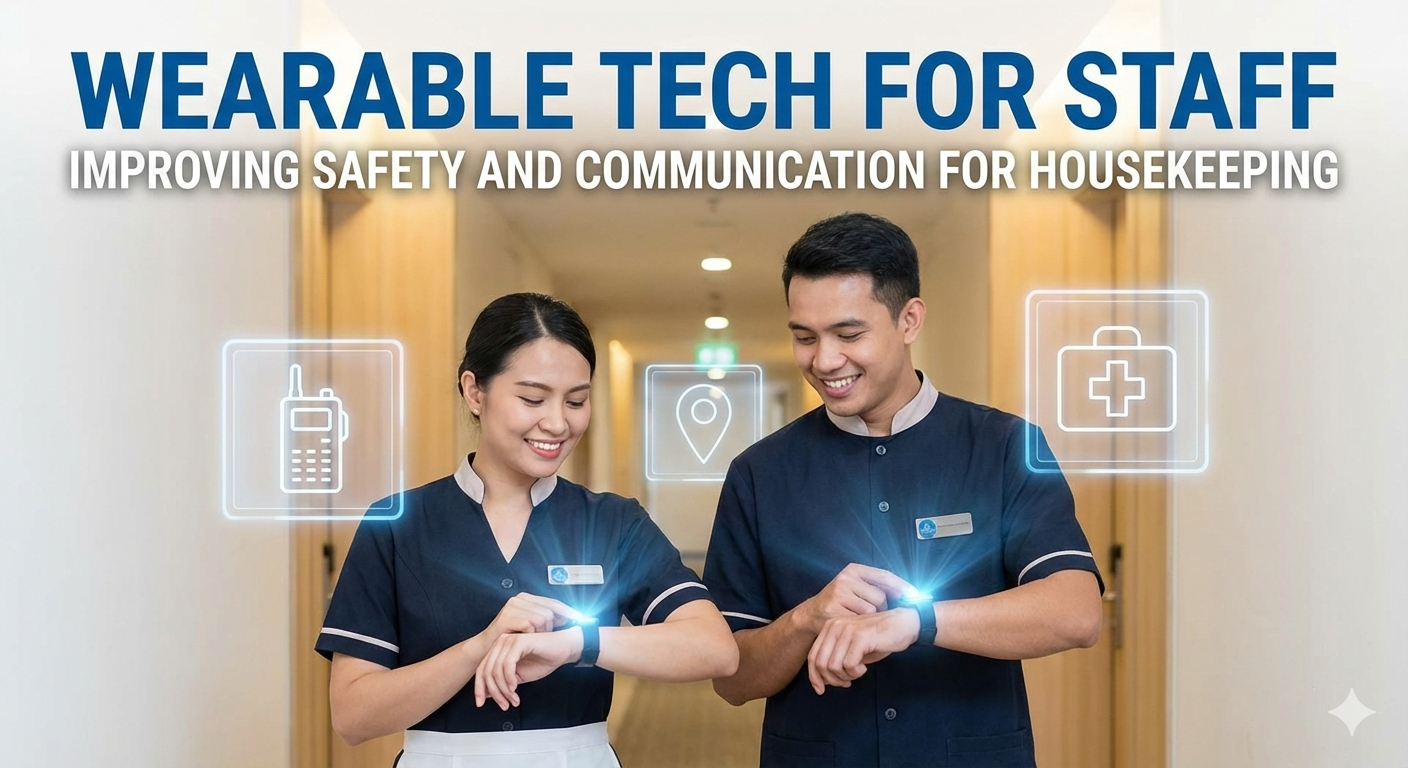
Housekeeping teams are the backbone of hotel operations. They ensure cleanliness, hygiene, and comfort—elements that directly influence guest satisfaction and brand reputation. Despite their critical role, housekeeping staff often work behind the scenes, facing physically demanding tasks, time pressure, and safety risks. As the hospitality industry embraces digital transformation, wearable technology is emerging as a powerful solution to improve safety, communication, and efficiency for housekeeping teams.
This article explores how wearable tech is reshaping housekeeping operations, enhancing employee well-being, and future-proofing hotel workforce management.
Understanding Wearable Technology in Hospitality
Wearable technology refers to smart electronic devices worn on the body that collect data, enable communication, and support real-time decision-making. In hospitality, wearables are increasingly designed to support frontline staff, especially housekeeping teams.
Common wearable devices used in hotels include:
- Smartwatches
- Smart badges
- Panic buttons
- Location-tracking wearables
- Health and activity monitors
These devices integrate with hotel systems to create safer, more connected work environments.
Why Housekeeping Needs Wearable Technology
Housekeeping staff face unique operational challenges that make wearable technology especially valuable.
High-Risk Work Environment
Housekeepers often work alone in guest rooms, increasing vulnerability to accidents or unsafe situations.
Physical Strain
Repetitive movements, lifting, and long shifts can lead to fatigue and injury.
Communication Gaps
Traditional communication methods are slow and ineffective during peak operational hours.
Labor Shortages
Hotels need ways to maintain productivity and safety with smaller teams.
Wearable tech addresses these challenges by enabling proactive support and real-time communication.
Improving Safety with Wearable Technology
Safety is the most critical benefit of wearable technology for housekeeping staff.
1. Emergency Alerts and Panic Buttons
Wearable panic buttons allow staff to instantly alert management or security during emergencies.
Benefits include:
- Immediate response to unsafe situations
- Enhanced employee confidence
- Reduced response times
- Compliance with workplace safety regulations
These devices are especially valuable for lone workers.
2. Real-Time Location Tracking
Location-enabled wearables help managers:
- Locate staff quickly during emergencies
- Monitor high-risk zones
- Improve response coordination
This feature enhances safety without being intrusive when used responsibly.
3. Health Monitoring and Fatigue Management
Some wearables track:
- Heart rate
- Activity levels
- Movement patterns
This data helps identify fatigue risks and supports healthier work scheduling.
Enhancing Communication Across Housekeeping Teams
Effective communication is essential for smooth housekeeping operations.
1. Instant Task Updates
Wearables allow housekeeping staff to receive:
- Room status updates
- Priority cleaning requests
- Maintenance alerts
This eliminates delays caused by manual coordination.
2. Hands-Free Communication
Voice-enabled wearables enable staff to:
- Communicate without stopping work
- Respond to supervisors quickly
- Maintain focus and productivity
Hands-free communication reduces errors and improves efficiency.
3. Multilingual Support
Some wearable systems offer language translation features, helping diverse teams communicate more effectively.
Boosting Productivity and Operational Efficiency
Wearable tech helps streamline housekeeping workflows.
Optimized Task Allocation
Data from wearables allows managers to:
- Assign tasks based on availability
- Reduce unnecessary movement
- Balance workloads fairly
This leads to faster room turnaround times.
Reduced Downtime
Real-time alerts ensure staff are informed immediately about:
- Early check-outs
- Room changes
- Guest requests
This minimizes idle time and improves operational flow.
Supporting Staff Well-Being and Morale
Technology adoption should enhance, not replace, human care.
Empowering Employees
When staff feel safer and better supported, confidence and job satisfaction improve.
Reducing Stress and Burnout
Clear communication and realistic workloads reduce physical and mental strain.
Building Trust
Transparent policies around data use help staff trust wearable technology initiatives.
Data-Driven Insights for Better Management
Wearable tech generates valuable operational data.
Hotels can analyze:
- Task completion times
- Movement patterns
- Incident reports
- Workload distribution
These insights help optimize staffing levels and improve training programs.
Integration with Hotel Systems
For maximum impact, wearable tech should integrate seamlessly with:
- Property management systems (PMS)
- Housekeeping management software
- Maintenance systems
- Security platforms
Integrated systems create a unified operational ecosystem.
Addressing Privacy and Ethical Considerations
Privacy is a key concern in wearable technology adoption.
Hotels must:
- Clearly communicate data usage policies
- Limit data collection to operational needs
- Ensure compliance with labor and privacy laws
- Use data ethically and transparently
Employee trust is essential for successful implementation.
Challenges in Implementing Wearable Tech
Despite its benefits, wearable tech adoption presents challenges.
Initial Investment Costs
Hardware, software, and training require upfront investment.
Change Resistance
Staff may be hesitant to adopt new technology.
Technical Reliability
Devices must be durable and user-friendly in demanding environments.
These challenges can be overcome with phased rollouts and employee involvement.
Best Practices for Successful Adoption
Hotels can maximize success by:
- Involving housekeeping staff early
- Providing hands-on training
- Piloting programs before full rollout
- Collecting feedback and making adjustments
- Ensuring leadership support
A people-first approach ensures technology adoption adds real value.
Future of Wearable Technology in Housekeeping
Wearable technology will continue to evolve.
Future developments may include:
- AI-powered safety alerts
- Predictive fatigue detection
- Smart uniforms with embedded sensors
- Enhanced voice and gesture controls
These innovations will further enhance safety and efficiency.
Wearable Tech as a Competitive Advantage
Hotels that invest in staff safety and communication gain:
- Higher employee retention
- Improved service consistency
- Stronger employer branding
- Better guest satisfaction
Happy, supported staff deliver better guest experiences.
Conclusion
Wearable technology is transforming housekeeping operations by improving safety, communication, and workforce efficiency. By empowering staff with real-time support and data-driven insights, hotels can create safer work environments while maintaining high service standards. When implemented ethically and thoughtfully, wearable tech strengthens both employee well-being and operational resilience.
At Booksmart, we believe that the future of hospitality depends on caring for the people who make exceptional service possible. Wearable technology is not just an operational upgrade—it is an investment in the safety, dignity, and success of housekeeping professionals.
Leave a Reply