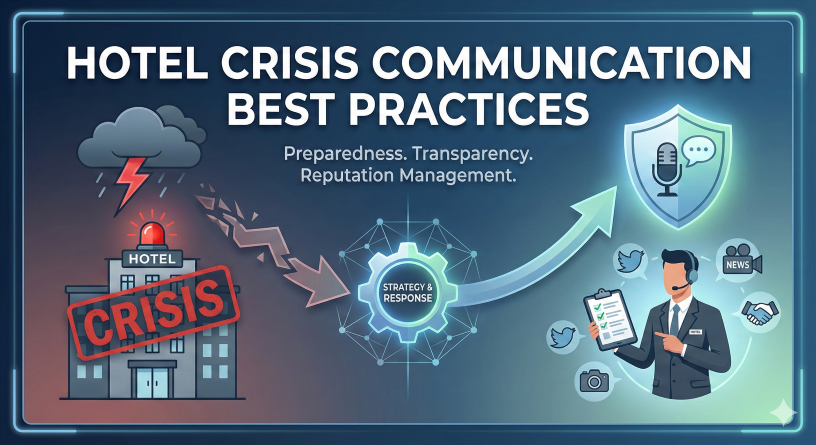
In the hospitality industry, trust is everything. Guests expect hotels to provide comfort, safety, and reliability. However, no hotel is immune to crises. From natural disasters and health emergencies to data breaches, service failures, or negative publicity, crises can arise unexpectedly and spread rapidly—especially in the age of social media.
How a hotel communicates during a crisis often determines whether it protects or damages its reputation. Effective crisis communication helps maintain guest trust, reassure stakeholders, and restore confidence. This article explores best practices hotels should adopt to manage crisis communication professionally, transparently, and empathetically.
1. Understanding Crisis Communication in Hotels
Crisis communication refers to the strategic exchange of information before, during, and after a crisis to minimize reputational damage and ensure stakeholder confidence.
Common Hotel Crises Include:
- Natural disasters (floods, earthquakes, hurricanes)
- Health emergencies or pandemics
- Fire or safety incidents
- Cybersecurity breaches
- Service disruptions
- Guest safety incidents
- Negative media coverage or viral complaints
A well-prepared communication strategy allows hotels to respond quickly and confidently rather than react emotionally or inconsistently.
2. Importance of Crisis Communication in Hospitality
Hotels operate in a people-centric industry. Poor communication during a crisis can escalate panic, spread misinformation, and permanently damage brand credibility.
Effective crisis communication helps hotels to:
- Protect guest safety and confidence
- Maintain transparency and trust
- Control misinformation
- Reduce legal and reputational risks
- Reassure employees and partners
- Recover faster after the crisis
Clear and compassionate communication can turn a crisis into an opportunity to demonstrate professionalism and accountability.
3. Prepare a Crisis Communication Plan in Advance
The most effective crisis communication begins before a crisis occurs.
a. Develop a Crisis Communication Plan
Hotels should have a documented plan that outlines:
- Types of potential crises
- Communication objectives
- Key messages
- Approved communication channels
- Roles and responsibilities
- Escalation protocols
This plan ensures quick, coordinated action under pressure.
b. Create a Crisis Response Team
The team may include:
- General Manager
- PR or Communications Head
- Operations Manager
- HR Manager
- Legal Advisor
- IT or Security Head
Each member should know their role to avoid confusion and delays.
4. Respond Quickly but Thoughtfully
Speed matters during a crisis—but accuracy matters more.
a. Acknowledge the Situation Early
Silence creates uncertainty. Hotels should:
- Acknowledge the issue as soon as possible
- Confirm awareness of the situation
- Assure guests that action is being taken
Even if full details are not yet available, acknowledgment builds trust.
b. Avoid Speculation
Never share unverified information. Communicate only confirmed facts and commit to providing updates as more details emerge.
5. Communicate with Transparency and Honesty
Transparency is essential during a crisis.
a. Share Clear and Accurate Information
Hotels should explain:
- What happened (without technical jargon)
- Who is affected
- What steps are being taken
- What guests or staff should do next
Honest communication reduces rumors and misinformation.
b. Admit Mistakes When Necessary
If the hotel is at fault:
- Take responsibility
- Apologize sincerely
- Explain corrective actions
Guests value accountability more than perfection.
6. Use Empathy and a Human Tone
Hospitality is built on empathy, and crisis communication should reflect that.
a. Acknowledge Emotions
Recognize guest concerns, fear, or inconvenience. Avoid defensive or corporate-sounding language.
b. Show Care and Concern
Messages should reassure guests that their:
- Safety
- Well-being
- Comfort
are the hotel’s top priorities.
A compassionate tone strengthens emotional trust.
7. Choose the Right Communication Channels
Different crises require different communication channels.
a. Direct Guest Communication
Use:
- Emails
- SMS alerts
- Hotel apps
- In-room notifications
for immediate and personalized communication.
b. Internal Communication
Employees should be informed before or alongside guests. Use:
- Staff meetings
- Internal messaging platforms
- Emails or notices
Well-informed staff prevent misinformation and respond confidently to guest queries.
c. Public and Media Communication
For high-profile crises:
- Issue official statements
- Use social media responsibly
- Designate a single spokesperson
Consistent messaging prevents confusion and misinterpretation.
8. Manage Social Media Proactively
Social media can escalate a crisis quickly if not managed properly.
a. Monitor Social Platforms
Track:
- Guest comments
- Reviews
- Mentions
- Hashtags
This helps identify misinformation early.
b. Respond Calmly and Professionally
- Acknowledge concerns
- Avoid arguments
- Take sensitive discussions offline when possible
Professional engagement helps maintain brand integrity.
c. Avoid Deleting Legitimate Complaints
Unless content is abusive or false, deleting comments can damage credibility. Transparency builds trust.
9. Train Staff in Crisis Communication
Employees are often the first point of contact during a crisis.
a. Provide Communication Training
Staff should know:
- What to say
- What not to say
- When to escalate issues
Clear guidelines prevent inconsistent messaging.
b. Empower Frontline Staff
Confident, well-informed employees reassure guests and reduce panic.
10. Coordinate with External Stakeholders
Hotels must align communication with:
- Local authorities
- Emergency services
- Health agencies
- Corporate offices
- Legal teams
This ensures compliance and credibility.
11. Protect Guest Data and Privacy
During crises involving cyber incidents or data breaches:
- Inform affected guests promptly
- Explain protective measures
- Follow data protection laws
- Avoid sharing sensitive information publicly
Responsible data communication protects trust and legal standing.
12. Provide Regular Updates
Lack of updates creates uncertainty.
Hotels should:
- Share progress updates
- Communicate timelines
- Explain next steps
Even small updates reassure stakeholders that the situation is under control.
13. Conduct Post-Crisis Communication
Communication doesn’t end when the crisis is over.
a. Share Resolution Updates
Inform guests and staff about:
- Issue resolution
- Preventive measures
- Policy changes
b. Thank Stakeholders
Express gratitude to:
- Guests for patience
- Staff for dedication
- Partners for support
Gratitude strengthens relationships.
14. Review and Improve Crisis Communication Strategy
After the crisis:
- Conduct internal reviews
- Identify gaps
- Update communication plans
- Train staff accordingly
Learning from each incident improves preparedness for the future.
15. Turning Crisis into an Opportunity
Handled correctly, a crisis can:
- Strengthen brand credibility
- Showcase leadership and empathy
- Build long-term guest loyalty
Hotels that communicate responsibly often emerge stronger than before.
Conclusion
Crisis communication is a critical component of hotel management. In moments of uncertainty, guests and employees look to hotel leadership for clarity, honesty, and reassurance. By preparing in advance, communicating transparently, showing empathy, and using the right channels, hotels can manage crises effectively while protecting their reputation and relationships.
In the hospitality industry, how you communicate during a crisis can define your brand for years. With the right strategy, hotels can not only survive crises—but emerge with trust intact and confidence renewed.
Leave a Reply