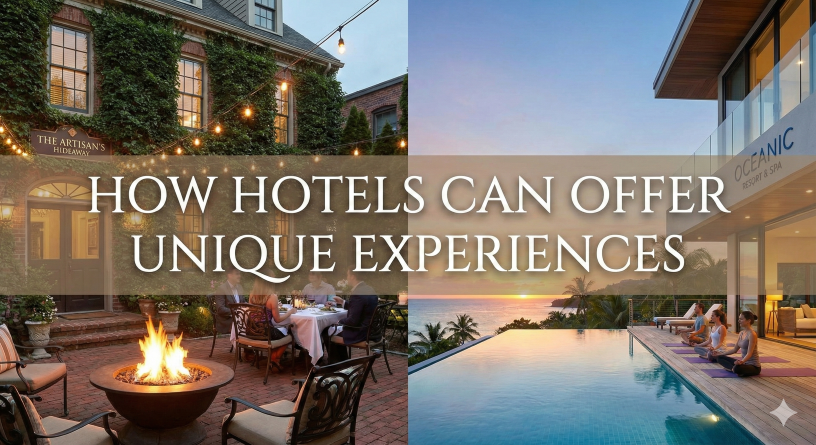
In today’s highly competitive hospitality industry, offering a comfortable room and basic amenities is no longer enough. Modern travelers are searching for experiences that are memorable, personalized, and emotionally engaging. They want more than a stay—they want a story to tell. As a result, hotels that focus on creating unique experiences stand out, attract loyal guests, and command higher value.
This article explores how hotels can design and deliver distinctive experiences that go beyond traditional hospitality and leave a lasting impression on guests.
1. Understanding the Modern Traveler
To offer unique experiences, hotels must first understand what today’s guests truly want.
Modern travelers value:
- Authenticity
- Personalization
- Cultural immersion
- Wellness and well-being
- Sustainability
- Seamless technology
Guests are willing to pay more for experiences that feel meaningful, exclusive, and tailored to their interests.
2. Creating a Strong Sense of Place
A hotel’s identity should reflect the destination it operates in.
a. Local Architecture and Design
Hotels can incorporate:
- Regional architectural styles
- Locally sourced materials
- Traditional artwork and décor
- Cultural symbols
This helps guests feel connected to the destination the moment they arrive.
b. Cultural Storytelling
Hotels can share:
- The history of the building
- Local legends and folklore
- Cultural narratives through art, signage, and staff interactions
Storytelling transforms a stay into an immersive cultural experience.
3. Personalizing the Guest Journey
Personalization is one of the most powerful ways to create memorable experiences.
a. Customized Pre-Arrival Communication
Hotels can ask guests about:
- Preferences
- Special occasions
- Dietary requirements
- Travel purpose
This allows hotels to tailor the experience before guests even arrive.
b. Personalized In-Stay Services
Examples include:
- Customized welcome amenities
- Curated itineraries
- Room settings based on guest preferences
- Personalized dining recommendations
Guests feel valued when services are designed specifically for them.
4. Offering Immersive Local Experiences
Hotels can act as cultural gateways by offering experiences beyond their walls.
a. Local Tours and Activities
Hotels can organize:
- Guided heritage walks
- Food tasting tours
- Village visits
- Artisan workshops
These experiences allow guests to explore the destination authentically.
b. Collaborations with Local Experts
Partnering with local guides, chefs, artists, and wellness practitioners adds credibility and uniqueness to hotel offerings.
5. Curating Culinary Experiences
Food is a powerful medium for storytelling and cultural connection.
a. Local and Seasonal Menus
Hotels can:
- Highlight regional dishes
- Use locally sourced ingredients
- Rotate menus seasonally
This ensures freshness and authenticity.
b. Interactive Dining Experiences
Unique culinary experiences include:
- Live cooking sessions
- Chef’s table dining
- Traditional cooking classes
- Farm-to-table experiences
Such offerings transform meals into memorable moments.
6. Integrating Wellness and Mindfulness
Wellness has become a major driver of unique hospitality experiences.
a. Holistic Wellness Programs
Hotels can offer:
- Yoga and meditation sessions
- Spa therapies using local traditions
- Nature-based wellness retreats
b. Wellness-Oriented Rooms
Features may include:
- Aromatherapy
- Sleep-enhancing amenities
- Air purifiers
- Natural lighting
Wellness-focused experiences promote relaxation and emotional well-being.
7. Using Technology to Enhance Experiences
Technology, when used thoughtfully, can elevate guest experiences without removing the human touch.
a. Smart Room Features
Guests can control:
- Lighting
- Temperature
- Entertainment
through mobile apps or voice assistants.
b. AI-Powered Recommendations
AI tools can suggest:
- Activities based on guest interests
- Dining options
- Events happening nearby
This adds convenience and personalization.
c. Virtual and Augmented Reality
Hotels can use VR or AR for:
- Virtual tours
- Cultural storytelling
- Interactive guides
Technology enhances engagement and accessibility.
8. Designing Experiential Spaces
Hotels should create spaces that encourage interaction and exploration.
a. Social and Community Spaces
These include:
- Art lounges
- Co-working spaces
- Community kitchens
- Rooftop gardens
Such spaces encourage connection among guests.
b. Multi-Functional Areas
Hotels can host:
- Cultural performances
- Pop-up exhibitions
- Workshops
- Wellness sessions
Flexible spaces allow hotels to constantly refresh experiences.
9. Focusing on Sustainability and Responsible Tourism
Unique experiences today must also be responsible.
a. Eco-Friendly Practices
Hotels can implement:
- Plastic-free initiatives
- Energy-efficient systems
- Water conservation programs
b. Community Engagement
By supporting local businesses and artisans, hotels create experiences that benefit both guests and the destination.
Sustainable experiences resonate strongly with conscious travelers.
10. Empowering Staff to Deliver Exceptional Experiences
Employees play a crucial role in experience creation.
a. Training for Emotional Intelligence
Staff should be trained to:
- Anticipate guest needs
- Offer genuine interactions
- Provide local insights
b. Encouraging Creativity
Allowing staff to personalize service and suggest new ideas fosters innovation and authenticity.
11. Hosting Exclusive and Signature Experiences
Signature experiences differentiate hotels from competitors.
Examples include:
- Sunset dining experiences
- Cultural festivals
- Wellness retreats
- Seasonal events
Exclusive offerings create strong brand recall and emotional connections.
12. Gathering Feedback and Continuously Improving
Hotels must listen to guests to refine experiences.
a. Real-Time Feedback Tools
Digital feedback systems allow hotels to make instant improvements.
b. Data-Driven Enhancements
Analyzing guest feedback helps hotels identify what experiences resonate most.
13. Marketing Unique Experiences Effectively
Experiences must be communicated clearly to attract the right audience.
a. Visual Storytelling
High-quality photos and videos showcase experiential offerings.
b. User-Generated Content
Encouraging guests to share experiences builds authenticity and trust.
Conclusion
Offering unique experiences is no longer a luxury—it’s a necessity in modern hospitality. By focusing on personalization, cultural immersion, wellness, sustainability, technology, and human connection, hotels can transform ordinary stays into unforgettable journeys. Hotels that consistently innovate and listen to their guests will build strong emotional bonds, earn loyalty, and remain competitive in an experience-driven travel market.
Leave a Reply