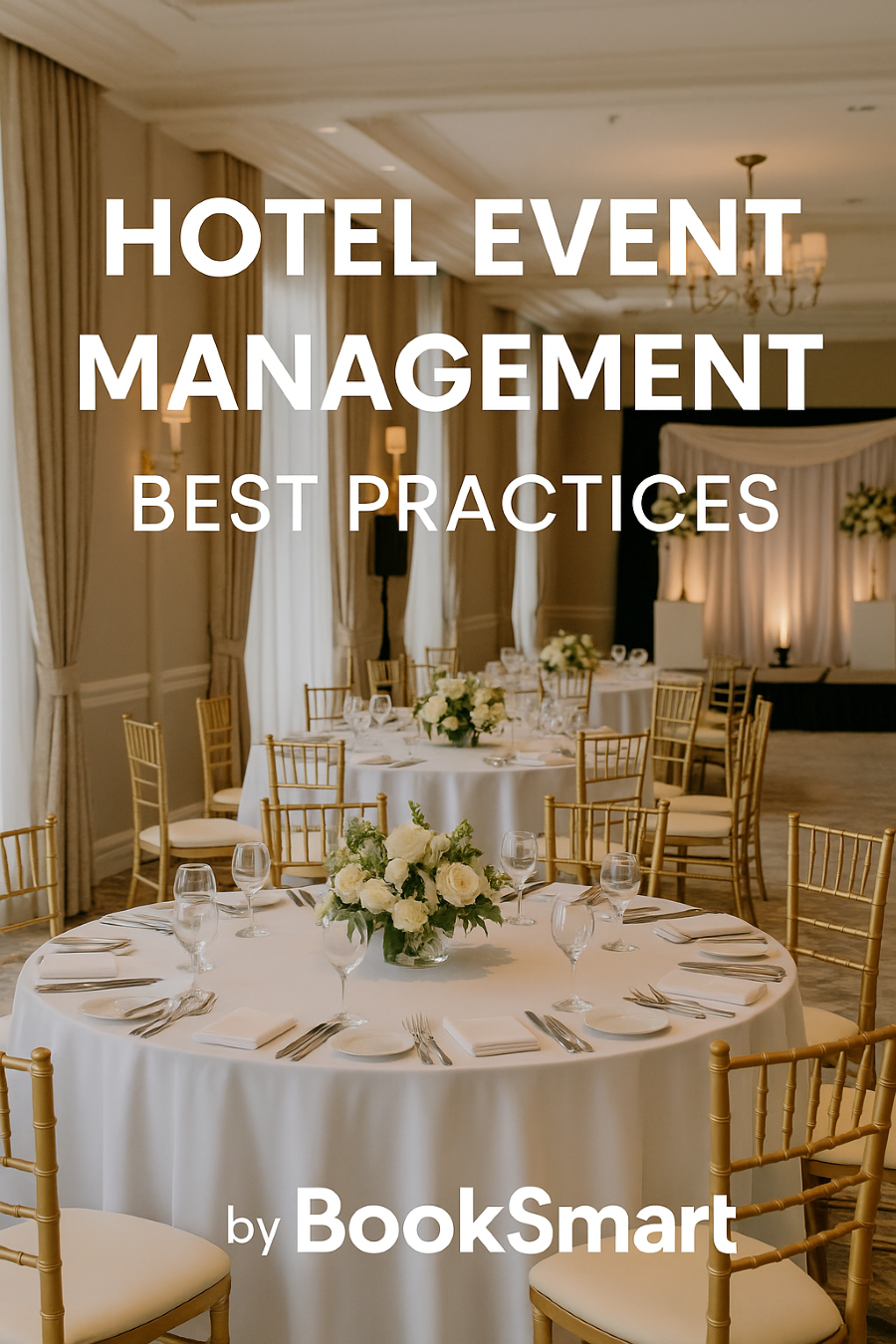
In the world of hospitality, events are powerful opportunities to create memorable guest experiences, build brand recognition, and drive revenue. From elegant weddings and corporate conferences to music festivals and private gatherings, hotels today serve as more than just places to stay—they are dynamic event destinations.
Successful hotel event management requires more than good planning. It’s about blending creativity, organization, and guest-centric execution to deliver unforgettable experiences. At BookSmart, we believe that mastering the art of event management is the key to a thriving hotel business. In this article, we explore the best practices for hotel event management, helping your property attract clients, execute flawlessly, and leave lasting impressions.
1. Understand Your Client’s Vision
Every event starts with a vision. Whether it’s a corporate seminar or a destination wedding, clients have specific goals, preferences, and expectations. The foundation of great event management is understanding that vision deeply.
Start by conducting in-depth consultations with your client. Ask about their theme, desired atmosphere, budget, and special requirements. This helps your team align every aspect—venue layout, lighting, catering, and entertainment—with their objectives.
BookSmart Tip: Use digital event planning tools or visualization software to create mock-ups and layouts. This helps clients visualize the final setup and minimizes last-minute changes.
2. Create a Comprehensive Event Plan
Behind every successful event lies a well-structured plan. A detailed roadmap keeps your team organized and ensures that no detail slips through the cracks.
Your event plan should include:
- Venue layout and seating arrangements
- Audio-visual and lighting setups
- Catering menu and dietary accommodations
- Staffing schedules and roles
- Guest registration and logistics
- Backup plans for emergencies
Having a central event management software—like the kind integrated with BookSmart’s hotel solutions—can automate scheduling, communication, and vendor coordination. This reduces manual errors and keeps everyone on the same page.
3. Choose the Right Venue Spaces
Flexibility in venue spaces is a major advantage for hotels. Whether it’s a grand ballroom, rooftop terrace, or poolside deck, each area can cater to different event types.
When managing events, focus on venue versatility:
- Offer multiple room configurations—banquet, theater, classroom, or cocktail.
- Highlight the venue’s ambiance with décor, lighting, and branding.
- Ensure easy access for guests, especially for VIPs or differently-abled attendees.
BookSmart Tip: Promote your hotel’s event spaces through virtual tours on your website. This allows potential clients to explore the ambiance before making a booking—boosting online conversions.
4. Perfect the Guest Experience
A memorable event isn’t just about logistics—it’s about emotions. Guests remember how they felt during an event more than the details themselves.
To ensure exceptional guest experiences:
- Train your staff in hospitality etiquette and proactive service.
- Offer personalized touches like welcome drinks, event-themed signage, or name tags.
- Ensure fast and seamless check-ins for event attendees.
- Provide easy navigation using digital screens or mobile event guides.
At BookSmart, we help hotels design guest experience blueprints, ensuring that every touchpoint—from arrival to departure—feels smooth, professional, and memorable.
5. Integrate Technology for Efficiency
In 2025, hotel event management has gone digital. Modern tools help streamline communication, manage attendees, and analyze success metrics.
Key technologies that enhance event management include:
- Event management software: To schedule, track, and automate operations.
- Mobile apps: For attendees to view agendas, maps, and updates.
- Contactless check-ins: For smoother entry and safety.
- Data analytics: To evaluate guest satisfaction, attendance rates, and ROI.
BookSmart’s technology-driven hotel solutions make it easier to manage bookings, automate workflows, and track event performance—all in one centralized platform.
6. Focus on Food and Beverage Excellence
Catering is often one of the most memorable parts of an event—and one of the biggest opportunities for hotels to shine. Guests remember a delicious meal long after the event ends.
Best practices for food and beverage management include:
- Offering customized menus that match the event’s theme and audience.
- Considering dietary preferences—vegetarian, vegan, or gluten-free options.
- Ensuring efficient service timing and temperature control.
- Collaborating closely with chefs for presentation and taste.
BookSmart encourages hotels to highlight signature dishes or local cuisine to make events culturally rich and distinctive. Great food doesn’t just satisfy—it enhances brand reputation.
7. Strengthen Vendor and Partner Relationships
Events often require collaboration with multiple vendors—decorators, photographers, entertainers, and AV technicians. Establishing reliable vendor partnerships ensures smoother coordination and better outcomes.
Keep a pre-vetted vendor list that includes trusted partners who share your commitment to quality and punctuality. Establish clear contracts covering deliverables, costs, and deadlines.
BookSmart Tip: Build long-term vendor relationships through loyalty agreements and mutual promotions. Reliable vendors save time and guarantee consistent excellence.
8. Prioritize Safety and Compliance
Health and safety are non-negotiable in hospitality events. Hotels must follow local regulations, safety codes, and crowd control measures to protect both guests and staff.
Safety best practices include:
- Regular inspection of fire exits and emergency equipment.
- Availability of first-aid and trained personnel.
- Clear evacuation plans displayed across the venue.
- Hygiene and food safety compliance in catering.
At BookSmart, we emphasize that maintaining high safety standards not only ensures compliance but also builds guest trust and confidence—an essential element of repeat business.
9. Market Your Event Capabilities
A successful hotel doesn’t just host events—it markets its event management strengths effectively.
Promote your hotel’s event offerings through strategic digital marketing:
- Showcase high-quality images and testimonials on your website and social media.
- Optimize your event pages for SEO using keywords like hotel event venues, conference spaces, or destination weddings.
- Partner with local event planners, photographers, and travel influencers.
BookSmart’s marketing support tools help hotels build compelling online visibility—ensuring potential clients find your venue first when searching for event destinations.
10. Gather Feedback and Measure Success
Once the event concludes, the job isn’t over. Gathering feedback helps you identify strengths and areas for improvement.
Use post-event surveys or feedback forms to measure satisfaction across:
- Venue and setup
- Food and beverage quality
- Staff service and responsiveness
- Overall guest experience
Analyze data to improve future event operations. At BookSmart, we recommend using customer relationship management (CRM) systems to track client preferences and follow up for future bookings.
Conclusion: Transforming Events into Experiences with BookSmart
In today’s competitive hospitality industry, hotels that master event management stand out as complete experience providers. Every successful event not only boosts short-term revenue but also strengthens long-term guest loyalty and brand value.
At BookSmart, we help hotels embrace smart technology, guest personalization, and operational excellence to deliver events that impress and inspire. Whether it’s a grand wedding or a high-profile conference, we empower hotels to turn every occasion into an unforgettable story.
Leave a Reply