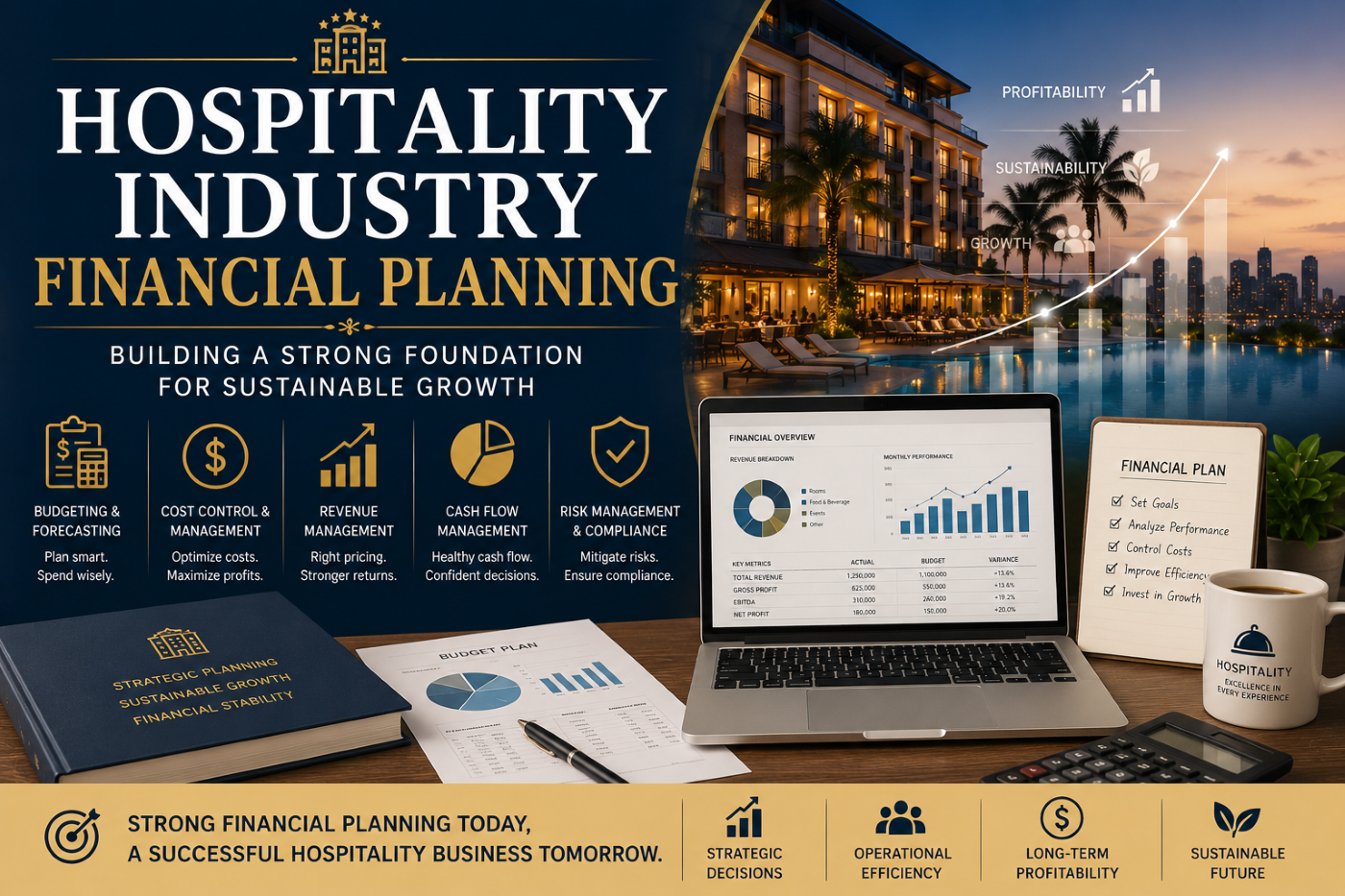
The hospitality industry operates in a dynamic environment where market conditions, guest expectations, seasonal demand, and economic trends can change rapidly. Hotels, resorts, restaurants, event venues, and other hospitality businesses must continuously balance service excellence with financial performance to remain competitive. In such a fast-paced industry, effective financial planning is not merely a management function—it is a critical component of long-term success.
Financial planning enables hospitality organizations to manage resources efficiently, control costs, forecast future performance, and make informed business decisions. It provides a roadmap for achieving profitability while ensuring that businesses can adapt to challenges such as economic downturns, changing travel patterns, labor shortages, and rising operational expenses.
At BookSmart, we believe that strong financial planning empowers hospitality businesses to improve operational efficiency, enhance guest experiences, and build sustainable growth strategies. Organizations that prioritize financial planning are better positioned to navigate uncertainty and seize new opportunities in an increasingly competitive marketplace.
Understanding Financial Planning in Hospitality
Financial planning is the process of setting financial goals, forecasting revenues and expenses, managing budgets, allocating resources, and monitoring financial performance. In the hospitality industry, financial planning encompasses every aspect of operations, from room revenue and food service income to labor costs, maintenance expenses, marketing investments, and capital expenditures.
Unlike many industries, hospitality businesses often experience fluctuations in demand due to seasonality, tourism trends, economic conditions, and special events. As a result, financial planning requires both short-term operational management and long-term strategic forecasting.
A comprehensive financial plan helps organizations maintain stability while supporting growth, innovation, and guest satisfaction initiatives.
Why Financial Planning Matters in Hospitality
Financial planning serves as the foundation for sound business management. Without a structured financial strategy, hospitality organizations may struggle to manage cash flow, control expenses, or respond effectively to market changes.
Effective financial planning provides several benefits, including improved profitability, stronger cash flow management, better decision-making, risk mitigation, operational efficiency, and enhanced investor confidence.
It also enables management teams to anticipate challenges, evaluate investment opportunities, and allocate resources more effectively across departments.
In a highly competitive industry where profit margins can be narrow, financial planning helps ensure long-term business sustainability.
Setting Clear Financial Goals
The financial planning process begins with establishing clear and measurable objectives. These goals should align with the organization’s overall business strategy and operational priorities.
Common hospitality financial goals include increasing revenue, improving occupancy rates, reducing operational costs, enhancing profit margins, expanding facilities, investing in technology, or improving guest satisfaction scores.
Clearly defined goals provide direction for budgeting, forecasting, and performance measurement.
Regularly reviewing financial objectives helps ensure that business strategies remain aligned with changing market conditions and organizational priorities.
Revenue Forecasting and Demand Planning
Accurate revenue forecasting is one of the most important aspects of hospitality financial planning. Forecasts help organizations estimate future income based on historical performance, market trends, seasonal demand, booking patterns, and economic conditions.
Hotels often analyze occupancy rates, average daily rates (ADR), revenue per available room (RevPAR), event bookings, and food and beverage sales when developing revenue projections.
Advanced revenue management systems use data analytics and predictive modeling to improve forecasting accuracy and optimize pricing strategies.
Reliable revenue forecasts support more effective budgeting, staffing decisions, inventory management, and investment planning.
Budgeting for Operational Success
Budgeting provides a framework for managing financial resources and controlling expenses. A well-structured budget outlines expected revenues, operating costs, capital expenditures, and departmental spending allocations.
Hospitality budgets typically cover labor costs, food and beverage expenses, utilities, marketing, maintenance, procurement, technology investments, training programs, and administrative overhead.
Department managers should actively participate in the budgeting process to ensure realistic planning and accountability.
Regular budget reviews allow organizations to compare actual performance against projections and make adjustments when necessary.
Effective budgeting helps maintain financial discipline while supporting operational objectives.
Managing Cash Flow Effectively
Cash flow management is critical in the hospitality industry, where revenue patterns can vary significantly throughout the year.
Even profitable businesses may encounter difficulties if cash inflows and outflows are not managed properly. Seasonal fluctuations, delayed payments, unexpected expenses, and economic disruptions can all affect liquidity.
Hospitality organizations should maintain detailed cash flow forecasts that track anticipated receipts and expenditures over specific periods.
Maintaining adequate cash reserves provides flexibility to manage unforeseen challenges while supporting ongoing operations.
Strong cash flow management helps ensure financial stability and reduces dependence on external financing.
Controlling Operational Costs
Cost management is a central component of hospitality financial planning. Rising labor costs, utility expenses, food prices, and procurement challenges can significantly impact profitability.
Hotels and hospitality businesses should regularly analyze operating expenses and identify opportunities to improve efficiency.
Key cost-control strategies include optimizing staffing levels, improving energy efficiency, reducing waste, negotiating supplier contracts, implementing inventory management systems, and leveraging technology automation.
The goal is not simply to reduce costs but to maximize value while maintaining service quality and guest satisfaction.
Effective cost management directly contributes to stronger financial performance.
Capital Investment Planning
Hospitality businesses frequently require significant capital investments to maintain facilities, upgrade technology, renovate properties, and expand operations.
Capital planning helps organizations evaluate investment opportunities and prioritize projects based on expected returns and strategic objectives.
Common capital expenditures include room renovations, restaurant upgrades, property expansions, energy-efficient equipment, digital transformation initiatives, and infrastructure improvements.
Before committing resources, organizations should conduct thorough financial analyses, including return on investment (ROI) assessments and risk evaluations.
Strategic capital planning ensures that investments contribute to long-term growth and competitive advantage.
Financial Risk Management
The hospitality industry faces numerous financial risks, including economic downturns, inflation, changing travel trends, natural disasters, geopolitical events, and public health emergencies.
Effective financial planning includes identifying potential risks and developing strategies to mitigate their impact.
Risk management measures may include maintaining emergency reserves, diversifying revenue streams, securing appropriate insurance coverage, implementing flexible budgeting practices, and conducting scenario planning exercises.
By preparing for uncertainty, hospitality organizations can improve resilience and protect long-term financial stability.
Leveraging Financial Technology
Technology has transformed financial management across the hospitality industry. Modern financial software provides real-time visibility into revenues, expenses, budgets, cash flow, and operational performance.
Cloud-based accounting systems, automated reporting tools, revenue management platforms, and business intelligence solutions enable faster and more accurate decision-making.
Financial analytics help managers identify trends, evaluate performance, and uncover opportunities for improvement.
Automation reduces administrative workload while improving accuracy and compliance.
Technology-driven financial planning supports greater agility and operational efficiency.
Measuring Financial Performance
Successful financial planning requires continuous monitoring and evaluation. Hospitality organizations should establish key performance indicators (KPIs) that measure financial health and operational effectiveness.
Common hospitality financial metrics include:
- Occupancy Rate
- Average Daily Rate (ADR)
- Revenue Per Available Room (RevPAR)
- Gross Operating Profit (GOP)
- Net Profit Margin
- Food Cost Percentage
- Labor Cost Percentage
- Cash Flow Performance
- Return on Investment (ROI)
Regular performance reviews help management identify strengths, address weaknesses, and make data-driven decisions.
Financial transparency also improves accountability across departments.
Sustainability and Financial Planning
Sustainability initiatives are increasingly influencing hospitality financial strategies. Investments in energy-efficient technologies, waste reduction programs, water conservation systems, and sustainable procurement practices often generate long-term financial benefits.
Although sustainability projects may require initial investment, they frequently reduce operating costs while enhancing brand reputation and guest loyalty.
Many investors and corporate clients now consider environmental performance when evaluating hospitality businesses.
Integrating sustainability into financial planning supports both profitability and corporate responsibility objectives.
Workforce Planning and Labor Cost Management
Labor typically represents one of the largest expenses within hospitality operations. Financial planning should include workforce forecasting, staffing optimization, training investments, and employee retention strategies.
Effective workforce planning ensures that staffing levels align with occupancy patterns and service requirements.
Cross-training employees, improving scheduling efficiency, and reducing turnover can significantly lower labor-related costs.
At the same time, investing in employee development helps improve service quality and operational performance.
Balancing labor costs with guest satisfaction remains a key financial planning challenge.
Future Trends in Hospitality Financial Planning
The future of hospitality financial planning will be increasingly shaped by advanced analytics, artificial intelligence, automation, and predictive modeling.
AI-powered forecasting tools will improve demand prediction, pricing optimization, and cost management. Real-time financial dashboards will provide greater visibility into operational performance and support faster decision-making.
Sustainability reporting, environmental performance measurement, and ESG (Environmental, Social, and Governance) considerations will also become more important components of financial planning.
Organizations that embrace innovation and data-driven financial management will be better positioned to thrive in a rapidly changing industry.
Conclusion
Financial planning is a fundamental driver of success within the hospitality industry. It enables organizations to forecast revenue, manage expenses, control cash flow, evaluate investments, mitigate risks, and achieve long-term business objectives.
By combining strategic budgeting, effective cost management, technology adoption, performance monitoring, and sustainable business practices, hospitality organizations can build a strong financial foundation that supports growth and resilience.
At BookSmart, we believe that successful hospitality businesses understand that exceptional guest experiences and strong financial performance go hand in hand. Through proactive financial planning and informed decision-making, hotels and hospitality organizations can navigate challenges, seize opportunities, and create lasting value in an increasingly competitive marketplace.
Leave a Reply