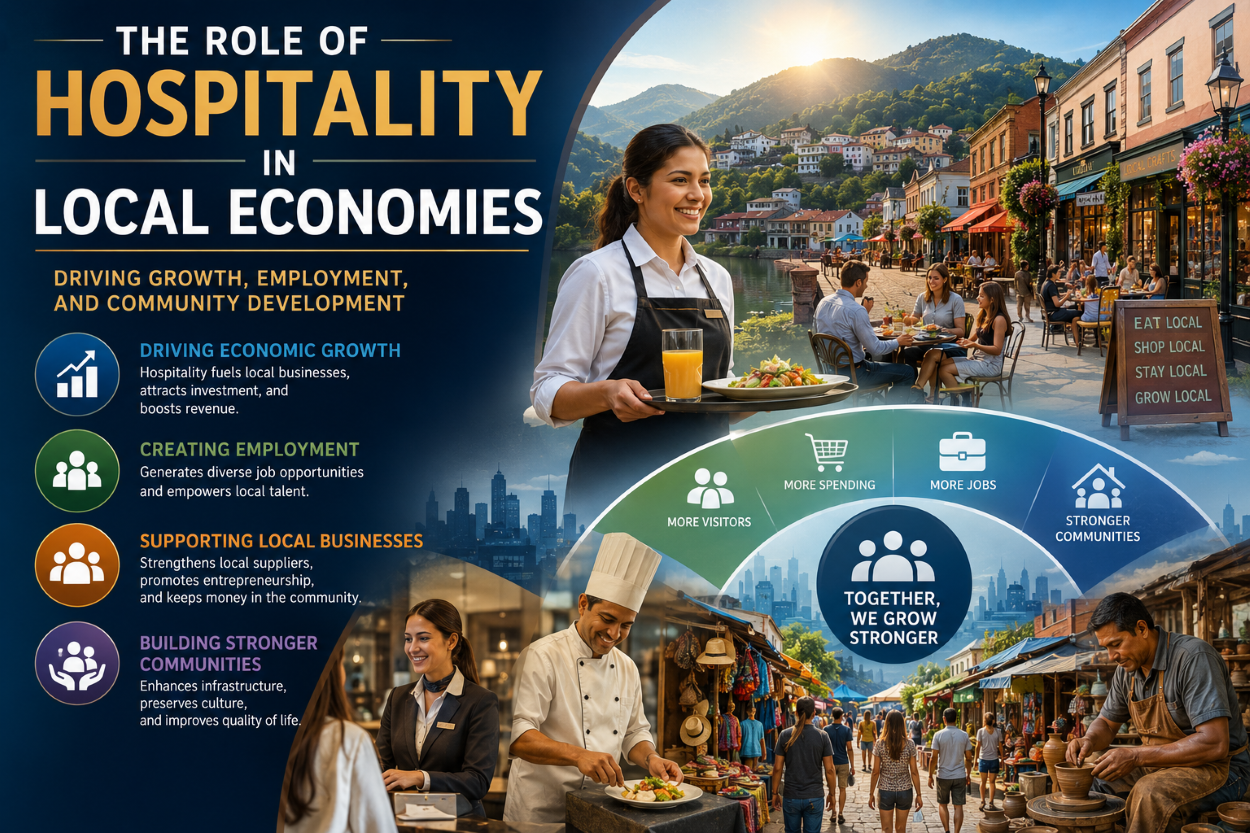
The hospitality industry is much more than a provider of accommodation, dining, and leisure experiences. It serves as a powerful economic engine that stimulates local development, creates employment opportunities, supports small businesses, and attracts investment. From luxury hotels and boutique resorts to restaurants, cafés, guesthouses, and event venues, hospitality businesses contribute significantly to the economic and social well-being of communities around the world.
As tourism continues to expand and travelers seek authentic local experiences, the connection between hospitality and regional economic growth has become even stronger. Every guest who checks into a hotel, dines at a restaurant, or attends a local event contributes directly and indirectly to the local economy. Hospitality businesses create a ripple effect by supporting suppliers, transportation providers, artisans, farmers, retailers, and numerous other industries.
At BookSmart, we believe that a thriving hospitality sector is essential for sustainable economic development. By investing in quality services, supporting local communities, and embracing responsible business practices, hospitality organizations can create lasting value that extends far beyond their own operations.
Understanding the Hospitality Industry’s Economic Impact
The hospitality industry includes hotels, resorts, restaurants, cafés, catering services, event management companies, travel accommodations, and recreational facilities. These businesses provide services that support both tourists and local residents while generating significant economic activity.
Unlike many industries that operate within a limited supply chain, hospitality influences multiple sectors simultaneously. Every guest expenditure on accommodation, food, transportation, shopping, entertainment, and local attractions circulates through the economy, creating additional business opportunities and supporting regional development.
This interconnected nature makes hospitality one of the most influential contributors to local economic growth.
Creating Employment Opportunities
One of the most important contributions of the hospitality industry is job creation. Hotels, restaurants, and tourism-related businesses employ millions of people across a wide range of roles, including management, housekeeping, food preparation, customer service, maintenance, marketing, security, transportation, and administration.
Hospitality also offers employment opportunities for individuals with varying educational backgrounds and skill levels. Entry-level positions provide valuable career pathways, while professional roles support long-term career development.
Beyond direct employment, the industry generates indirect jobs through suppliers, construction companies, maintenance providers, laundry services, event planners, travel agencies, and technology vendors.
This extensive employment network strengthens household incomes and improves local living standards.
Supporting Small and Local Businesses
Hospitality businesses rely heavily on local suppliers to meet their operational needs. Hotels purchase fresh produce from local farmers, seafood from regional fisheries, baked goods from neighborhood bakeries, flowers from local growers, and handcrafted décor from local artisans.
Restaurants often source ingredients from nearby producers, helping strengthen agricultural communities and encourage sustainable farming practices.
Gift shops, tour operators, transportation providers, entertainment companies, photographers, florists, and event decorators also benefit from partnerships with hospitality businesses.
By supporting local enterprises, hospitality creates a multiplier effect where revenue earned by one business generates income for many others within the community.
Boosting Tourism Revenue
Tourism and hospitality are closely connected. Without quality accommodations, restaurants, and visitor services, destinations would struggle to attract domestic and international travelers.
Hotels play a vital role in encouraging longer stays and higher visitor spending. Tourists who spend several days in a destination contribute to local businesses through dining, shopping, transportation, cultural attractions, recreational activities, and entertainment.
Seasonal festivals, conferences, sporting events, and cultural celebrations further increase visitor numbers, generating additional revenue for hospitality businesses and surrounding communities.
As tourism grows, local governments also benefit through increased tax revenues that can be reinvested in public infrastructure and community services.
Driving Infrastructure Development
The growth of the hospitality industry often encourages investment in infrastructure that benefits both visitors and local residents.
Road improvements, airports, railway stations, public transportation systems, utilities, internet connectivity, parks, healthcare facilities, and public spaces frequently expand to accommodate increasing tourism demand.
Improved infrastructure enhances quality of life for local communities while making destinations more attractive to future visitors and investors.
Private investment in hospitality projects can also stimulate urban renewal by revitalizing underdeveloped neighborhoods and supporting regional economic development.
Encouraging Entrepreneurship
Hospitality creates numerous opportunities for entrepreneurship and small business development. As visitor demand grows, local entrepreneurs often establish cafés, restaurants, boutique hotels, tour companies, transportation services, souvenir shops, wellness centers, and cultural experiences.
Many family-owned businesses thrive by offering authentic products and personalized services that appeal to travelers seeking unique local experiences.
Hospitality also encourages innovation by creating demand for digital booking platforms, food delivery services, event management companies, and travel technology solutions.
Entrepreneurship strengthens economic diversity while increasing resilience within local economies.
Promoting Cultural Heritage
Hospitality businesses frequently serve as ambassadors for local culture. Hotels and restaurants showcase regional cuisine, traditional architecture, local artwork, music, festivals, and cultural customs that enhance visitor experiences.
Cultural tourism encourages communities to preserve historic buildings, traditional crafts, and indigenous knowledge while generating economic value from cultural assets.
Many hospitality organizations collaborate with local artists, performers, historians, and cultural institutions to create authentic experiences that benefit both visitors and residents.
By celebrating local identity, hospitality contributes to cultural preservation while supporting economic growth.
Supporting Sustainable Community Development
Modern hospitality increasingly recognizes the importance of sustainable development. Responsible hotels and tourism businesses invest in environmental protection, community partnerships, education, and social initiatives that improve local quality of life.
Examples include supporting local schools, funding community projects, promoting environmental conservation, employing local residents, and sourcing products from nearby suppliers.
Sustainable hospitality ensures that economic benefits are shared more equitably while minimizing negative environmental impacts.
These initiatives strengthen relationships between hospitality businesses and the communities they serve.
Strengthening Government Revenue
Hospitality contributes significantly to public finances through taxes, licensing fees, tourism levies, property taxes, and employment-related contributions.
Governments use these revenues to fund education, healthcare, transportation, public safety, environmental conservation, and infrastructure improvements.
A strong hospitality sector therefore supports broader economic development beyond individual businesses.
Many governments actively encourage hospitality investment because of its ability to generate employment, attract foreign exchange, and stimulate regional development.
Hospitality and Local Supply Chains
Efficient local supply chains create mutual benefits for hospitality businesses and surrounding communities.
Hotels often establish long-term relationships with farmers, food producers, cleaning service providers, maintenance contractors, textile manufacturers, furniture suppliers, and technology companies.
These partnerships reduce transportation costs, improve product freshness, strengthen supply chain resilience, and support local economic activity.
Buying locally also reduces environmental impact by shortening transportation distances while helping small businesses grow.
Strong local supply chains create economic stability and encourage collaborative regional development.
Enhancing Destination Competitiveness
A destination’s hospitality infrastructure plays a major role in attracting visitors and investment. High-quality accommodations, excellent customer service, diverse dining options, and professional event facilities enhance the overall appeal of a region.
Positive guest experiences encourage repeat visits, online recommendations, and word-of-mouth marketing that attract additional travelers.
Destination competitiveness also benefits businesses outside hospitality, including retail, transportation, entertainment, healthcare, and education sectors.
A well-developed hospitality ecosystem strengthens the entire regional economy.
Challenges Facing Hospitality’s Economic Contribution
Despite its many benefits, the hospitality industry also faces challenges that can affect local economies.
Seasonal demand fluctuations, labor shortages, economic downturns, natural disasters, global health crises, inflation, and changing travel patterns can disrupt business operations and reduce tourism activity.
Communities that rely heavily on tourism must diversify their economies while investing in resilient hospitality infrastructure.
Collaboration between government agencies, private businesses, educational institutions, and community organizations is essential for addressing these challenges and ensuring sustainable growth.
Future Trends in Hospitality and Local Economic Development
The future relationship between hospitality and local economies will be shaped by sustainability, technology, and experiential travel.
Travelers increasingly seek authentic experiences that support local communities, purchase locally made products, and promote environmental responsibility.
Digital technologies will improve destination marketing, visitor management, and operational efficiency, while sustainable tourism practices will encourage responsible economic growth.
Hospitality businesses that invest in community partnerships, innovation, workforce development, and environmental stewardship will continue to play a leading role in regional prosperity.
As global tourism evolves, locally focused hospitality strategies will become increasingly important for creating inclusive and sustainable economic growth.
Conclusion
The hospitality industry serves as a cornerstone of local economic development by creating employment, supporting entrepreneurship, strengthening supply chains, promoting tourism, preserving cultural heritage, and encouraging infrastructure investment.
Its economic impact extends well beyond hotels and restaurants, generating opportunities for farmers, artisans, retailers, transportation providers, event organizers, and countless other local businesses. By embracing sustainable practices and fostering strong community partnerships, hospitality organizations contribute to long-term prosperity while enhancing the quality of life for residents.
At BookSmart, we believe that hospitality is not only about delivering outstanding guest experiences—it is also about creating meaningful economic value for communities. As destinations continue to grow and evolve, the hospitality industry will remain a vital force in building resilient, inclusive, and thriving local economies for generations to come.
Leave a Reply