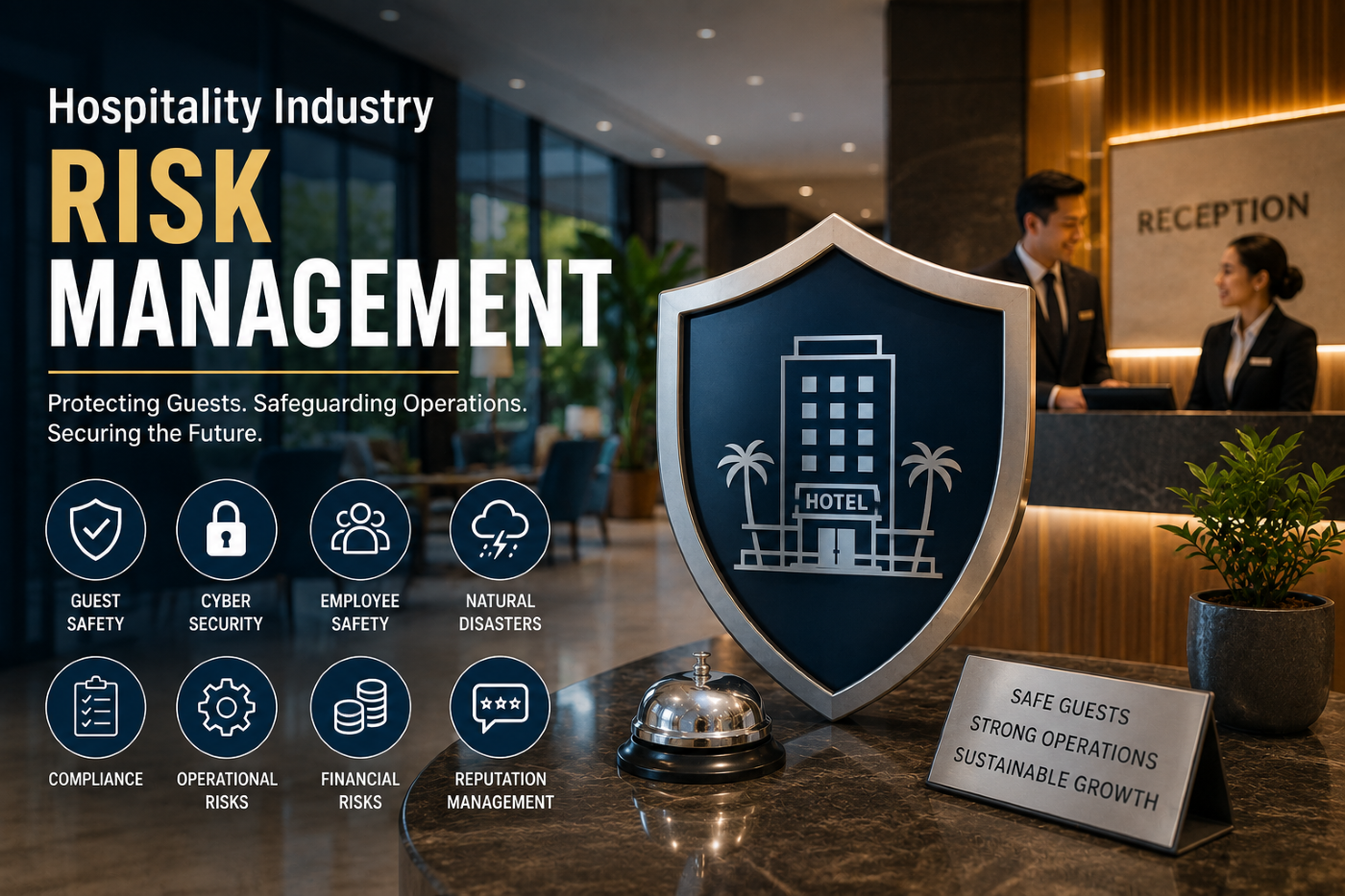
The hospitality industry operates in a fast-changing environment where hotels must manage a wide variety of risks every day. From health emergencies and cybersecurity threats to natural disasters, financial uncertainty, operational disruptions, and changing guest expectations, hotels face challenges that can affect their reputation, profitability, and long-term success.
Risk management is no longer limited to insurance policies or emergency response plans. It has become a strategic process that helps hospitality businesses identify potential threats, reduce vulnerabilities, prepare for unexpected situations, and maintain business continuity. Hotels that proactively manage risks are better equipped to protect guests, employees, assets, and brand reputation while ensuring uninterrupted operations.
At BookSmart, we believe that effective risk management is one of the foundations of sustainable hospitality. By combining careful planning, modern technology, employee training, and continuous monitoring, hotels can reduce uncertainty and create safer, more resilient businesses.
What Is Risk Management in Hospitality?
Risk management in hospitality is the process of identifying, assessing, controlling, and monitoring potential events that could negatively affect hotel operations, guests, employees, finances, or reputation.
Rather than reacting only after problems occur, risk management encourages hotels to anticipate challenges and implement preventive measures.
A comprehensive risk management strategy covers multiple areas, including:
- Guest safety
- Employee safety
- Financial risks
- Operational risks
- Cybersecurity
- Legal compliance
- Environmental risks
- Supply chain disruptions
- Reputation management
- Technology failures
The objective is not to eliminate every risk, which is impossible, but to reduce the likelihood and impact of potential problems.
Why Risk Management Matters in Hospitality
Hotels operate 24 hours a day and interact with thousands of guests, employees, suppliers, and service providers.
This creates numerous opportunities for unexpected situations.
Without effective risk management, even a relatively small incident can damage guest trust, generate financial losses, or lead to negative publicity.
A proactive approach offers several benefits:
- Improved guest safety
- Stronger business continuity
- Better regulatory compliance
- Reduced financial losses
- Enhanced employee confidence
- Increased operational efficiency
- Greater customer trust
- Protection of brand reputation
Risk management helps hotels respond quickly while minimizing disruption.
Identifying Potential Risks
The first step in effective risk management is identifying possible threats.
Hotels should regularly evaluate both internal and external risks that may affect operations.
Common hospitality risks include:
- Fire and safety hazards
- Natural disasters
- Cyberattacks
- Data breaches
- Equipment failures
- Staff shortages
- Food safety incidents
- Financial fraud
- Legal disputes
- Supply chain interruptions
- Public health emergencies
- Negative online reviews
- Power outages
- Water supply disruptions
Regular risk assessments help management prioritize resources and prepare appropriate response plans.
Guest Safety and Security
Guest safety is one of the highest priorities for every hotel.
Hotels must create environments where guests feel secure throughout their stay.
Important safety measures include:
- Fire detection systems
- Emergency exits
- CCTV surveillance
- Access control systems
- Secure room locks
- Well-lit public areas
- Emergency communication procedures
- Security personnel where appropriate
Hotels should also provide guests with clear emergency instructions and ensure employees understand evacuation procedures.
Visible commitment to safety increases guest confidence and supports positive reviews.
Employee Health and Safety
Employees are essential to hospitality operations.
Hotels should provide safe working environments through regular safety training, protective equipment where necessary, ergonomic workspaces, and emergency response procedures.
Departments such as housekeeping, maintenance, kitchens, and engineering often face higher physical risks.
Regular inspections, safety audits, and workplace training reduce accidents while improving employee morale and productivity.
A strong safety culture benefits both employees and guests.
Cybersecurity Risks
Modern hotels rely heavily on digital systems.
Property Management Systems, reservation platforms, payment processing, Customer Relationship Management software, mobile applications, and cloud services all handle sensitive guest information.
This makes cybersecurity a major area of risk.
Hotels should implement:
- Multi-factor authentication
- Data encryption
- Secure Wi-Fi networks
- Firewall protection
- Regular software updates
- Employee cybersecurity training
- Access controls
- Incident response plans
Cybersecurity is not solely the responsibility of the IT department.
Every employee who handles digital information contributes to protecting guest data.
Data Privacy and Regulatory Compliance
Hotels collect personal information such as guest names, contact details, payment information, identification documents, and travel preferences.
Protecting this information is both a legal and ethical responsibility.
Hotels should establish clear privacy policies, limit access to sensitive data, securely store information, and comply with applicable data protection regulations.
Transparent communication about data collection and usage helps build guest trust.
Failure to protect customer information can result in legal penalties, financial losses, and reputational damage.
Financial Risk Management
Financial uncertainty can affect hotels in many ways.
Economic downturns, inflation, currency fluctuations, unexpected operating costs, and changing travel demand may influence profitability.
Hotels can reduce financial risks by:
- Diversifying revenue streams
- Monitoring cash flow
- Maintaining emergency reserves
- Conducting regular financial forecasting
- Controlling operational costs
- Reviewing pricing strategies
- Investing in revenue management systems
Strong financial planning allows hotels to remain resilient during periods of uncertainty.
Managing Operational Risks
Daily hotel operations involve numerous interconnected activities.
Equipment breakdowns, housekeeping delays, reservation errors, utility failures, and supplier disruptions can affect guest satisfaction.
Hotels should establish standard operating procedures for critical functions and regularly review operational performance.
Preventive maintenance programs reduce equipment failures.
Technology can also support operational continuity by providing real-time monitoring and automated alerts.
Effective communication between departments ensures that problems are addressed quickly.
Food Safety and Hygiene
Restaurants, cafés, banquet facilities, and room service operations present additional risks.
Hotels should maintain strict food safety standards throughout purchasing, storage, preparation, cooking, and service.
Key practices include:
- Temperature monitoring
- Hygiene training
- Safe food handling
- Supplier quality control
- Kitchen sanitation
- Regular inspections
Food safety incidents can seriously damage a hotel’s reputation and expose guests to health risks.
Continuous monitoring is essential.
Supply Chain Risk Management
Hotels depend on reliable suppliers for food, beverages, cleaning materials, furniture, linens, technology, and maintenance equipment.
Supply chain disruptions can affect service quality and guest satisfaction.
Hotels should diversify suppliers where possible and establish contingency plans for critical products.
Maintaining appropriate inventory levels for essential supplies also improves operational resilience.
Strong supplier relationships contribute to more reliable service delivery.
Managing Reputation Risks
A hotel’s reputation can change rapidly in the digital age.
Negative online reviews, social media complaints, or publicized service failures may influence future bookings.
Hotels should actively monitor guest feedback and respond professionally to both positive and negative reviews.
Operational issues identified through guest feedback should be investigated and addressed promptly.
Transparent communication during crises helps preserve trust.
Reputation management should be integrated into the hotel’s overall risk strategy rather than treated as a separate marketing activity.
Crisis Management Planning
Unexpected crises can occur at any time.
Hotels should develop crisis management plans that clearly define responsibilities, communication procedures, emergency contacts, evacuation plans, and business continuity strategies.
Examples of potential crises include:
- Natural disasters
- Disease outbreaks
- Technology failures
- Terrorism or security incidents
- Utility disruptions
- Severe weather
- Civil unrest
Regular drills help employees understand their responsibilities during emergencies.
Preparation reduces confusion and improves response effectiveness.
Business Continuity Planning
Business continuity focuses on maintaining essential operations during and after disruptions.
Hotels should identify critical business functions and develop recovery plans for each.
Cloud-based systems, backup power supplies, alternative communication channels, remote access capabilities, and data backups all contribute to operational resilience.
Business continuity planning helps hotels resume normal operations more quickly following unexpected events.
Using Technology for Risk Management
Modern hospitality technology supports risk management in many ways.
Hotels increasingly use:
- Smart surveillance systems
- Digital access control
- Cloud-based data backups
- Predictive maintenance software
- Artificial Intelligence for threat detection
- Automated incident reporting
- Cybersecurity monitoring tools
- Environmental sensors
Technology provides real-time visibility and allows management to identify risks before they become serious problems.
However, technology should complement—not replace—effective human oversight.
Employee Training and Risk Awareness
Employees play an essential role in successful risk management.
Hotels should provide regular training covering:
- Emergency procedures
- Fire safety
- Cybersecurity awareness
- Food hygiene
- Customer service
- Data privacy
- Workplace safety
- Incident reporting
Training should be practical and updated regularly as new risks emerge.
Employees who understand risk management are more likely to recognize warning signs and respond appropriately.
Creating a culture of awareness encourages proactive problem-solving.
Sustainability and Environmental Risks
Climate change and environmental challenges are increasingly influencing hospitality operations.
Hotels may face risks related to extreme weather, water shortages, rising energy costs, and changing environmental regulations.
Sustainability initiatives such as energy efficiency, water conservation, waste reduction, and renewable energy adoption help reduce environmental risks while improving operational resilience.
Guests also increasingly value environmentally responsible businesses.
Combining sustainability with risk management supports both long-term profitability and corporate responsibility.
Insurance as Part of Risk Management
Insurance remains an important component of hospitality risk management.
Hotels may require coverage for:
- Property damage
- Business interruption
- Public liability
- Cyber incidents
- Employee compensation
- Equipment breakdown
- Professional liability
Insurance should support broader risk management efforts rather than replace preventive measures.
Regular policy reviews ensure adequate coverage as business operations evolve.
Measuring Risk Management Performance
Hotels should regularly evaluate the effectiveness of their risk management strategies.
Useful performance indicators include:
- Incident frequency
- Guest safety reports
- Employee injury rates
- Cybersecurity events
- Equipment downtime
- Customer complaints
- Insurance claims
- Regulatory compliance results
- Crisis response times
Continuous monitoring helps identify opportunities for improvement.
Risk management should evolve alongside changes in technology, regulations, and guest expectations.
The Future of Hospitality Risk Management
Risk management will become increasingly data-driven and technology-enabled.
Artificial Intelligence will help predict operational issues, identify cybersecurity threats, monitor equipment health, and analyze guest feedback for emerging concerns.
Internet of Things (IoT) sensors will provide real-time monitoring of building systems, energy usage, and environmental conditions.
Predictive analytics will allow hotels to anticipate disruptions rather than simply reacting to them.
Despite technological advances, human leadership, communication, and decision-making will remain central to effective risk management.
Hotels that combine digital innovation with strong organizational culture will be better prepared for future challenges.
Conclusion
Risk management is an essential part of successful hospitality operations. Hotels face a wide range of challenges, from cybersecurity threats and operational disruptions to financial uncertainty, guest safety concerns, environmental risks, and reputational issues.
By identifying potential risks, implementing preventive measures, training employees, investing in technology, and developing comprehensive crisis and business continuity plans, hotels can reduce uncertainty and strengthen resilience.
At BookSmart, we believe that effective risk management is not about avoiding every possible problem—it is about being prepared. Hotels that proactively manage risks create safer environments for guests and employees, protect their reputation, improve operational stability, and position themselves for sustainable long-term success in an increasingly complex hospitality industry.
Leave a Reply