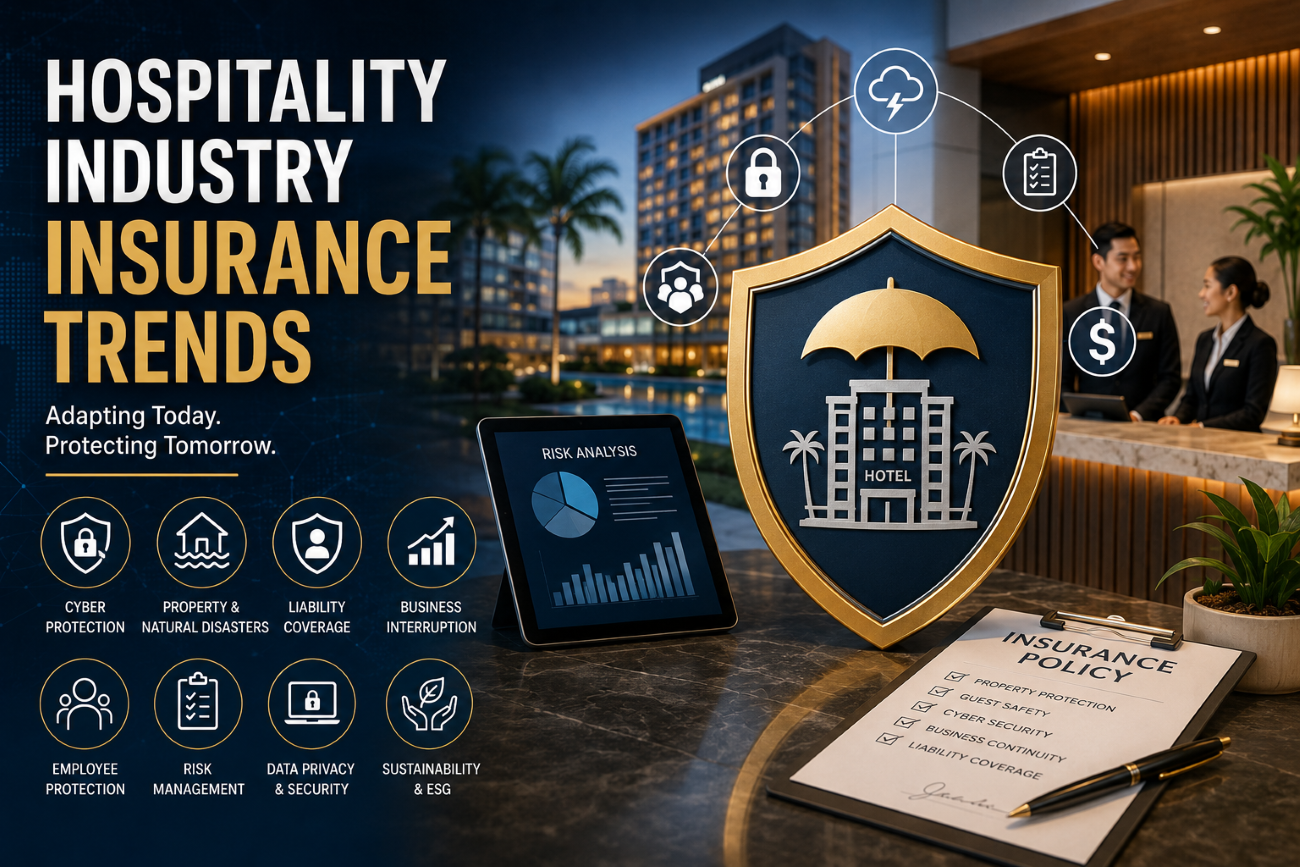
The hospitality industry operates in an environment filled with opportunities, but it also faces a wide range of risks. Hotels, resorts, restaurants, event venues, and other hospitality businesses must protect their properties, employees, guests, digital systems, and financial operations from unexpected events. Natural disasters, cyberattacks, accidents, business interruptions, changing regulations, and rising operational costs can all create significant challenges.
As the hospitality industry evolves, insurance is also changing. Traditional insurance coverage is no longer the only consideration for hotel operators. Today, hospitality businesses must evaluate emerging risks, changing insurance requirements, new technology, and the growing importance of data-driven risk management.
For hotels, insurance is not simply a financial safety net used after something goes wrong. It is becoming an important part of broader business resilience and risk management strategies.
At BookSmart, we believe that understanding hospitality industry insurance trends can help hotels prepare for uncertainty, protect their assets, and build stronger, more resilient operations.
The Changing Insurance Landscape in Hospitality
The hospitality industry has always faced risks related to property damage, guest safety, employee accidents, and liability. However, the range and complexity of risks have increased significantly.
Modern hotels depend heavily on digital systems, global supply chains, online payment platforms, cloud technology, and connected devices. At the same time, environmental risks and extreme weather events are becoming increasingly important considerations for hospitality businesses.
As a result, hotels are reviewing their insurance requirements more carefully.
Insurance providers are also paying greater attention to a property’s risk profile. Factors such as location, cybersecurity practices, building safety, maintenance procedures, and disaster preparedness may influence the availability and cost of coverage.
This is encouraging hotels to take a more proactive approach to risk management.
Cyber Insurance Is Becoming More Important
One of the biggest insurance trends in the hospitality industry is the growing importance of cyber insurance.
Hotels collect and process a significant amount of sensitive information, including guest names, contact details, payment information, identification records, and booking history.
A cyberattack or data breach can create serious financial and reputational consequences.
Cyber insurance may help businesses manage certain costs associated with incidents such as:
- Data breaches
- Ransomware attacks
- Business interruptions caused by cyber incidents
- Data recovery
- Legal expenses
- Customer notification
- Incident response services
However, obtaining cyber coverage may require hotels to demonstrate that they have implemented appropriate security measures.
Insurance providers may expect businesses to use practices such as multi-factor authentication, secure access controls, regular software updates, employee cybersecurity training, and data backup systems.
This trend highlights the growing connection between cybersecurity and overall business resilience.
Climate and Natural Disaster Risks
Climate-related risks are becoming an increasingly important issue for the hospitality industry.
Hotels located in coastal areas, flood-prone regions, areas affected by extreme heat, or locations vulnerable to storms may face greater exposure to property damage and business interruptions.
Insurance strategies are evolving as hospitality businesses evaluate risks associated with:
- Flooding
- Storm damage
- Wildfires
- Extreme temperatures
- Water shortages
- Power disruptions
- Property damage
Hotels are increasingly investing in preventive measures such as stronger infrastructure, backup power systems, water management, emergency planning, and property maintenance.
Insurance is becoming part of a larger resilience strategy rather than the only solution to climate-related risks.
Business Interruption Coverage Remains a Major Focus
A hotel may experience financial losses even when its property is not permanently damaged.
Unexpected events can force businesses to close temporarily, reduce room availability, or operate with limited services.
Business interruption coverage is therefore an important consideration for hospitality businesses.
Hotels may experience operational disruptions because of:
- Fire or property damage
- Natural disasters
- Utility failures
- Equipment breakdowns
- Supply chain disruptions
- Certain technology failures
Business interruption insurance can help provide financial support under covered circumstances, depending on the policy terms and conditions.
Hotels should carefully review how long coverage may apply, which events are included, and what exclusions may exist.
A clear understanding of policy details is essential because different insurance products may provide different levels of protection.
Rising Focus on Liability Protection
Guest safety remains one of the most important responsibilities in hospitality.
Hotels may face liability risks related to accidents, injuries, property damage, food service, events, and other guest experiences.
As guest expectations and legal responsibilities evolve, hospitality businesses are reviewing liability coverage more carefully.
Risk management practices can also influence liability exposure.
Hotels are increasingly focusing on employee training, regular safety inspections, food hygiene, maintenance procedures, security systems, and incident reporting.
The goal is not simply to rely on insurance after an incident. It is to reduce the likelihood of an incident occurring in the first place.
Technology Is Transforming Insurance Management
Technology is changing how hospitality businesses manage insurance and risk.
Digital platforms can help hotels organize policies, track incidents, manage claims, and maintain important documentation.
Artificial Intelligence and data analytics may also help identify potential risks.
For example, predictive maintenance technology can detect possible equipment failures before they cause major operational disruptions. Smart sensors can monitor water leaks, temperature changes, energy systems, and other property conditions.
These technologies can help hotels reduce risks and improve operational efficiency.
The growing use of data may also encourage more customized approaches to risk assessment in the future.
Parametric and Data-Driven Insurance Models
Traditional insurance generally involves assessing losses after an event and determining whether the policy provides coverage.
Newer insurance approaches are exploring more data-driven and automated models.
One example is parametric insurance, where payment may be linked to a predefined trigger rather than requiring the same type of traditional loss assessment.
For example, a policy could potentially be connected to a measurable event such as a specific weather condition or environmental threshold, depending on the terms of the agreement.
These models may provide faster financial support in certain situations.
While such insurance structures may not be suitable for every hotel, they represent a growing trend toward more technology-driven and specialized risk protection.
Employee-Related Insurance and Workforce Protection
The hospitality industry depends on people.
Hotels need skilled employees to deliver quality service, manage operations, maintain facilities, prepare food, and support guests.
Employee-related risks can include workplace injuries, staff shortages, employment disputes, and health and safety concerns.
Hospitality businesses are increasingly focusing on employee protection through workplace safety programs, training, workers’ compensation coverage where applicable, and broader employee support initiatives.
A strong employee risk strategy can reduce workplace incidents while supporting retention and productivity.
Hotels that create safer and more supportive workplaces may also strengthen their overall business resilience.
Supply Chain and Equipment Risks
Hotels rely on a large network of suppliers and service providers.
Food, beverages, linens, cleaning supplies, technology systems, maintenance materials, and other resources are essential to daily operations.
Supply chain disruptions can affect guest service and increase operational costs.
Hotels are therefore paying closer attention to supplier reliability and contingency planning.
Equipment breakdown is another important concern.
A major failure involving heating, cooling, elevators, kitchen equipment, or critical technology systems can disrupt hotel operations.
Insurance coverage for equipment breakdown, combined with preventive maintenance, can help hotels manage these risks.
The strongest approach combines financial protection with proactive operational planning.
Greater Emphasis on Risk Prevention
One of the most significant hospitality insurance trends is the shift toward prevention.
Insurance providers and hotel operators increasingly recognize that preventing a major incident is often more effective than managing the consequences afterward.
Hotels are investing in:
- Fire and safety systems
- Cybersecurity tools
- Employee training
- Predictive maintenance
- Security monitoring
- Emergency response plans
- Data backup systems
- Regular risk assessments
This proactive approach can help reduce operational disruptions and strengthen a hotel’s overall risk profile.
Risk prevention is becoming an important part of long-term insurance planning.
Insurance and Reputation Management
A major incident can damage a hotel’s reputation, particularly in an era of online reviews and social media.
Guests may quickly share their experiences online, making communication and crisis management essential.
Hotels should develop clear crisis communication plans that explain how information will be shared with guests, employees, media, and other stakeholders.
Insurance can help manage certain financial consequences, but it cannot automatically restore guest trust.
Hotels need effective leadership, transparent communication, and strong service recovery strategies.
A successful insurance and risk management approach should therefore consider both financial recovery and reputation recovery.
Customized Coverage for Different Hospitality Businesses
Not all hospitality businesses face the same risks.
A luxury resort, budget hotel, boutique property, restaurant, convention center, and vacation rental business may require different types of protection.
For example, a beachfront resort may focus heavily on weather-related risks, while a city business hotel may prioritize cybersecurity, technology systems, and business interruption planning.
Hotels are increasingly looking for insurance strategies that reflect their specific location, services, assets, and operational risks.
Customized risk assessments can help businesses identify gaps in their existing protection.
A one-size-fits-all approach may not provide adequate coverage for every hospitality business.
Sustainability and Insurance
Sustainability is becoming increasingly connected to risk management.
Hotels that invest in energy efficiency, water conservation, resilient infrastructure, and environmental risk reduction may be better prepared for long-term challenges.
Sustainable building practices can also help reduce certain operational vulnerabilities.
For example, energy-efficient systems may reduce dependence on expensive resources, while improved water management can support operations in regions facing water shortages.
As environmental risks continue to influence business planning, sustainability and insurance strategies may become increasingly connected.
Hotels that understand their environmental exposure can make better decisions about property protection and long-term resilience.
The Importance of Reviewing Insurance Regularly
Insurance requirements can change as a hotel expands, adopts new technology, renovates its property, or introduces additional services.
A policy that was appropriate several years ago may no longer provide sufficient protection.
Hotels should regularly review their insurance strategies when there are significant changes involving:
- Property expansion
- Technology adoption
- New payment systems
- Additional facilities
- New locations
- Changes in local risk conditions
- Changes in regulations
- Increased property values
Regular reviews can help identify gaps before a major incident occurs.
Hotels should also carefully understand policy limits, exclusions, deductibles, and claims procedures.
Data Will Play a Bigger Role in Future Insurance
The future of hospitality insurance is likely to become increasingly data-driven.
Hotels are generating more information through Property Management Systems, smart building technologies, security systems, maintenance platforms, and other digital tools.
This information can help identify patterns and improve risk assessments.
Artificial Intelligence may also support predictive risk management by identifying unusual activity, forecasting equipment problems, and analyzing operational trends.
As insurance technology continues to evolve, hotels may gain access to more personalized and flexible risk management solutions.
However, data accuracy and cybersecurity will remain essential.
Hotels must protect sensitive information while ensuring that the data used for decision-making is reliable.
Building a Comprehensive Insurance Strategy
Insurance should be part of a broader risk management framework.
A comprehensive strategy may include:
- Identifying key business risks.
- Assessing the financial and operational impact of those risks.
- Implementing preventive measures.
- Reviewing appropriate insurance options.
- Developing crisis response procedures.
- Training employees.
- Maintaining accurate records and documentation.
- Regularly reviewing and updating the strategy.
Hotels should work with qualified insurance and risk professionals to understand which forms of coverage may be appropriate for their specific business.
The objective is to create a balanced strategy that combines prevention, preparedness, financial protection, and operational resilience.
The Future of Hospitality Insurance
The hospitality insurance industry will continue to evolve as new risks emerge.
Cybersecurity, climate resilience, data analytics, automation, and changing guest expectations are likely to influence how hotels approach risk protection.
Insurance providers may increasingly use technology and data to understand individual business risks. Hotels may also adopt more specialized coverage designed for specific operational challenges.
At the same time, prevention will remain essential.
The best insurance strategy cannot eliminate every risk. Hotels must continue investing in safety, employee training, cybersecurity, property maintenance, and crisis preparedness.
Conclusion
The hospitality industry is facing a changing and increasingly complex risk environment. Cyber threats, climate events, operational disruptions, liability concerns, and technology dependence are reshaping how hotels think about insurance.
Modern hospitality insurance is no longer only about recovering from financial losses. It is becoming part of a broader strategy focused on prevention, preparedness, resilience, and business continuity.
At BookSmart, we believe that hotels should view insurance as one important layer of protection within a comprehensive risk management strategy. By understanding emerging insurance trends, reviewing coverage regularly, investing in preventive measures, and preparing for unexpected disruptions, hospitality businesses can protect their assets, strengthen guest confidence, and build a more resilient future.
In an industry where guest trust and operational continuity are essential, a proactive approach to insurance can help hotels navigate uncertainty while remaining prepared for the opportunities and challenges ahead.
Leave a Reply