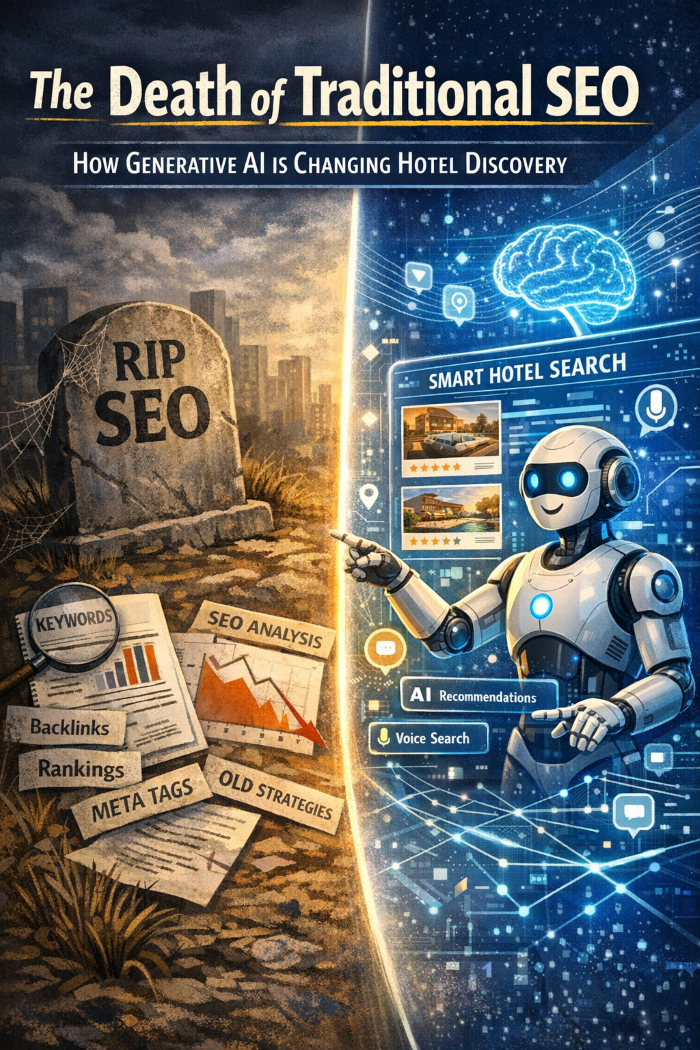
For more than two decades, search engine optimization (SEO) has been a cornerstone of digital marketing in the hospitality industry. Hotels invested heavily in keywords, backlinks, meta tags, and ranking strategies to appear on the first page of search results. Visibility on search engines directly influenced bookings, website traffic, and brand awareness.
However, the rapid rise of generative artificial intelligence (AI) is reshaping how travelers discover hotels online. Instead of scrolling through long lists of links, users are increasingly receiving direct answers, curated recommendations, and AI-generated travel plans.
This shift signals a fundamental transformation in digital discovery. Traditional SEO strategies are evolving, and hotels must rethink how they present information in a world where AI assistants, chatbots, and intelligent search tools play a central role in travel decision-making.
The question is no longer simply “How do we rank on Google?” but rather “How do we appear in AI-generated recommendations?”
From Search Results to AI Answers
Traditional search engines provide users with lists of web pages ranked according to relevance and authority. Users must then browse multiple sites to gather information.
Generative AI systems operate differently. Instead of directing users to external websites, AI tools can:
- Summarize hotel options instantly
- Recommend accommodations based on preferences
- Create full travel itineraries
- Compare properties automatically
- Provide conversational guidance
For example, a traveler may ask an AI assistant:
“Find a quiet boutique hotel in Barcelona near the beach with good breakfast and coworking spaces.”
Instead of returning links, the AI produces a shortlist of hotels tailored to the request, often including descriptions and key highlights.
This dramatically changes how visibility works online.
Why Traditional SEO Is Losing Influence
While SEO is far from disappearing entirely, several factors are reducing its dominance.
Fewer Clicks on Traditional Results
When AI tools summarize information directly on the search page, users may never click through to hotel websites. This phenomenon, often called “zero-click search,” is growing rapidly.
Hotels that once relied on website traffic must now compete for inclusion within AI-generated summaries.
Conversational Search Queries
Travelers increasingly use natural language queries instead of short keywords.
Instead of typing:
“Luxury hotel Paris”
Users may ask:
“Which luxury hotels in Paris are quiet, have spa facilities, and are good for couples?”
AI systems analyze these complex questions and generate personalized recommendations. Keyword-based SEO strategies alone cannot address these nuanced queries.
Personalization Through Data
Generative AI platforms incorporate user preferences, past behavior, and contextual data to tailor recommendations.
Two travelers searching for hotels in the same city may receive completely different suggestions depending on:
- Budget preferences
- Travel history
- Dining interests
- Wellness habits
Personalized discovery reduces the influence of generic ranking strategies.
The Rise of AI Travel Assistants
AI travel planning tools are quickly becoming mainstream. These platforms can organize entire trips, including flights, hotels, dining, and activities.
Instead of browsing multiple travel websites, travelers interact with a single AI interface that handles planning automatically.
These systems analyze:
- Online reviews
- Pricing trends
- location data
- traveler preferences
- local recommendations
Hotels must now ensure their information is accurate, structured, and accessible to AI systems, not just optimized for human readers.
Content Quality Matters More Than Keywords
In the era of generative AI, content credibility and depth are becoming more important than simple keyword density.
AI models prioritize content that is:
- Informative and detailed
- Well-structured and easy to interpret
- Frequently updated
- Consistent across platforms
Hotels that publish meaningful content about experiences, amenities, and local insights are more likely to appear in AI-generated travel recommendations.
Generic marketing pages filled with repetitive keywords will gradually lose influence.
Structured Data and Machine Readability
Generative AI systems rely heavily on structured data to interpret information correctly.
Hotels should ensure that their websites include clearly organized details such as:
- Room categories
- Amenities
- location information
- pricing ranges
- sustainability practices
- accessibility features
Structured data helps AI systems understand property characteristics and match them with traveler preferences.
Reviews and Reputation Are Becoming Critical Signals
AI-powered recommendation engines analyze thousands of reviews to identify patterns in guest satisfaction.
Rather than relying solely on star ratings, AI can interpret:
- sentiment within reviews
- recurring guest compliments
- frequently mentioned problems
- service quality indicators
Hotels with strong reputational signals are more likely to appear in AI-curated travel lists.
This means that guest experience management now directly influences digital discovery.
Visual Content and Experience Storytelling
Generative AI tools increasingly integrate visual information when presenting recommendations.
High-quality images, virtual tours, and immersive media can influence how properties are described and displayed in AI-driven travel platforms.
Instead of focusing solely on written SEO content, hotels should invest in visual storytelling that communicates atmosphere and experience.
Travelers often choose hotels based on emotional connection rather than technical specifications.
Voice Search and Conversational Booking
Voice-enabled assistants are further transforming hotel discovery.
Travelers may soon plan entire trips through voice conversations, asking questions such as:
- “What’s a good eco-friendly hotel near the city center?”
- “Find a hotel with coworking spaces and fast Wi-Fi.”
- “Book a beachfront hotel for next weekend under $200.”
AI systems will interpret these requests and recommend properties instantly.
Hotels that provide clear, descriptive information about their offerings will have a higher chance of appearing in voice-driven results.
Direct Booking Strategies in the AI Era
As discovery channels evolve, hotels must strengthen direct relationships with guests.
Effective strategies include:
- Building strong brand identities
- Creating unique experiences difficult to compare purely by price
- Encouraging repeat bookings through loyalty programs
- Developing personalized communication channels
When travelers recognize and trust a hotel brand, they may request it directly from AI assistants.
Brand recognition becomes a powerful discovery advantage.
Preparing for the Future of AI-Driven Hospitality Marketing
Hotels can adapt to generative AI discovery trends through several strategic actions:
Invest in High-Quality Content
Focus on informative articles, destination guides, and experience-focused storytelling.
Improve Data Accuracy
Ensure consistent information across websites, booking platforms, and travel directories.
Monitor Online Reputation
Actively manage guest reviews and address feedback promptly.
Embrace AI Tools
Use AI-driven marketing analytics to understand traveler behavior and preferences.
Strengthen Brand Identity
Create memorable experiences that encourage guests to search for your property specifically.
The Future of Hotel Discovery
The evolution of generative AI will continue to reshape the travel planning process.
Future discovery experiences may include:
- Fully AI-generated travel itineraries
- Hyper-personalized hotel recommendations
- Instant conversational booking
- Virtual previews of hotel environments
- Predictive travel suggestions based on lifestyle patterns
Instead of manually searching through dozens of websites, travelers will rely on intelligent systems to guide their choices.
Hotels that adapt early will gain a major competitive advantage.
Conclusion
Traditional SEO strategies once dominated hotel digital marketing, but generative AI is fundamentally transforming how travelers discover accommodations. Search engines are shifting from link directories to intelligent assistants capable of delivering personalized recommendations instantly.
For hotels, success in this new environment requires more than keyword optimization. Properties must focus on high-quality content, structured data, strong online reputations, and distinctive guest experiences.
The future of hotel discovery will be shaped by conversation, personalization, and intelligent technology.
Hotels that understand this transformation will not only remain visible — they will become the properties that AI recommends first.
Leave a Reply