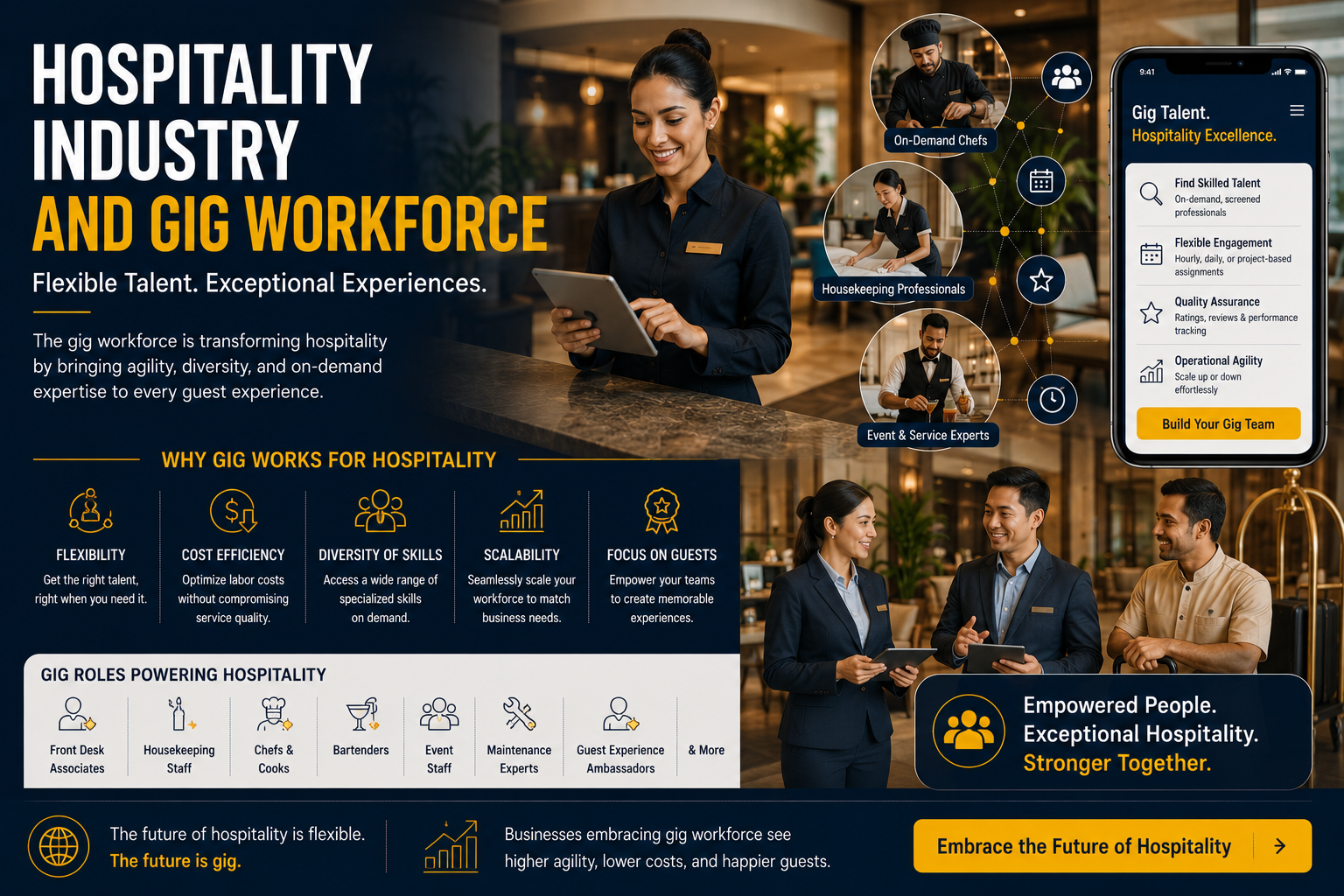
The hospitality industry has always relied heavily on people. From front desk executives and housekeeping staff to chefs, event coordinators, and customer service professionals, human interaction remains at the heart of hospitality. However, as business models evolve and workforce expectations change, the industry is increasingly embracing a new employment trend—the gig workforce.
The gig economy refers to a labor market where individuals work on short-term assignments, freelance contracts, temporary projects, or flexible engagements rather than traditional full-time employment. Driven by digital platforms, changing worker preferences, and the demand for operational flexibility, gig work has become a significant part of many industries, including hospitality.
For BookSmart, understanding the relationship between hospitality and the gig workforce is essential because it represents a major shift in how hotels manage staffing, control costs, and respond to fluctuating demand.
Understanding the Gig Workforce
A gig workforce consists of individuals who work on temporary, project-based, or flexible assignments.
These workers may include:
- freelance professionals
- temporary staff
- contract workers
- part-time specialists
- on-demand service providers
Unlike traditional employees, gig workers are often engaged for specific tasks, shifts, or projects rather than long-term positions.
The model offers flexibility for both employers and workers.
Why the Gig Economy Is Growing
Several factors have contributed to the growth of gig work.
These include:
- digital workforce platforms
- changing career preferences
- demand for flexible schedules
- technological advancements
- rising interest in independent work
Many professionals now prioritize flexibility, autonomy, and work-life balance over conventional employment structures.
At the same time, businesses increasingly seek workforce models that allow them to adapt quickly to changing operational needs.
The Hospitality Industry’s Need for Flexibility
Hospitality is one of the most dynamic industries in the world.
Hotels frequently experience fluctuations due to:
- seasonal demand
- special events
- conferences
- festivals
- tourism cycles
- unexpected market changes
These fluctuations often create staffing challenges.
The gig workforce provides hotels with a flexible solution that can help meet varying labor requirements without maintaining excessive permanent staffing levels.
For BookSmart, workforce flexibility is becoming increasingly important in modern hospitality operations.
Common Gig Roles in Hospitality
The hospitality industry utilizes gig workers across a wide range of functions.
Common roles include:
- housekeeping staff
- banquet personnel
- event coordinators
- servers and bartenders
- kitchen assistants
- customer service representatives
- tour guides
- maintenance support staff
These positions often require temporary staffing based on demand levels.
Gig workers help hotels manage operational peaks efficiently.
Managing Seasonal Demand
Seasonality is a major challenge for many hospitality businesses.
Hotels in tourist destinations often experience dramatic increases in occupancy during peak travel periods.
For example, hotels in Goa may require additional staff during holiday seasons, while properties in Manali often experience higher demand during summer and winter tourism periods.
The gig workforce enables hotels to scale staffing levels up or down as needed.
This flexibility helps control labor costs while maintaining service standards.
Cost Efficiency and Workforce Optimization
Labor is one of the largest operational expenses in hospitality.
Gig staffing can provide cost advantages by allowing hotels to:
- hire based on demand
- reduce overtime costs
- optimize workforce allocation
- avoid overstaffing
Hotels can access talent when needed without committing to long-term employment contracts.
For BookSmart, efficient workforce management directly contributes to profitability.
Access to Specialized Skills
Certain hospitality activities require specialized expertise.
Examples include:
- event management
- photography
- entertainment services
- wellness instruction
- digital marketing
Gig workers often bring highly specialized skills that may not be required on a full-time basis.
This allows hotels to access expertise while maintaining operational flexibility.
Technology Driving Gig Workforce Adoption
Technology has played a crucial role in the growth of gig employment.
Hotels increasingly use digital platforms to:
- recruit temporary workers
- schedule shifts
- manage workforce availability
- process payments
- track performance
Technology simplifies workforce management and improves operational efficiency.
Digital platforms have made gig staffing more accessible than ever.
Benefits for Workers
The gig economy also offers advantages for hospitality professionals.
Benefits may include:
- flexible schedules
- multiple income opportunities
- varied work experiences
- greater independence
- skill development
Many individuals appreciate the ability to choose assignments that fit their personal and professional goals.
Flexibility has become a major attraction for today’s workforce.
Enhancing Operational Agility
Hospitality businesses must often respond quickly to changing conditions.
Examples include:
- last-minute event bookings
- unexpected occupancy increases
- staff shortages
- seasonal spikes
A flexible workforce allows hotels to adapt rapidly while maintaining service quality.
Operational agility has become a key competitive advantage.
Challenges of Managing Gig Workers
While the gig workforce offers many benefits, it also presents challenges.
Hotels may encounter issues such as:
- inconsistent service quality
- training requirements
- workforce availability
- communication gaps
- employee engagement concerns
Maintaining brand standards can be more complex when working with temporary staff.
Proper onboarding and supervision remain essential.
Training and Quality Assurance
Guest experience is central to hospitality success.
Hotels must ensure that gig workers understand:
- service standards
- operational procedures
- guest interaction expectations
- safety requirements
Structured training programs help maintain consistency and protect brand reputation.
For BookSmart, service quality should never be compromised in pursuit of workforce flexibility.
Building a Reliable Talent Pool
Many successful hotels develop networks of trusted gig workers.
Maintaining relationships with experienced temporary staff helps:
- improve consistency
- reduce recruitment time
- strengthen operational reliability
A dependable talent pool can become a valuable strategic asset.
The Future of Gig Work in Hospitality
The role of gig workers is expected to expand as workforce preferences continue to evolve.
Emerging trends include:
- app-based staffing platforms
- AI-driven workforce scheduling
- hybrid employment models
- specialized freelance hospitality services
- on-demand workforce ecosystems
Hotels are increasingly adopting flexible staffing strategies as part of broader workforce planning initiatives.
Balancing Flexibility and Stability
While gig work offers flexibility, hotels must balance temporary staffing with a stable core workforce.
Permanent employees often provide:
- institutional knowledge
- leadership
- brand consistency
- long-term operational expertise
The most effective workforce strategies combine the strengths of both models.
Balance is essential for sustainable success.
Benefits for Hospitality Businesses
A well-managed gig workforce can help hotels:
- improve staffing flexibility
- control labor costs
- respond to demand fluctuations
- access specialized talent
- enhance operational efficiency
These benefits contribute directly to business performance and competitiveness.
Conclusion
The gig workforce is reshaping the hospitality industry by providing greater flexibility, scalability, and access to talent. As traveler demand becomes more dynamic and workforce expectations continue to change, gig employment offers hotels an effective way to adapt to evolving market conditions.
For BookSmart, the key takeaway is clear: the future of hospitality staffing lies in combining operational flexibility with exceptional service standards.
Hotels that successfully integrate gig workers into their workforce strategies will be better equipped to manage demand fluctuations, improve efficiency, and deliver outstanding guest experiences in an increasingly competitive hospitality landscape.
Leave a Reply