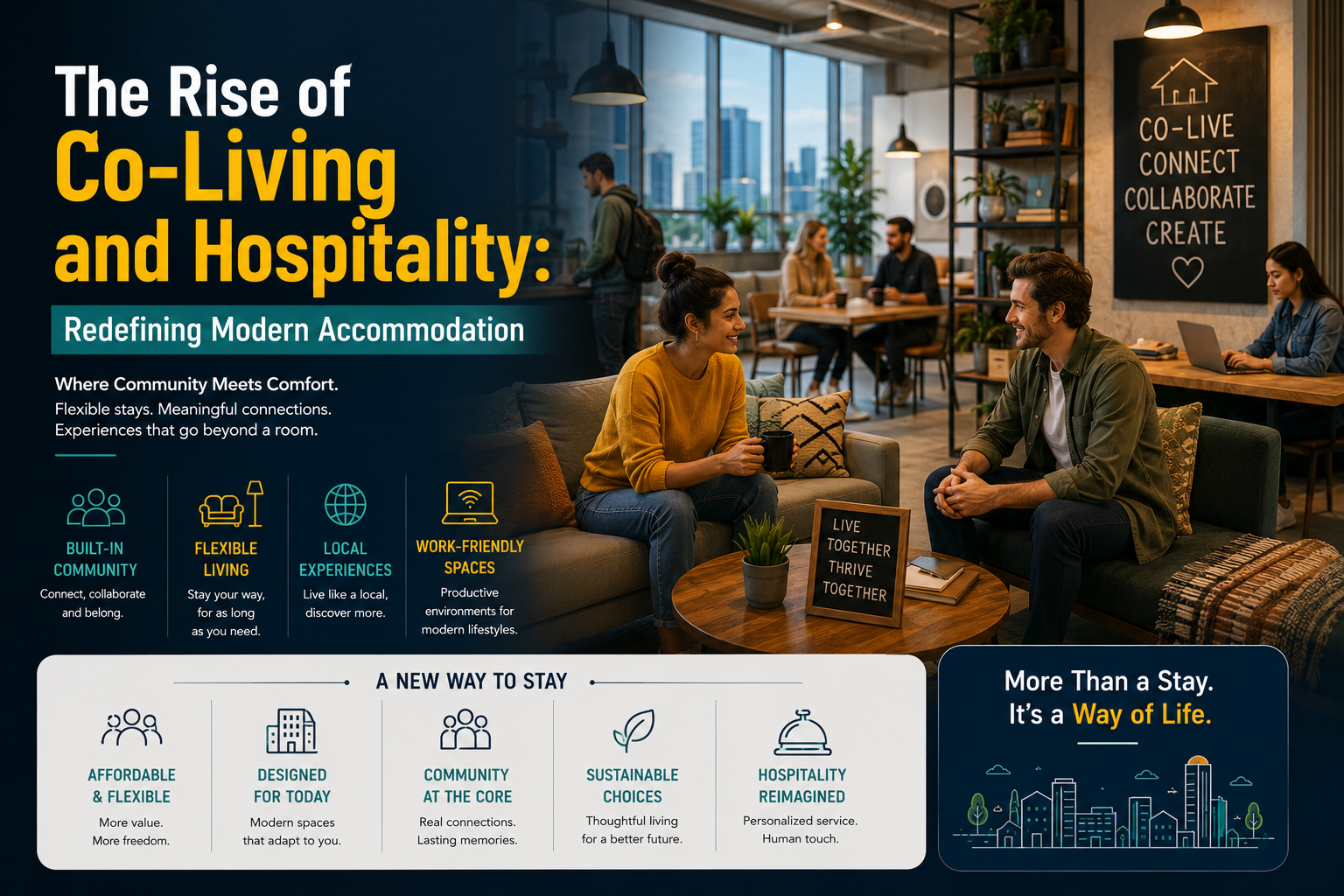
The hospitality industry is undergoing a significant transformation as traveler preferences, work habits, and lifestyle choices continue to evolve. Traditional hotel stays and long-term rental arrangements are no longer the only accommodation options available to modern travelers. A growing number of people are seeking flexible, community-oriented, and experience-driven living environments that combine the convenience of hospitality with the comfort of home. This shift has fueled the rapid rise of co-living.
Co-living is a housing concept where individuals share common living spaces while enjoying private accommodations and access to a range of amenities and services. Originally popular among students and young professionals, co-living has expanded to include remote workers, digital nomads, entrepreneurs, and long-term travelers. As the demand for flexible living solutions increases, hospitality brands are recognizing co-living as a powerful opportunity for growth and innovation.
For BookSmart, the rise of co-living represents a convergence of hospitality, community, and modern lifestyle expectations.
Understanding Co-Living
Co-living is a residential model that combines private living spaces with shared communal areas.
Typically, residents have access to:
- private bedrooms or studio units
- shared kitchens
- lounges and social spaces
- co-working areas
- fitness facilities
- community events
Unlike traditional rentals, co-living often includes services such as housekeeping, maintenance, internet access, and utility management.
The concept emphasizes convenience, flexibility, and social interaction.
Why Co-Living Is Growing
Several societal and economic trends are contributing to the growth of co-living.
These include:
- remote work adoption
- increasing urbanization
- rising housing costs
- desire for community
- flexible lifestyles
- growth of digital nomadism
Many individuals are prioritizing experiences and flexibility over long-term property ownership.
Co-living offers an attractive alternative that aligns with these changing preferences.
The Connection Between Co-Living and Hospitality
Co-living shares many characteristics with traditional hospitality.
Both focus on:
- guest comfort
- service quality
- community experiences
- convenience
- flexible accommodation
However, co-living typically serves guests for longer periods than conventional hotels.
This overlap has encouraged many hospitality providers to explore co-living as an extension of their business models.
For BookSmart, co-living represents an opportunity to diversify offerings while addressing emerging market needs.
Appeal to Remote Workers and Digital Nomads
Remote work has significantly accelerated demand for co-living spaces.
Professionals who can work from anywhere often seek accommodations that provide:
- reliable internet access
- productive work environments
- networking opportunities
- flexible leases
- social engagement
Co-living spaces naturally support these requirements.
For example, professionals spending several months in Goa may prefer a co-living environment that combines accommodation, workspace, and community under one roof.
The ability to work and socialize in the same environment creates strong appeal.
Community as a Core Value
One of the defining features of co-living is its emphasis on community.
Unlike traditional apartments or hotel rooms, co-living spaces actively encourage interaction through:
- social events
- networking sessions
- workshops
- shared activities
- community gatherings
Many residents value the opportunity to connect with like-minded individuals.
This sense of belonging often becomes a major reason for choosing co-living.
Flexibility Drives Demand
Traditional rental agreements often require long commitments and complex paperwork.
Co-living offers greater flexibility through:
- short-term stays
- month-to-month arrangements
- all-inclusive pricing
- simplified onboarding
This flexibility appeals to modern travelers and professionals who value mobility.
For BookSmart, flexibility has become a key competitive advantage in accommodation services.
Hospitality-Inspired Services
Many co-living operators are adopting hospitality-style services to enhance resident experiences.
Common offerings include:
- housekeeping
- concierge services
- maintenance support
- wellness programs
- community management
These services create convenience while differentiating co-living from traditional housing.
Hospitality principles help elevate the overall living experience.
The Role of Technology
Technology is a major enabler of co-living operations.
Modern co-living spaces often utilize:
- mobile applications
- digital access systems
- automated billing
- online community platforms
- smart room technologies
These solutions improve efficiency and convenience for residents.
Technology also supports seamless communication and community engagement.
Co-Working and Co-Living Integration
The rise of remote work has led to increased integration between co-working and co-living environments.
Many properties now offer:
- dedicated workspaces
- meeting rooms
- high-speed internet
- business support services
This combination creates a complete lifestyle solution for professionals.
Residents can live, work, and connect within a single ecosystem.
Benefits for Hospitality Businesses
Hospitality providers can benefit from co-living through:
- longer average stays
- recurring revenue streams
- reduced guest turnover
- stronger community engagement
- diversified business models
Longer stays often improve operational efficiency and occupancy stability.
Co-living also helps reduce dependence on seasonal tourism demand.
Urban Opportunities
Co-living is particularly popular in urban centers where housing costs are high.
Cities such as Bengaluru, Mumbai, and Hyderabad have seen growing interest in flexible living arrangements among young professionals and entrepreneurs.
Urban co-living addresses both affordability and lifestyle needs.
Wellness and Lifestyle Focus
Modern co-living communities increasingly incorporate wellness features such as:
- fitness centers
- yoga spaces
- meditation areas
- healthy dining options
- outdoor recreation
Residents often view wellness as an important component of their living environment.
Lifestyle-focused amenities contribute to higher satisfaction and retention.
Sustainability and Shared Living
Co-living can support sustainability objectives by encouraging:
- shared resources
- efficient space utilization
- reduced energy consumption
- community-driven environmental initiatives
Many residents are attracted to environmentally responsible living models.
Sustainability strengthens the appeal of co-living communities.
Challenges of Co-Living
Despite its growth, co-living faces several challenges.
These include:
- maintaining community engagement
- balancing privacy and social interaction
- operational complexity
- regulatory considerations
- ensuring consistent service quality
Successful operators must carefully manage these factors to create positive resident experiences.
Future Trends in Co-Living and Hospitality
The future of co-living is expected to be shaped by:
- hybrid hospitality models
- smart living technologies
- AI-powered personalization
- wellness-focused communities
- global remote work trends
As lifestyle preferences continue to evolve, co-living is likely to become an increasingly important segment within the hospitality ecosystem.
Why Guests Choose Co-Living
Modern residents are attracted to co-living because it offers:
- flexibility
- convenience
- affordability
- community
- productivity support
- lifestyle enrichment
These benefits align closely with the expectations of younger generations and mobile professionals.
Conclusion
The rise of co-living reflects broader changes in how people live, work, and travel. As flexibility, community, and convenience become increasingly important, co-living is emerging as a compelling alternative to both traditional housing and conventional hospitality.
For BookSmart, the key takeaway is clear: co-living is not merely a housing trend—it is a new approach to accommodation that blends hospitality, community, and lifestyle into a single experience.
Hospitality providers that embrace co-living concepts will be better positioned to serve the evolving needs of modern travelers, remote workers, and long-term residents while creating sustainable growth opportunities in the years ahead.
Leave a Reply