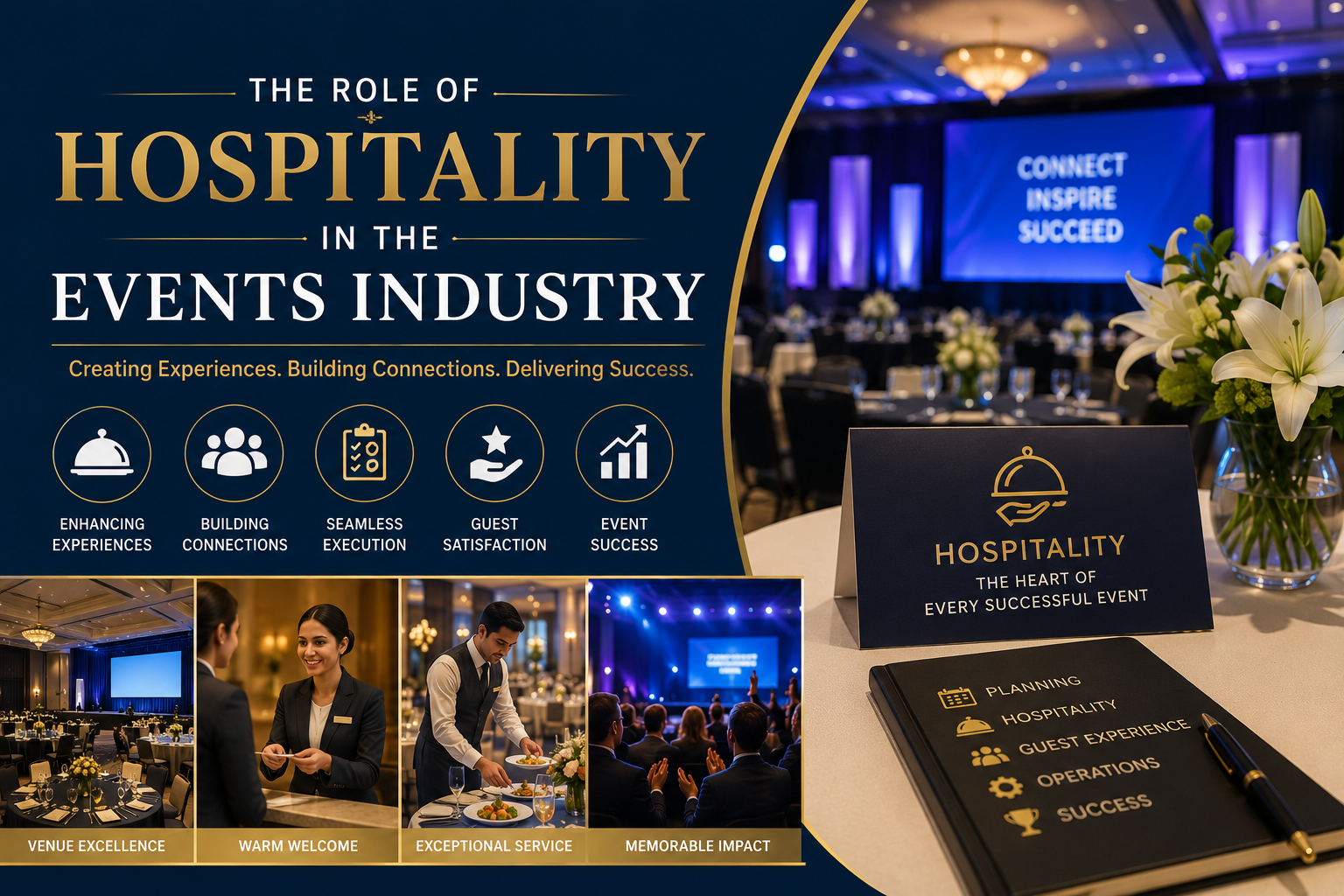
The events industry has evolved significantly over the past decade, becoming one of the most dynamic sectors within the global economy. From corporate conferences and trade shows to weddings, concerts, exhibitions, and sporting events, successful event execution depends on more than just planning and logistics. At the heart of every memorable event lies a strong hospitality experience. Hospitality plays a critical role in shaping guest perceptions, ensuring comfort, facilitating engagement, and ultimately determining the success of an event.
In today’s experience-driven economy, attendees expect more than simply participating in an event. They seek personalized experiences, seamless service, comfort, convenience, and meaningful interactions. This growing emphasis on guest satisfaction has elevated the importance of hospitality within the events industry. At BookSmart, we recognize that hospitality is not merely a supporting function but a strategic element that transforms ordinary gatherings into extraordinary experiences.
Understanding Hospitality in the Events Industry
Hospitality within the events sector encompasses all services and interactions designed to enhance the attendee experience. It includes accommodation, food and beverage services, guest management, venue operations, customer service, transportation coordination, entertainment support, and personalized attendee assistance.
The goal of hospitality is to create an environment where guests feel welcomed, valued, comfortable, and engaged throughout the event journey. Whether attendees are arriving at a conference venue, checking into a hotel, attending a gala dinner, or participating in networking sessions, hospitality influences every touchpoint.
As events become increasingly competitive, organizers are investing more heavily in hospitality services to differentiate their offerings and build lasting relationships with attendees.
Why Hospitality Matters in Modern Events
Event success is often measured by attendee satisfaction. Even the most well-planned event can fall short if guests encounter poor service, inadequate facilities, long waiting times, or uncomfortable environments. Hospitality serves as the bridge between event planning and attendee experience.
Exceptional hospitality helps create positive emotional connections, improves attendee engagement, encourages repeat participation, and strengthens event reputation. Guests are more likely to recommend events that provide excellent service and memorable experiences.
In the age of social media and online reviews, attendee feedback can significantly impact future event attendance. Positive hospitality experiences frequently generate word-of-mouth marketing that enhances an event’s credibility and reach.
Enhancing Guest Experience Through Personalized Service
Personalization has become one of the most influential trends in both hospitality and event management. Modern attendees expect experiences tailored to their preferences, interests, and needs.
Hospitality teams contribute by collecting attendee information, understanding guest expectations, and delivering customized services. Personalized welcome messages, dietary accommodations, VIP experiences, preferred seating arrangements, and tailored networking opportunities can significantly enhance satisfaction levels.
Technology has further enabled personalization through mobile event applications, digital check-ins, customized schedules, and AI-powered attendee recommendations. These tools allow organizers to deliver more meaningful and engaging experiences.
When guests feel recognized and valued, they are more likely to develop a positive perception of both the event and its organizers.
The Importance of Venue Hospitality
The venue serves as the physical foundation of any event, making hospitality within the venue environment particularly important. Venue hospitality includes cleanliness, comfort, accessibility, ambiance, customer service, and operational efficiency.
Attendees often form their first impressions based on their arrival experience. Efficient registration processes, helpful staff, clear signage, comfortable seating, and well-maintained facilities contribute significantly to overall satisfaction.
Modern event venues increasingly integrate hospitality-focused features such as relaxation zones, wellness spaces, charging stations, concierge services, and premium lounges. These amenities help create a more enjoyable and productive attendee experience.
Event organizers who prioritize venue hospitality often see improved engagement levels and higher attendee retention rates.
Hospitality and Accommodation Services
Many events attract attendees from different cities, regions, and countries. Accommodation services therefore become an essential component of event hospitality.
Hotels play a crucial role in supporting conferences, conventions, exhibitions, and destination events. Comfortable accommodations, efficient check-in processes, transportation coordination, and guest support services contribute to a seamless event experience.
Strong partnerships between event organizers and hospitality providers help ensure consistent service standards. Coordinated communication between venues, hotels, and transportation providers reduces attendee stress and improves overall satisfaction.
For large-scale events, accommodation management can significantly influence attendee perceptions and event success.
Food and Beverage as a Hospitality Driver
Food and beverage services represent one of the most visible aspects of hospitality within events. Attendees often associate event quality with the dining experience provided.
Successful event catering goes beyond serving meals. It involves menu planning, dietary accommodation, presentation, service efficiency, and cultural sensitivity. High-quality food and beverage offerings can enhance networking opportunities, encourage attendee interaction, and create memorable moments.
As attendee preferences evolve, event organizers are increasingly offering vegetarian, vegan, gluten-free, and allergen-friendly options. Sustainable catering practices and locally sourced ingredients have also become important considerations.
Well-executed food and beverage services contribute directly to attendee comfort, energy levels, and overall event satisfaction.
Supporting Corporate Events and Conferences
Corporate events rely heavily on hospitality to create professional yet welcoming environments. Conferences, seminars, leadership summits, and training programs require seamless coordination between event management and hospitality teams.
Hospitality professionals support corporate events by managing guest arrivals, coordinating accommodations, arranging catering services, facilitating networking opportunities, and addressing attendee needs throughout the event.
A positive hospitality experience reflects positively on the hosting organization, helping strengthen relationships with clients, partners, employees, and stakeholders.
In many cases, hospitality quality can influence business outcomes by creating favorable impressions that support future collaboration and partnership opportunities.
Hospitality’s Role in Weddings and Social Events
Weddings, celebrations, and social gatherings are deeply personal occasions where hospitality plays a particularly important role. Guests often remember how they were treated long after the event itself has ended.
Hospitality teams ensure smooth guest arrivals, comfortable accommodations, efficient meal service, personalized attention, and effective problem resolution. Their ability to anticipate guest needs helps create stress-free experiences for hosts and attendees alike.
Attention to detail is especially important in social events, where emotional experiences and personal memories are central to success.
By delivering exceptional service, hospitality professionals contribute to creating cherished memories that last a lifetime.
Technology and Hospitality Integration
Technology has transformed hospitality services within the events industry. Digital innovations now support guest engagement, operational efficiency, and personalized experiences.
Mobile event applications provide attendees with schedules, venue maps, networking tools, and real-time updates. Contactless registration systems reduce waiting times and improve convenience. Artificial intelligence supports personalized recommendations and attendee assistance.
Data analytics enables organizers to monitor attendee behavior, measure satisfaction levels, and identify opportunities for improvement. Hospitality teams can use this information to deliver more responsive and customized services.
As technology continues to evolve, the integration of digital solutions and hospitality practices will become increasingly important.
Managing Challenges Through Effective Hospitality
Events often face unexpected challenges such as schedule changes, transportation delays, weather disruptions, technical issues, or last-minute attendee requests. Hospitality professionals play a critical role in managing these situations.
Their ability to communicate effectively, provide solutions quickly, and maintain a positive guest experience can significantly reduce the impact of disruptions. Skilled hospitality teams help preserve attendee satisfaction even when unforeseen circumstances arise.
This adaptability is one of the key reasons hospitality remains essential to successful event management.
Sustainability and Responsible Event Hospitality
Sustainability has become a major priority within both hospitality and event management. Attendees increasingly expect environmentally responsible practices from event organizers and hospitality providers.
Sustainable hospitality initiatives include reducing food waste, minimizing single-use plastics, conserving energy, supporting local suppliers, and implementing environmentally friendly transportation solutions.
These efforts not only reduce environmental impact but also enhance brand reputation and appeal to socially conscious attendees.
Organizations that embrace sustainable hospitality practices are often better positioned to meet evolving stakeholder expectations and industry standards.
Future Trends in Hospitality and Events
The future of hospitality in the events industry will be shaped by personalization, technology, sustainability, and experience design. Artificial intelligence, virtual reality, predictive analytics, and smart venue technologies will continue transforming how hospitality services are delivered.
Attendees will increasingly seek immersive experiences that combine convenience, personalization, and meaningful engagement. Hospitality professionals will play a central role in designing and delivering these experiences.
As competition grows within the events industry, organizations that invest in hospitality excellence will gain a significant competitive advantage.
Conclusion
Hospitality serves as the foundation of successful event experiences. From welcoming guests and providing accommodations to delivering exceptional service and managing attendee needs, hospitality influences every aspect of the event journey.
In an increasingly experience-driven marketplace, the role of hospitality extends far beyond operational support. It has become a strategic tool for enhancing attendee satisfaction, strengthening brand reputation, encouraging repeat participation, and creating memorable experiences.
At BookSmart, we believe that outstanding hospitality is one of the most powerful factors contributing to event success. Organizations that prioritize guest experience, embrace innovation, and invest in hospitality excellence will continue to thrive in the rapidly evolving events industry.
Leave a Reply