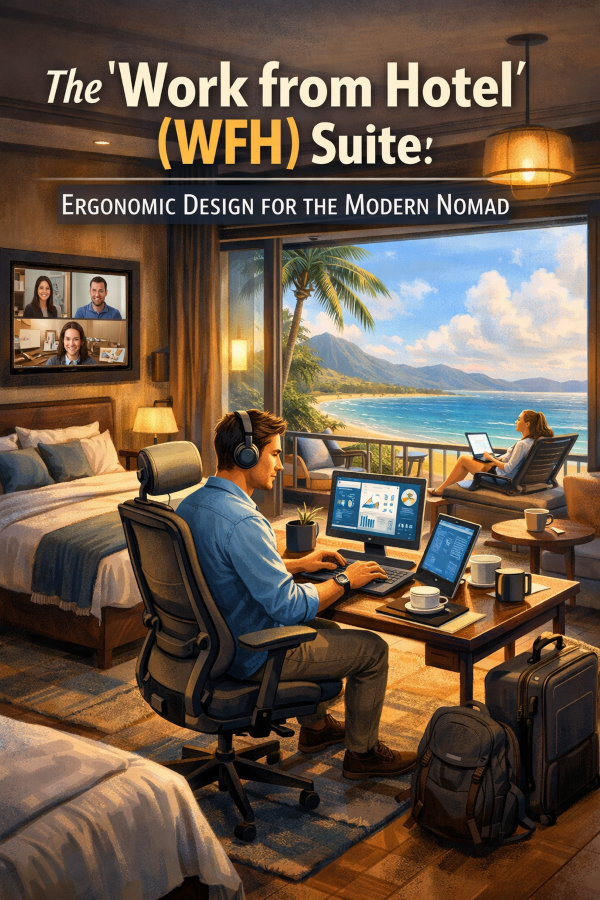
The global shift toward remote work has transformed how people travel, live, and work. As professionals increasingly embrace flexible lifestyles, the boundaries between business trips, vacations, and everyday work environments are dissolving. This trend has given rise to a new category of traveler: the modern nomad — individuals who work remotely while moving between destinations.
For hotels, this evolution represents a significant opportunity. Instead of catering only to traditional business travelers or leisure tourists, properties can design specialized “Work from Hotel” (WFH) suites that combine productivity, comfort, and hospitality.
However, simply placing a desk in a room is no longer enough. Remote professionals require ergonomic workspaces, high-speed connectivity, quiet environments, and thoughtful design that supports long hours of focus without sacrificing relaxation.
The modern WFH suite blends the functionality of a professional office with the comfort of a premium hotel room.
The Rise of the Remote Work Traveler
Remote work was already growing before the pandemic, but global disruptions accelerated adoption dramatically. Many companies now allow employees to work from anywhere, enabling professionals to travel without interrupting their careers.
As a result, hotels are seeing an increase in guests who:
- Stay for extended periods
- Work several hours daily from their rooms
- Require stable internet and workspace infrastructure
- Seek environments that balance productivity and relaxation
These travelers often include freelancers, entrepreneurs, digital nomads, startup founders, consultants, and remote employees.
Hotels that recognize these needs can attract longer stays and higher guest loyalty.
Why Traditional Hotel Rooms Don’t Work for Remote Professionals
Typical hotel room layouts prioritize comfort and short-term stays. While suitable for vacations or brief business trips, they often lack features necessary for sustained productivity.
Common issues include:
- Small or poorly positioned desks
- Non-ergonomic chairs
- Limited power outlets
- Weak lighting for work tasks
- Unstable Wi-Fi connectivity
- Background noise distractions
Working eight hours from a poorly designed hotel room can lead to fatigue, poor posture, and reduced productivity.
WFH suites address these problems through ergonomic and functional design.
Ergonomic Workspaces: The Core of a WFH Suite
A productive work environment begins with proper ergonomics.
Adjustable Work Desks
WFH suites benefit from desks designed specifically for long work sessions. Adjustable-height desks allow guests to alternate between sitting and standing, reducing strain and improving circulation.
Generous desk space also accommodates laptops, monitors, notebooks, and coffee without feeling cramped.
Professional-Grade Seating
A high-quality ergonomic chair is essential. Unlike traditional hotel chairs, these should provide:
- Lumbar support
- Adjustable height
- Armrest positioning
- Breathable materials for comfort
Good seating reduces back pain and improves focus during extended work periods.
Monitor and Tech Compatibility
Many remote workers rely on multiple screens. Hotels can support productivity by offering:
- External monitors
- HDMI or USB-C connections
- Wireless keyboard and mouse options
Providing simple plug-and-play solutions instantly upgrades the workspace experience.
Lighting Designed for Productivity
Lighting has a direct impact on energy levels, concentration, and eye comfort.
WFH suites should combine several lighting layers:
Natural Daylight
Large windows and adjustable curtains allow guests to control natural light, which improves mood and alertness.
Task Lighting
Focused desk lamps reduce eye strain during computer work or reading.
Ambient Lighting
Soft ambient lighting maintains comfort during early mornings or evening work sessions.
Smart lighting controls allow guests to customize brightness levels depending on their work style.
Acoustic Design for Focus
Noise distractions can severely disrupt remote work. Hotels must create environments that support concentration.
Solutions include:
- Soundproofed walls and windows
- Acoustic panels or carpeting
- Quiet floor placement within the property
- White noise options for additional focus
WFH suites may even include small acoustic pods or partitions for video calls and meetings.
High-Speed, Reliable Connectivity
For remote professionals, internet connectivity is as essential as electricity.
Hotels offering WFH suites should prioritize:
- Dedicated high-speed Wi-Fi networks
- Backup internet connections
- Wired Ethernet ports
- Secure VPN-friendly infrastructure
Some properties also provide portable Wi-Fi routers or guaranteed bandwidth packages for business travelers.
Reliable connectivity ensures guests can participate in video calls, upload files, and collaborate with colleagues without interruptions.
Smart Power Management
Remote workers often travel with multiple devices — laptops, tablets, smartphones, cameras, and headphones.
WFH suites should include:
- Multiple easily accessible power outlets
- USB charging ports
- Wireless charging pads
- Cable management systems
Convenient power access prevents clutter and improves workspace efficiency.
Creating a Work-Life Balance Environment
While productivity is important, one of the main reasons professionals choose to work from hotels is the ability to combine work with lifestyle benefits.
WFH suites should therefore support both focus and relaxation.
Features may include:
- Comfortable lounge areas separate from the desk
- In-room coffee or tea stations
- Mini wellness zones for stretching or meditation
- Access to fitness and spa facilities
- Balconies or outdoor workspaces
These elements help guests recharge after intense work sessions.
Integrated Technology and Smart Controls
Smart room technology enhances the WFH experience by simplifying environmental control.
Guests can manage:
- Lighting scenes
- Temperature settings
- Window shades
- Do-not-disturb modes
Voice assistants or mobile apps allow seamless adjustments without interrupting work flow.
Technology becomes an invisible assistant rather than a distraction.
Community Spaces for Networking
While remote professionals often work independently, many also value occasional social interaction and networking opportunities.
Hotels can complement WFH suites with shared spaces such as:
- Co-working lounges
- Business libraries
- Meeting rooms
- Café-style work areas
These environments encourage collaboration and provide a change of scenery during long workdays.
Marketing the WFH Suite Concept
Hotels should clearly communicate the value of WFH suites through targeted marketing strategies.
Key selling points include:
- Productivity-friendly room design
- Guaranteed high-speed internet
- Ergonomic workspace equipment
- Quiet working environments
- Access to wellness and recreation facilities
Packages may also include extended stay discounts or coworking memberships.
Positioning the property as a remote work destination helps attract digital professionals seeking reliable productivity spaces.
The Business Advantage for Hotels
WFH suites provide several strategic benefits for hotels.
Longer Average Stays
Remote workers often stay for weeks or months rather than just a few nights.
Higher Occupancy During Off-Peak Periods
Work-from-hotel guests travel year-round rather than seasonally.
Increased Ancillary Revenue
Remote professionals frequently use hotel restaurants, wellness facilities, and meeting rooms.
Brand Differentiation
Offering purpose-built work suites positions hotels as innovative and forward-thinking.
The Future of Work-Friendly Hospitality
As remote work continues to evolve, hospitality providers will increasingly blur the line between office spaces and hotel environments.
Future WFH suites may include:
- AI-powered productivity environments
- Advanced teleconferencing technology
- Personalized workspace settings stored in guest profiles
- Hybrid living-and-working hotel residences
Hotels will not simply host travelers — they will become flexible workplaces for a global workforce.
Conclusion
The rise of remote work has reshaped the expectations of modern travelers. Today’s digital professionals need more than a comfortable bed; they require spaces that support productivity, focus, and well-being.
The “Work from Hotel” suite answers this demand by combining ergonomic design, reliable technology, and lifestyle comfort into a single environment.
Hotels that embrace this concept position themselves at the forefront of a growing travel segment — welcoming a new generation of guests who work from anywhere but expect excellence everywhere.
For the modern nomad, the ideal workspace may no longer be a traditional office — it might be a thoughtfully designed hotel suite overlooking a new destination.
Leave a Reply