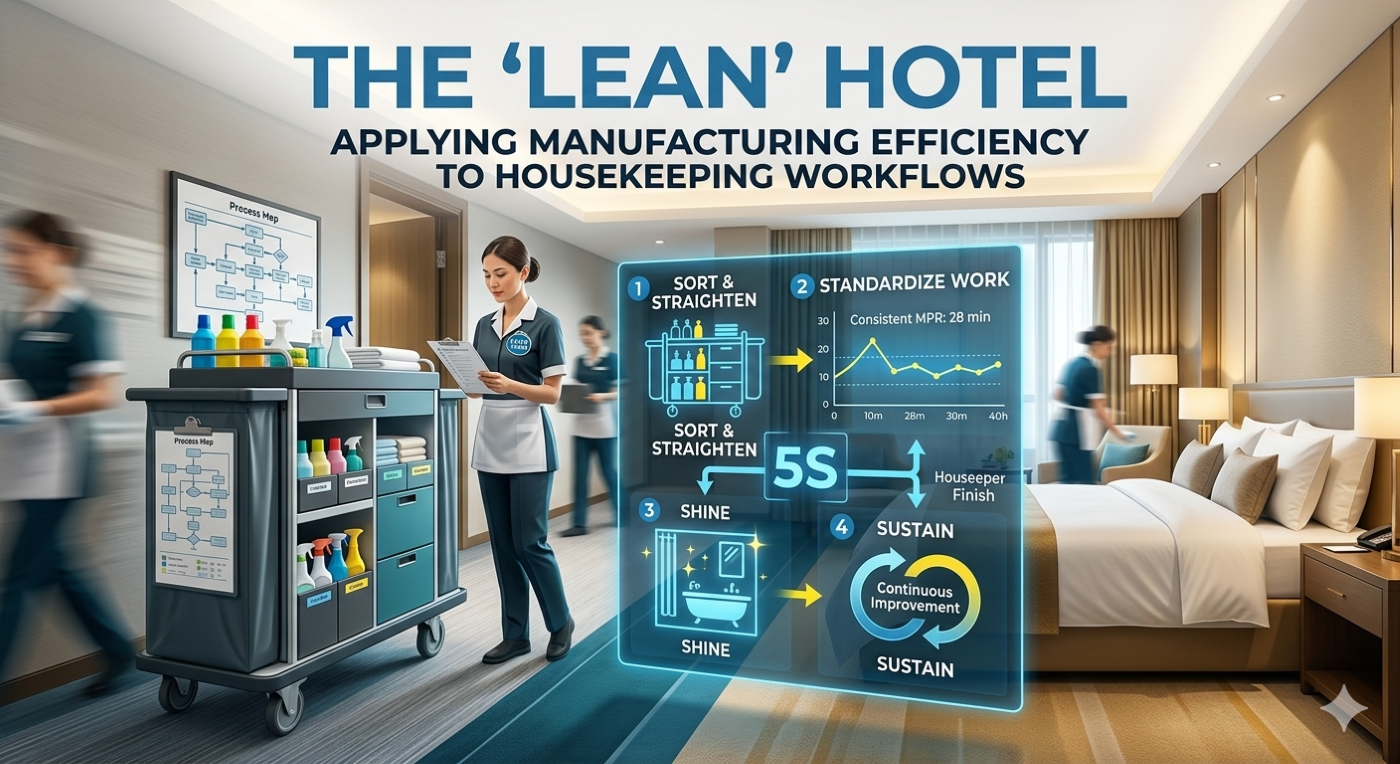
In hospitality, housekeeping is one of the most essential yet operationally demanding departments. Clean, comfortable rooms are fundamental to guest satisfaction, but behind every perfectly prepared room lies a complex process involving time management, coordination, inventory handling, and labor efficiency.
As labor shortages and operational costs continue to rise, hotels are searching for smarter ways to streamline their housekeeping workflows without compromising quality. One approach gaining attention is the application of lean management principles, originally developed in the manufacturing industry.
By adopting lean strategies, hotels can reduce wasted effort, optimize staff productivity, improve turnaround times, and enhance employee satisfaction. The concept of the “Lean Hotel” focuses on creating housekeeping systems that deliver maximum value to guests with minimal operational waste.
Understanding Lean Principles in Hospitality
Lean management originated in manufacturing environments where companies aimed to eliminate inefficiencies while maintaining product quality. The core idea is simple: identify and remove any activity that does not add value to the final outcome.
When applied to housekeeping, the “final outcome” is a clean, guest-ready room.
Lean thinking focuses on reducing five major types of operational waste:
- Time waste – unnecessary delays or inefficient workflows
- Motion waste – excessive walking or repeated movements
- Overproduction – preparing rooms too early or unnecessarily
- Inventory waste – excessive supplies or poorly managed stock
- Defects – cleaning errors requiring rework
By addressing these inefficiencies, hotels can significantly improve housekeeping productivity.
The Hidden Inefficiencies in Traditional Housekeeping
Many housekeeping operations follow routines that have remained unchanged for years. While they may appear functional, these systems often contain hidden inefficiencies.
Common problems include:
- Room attendants walking long distances to supply closets
- Delays waiting for room status updates
- Overloaded housekeeping carts
- Inefficient task sequencing
- Lack of communication between front desk and housekeeping teams
These inefficiencies accumulate throughout the day, increasing labor costs and reducing the number of rooms cleaned per shift.
Lean housekeeping seeks to redesign workflows to eliminate these obstacles.
Mapping the Housekeeping Workflow
The first step in implementing lean principles is process mapping. Managers analyze each step involved in preparing a room, from check-out notification to final inspection.
Typical housekeeping workflow stages include:
- Receiving room status updates
- Collecting supplies
- Entering the room
- Removing used linens and waste
- Cleaning surfaces and bathrooms
- Replacing linens and amenities
- Final inspection and room release
By carefully observing these steps, hotels can identify unnecessary movements, delays, or repeated actions that slow down the process.
Once these inefficiencies are identified, workflows can be redesigned for maximum efficiency.
Optimizing Housekeeping Cart Design
One of the simplest yet most impactful lean improvements involves housekeeping carts.
Traditional carts are often overloaded with supplies that may never be used during a shift. This increases pushing effort and slows down room entry and exit.
Lean cart design focuses on:
- Stocking only frequently used items
- Organizing supplies in logical sequences
- Reducing cart weight
- Standardizing layouts across staff members
When attendants can access items quickly without searching, cleaning speed improves while physical strain decreases.
Reducing Motion Waste
Housekeepers often walk several kilometers during a single shift. Excessive walking not only wastes time but also contributes to fatigue and workplace injuries.
Lean hotels address this problem by reorganizing supply storage and task assignments.
Solutions include:
- Decentralized supply closets on each floor
- Smaller restocking stations
- Assigning room clusters to attendants
- Digital communication tools for real-time updates
These changes minimize unnecessary movement and allow attendants to focus on cleaning tasks rather than logistics.
Standardizing Cleaning Procedures
Consistency is essential for both efficiency and quality.
Lean housekeeping introduces standard operating procedures (SOPs) that define the most efficient cleaning sequence for each room type.
For example, attendants may follow a consistent pattern:
- Ventilate room and open curtains
- Remove linens and trash
- Clean bathroom surfaces
- Dust and wipe furniture
- Replace linens
- Vacuum and final inspection
Following the same sequence every time reduces decision fatigue and speeds up task completion.
Standardization also makes training new employees faster and easier.
Using Technology for Real-Time Coordination
Technology plays a crucial role in modern lean housekeeping systems.
Mobile housekeeping applications connected to the hotel’s property management system allow staff to receive instant updates on room status.
Benefits include:
- Immediate notification of guest check-outs
- Automatic room assignment updates
- Digital inspection checklists
- Maintenance reporting tools
Real-time communication eliminates delays caused by manual reporting and paper-based workflows.
Rooms can be cleaned faster and released sooner for new arrivals.
Implementing the “Just-In-Time” Approach
In manufacturing, Just-In-Time (JIT) production means producing items exactly when they are needed rather than in advance.
Hotels can apply this concept to housekeeping.
Instead of cleaning all vacant rooms early in the day, rooms are prioritized based on upcoming guest arrivals.
This ensures:
- Freshly prepared rooms for incoming guests
- Reduced unnecessary re-cleaning
- Better allocation of housekeeping resources
JIT housekeeping also aligns room readiness more closely with front desk operations.
Improving Employee Engagement
Lean systems are not only about efficiency — they also aim to empower employees.
Housekeeping staff often have the best insights into operational challenges. Encouraging their feedback helps managers identify improvement opportunities.
Hotels can create lean improvement programs where staff contribute ideas for:
- Better cart organization
- Faster cleaning techniques
- Improved supply placement
- Safety enhancements
When employees participate in problem-solving, they become more invested in operational success.
Quality Control Through Continuous Improvement
Lean methodology emphasizes continuous improvement, often referred to as the concept of “Kaizen.”
Instead of implementing large, disruptive changes, hotels focus on small incremental improvements over time.
Examples include:
- Adjusting room cleaning sequences
- Improving linen handling processes
- Refining inspection checklists
- Optimizing task distribution among staff
Over time, these small adjustments create substantial efficiency gains.
Measuring Success with Key Metrics
To evaluate lean housekeeping initiatives, hotels should track performance indicators such as:
- Rooms cleaned per attendant per shift
- Average room turnaround time
- Guest satisfaction scores
- Housekeeping labor cost per room
- Employee injury rates
Data-driven monitoring ensures that efficiency improvements do not compromise cleaning quality or employee well-being.
Sustainability Benefits
Lean housekeeping also contributes to environmental sustainability.
Reduced waste leads to:
- Lower water and chemical usage
- Less discarded linen and supplies
- Reduced energy consumption during cleaning operations
Sustainability improvements often align with both cost savings and corporate responsibility goals.
The Future of Lean Hospitality
As hotels continue to adopt data-driven technologies and automation, lean principles will become even more powerful.
Future innovations may include:
- AI-powered housekeeping scheduling
- Smart inventory management systems
- Autonomous cleaning equipment
- Predictive room maintenance alerts
These advancements will further streamline operations while maintaining high service standards.
Conclusion
Housekeeping is the backbone of hotel operations, directly influencing guest satisfaction and operational efficiency. By applying lean management principles from manufacturing, hotels can redesign housekeeping workflows to eliminate waste, improve productivity, and create more sustainable operations.
The Lean Hotel approach does not require sacrificing quality or increasing employee pressure. Instead, it focuses on smarter systems, better organization, and continuous improvement.
In an industry where margins are tight and expectations are high, lean housekeeping offers a practical path toward operational excellence — ensuring that every room is prepared efficiently, consistently, and with the level of care guests expect.
Leave a Reply