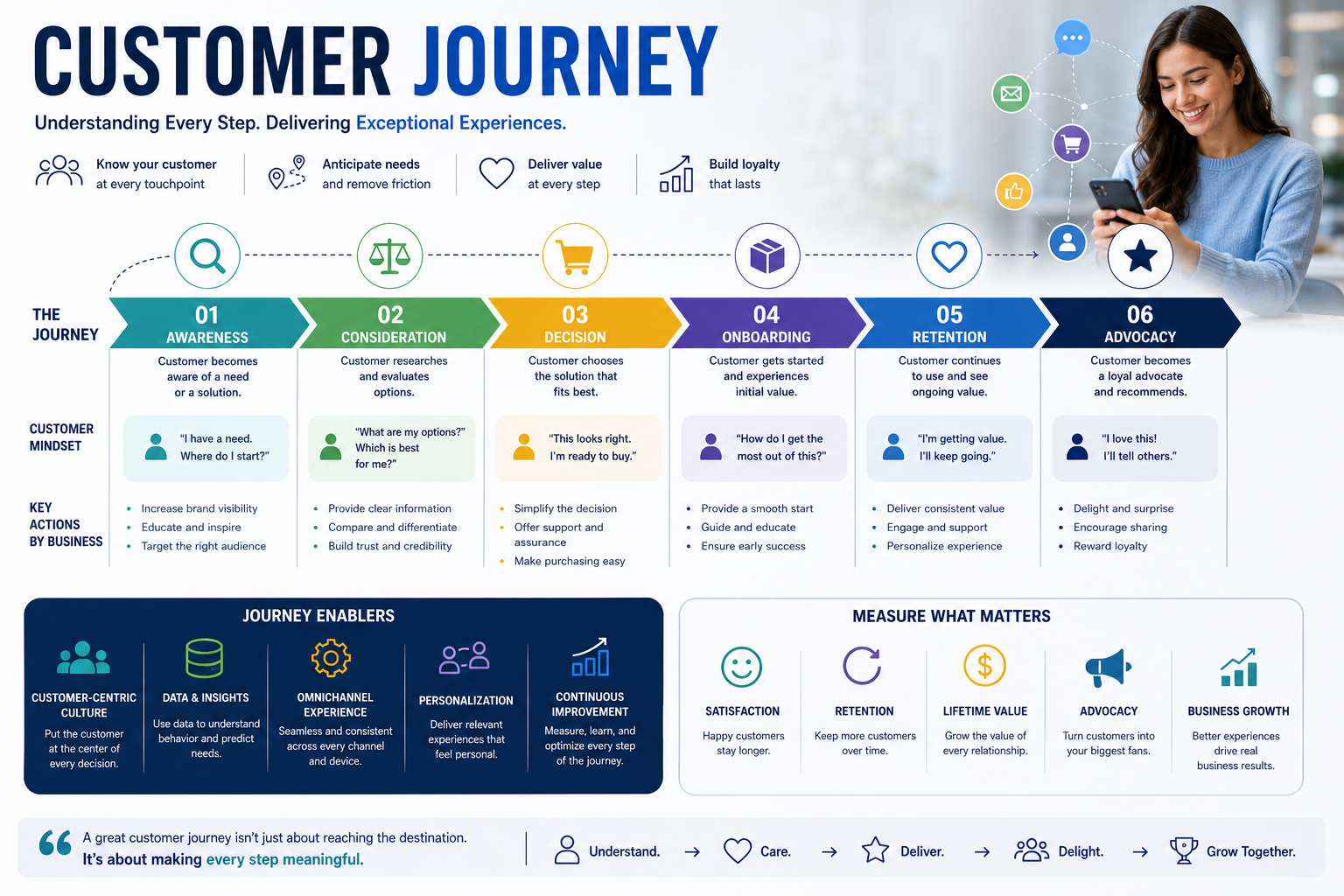
In the hospitality industry, success is not defined by a single interaction but by the entire sequence of experiences a guest goes through. This sequence is known as the customer journey—a comprehensive path that begins long before a booking is made and continues even after the guest checks out.
Understanding and optimizing the customer journey allows hotels to deliver seamless, personalized, and memorable experiences at every touchpoint. For BookSmart, mapping this journey is essential to improving guest satisfaction, increasing conversions, and building long-term loyalty.
What is the Customer Journey?
The customer journey in hospitality refers to every interaction a guest has with a hotel, from the first moment of awareness to post-stay engagement.
It typically includes the following stages:
- Discovery
- Consideration
- Booking
- Pre-Arrival
- Stay Experience
- Post-Stay Engagement
Each stage presents an opportunity to influence guest perception and decision-making.
Stage 1: Discovery
The journey begins when a traveler becomes aware of a hotel.
This can happen through:
- search engines
- social media
- travel blogs
- online travel agencies
- recommendations
At this stage, visibility is key. A strong online presence, engaging content, and positive reviews help attract potential guests.
First impressions are formed here, even before the guest visits the hotel website.
Stage 2: Consideration
Once aware, the guest begins evaluating options.
They compare:
- room types
- pricing
- amenities
- location
- reviews
This is where trust and clarity matter.
High-quality images, transparent pricing, and detailed information help build confidence.
For example, a traveler planning a visit to Mumbai may compare multiple hotels before making a decision.
Stage 3: Booking
This is the conversion stage.
The guest selects dates, chooses a room, and completes the reservation.
A smooth booking experience is crucial.
Key elements include:
- fast loading pages
- simple navigation
- secure payment options
- instant confirmation
Any friction at this stage can lead to abandonment.
For BookSmart, optimizing the booking experience directly impacts revenue.
Stage 4: Pre-Arrival
After booking, the focus shifts to preparation and anticipation.
Hotels can enhance this stage through:
- confirmation emails
- check-in instructions
- personalized offers
- local recommendations
For example, a hotel in Goa might suggest beach activities or local dining options.
Engaging guests before arrival builds excitement and strengthens connection.
Stage 5: Stay Experience
This is the core of the customer journey.
Every interaction during the stay influences satisfaction.
Key factors include:
- check-in experience
- room quality and cleanliness
- staff behavior
- amenities and services
- dining experience
Personalization plays a major role here.
Small gestures, such as remembering guest preferences or offering tailored recommendations, can significantly enhance the experience.
Stage 6: Post-Stay Engagement
The journey does not end at check-out.
Post-stay engagement helps build long-term relationships.
Hotels can:
- send thank-you messages
- request feedback
- respond to reviews
- offer loyalty rewards
- provide future booking discounts
For example, a guest who had a great stay in Jaipur may be encouraged to return through personalized offers.
This stage is crucial for repeat business.
Importance of Customer Journey Mapping
Mapping the customer journey helps hotels understand:
- guest expectations at each stage
- pain points and drop-offs
- opportunities for improvement
- areas for personalization
By analyzing each touchpoint, hotels can create a smoother and more satisfying experience.
Role of Technology
Technology plays a major role in managing the customer journey.
Hotels use:
- CRM systems
- booking engines
- mobile apps
- AI chatbots
- automation tools
These tools help track guest behavior, personalize interactions, and streamline processes.
For BookSmart, technology enables smarter and more efficient journey management.
Personalization Across the Journey
Personalization enhances every stage of the journey.
Examples include:
- targeted ads during discovery
- tailored offers during booking
- customized services during the stay
- personalized communication post-stay
This approach makes guests feel valued and understood.
Common Pain Points
Hotels often face challenges such as:
- slow booking process
- lack of communication
- inconsistent service
- hidden charges
- poor post-stay follow-up
Identifying and addressing these issues improves the overall journey.
Measuring Customer Journey Success
Hotels can measure performance using:
- conversion rates
- guest satisfaction scores
- online reviews
- repeat booking rates
- Net Promoter Score (NPS)
These metrics provide insights into how well the journey is performing.
Future of Customer Journey in Hospitality
The future is focused on:
- AI-driven personalization
- predictive guest behavior
- seamless omnichannel experiences
- contactless services
- real-time engagement
Hotels that adapt to these trends will deliver more efficient and memorable journeys.
Conclusion
The customer journey is the foundation of modern hospitality.
It connects every interaction a guest has with a hotel, from discovery to loyalty.
For BookSmart, the key takeaway is clear: every stage of the journey matters.
Hotels that understand and optimize this journey will not only increase bookings but also create meaningful experiences that drive long-term success in an increasingly competitive market.
Leave a Reply