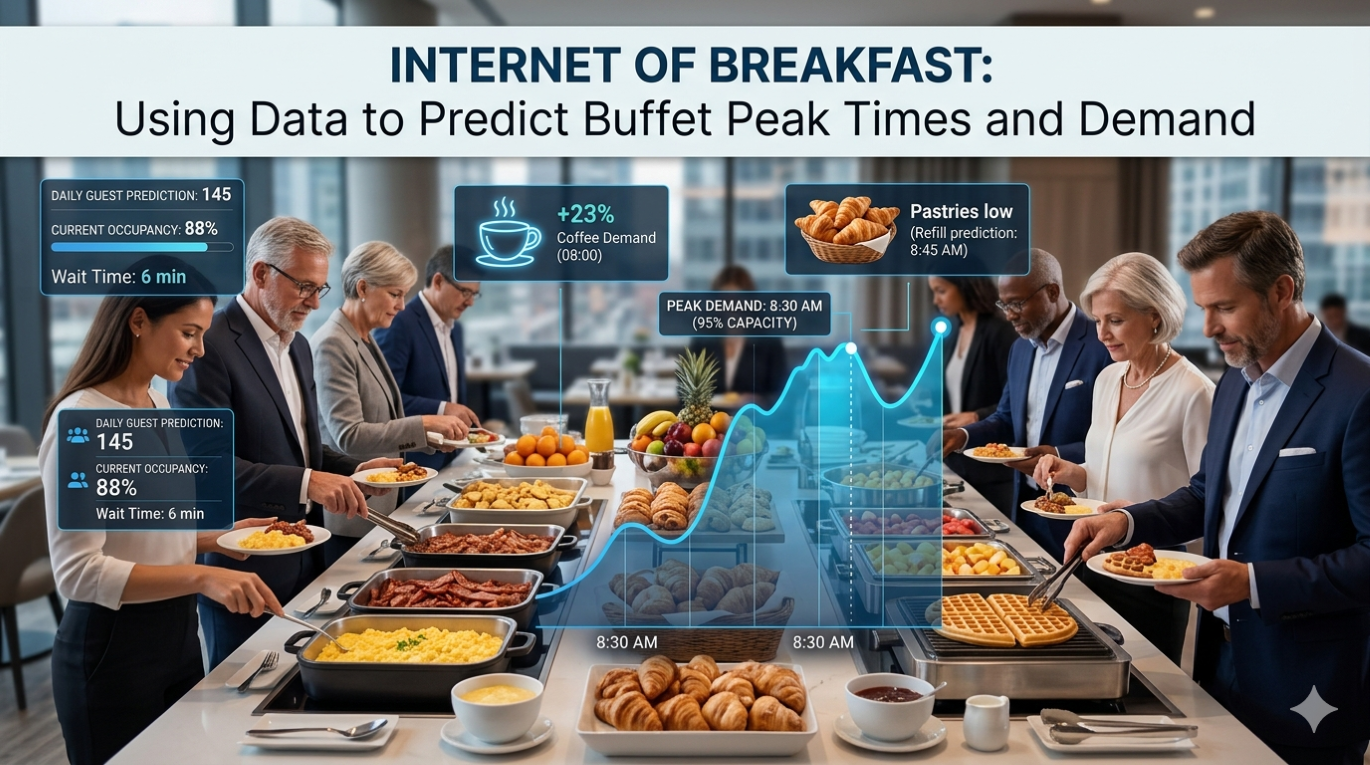
Breakfast is one of the most important — and operationally complex — service periods in the hospitality industry. For hotels around the world, the morning buffet represents both an opportunity and a challenge. Guests expect abundant choices, fresh food, and minimal waiting times. At the same time, kitchens struggle with unpredictable demand, food waste, staffing pressure, and fluctuating guest flows.
This is where the concept of the “Internet of Breakfast” is emerging. Inspired by the broader Internet of Things (IoT), this approach uses connected sensors, analytics, and real-time data to understand guest behavior and predict buffet demand with remarkable accuracy.
By analyzing patterns such as guest check-ins, occupancy rates, historical dining behavior, and even weather conditions, hotels can forecast peak breakfast times and adjust operations accordingly. The result is smarter kitchens, happier guests, and significantly reduced food waste.
Why Breakfast Operations Are So Difficult to Predict
Unlike dinner reservations or scheduled events, breakfast demand tends to fluctuate unpredictably.
Several factors influence buffet traffic:
- Flight schedules and early departures
- Conference or meeting agendas
- Leisure travelers sleeping late
- Seasonal tourism patterns
- Local weather conditions
- Cultural dining habits
For example, business travelers may arrive early between 6:30 AM and 7:30 AM, while leisure guests often peak closer to 9:00 AM or later. When these groups overlap, breakfast areas can quickly become overcrowded.
Without accurate forecasting, hotels face two undesirable outcomes: food shortages during peak demand or excessive food waste during slow periods.
What Is the “Internet of Breakfast”?
The “Internet of Breakfast” refers to the integration of connected devices, guest data, and predictive analytics to optimize buffet operations.
Instead of relying on guesswork, hotels gather real-time information from multiple sources:
- Occupancy and booking data
- Smart buffet sensors
- Plate weight monitoring
- Kitchen inventory tracking
- Guest movement analytics
- Mobile ordering platforms
All of this data feeds into analytics platforms that forecast demand patterns and recommend operational adjustments.
Essentially, breakfast service becomes a data-driven ecosystem rather than a reactive process.
Key Technologies Driving Smart Breakfast Operations
1. Occupancy and Reservation Data
The most basic forecasting tool comes from the hotel’s Property Management System (PMS). By analyzing:
- Number of checked-in guests
- Room types (families vs. single travelers)
- Conference group schedules
- Length of stay
Hotels can estimate how many guests are likely to attend breakfast.
Advanced analytics can even predict when those guests are most likely to arrive.
2. Smart Buffet Sensors
IoT sensors placed beneath buffet trays or serving stations measure food weight and usage in real time.
This allows kitchen teams to track:
- Which dishes are consumed fastest
- When items require replenishment
- Which foods remain untouched
By analyzing historical data, chefs can refine portion sizes and preparation timing to minimize waste.
3. Guest Flow Tracking
Anonymous motion sensors or Wi-Fi analytics help hotels monitor movement patterns within dining areas.
This data reveals:
- Entry times
- Average dining duration
- Queue formation points
- Seating capacity utilization
When combined with predictive algorithms, hotels can anticipate crowd surges before they happen.
4. Weather and Local Event Data
External data sources also influence breakfast demand.
For example:
- Rainy weather encourages guests to stay indoors and dine at the hotel.
- Local festivals or sporting events can shift dining times.
- Early flights may push guests toward earlier service.
By incorporating external variables, forecasting models become more accurate.
Predicting Buffet Peak Times
Once sufficient data is collected, hotels can generate detailed breakfast demand forecasts.
Typical insights include:
- Expected guest volume by time slot
- Average dish consumption rates
- Staffing requirements
- Replenishment intervals for buffet items
For example, predictive systems might forecast:
| Time Slot | Expected Guests | Operational Action |
|---|---|---|
| 6:30–7:30 AM | High (Business travelers) | Increase coffee stations |
| 7:30–8:30 AM | Moderate | Refill hot items |
| 8:30–9:30 AM | Peak (Leisure travelers) | Add staff and seating |
| 9:30–10:30 AM | Gradual decline | Reduce production |
This data allows hotels to shift from reactive service to proactive management.
Reducing Food Waste Through Precision Preparation
Food waste is one of the biggest challenges in buffet operations. Large displays are often prepared in advance to maintain visual appeal, but unsold items must eventually be discarded.
With predictive analytics, kitchens can adopt batch cooking strategies.
Instead of preparing large quantities at once, chefs produce smaller batches based on forecast demand.
Benefits include:
- Fresher food quality
- Lower waste levels
- Reduced ingredient costs
- Improved sustainability metrics
Even a small reduction in buffet waste can translate into significant annual savings for large properties.
Improving Guest Experience
The Internet of Breakfast isn’t only about efficiency — it also enhances the guest experience.
When hotels anticipate demand correctly:
- Buffets remain fully stocked during peak periods
- Waiting lines decrease
- Seating availability improves
- Service feels smoother and more organized
Guests enjoy relaxed mornings instead of crowded dining spaces.
Small operational improvements often lead to better online reviews and higher guest satisfaction scores.
Smarter Staffing Decisions
Breakfast staffing is traditionally scheduled using rough estimates. Data-driven forecasting allows managers to align staffing levels with real demand.
For example:
- Additional servers during peak periods
- Fewer staff during slower times
- Flexible shifts for buffet attendants
Optimized staffing reduces labor costs while maintaining service quality.
Personalization Opportunities
The next phase of the Internet of Breakfast involves personalized dining experiences.
Hotels may soon analyze guest preferences from previous stays to tailor offerings.
Examples include:
- Dietary preference tracking
- Personalized breakfast recommendations
- Mobile pre-order options
- Smart coffee machines recognizing guest profiles
Personalization transforms breakfast from a standardized buffet into a customized experience.
Implementation Challenges
Despite its benefits, adopting data-driven breakfast systems requires careful planning.
Common challenges include:
Technology Integration
Different platforms — PMS, kitchen systems, and IoT devices — must communicate seamlessly.
Staff Training
Kitchen teams need training to interpret data and adjust workflows.
Data Privacy
Hotels must ensure guest data is collected and analyzed responsibly.
Initial Investment
Sensors and analytics platforms require upfront capital, though long-term savings typically offset these costs.
Successful adoption depends on aligning technology with operational culture.
The Future of Smart Dining in Hotels
The Internet of Breakfast represents just the beginning of data-driven food service in hospitality.
Future innovations may include:
- AI-powered buffet forecasting
- Autonomous kitchen preparation systems
- Dynamic menu adjustments based on demand
- Voice-enabled guest ordering
- Zero-waste dining programs
As technology evolves, hotel dining operations will become more adaptive, sustainable, and personalized.
Conclusion
Breakfast may appear simple on the surface, but behind the scenes it involves complex logistics and significant resource management. The Internet of Breakfast offers a powerful solution by turning guest behavior and operational data into actionable insights.
Through predictive analytics, connected sensors, and integrated systems, hotels can forecast buffet demand, reduce food waste, optimize staffing, and deliver smoother dining experiences.
In an industry where efficiency and guest satisfaction must coexist, data-driven breakfast operations represent a smart step toward the future of hospitality.
Because in modern hotels, even something as routine as breakfast can benefit from intelligent technology.
Leave a Reply