Energy efficiency has moved from being an operational preference to a strategic necessity in modern hospitality. Rising utility costs, sustainability regulations, and environmentally conscious travelers are pushing hotels to rethink how energy is consumed at the room level.
Guestrooms account for nearly 60–70% of a hotel’s total energy usage, with heating, ventilation, air conditioning (HVAC), and lighting representing the largest share. Traditionally, these systems operated independently, often running at full capacity regardless of occupancy.
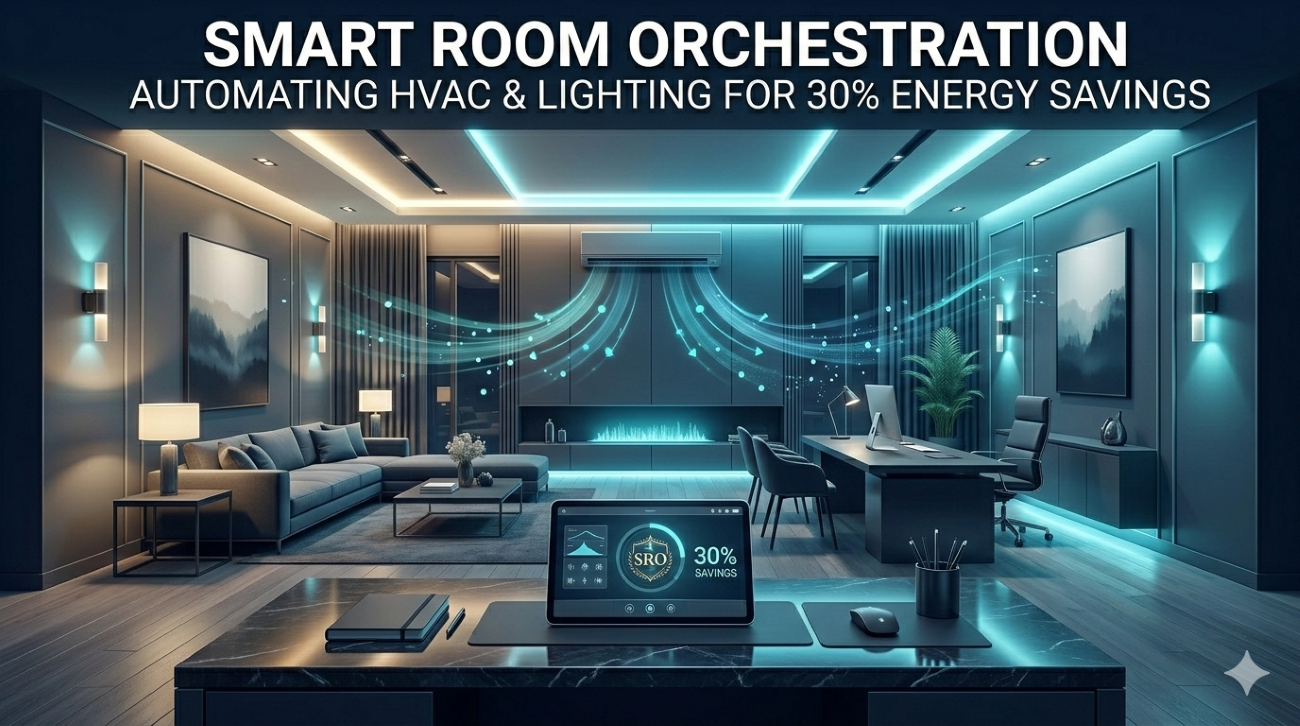
Today, forward-thinking hotels are embracing smart room orchestration — an integrated automation approach that synchronizes HVAC, lighting, occupancy data, and guest behavior to optimize comfort while significantly reducing energy waste. When implemented effectively, smart orchestration systems can deliver energy savings of up to 30% or more without compromising guest experience.
This article explores how automated room intelligence works, why it matters, and best practices for successful deployment.
What Is Smart Room Orchestration?
Smart room orchestration refers to the centralized automation of in-room systems using sensors, artificial intelligence, and connected devices.
Instead of operating separately, systems communicate continuously:
- HVAC adjusts based on occupancy
- Lighting responds to movement and daylight
- Curtains align with temperature control
- Energy usage adapts to guest preferences
- Rooms enter energy-saving modes automatically
The room becomes a responsive environment rather than a static space.
The goal is simple: deliver comfort only when and where it is needed.
The Energy Waste Problem in Traditional Guestrooms
Conventional hotel rooms waste energy in multiple ways:
- Air conditioning runs in empty rooms
- Lights remain on after guests leave
- Thermostats reset inefficiently
- Housekeeping overrides settings manually
- Guests forget to switch systems off
Even when key-card systems exist, they often provide limited intelligence and fail to detect short absences or environmental conditions.
Energy loss accumulates silently across hundreds of rooms, significantly impacting operational costs.
How Automation Drives 30% Energy Savings
Smart orchestration reduces waste through layered intelligence.
1. Occupancy-Based HVAC Control
Motion and thermal sensors detect whether a room is occupied.
When guests leave:
- Temperature automatically shifts to eco-mode
- Cooling or heating output reduces gradually
- Systems reactivate before guest return
Predictive algorithms learn usage patterns to maintain comfort without excess consumption.
2. Intelligent Lighting Automation
Lighting systems adjust dynamically through:
- Motion detection
- Time-of-day programming
- Natural daylight sensing
- Scene-based controls
For example:
- Bathroom lights activate automatically at night with reduced brightness.
- Curtains close during peak sunlight to minimize cooling demand.
Automation eliminates unnecessary usage while enhancing ambiance.
3. Integrated Window and Balcony Sensors
Open windows or balcony doors trigger HVAC pauses automatically.
Without orchestration, air conditioning often runs continuously while cooled air escapes outdoors — a major source of inefficiency in resorts and coastal properties.
4. Guest Preference Learning
Modern smart rooms remember guest comfort settings such as:
- Preferred temperature
- Lighting intensity
- Sleep mode preferences
Upon return visits, rooms automatically configure themselves, improving satisfaction while preventing energy overshoot.
Personalization and sustainability work together rather than in conflict.
Key Technologies Behind Smart Rooms
Smart orchestration relies on interconnected technologies.
IoT Sensors
Detect motion, humidity, temperature, and occupancy patterns.
Smart Thermostats
Enable automated climate optimization and remote control.
Energy Management Systems (EMS)
Central dashboards allow facility teams to monitor real-time performance.
AI Analytics Platforms
Analyze behavioral patterns to predict demand and optimize settings.
Cloud Connectivity
Supports centralized monitoring across multiple properties.
Together, these technologies transform guestrooms into intelligent energy ecosystems.
Enhancing Guest Experience Through Automation
A common misconception is that energy efficiency compromises comfort. In reality, smart orchestration often improves the guest experience.
Benefits include:
- Faster room climate stabilization
- Personalized lighting scenes
- Better sleep environments
- Reduced noise from HVAC cycling
- Seamless arrival comfort
Guests rarely notice automation itself — only the improved comfort it creates.
Invisible efficiency becomes part of premium hospitality.
Operational Advantages Beyond Energy Savings
While energy reduction is the headline benefit, orchestration delivers broader operational gains.
Preventive Maintenance
Connected HVAC systems detect abnormal performance early, enabling maintenance teams to act before failures occur.
This reduces emergency repairs and guest complaints.
Housekeeping Coordination
Rooms automatically signal status:
- Vacant
- Occupied
- Cleaning mode
- Energy-saving mode
Departments operate with better coordination and efficiency.
Sustainability Reporting
Automated systems generate accurate environmental data required for ESG reporting, green certifications, and corporate sustainability disclosures.
Hotels gain measurable proof of environmental impact reduction.
Best Practices for Successful Implementation
Start with Pilot Floors
Testing automation on selected floors allows hotels to measure savings and refine workflows before full deployment.
Integrate with PMS Systems
Smart rooms should connect with Property Management Systems so check-in and check-out events automatically trigger energy modes.
Example:
- Guest checks out → room shifts instantly to deep energy-saving state.
Prioritize Guest Override Control
Guests must retain manual control over temperature and lighting.
Automation should assist — not restrict — comfort preferences.
Train Staff Thoroughly
Engineering, housekeeping, and front office teams must understand system behavior to avoid accidental overrides or confusion.
Employee engagement ensures long-term success.
Focus on Retrofit Compatibility
Older hotels can adopt wireless IoT solutions without extensive rewiring, making smart orchestration viable even for legacy properties.
ROI: Why Investment Pays Off Quickly
Smart room orchestration typically delivers returns through:
- Reduced electricity consumption
- Lower HVAC maintenance costs
- Extended equipment lifespan
- Improved sustainability ratings
- Increased asset value
Many hotels recover investment costs within 18–36 months, depending on property size and energy pricing.
Energy savings continue long after implementation.
The Sustainability Advantage
Eco-conscious travelers increasingly prefer brands aligned with environmental responsibility.
Energy-efficient rooms contribute to:
- Reduced carbon footprint
- Green certification eligibility
- Corporate travel compliance
- Brand reputation enhancement
Sustainability is no longer marketing — it is operational strategy.
The Future: Autonomous Guestrooms
Next-generation smart rooms may soon include:
- AI predicting guest arrival time
- Weather-responsive climate control
- Grid-aware energy optimization
- Voice-controlled environmental settings
- Integration with renewable energy systems
Guestrooms will evolve into adaptive environments capable of balancing comfort, cost, and sustainability automatically.
Conclusion
Smart room orchestration represents one of the most impactful innovations in modern hospitality operations. By synchronizing HVAC and lighting through intelligent automation, hotels can achieve substantial energy savings — often reaching or exceeding 30% — while enhancing guest comfort.
The shift is not simply about reducing utility bills. It reflects a broader transformation toward data-driven, sustainable, and experience-focused hospitality.
Hotels that invest in intelligent energy ecosystems today position themselves for a future where operational efficiency and environmental responsibility are inseparable from exceptional guest service.
Because the smartest room is one that works perfectly — without guests ever noticing how.
Leave a Reply