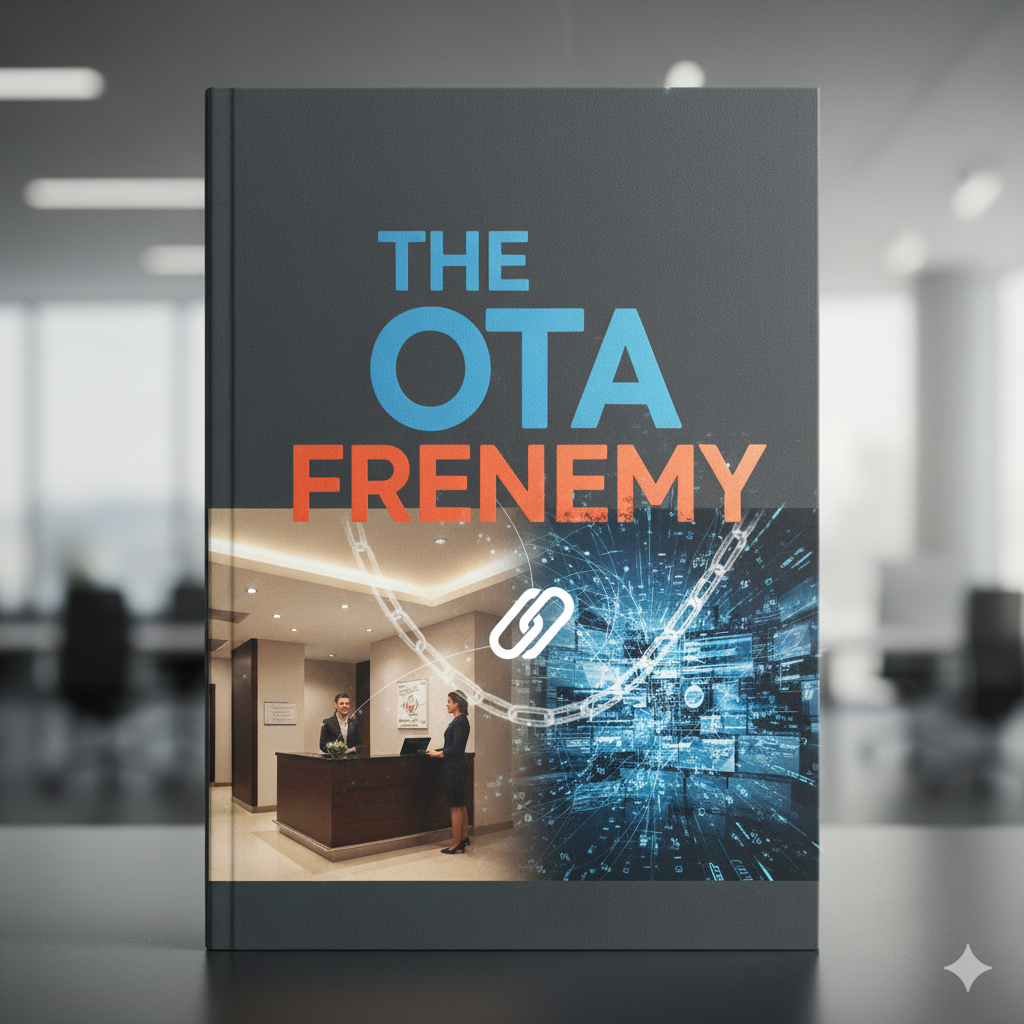
Let’s be honest: if you run a hotel today, your relationship with Online Travel Agencies (OTAs) is… complicated.
It’s the classic “frenemy” dynamic. On one hand, you love the ping of a new booking notification, regardless of where it comes from. On the other hand, you wince when you calculate the commission check at the end of the month.
At BookSmart, we talk to independent hoteliers every single day. We hear the sighs of frustration when Expedia demands rate parity, and we see the smiles when a guest books directly on your own website.
The landscape has shifted dramatically in the last fifteen years. OTAs like Booking.com, Expedia, and Agoda went from being handy supplementary channels to dominant giants powering a massive chunk of global room sales. They are undeniably powerful. But are they partners, or are they parasites?
The answer, unfortunately, isn’t black and white. It’s a messy shade of grey. Let’s dive into the real impact of OTAs on your business, and more importantly, how to find a balance that works for you.
The undeniable Allure: Why We Signed Up
Before we get into the thorny issues, we have to give credit where it’s due. OTAs didn’t become giants by accident. They solved a massive problem for travelers: fragmentation.
For you, the hotelier, they offered something irresistible:
1. The Ultimate Billboard: Imagine trying to market your boutique hotel in rural Vermont to a couple planning their honeymoon in Tokyo. Nearly impossible on your own. OTAs gave small players a global stage instantly. This is the famous “Billboard Effect”—even if they don’t book on the OTA, they might discover you there and then Google your name.
2. Filling the Gaps: It’s Tuesday night in November, and you’re looking at 40% occupancy. OTAs are incredible at moving distressed inventory. They are the masters of last-minute deals and capturing the undecided traveler.
3. Trust by Proxy: Consumers trust these platforms. They know that if something goes wrong with the booking, they have a behemoth corporate entity to call. When a traveler books through an OTA, your hotel borrows a little bit of that trust.
The Hangover: The Price of Popularity
So, you got the visibility. You got the bookings. But as the years went on, the dynamic shifted. What started as a partnership started to feel a lot more one-sided.
Here is the reality of the OTA impact that keeps hoteliers up at night:
1. The Commission Bite: This is the obvious one. Paying anywhere from 15% to a staggering 25% commission on a booking hurts your bottom line deeply. When OTAs are bringing in 70% of your business, that’s not a marketing cost anymore; it’s a massive operational hemorrhage.
2. The Commoditization of Your Property: On an OTA results page, your lovingly designed boutique hotel is just another thumbnail next to the generic chain down the street. You are judged almost entirely on price and review score. It’s hard to convey your unique personality, your amazing staff, or the smell of your fresh coffee through their standardized template.
3. Losing the Guest Relationship: This is the one that bothers us most at BookSmart. When someone books via an OTA, they aren’t really your customer yet; they are Booking.com’s customer. You often get masked email addresses, making pre-arrival communication difficult. You lose the chance to upsell, personalize their stay, or build loyalty before they even walk in the door.
4. The Rate Parity Handcuffs: Many OTA contracts still include clauses that prevent you from offering a lower public price on your own website than you offer on theirs. They demand the best price, yet charge you for the privilege of selling it. It feels restrictive and, frankly, unfair.
The BookSmart Philosophy: Balance, Not Battle
It’s easy to vilify the OTAs, but going to war with them is usually a losing strategy for an independent hotel. You probably cannot afford to shut them off completely tomorrow.
The goal isn’t elimination; it’s optimization.
At BookSmart, we believe that hotels need to stop treating OTAs as their primary sales strategy and start treating them as one expensive tool in a wider toolbox.
Here is how to start shifting the power dynamic back in your favor:
1. Make Your Website Better Than Theirs
If a guest finds you on Expedia and then decides to check your website (the Billboard Effect in action), what do they find? Is it clunky? Is it hard to book on mobile? Are the photos blurry? Your direct booking engine needs to be fast, intuitive, and beautiful. If it’s harder to book direct than it is to book on an OTA, you will lose every time.
2. The “Direct Advantage”
If rate parity stops you from competing on price, compete on value. What do direct bookers get that OTA bookers don’t?
- Free parking?
- A complimentary welcome drink?
- Priority room assignment (the best views)?
- Flexible cancellation policies? Make these perks loud and clear on your homepage. Give them a reason to click that “Book Now” button on your site.
3. Own the Guest Data
When an OTA guest checks in, that is your moment. Capture their real email address. Ask for permission to stay in touch. Wow them with service during their stay so that next time, they don’t need to search for a hotel—they already know exactly where they are staying. Turn an OTA acquisition into a direct-booking repeater.
4. Be Strategic with Inventory
You don’t have to give the OTAs every single room, every single night. During your peak season, when you know you’re going to sell out, yield manage those channels. Close out the high-commission sites or only give them your standard room types, saving your premium suites for direct sale.
The Takeaway
OTAs are a fact of life in modern hospitality. They are incredible marketing machines that come with a very high price tag.
The impact they have on your business is ultimately up to you. If you leave them on autopilot, they will eat into your profits and own your customer relationships. But if you manage them actively, using them for visibility while aggressively fighting for direct business, you can turn that frenemy into just a regular old business partner.
Keep smart, keep hospitable, and keep fighting for those direct bookings.
Your partners in smart booking, The BookSmart Team
Leave a Reply