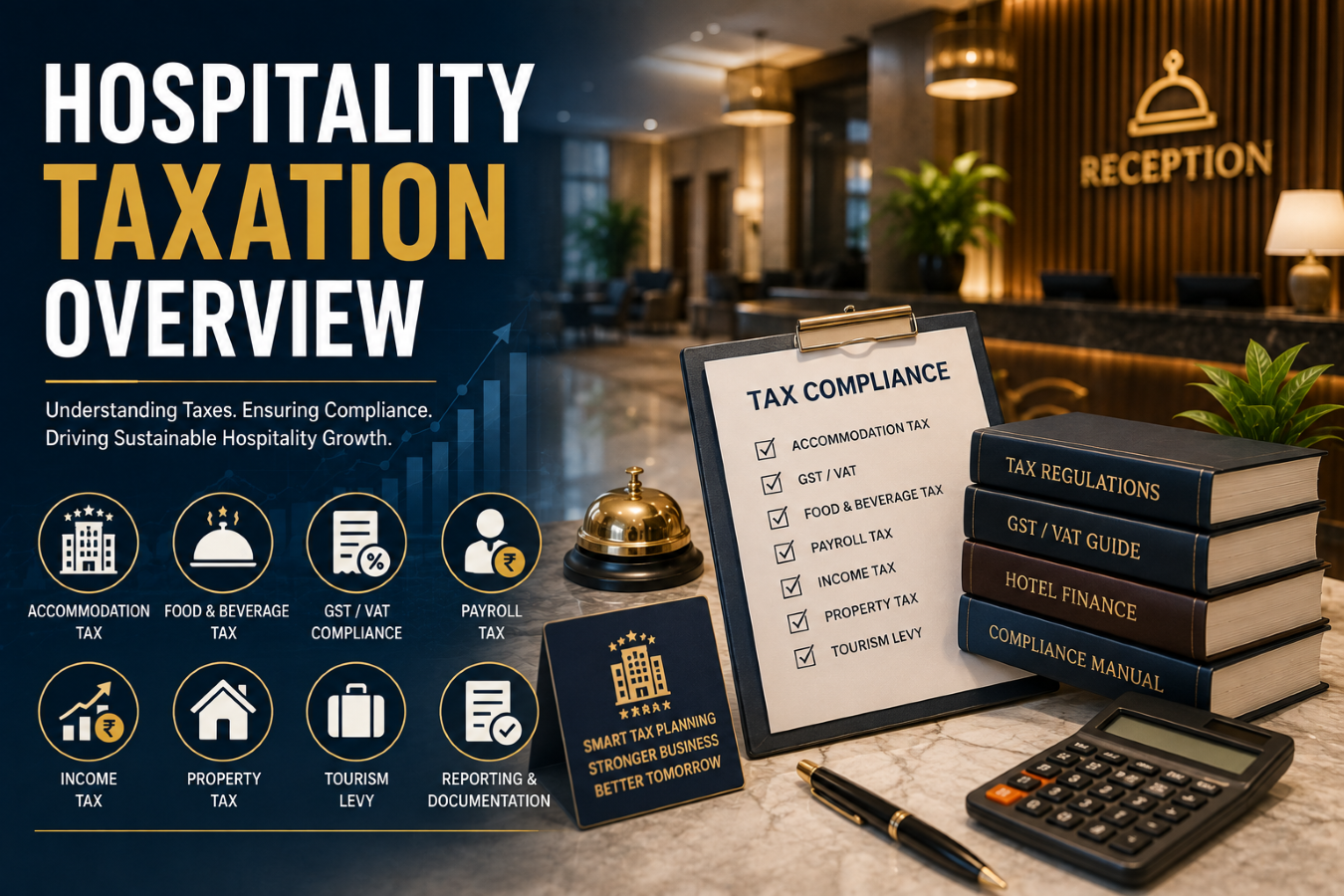
Taxation is an important part of running any hospitality business. Hotels, resorts, restaurants, cafés, event venues, and other accommodation providers operate across multiple revenue streams, making their tax responsibilities more complex than those of many other businesses. From room bookings and food services to events, amenities, employee payroll, and online reservations, different aspects of hospitality operations may have different tax implications.
For hotel owners and managers, understanding hospitality taxation is essential for accurate financial planning, regulatory compliance, pricing decisions, and long-term profitability. Tax rules vary significantly by country, state, and local authority, so businesses must understand the requirements that apply to their specific location and operations.
At BookSmart, we believe that a strong understanding of taxation helps hospitality businesses make better financial decisions, avoid unnecessary compliance problems, and build more sustainable operations.
What Is Hospitality Taxation?
Hospitality taxation refers to the taxes, duties, fees, and other government-imposed financial obligations that apply to businesses operating in the hospitality sector.
The exact tax structure depends on the location and type of business. A hotel may be responsible for taxes related to accommodation, goods and services, business income, employee payroll, property, and specific products or services.
Some taxes are paid directly by the hotel, while others may be collected from guests and subsequently remitted to the relevant authorities.
Understanding this distinction is important because incorrectly calculating, collecting, or reporting taxes can create financial and legal complications.
Why Taxation Matters in the Hospitality Industry
Taxation directly influences a hotel’s pricing, cash flow, profitability, and financial planning.
Hotels must consider taxes when setting room rates and pricing additional services. A room rate that appears profitable before taxes and fees may generate a very different financial result after all applicable costs are considered.
Effective tax management can help hospitality businesses:
- Maintain accurate financial records
- Avoid penalties and interest
- Improve cash-flow planning
- Set appropriate prices
- Prepare accurate financial forecasts
- Meet reporting obligations
- Understand actual profitability
- Reduce compliance risks
Tax planning should therefore be integrated into the hotel’s broader financial management strategy.
Accommodation and Hotel Taxes
Accommodation-related taxes are common in many hospitality markets, although the terminology and structure vary by jurisdiction.
A guest’s hotel bill may include the room charge along with applicable taxes, tourism levies, local charges, or other government-imposed fees.
Hotels need systems that can accurately calculate these charges based on the guest’s booking and the applicable rules.
This becomes particularly important for hotels that operate across different cities or regions because tax requirements may not be identical.
Clear presentation of taxes and fees also helps guests understand what they are paying and reduces confusion during the booking and checkout process.
Goods and Services Taxes
Hotels frequently provide multiple taxable goods and services.
Depending on the jurisdiction, these may include:
- Accommodation
- Restaurant meals
- Beverages
- Room service
- Conference facilities
- Spa services
- Transportation
- Laundry
- Event services
In countries that use value-added tax or goods and services tax systems, businesses may need to calculate, collect, report, and remit applicable taxes.
The treatment of different hospitality services can vary, making accurate accounting particularly important.
Hotels should maintain clear records of sales by category so that the correct tax treatment can be applied.
Restaurant and Food Service Taxation
Food and beverage operations represent a significant source of revenue for many hotels.
Restaurants, cafés, bars, banquet services, and room service may be subject to specific tax rules.
The applicable treatment may differ depending on factors such as the type of food or beverage, whether it is consumed on-site or provided as part of another service, and local regulations.
Hotels should ensure that their billing and point-of-sale systems are configured correctly.
Employees should also understand how taxes and charges appear on customer bills so they can answer guest questions accurately.
Taxes on Events and Banquet Services
Hotels frequently host weddings, conferences, corporate meetings, exhibitions, and social events.
These services may involve multiple revenue components, including venue rental, catering, accommodation, equipment, decoration, and additional services.
Tax treatment may differ between these components depending on local laws.
Hotels should therefore maintain detailed invoices that separate different services where required.
Clear documentation makes financial reporting easier and helps businesses determine the correct tax treatment.
Corporate Income Tax
Hospitality businesses generally need to account for taxes on their taxable business income according to the rules applicable in their jurisdiction.
Calculating taxable income may require businesses to consider revenue, operating expenses, depreciation, allowable deductions, and other financial factors.
Hotel management should maintain accurate accounting records throughout the year rather than waiting until the end of the financial period.
Regular financial reviews help identify potential tax liabilities and improve budgeting.
Professional accounting and tax advice can also be valuable when businesses operate under complex tax structures.
Employee Payroll Taxes and Contributions
Hotels are highly dependent on their workforce, which means payroll-related tax obligations can represent a significant administrative responsibility.
Depending on the jurisdiction, employers may need to manage payroll taxes, social security contributions, employee deductions, and other statutory payments.
Hospitality businesses often employ workers across multiple departments, including:
- Front office
- Housekeeping
- Food and beverage
- Maintenance
- Security
- Administration
- Sales and marketing
Accurate payroll systems help ensure that employee compensation and applicable deductions are calculated correctly.
Payroll compliance is particularly important because errors can affect both employees and the business.
Property-Related Taxes
Hotels own or lease valuable physical assets, including buildings, land, equipment, and other infrastructure.
Depending on local regulations and ownership structures, property-related taxes may apply.
Hotel owners should consider these obligations when evaluating property investments, renovations, expansions, and acquisitions.
Property taxes can also influence the overall cost of operating a hotel and should therefore be included in long-term financial planning.
Tourism Taxes and Local Levies
Some destinations impose tourism-related taxes or local visitor charges to support tourism infrastructure, public services, or destination development.
These charges may be collected from hotel guests as part of the booking or accommodation bill.
Because tourism taxes are often determined locally, hotels need to monitor changes carefully.
A new tourism levy or change in the applicable rate can affect pricing and booking communication.
Hotels should update their reservation and billing systems whenever applicable tax rules change.
Taxation and Online Hotel Bookings
The growth of online travel platforms has introduced additional complexity into hospitality taxation.
Hotels may receive bookings through online travel agencies, direct websites, mobile applications, corporate travel platforms, and other distribution channels.
The treatment of commissions, taxes, service fees, and payments may vary depending on the contractual arrangement and local tax rules.
Hotels should maintain accurate records of gross bookings, commissions, taxes, refunds, and net revenue.
Integration between booking platforms and accounting systems can reduce manual errors.
Tax Challenges for Hotel Franchises
Franchised hotels may have additional financial and tax considerations.
A franchise operation can involve payments such as franchise fees, management fees, marketing contributions, technology charges, or other contractual payments.
The tax treatment of these payments can vary depending on the business structure and applicable jurisdiction.
Hotel owners should understand their contractual and tax responsibilities before entering into a franchise agreement.
Professional advice can help clarify the financial implications of different ownership and operating models.
Taxation and Hotel Pricing Strategies
Taxation should be considered when developing hotel pricing strategies.
Guests typically compare the final amount they will pay rather than simply the advertised room rate.
Hotels should ensure that applicable taxes and fees are communicated clearly during the booking process.
Revenue managers should also understand how tax-inclusive and tax-exclusive pricing affects perceived value and financial performance.
Accurate pricing helps hotels avoid unpleasant surprises for guests and reduces billing disputes.
The Role of Technology in Hospitality Tax Management
Technology has made tax management more efficient for hospitality businesses.
Modern Property Management Systems, Point-of-Sale platforms, accounting software, and revenue management tools can help automate tax calculations and financial reporting.
Integrated systems can connect:
- Reservations
- Guest billing
- Restaurant sales
- Payments
- Accounting
- Tax reporting
Automation reduces manual data entry and can help identify inconsistencies.
However, technology must be configured correctly. Hotels should regularly review tax settings when regulations or business operations change.
Maintaining Accurate Financial Records
Good record-keeping is one of the foundations of effective tax compliance.
Hotels should maintain accurate documentation for revenue, expenses, invoices, payroll, refunds, supplier payments, and tax collections.
Records should be organized so that financial information can be easily reviewed when preparing tax returns or responding to regulatory inquiries.
Digital accounting systems can simplify document management and improve accessibility.
Accurate records also help management understand the hotel’s true financial performance.
Tax Compliance Challenges for Hospitality Businesses
Hospitality businesses may face several tax-related challenges.
One challenge is the complexity of having multiple revenue streams. A hotel may sell rooms, food, beverages, event packages, spa services, transportation, and other products simultaneously.
Another challenge is frequent regulatory change. Tax rates, exemptions, reporting requirements, and local levies may change over time.
Hotels operating in multiple locations face additional complexity because different jurisdictions may have different requirements.
Finally, international hotels may need to manage cross-border transactions and additional tax considerations.
A proactive compliance system can help businesses manage these challenges.
Common Hospitality Tax Management Mistakes
Several common mistakes can create unnecessary financial and compliance risks.
These include:
- Using outdated tax rates
- Incorrectly classifying revenue
- Failing to track taxable and non-taxable services
- Poor documentation
- Incorrect payroll deductions
- Missing filing deadlines
- Inaccurate online booking records
- Failing to reconcile tax collections
- Not reviewing changes in regulations
Regular internal checks can help identify and correct problems before they become more serious.
Building an Effective Hotel Tax Strategy
A strong hospitality tax strategy should combine compliance, planning, technology, and professional oversight.
Hotels can follow several practical steps:
- Identify all taxes applicable to the business.
- Assign responsibility for tax compliance.
- Maintain an updated tax calendar.
- Integrate tax calculations into billing systems.
- Reconcile tax collections regularly.
- Maintain accurate financial records.
- Monitor regulatory changes.
- Review tax treatment whenever new services are introduced.
- Train relevant employees.
- Seek qualified professional advice when necessary.
This approach can make taxation more manageable and reduce the risk of unexpected financial obligations.
Tax Planning and Hospitality Investment
Tax considerations can also influence hotel investment decisions.
When evaluating a new property, renovation, expansion, or acquisition, owners should consider the tax implications alongside expected revenue and operating costs.
A property’s location can influence local taxes, incentives, tourism levies, and other financial obligations.
Tax planning should therefore begin before major investment decisions are finalized.
Understanding the full cost structure provides a clearer picture of the potential return on investment.
Sustainability and Tax Considerations
Sustainability investments may sometimes interact with tax policies and government incentives.
Depending on the jurisdiction, businesses may receive incentives or deductions for qualifying investments in areas such as energy efficiency, renewable energy, or environmentally responsible infrastructure.
Hotels should investigate applicable programs rather than assuming that every sustainability investment automatically receives a tax benefit.
Regardless of incentives, sustainability can reduce long-term operating costs through lower energy consumption, improved water efficiency, and reduced waste.
The Future of Hospitality Taxation
The future of hospitality taxation will be increasingly influenced by digital commerce, international travel, data systems, and changing government policies.
As hotels become more dependent on online booking platforms and digital payments, governments may continue to modernize systems for monitoring and collecting taxes.
Automated reporting and digital invoicing may become increasingly common.
Artificial Intelligence and advanced analytics may also help businesses identify discrepancies and improve financial forecasting.
Hotels will need to keep their financial systems updated and remain aware of regulatory changes.
Why Professional Tax Advice Matters
Hospitality taxation can become complicated, particularly for large hotel groups, international businesses, franchises, and companies with multiple revenue streams.
Professional accountants, tax advisors, and legal professionals can help businesses understand their specific obligations.
They can also assist with tax planning, reporting, audits, compliance reviews, and changes in legislation.
Hotels should avoid relying solely on assumptions or outdated information because tax rules differ by jurisdiction and can change over time.
Conclusion
Hospitality taxation is an important part of hotel financial management. From accommodation and food services to payroll, property, business income, tourism levies, and online bookings, hospitality businesses must manage multiple tax-related responsibilities.
Effective tax management requires accurate records, reliable technology, clear internal processes, regular compliance reviews, and awareness of changing regulations.
At BookSmart, we believe that understanding taxation is not simply about avoiding penalties. It is about creating better financial visibility and making more informed business decisions. When hotels understand their tax obligations and incorporate them into pricing, budgeting, investment, and operational planning, they can build stronger and more sustainable businesses.
The hospitality industry will continue to evolve, and so will its taxation environment. Hotels that stay informed, use technology effectively, and take a proactive approach to financial compliance will be better prepared to navigate changes while continuing to deliver value to their guests.