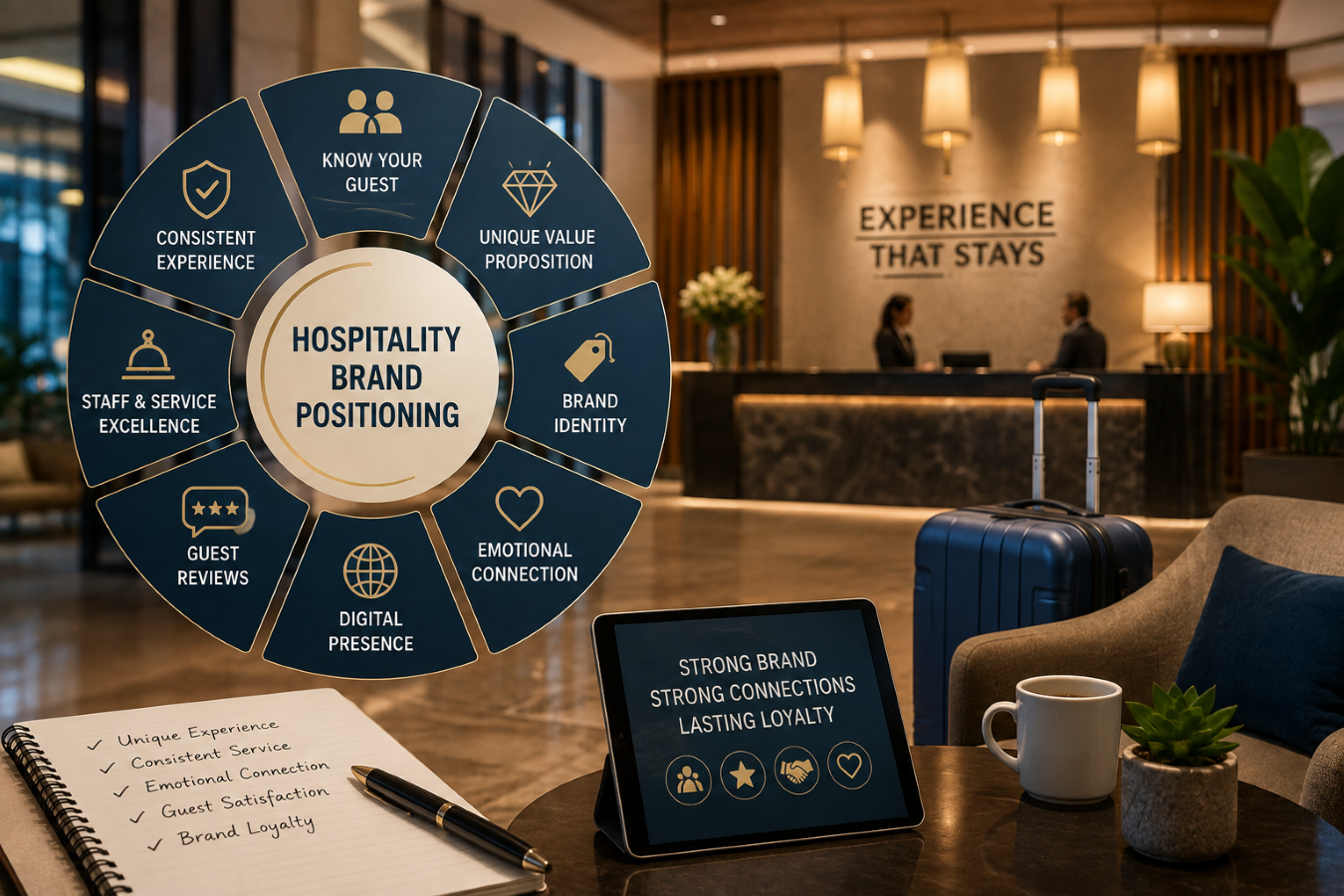
The hospitality industry is one of the most competitive sectors in the world. Travelers have more choices than ever before, from international hotel chains and boutique properties to serviced apartments, resorts, homestays, and alternative accommodation platforms. In such a crowded marketplace, simply offering a comfortable room is no longer enough to attract and retain guests.
Hotels need a clear identity that tells travelers why they should choose one property over another. This is where hospitality brand positioning becomes essential.
A strong hotel brand is more than a logo, color palette, or attractive website. It represents the experience guests can expect, the emotions they associate with the property, and the unique value the hotel provides. Effective hospitality brand positioning helps a hotel stand out from competitors, attract its ideal audience, build customer loyalty, and create a consistent experience across every touchpoint.
At BookSmart, we believe that successful hotel brands are built by combining a clear identity with exceptional service, meaningful experiences, technology, and a deep understanding of guest expectations.
What Is Hospitality Brand Positioning?
Hospitality brand positioning refers to the way a hotel or hospitality business wants to be perceived by its target customers compared with its competitors.
It answers an important question: Why should guests choose this hotel instead of another?
A hotel’s positioning may be based on several factors, including price, luxury, location, design, service, sustainability, wellness, business facilities, family-friendly experiences, or local culture.
For example, one hotel may position itself as an affordable and convenient choice for business travelers, while another may focus on luxury wellness experiences. A boutique property might build its identity around local culture and personalized service.
The most effective positioning strategy identifies a specific market opportunity and creates a compelling reason for guests to choose the brand.
Understanding the Target Guest
The first step in developing a strong hospitality brand positioning strategy is understanding the target audience.
Hotels cannot effectively appeal to everyone. Different travelers have different priorities, budgets, and expectations.
A hotel may target:
- Business travelers
- Families
- Couples
- Luxury travelers
- Budget-conscious tourists
- Digital nomads
- Wellness travelers
- Adventure seekers
- Long-stay guests
- Group travelers
Understanding the target audience allows hotels to design their services and marketing around real customer needs.
For example, a hotel targeting business travelers may prioritize high-speed Wi-Fi, workspaces, meeting facilities, convenient transportation, and flexible check-in options. A family-oriented hotel may focus on spacious rooms, children’s activities, family dining, and recreational facilities.
The clearer the target audience, the easier it becomes to build a relevant brand.
Creating a Unique Value Proposition
A hotel’s value proposition explains what makes the property different and valuable to its guests.
A strong value proposition should be clear, relevant, and believable.
Instead of simply saying that a hotel offers “excellent service,” the brand should communicate what makes its service distinctive.
For example, a property might promise personalized local experiences, technology-enabled convenience, sustainable luxury, or exceptional wellness services.
The value proposition should be reflected in the actual guest experience. If the brand promises personalized service but employees provide generic interactions, the positioning will quickly lose credibility.
A successful hospitality brand delivers on the promise it makes.
Developing a Distinctive Brand Identity
Brand identity includes the visual and verbal elements that represent a hotel.
This may include:
- Logo
- Colors
- Typography
- Photography
- Website design
- Signage
- Staff uniforms
- Packaging
- Social media style
- Tone of communication
However, visual identity is only one part of the brand.
The hotel’s personality should also be reflected in its communication style and guest interactions.
A luxury hotel may use sophisticated and elegant communication, while a youthful lifestyle property may adopt a more casual and energetic voice.
Consistency across all touchpoints helps guests recognize and remember the brand.
Using Location as a Brand Advantage
Location is one of the strongest assets available to hospitality businesses.
A hotel’s surroundings can become an important part of its brand positioning.
A beachfront resort can build its identity around relaxation and coastal experiences. A city-center hotel can focus on convenience and urban exploration. A mountain property may emphasize nature, adventure, and wellness.
Hotels should look beyond simply promoting their physical location.
They can create experiences that connect guests with the destination through local food, cultural activities, guided tours, partnerships with local businesses, and destination-based storytelling.
This approach helps the hotel become part of the travel experience rather than simply a place to sleep.
Building an Emotional Connection
Strong hospitality brands create emotional connections with guests.
Travelers often remember how a hotel made them feel more than specific physical features.
A memorable welcome, thoughtful gesture, personalized recommendation, or exceptional service interaction can create positive emotional associations.
Hotels should identify the emotions they want guests to associate with their brand.
These could include:
- Relaxation
- Excitement
- Comfort
- Belonging
- Discovery
- Exclusivity
- Freedom
- Adventure
Every aspect of the guest journey should reinforce these emotions.
When guests develop an emotional connection with a hotel, they are more likely to return and recommend it to others.
Personalization as a Positioning Strategy
Personalization has become an important differentiator in modern hospitality.
Guests increasingly expect hotels to understand their preferences and provide experiences tailored to their needs.
Customer Relationship Management systems and data analytics allow hotels to understand guest behavior and preferences.
A returning guest might receive a preferred room, a personalized welcome message, or recommendations based on previous visits.
Personalization can become a central part of brand positioning.
A hotel known for genuinely understanding its guests can differentiate itself from competitors that offer standardized experiences.
Creating a Consistent Guest Experience
Brand positioning is only effective when it is consistent.
A hotel cannot position itself as a luxury property while providing inconsistent service or poorly maintained facilities.
Every guest touchpoint should support the brand promise.
This includes:
- Booking
- Pre-arrival communication
- Check-in
- Room experience
- Dining
- Housekeeping
- Customer service
- Check-out
- Post-stay communication
Consistency creates trust.
When guests know what to expect and consistently receive a high-quality experience, they are more likely to become loyal customers.
Differentiating Through Guest Experience
Experience-based differentiation is becoming increasingly important in hospitality.
Hotels can create unique experiences through food, wellness, entertainment, design, technology, and local culture.
For example, a hotel might offer cooking classes featuring local cuisine, guided cultural tours, wellness retreats, rooftop events, or personalized adventure packages.
These experiences can become powerful elements of the brand identity.
The goal is to give guests something memorable that they cannot easily find elsewhere.
Sustainability as a Brand Positioning Strategy
Sustainability is increasingly influencing travel decisions.
Hotels can position themselves around responsible and environmentally conscious hospitality by implementing meaningful sustainability initiatives.
These may include:
- Renewable energy
- Water conservation
- Waste reduction
- Local sourcing
- Sustainable construction
- Plastic reduction
- Eco-friendly amenities
- Community partnerships
However, sustainability positioning must be authentic.
Hotels should avoid making exaggerated environmental claims that are not supported by real actions.
Transparent communication and measurable initiatives help build credibility with environmentally conscious travelers.
Technology-Driven Brand Positioning
Technology can also become an important part of a hotel’s brand identity.
Hotels may position themselves as technology-forward properties by offering mobile check-in, digital room keys, smart rooms, contactless payments, AI-powered assistance, and personalized mobile services.
Technology can improve convenience while reducing friction throughout the guest journey.
However, hotels should ensure that technology enhances rather than replaces human hospitality.
The strongest technology-driven brands use digital tools to make service faster and more personalized while maintaining meaningful human interactions.
Social Media and Digital Storytelling
Social media plays a major role in hospitality brand positioning.
Travelers often discover hotels through Instagram, TikTok, YouTube, travel blogs, and other digital platforms.
Hotels should create content that communicates their unique identity rather than simply posting room photographs.
Content can highlight:
- Guest experiences
- Local destinations
- Behind-the-scenes stories
- Food and beverage offerings
- Staff personalities
- Sustainability initiatives
- Events
- Design
- Local culture
Visual storytelling allows potential guests to imagine themselves experiencing the property before they make a booking.
Authentic and engaging content can strengthen brand awareness and encourage direct bookings.
Leveraging Guest Reviews
Online reviews are an important part of modern brand positioning.
Potential guests often use reviews to determine whether a hotel delivers the experience it promises.
Positive reviews reinforce brand credibility, while recurring negative feedback may weaken positioning.
Hotels should actively monitor guest feedback and identify common themes.
If guests consistently praise personalized service, this can become a stronger part of the hotel’s marketing message.
If multiple guests complain about the same issue, management should address the underlying problem.
The best hospitality brands treat reviews as both a reputation management tool and a source of operational insight.
Employee Culture and Brand Positioning
Employees play a critical role in delivering a hotel’s brand promise.
A hotel cannot create a strong service brand without employees who understand and believe in its values.
Staff training should focus not only on operational procedures but also on the brand’s personality and purpose.
Employees should understand what makes the hotel different and how they can communicate that difference through everyday interactions.
A strong internal culture creates a more authentic external brand.
When employees feel connected to the brand, guests are more likely to experience genuine and consistent hospitality.
Measuring Brand Positioning Success
Hotels should regularly evaluate whether their positioning strategy is producing the desired results.
Useful indicators include:
- Brand awareness
- Direct booking growth
- Repeat guest rates
- Guest satisfaction
- Online review scores
- Social media engagement
- Average Daily Rate (ADR)
- Revenue Per Available Room (RevPAR)
- Customer acquisition costs
- Loyalty program participation
Guest surveys and market research can also help hotels understand how customers perceive the brand.
If the hotel’s intended positioning does not match guest perceptions, management may need to adjust either the brand communication or the actual guest experience.
The Future of Hospitality Brand Positioning
The future of hotel branding will be shaped by personalization, technology, sustainability, and experience.
Travelers are becoming more selective and increasingly looking for brands that align with their values and lifestyles.
Hotels will need to move beyond generic promises and create distinctive identities that are meaningful to specific audiences.
Artificial Intelligence and data analytics will enable deeper personalization, while digital platforms will allow brands to communicate directly with guests.
At the same time, authentic human experiences will remain essential.
Technology can improve convenience, but genuine hospitality, thoughtful service, and memorable experiences will continue to define the strongest brands.
Conclusion
Hospitality brand positioning is essential for hotels that want to stand out in an increasingly competitive market. A strong positioning strategy helps a property communicate its unique value, attract the right guests, build trust, and create long-term loyalty.
Successful positioning begins with understanding the target audience and developing a clear value proposition. It continues through consistent branding, personalized service, memorable experiences, technology, sustainability, digital storytelling, and strong employee culture.
At BookSmart, we believe that the most successful hospitality brands are not simply those with the biggest marketing budgets. They are the brands that understand their guests, deliver on their promises, and create experiences that people remember.
In a world where travelers have countless accommodation choices, a clear and authentic brand identity can become one of a hotel’s greatest competitive advantages. By combining strategic positioning with exceptional hospitality, hotels can build brands that attract guests today and inspire them to return tomorrow.
Leave a Reply