Author: admin

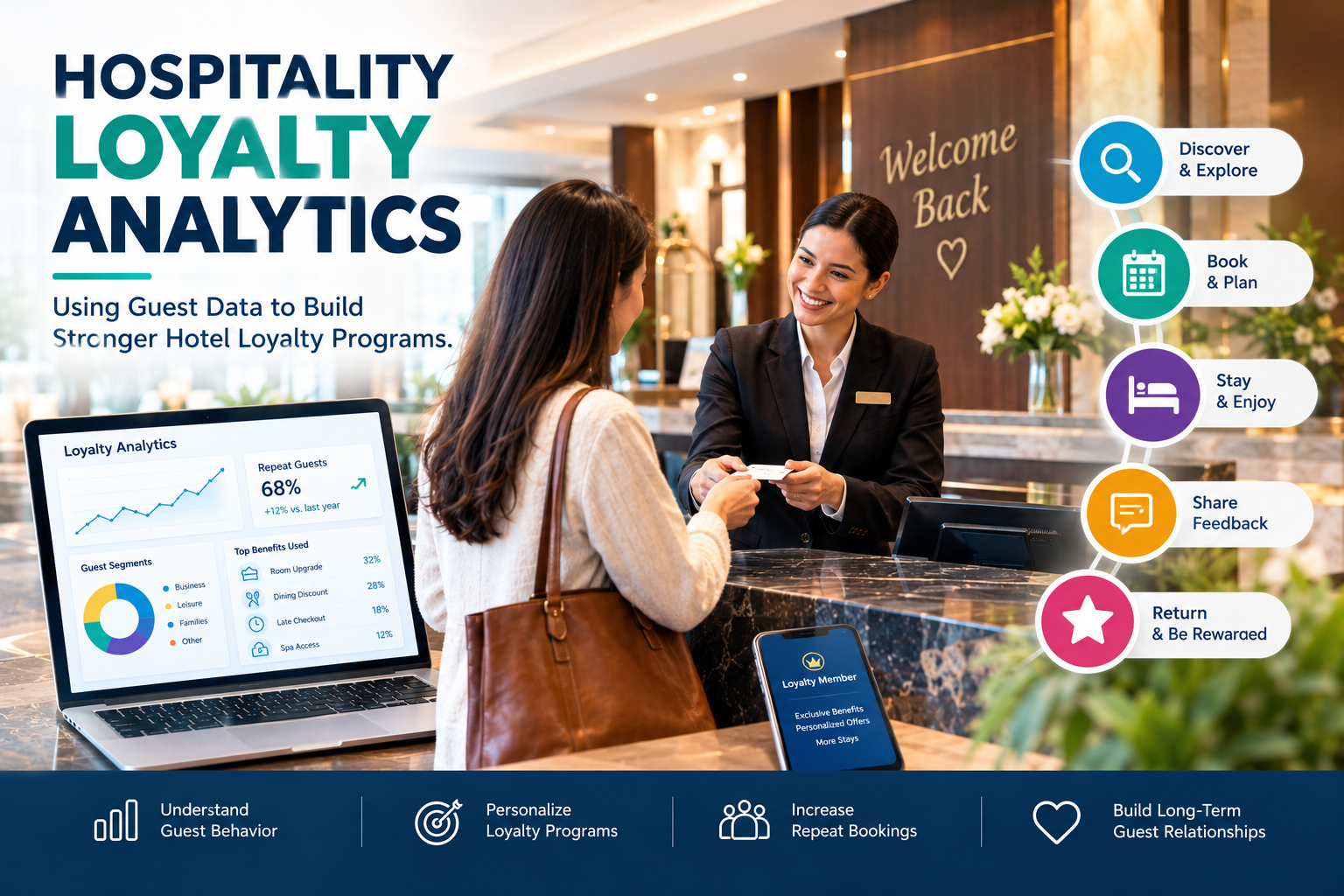
  • Hospitality Loyalty Analytics: Using Guest Data to Build Stronger Hotel Loyalty Programs

    Hospitality Loyalty Analytics: Using Guest Data to Build Stronger Hotel Loyalty Programs

    Guest loyalty has always been an important part of the hospitality industry. Hotels want guests to return, recommend their property to others, and develop a long-term relationship with the brand. However, modern loyalty programs are no longer based only on collecting points or offering occasional discounts. Hotels now have access to large amounts of guest and booking data that can help them understand what motivates guests to return. This is where hospitality loyalty analytics becomes increasingly valuable.

    Hospitality loyalty analytics refers to the use of data, reporting, and analytical tools to understand guest loyalty behavior and measure the performance of hotel loyalty programs. By analyzing booking patterns, spending habits, preferences, engagement, feedback, and repeat stays, hotels can develop more relevant loyalty strategies and make better business decisions.

    At BookSmart, we believe that effective loyalty management begins with understanding guests. When hotels use data responsibly, loyalty analytics can help transform a basic rewards program into a more meaningful and personalized guest relationship strategy.

    What Is Hospitality Loyalty Analytics?

    Hospitality loyalty analytics is the process of collecting and analyzing guest information to understand loyalty behavior and improve customer retention.

    Hotels can analyze data from various sources, including:

    • Hotel bookings
    • Property Management Systems
    • Customer Relationship Management platforms
    • Loyalty programs
    • Direct booking channels
    • Guest feedback
    • Online reviews
    • Food and beverage purchases
    • Spa and recreational services
    • Website interactions
    • Mobile applications

    By combining relevant information, hotels can develop a clearer picture of how guests interact with the property before, during, and after their stay.

    Why Loyalty Analytics Matters for Hotels

    A loyalty program may have thousands of members, but membership numbers alone do not indicate whether the program is successful.

    Hotels need to understand questions such as:

    • How frequently do loyalty members return?
    • Which benefits do guests actually use?
    • Which guest segments generate the most value?
    • What causes members to become inactive?
    • Which offers encourage repeat bookings?
    • Do loyalty members prefer direct booking channels?
    • How does loyalty participation affect overall guest spending?

    Loyalty analytics can help answer these questions using measurable data.

    This allows hotels to move from simply operating a loyalty program to actively managing and improving it.

    Understanding Guest Behavior

    Every guest has different travel habits.

    A business traveler may stay at hotels frequently throughout the year, while a leisure traveler may only book once or twice annually. Some guests may spend heavily on food and beverages, while others may primarily use room-related services.

    Analytics can identify these behavioral patterns.

    For example, hotels can segment guests according to booking frequency, average spending, length of stay, travel purpose, booking channel, or preferred services.

    Understanding these differences allows hotels to create more relevant loyalty experiences.

    Guest Segmentation Through Loyalty Analytics

    Guest segmentation is one of the most useful applications of loyalty analytics.

    Instead of treating every loyalty member identically, hotels can create meaningful segments based on behavior and preferences.

    Possible segments include:

    • Frequent business travelers
    • Occasional leisure guests
    • High-spending guests
    • Long-stay guests
    • New loyalty members
    • Highly engaged members
    • Inactive members
    • Guests who primarily book directly

    Each group may respond differently to loyalty benefits.

    For example, a frequent business traveler may value flexibility and convenience, while a leisure guest may prefer experiences, dining benefits, or family-oriented packages.

    Measuring Repeat Booking Behavior

    Repeat bookings are an important indicator of guest loyalty.

    Hotels can use analytics to determine how often loyalty members return compared with other guests.

    They can also examine the time between stays.

    For example, if a particular group of guests typically returns every six months, the hotel can plan appropriate communication around that period.

    This does not mean sending constant promotional messages. Instead, the hotel can use behavioral information to provide relevant communication when it is most useful.

    Analyzing Customer Lifetime Value

    Customer Lifetime Value, or CLV, is another important metric for loyalty analytics.

    Instead of evaluating guests based only on the value of a single booking, CLV considers the broader relationship over time.

    A guest who makes frequent bookings over several years may generate substantially more value than a guest who makes one expensive booking.

    Hotels can use CLV analysis to better understand the long-term value of different guest segments.

    This can support decisions related to loyalty benefits, marketing investment, service strategies, and customer retention.

    Understanding Loyalty Program Engagement

    Not every loyalty member actively participates in a program.

    Some guests may sign up but rarely interact with the program afterward.

    Hotels can measure engagement through indicators such as:

    • Login activity
    • Reward redemption
    • Booking frequency
    • Offer interaction
    • Email engagement
    • Mobile application usage
    • Benefit usage
    • Direct booking activity

    Low engagement may indicate that members do not understand the program or find its benefits insufficiently relevant.

    Analytics can help hotels identify these patterns and investigate possible improvements.

    Identifying Inactive Members

    Inactive loyalty members represent another important area for analysis.

    Hotels can identify members who have not booked or interacted with the brand for a certain period.

    Instead of sending the same offer to every inactive member, hotels can examine historical behavior to understand what previously motivated those guests.

    For example, a guest who previously booked weekend stays may respond better to relevant weekend packages than to generic discounts.

    Data can therefore support more targeted re-engagement strategies.

    Personalizing Loyalty Benefits

    Loyalty analytics can help hotels understand which benefits different guests value.

    Some guests may prefer room-related benefits, while others may value dining, wellness, experiences, flexibility, or convenience.

    Hotels can analyze benefit usage to determine which rewards are most popular among different segments.

    This information can support the development of more flexible loyalty programs.

    Personalization should always be handled responsibly, particularly when guest information is used for targeted communication.

    Predictive Analytics in Hotel Loyalty

    Predictive analytics can take loyalty management a step further.

    Instead of only analyzing what happened in the past, predictive models can identify patterns that may help hotels anticipate future guest behavior.

    Potential applications include:

    • Predicting repeat booking likelihood
    • Identifying members at risk of becoming inactive
    • Forecasting guest spending
    • Predicting preferred services
    • Identifying potential high-value guests
    • Estimating future loyalty engagement

    These insights can help hotels plan their customer relationship strategies more effectively.

    Predictions should be treated as decision-support information rather than certainty.

    Using Loyalty Analytics for Personalized Marketing

    Hotel marketing can become more relevant when it is informed by loyalty data.

    Rather than sending identical campaigns to every guest, hotels can use segmentation and behavioral information to develop targeted communication.

    For example, hotels might create different campaigns for business travelers, families, couples, long-stay guests, or guests interested in particular hotel services.

    Relevant communication can improve the usefulness of marketing while reducing unnecessary messages.

    Connecting Loyalty Analytics With CRM Systems

    Customer Relationship Management systems play an important role in hospitality loyalty analytics.

    A CRM can help hotels organize guest profiles, booking history, communication records, preferences, and loyalty information.

    When relevant systems are properly integrated, hotels can develop a more complete view of the guest relationship.

    This can allow employees and marketing teams to understand guest interactions more effectively while maintaining appropriate access controls and privacy practices.

    The Role of Artificial Intelligence

    Artificial Intelligence is increasingly being used to analyze large amounts of customer data.

    AI can help identify patterns that may be difficult to detect through manual analysis.

    Potential applications in loyalty analytics include:

    • Guest segmentation
    • Churn-risk analysis
    • Recommendation systems
    • Sentiment analysis
    • Personalized offers
    • Demand forecasting
    • Customer behavior prediction

    For example, an AI system could analyze booking frequency, engagement, and previous interactions to identify members whose activity has declined.

    Hotel teams can then determine whether appropriate engagement is needed.

    AI should complement human decision-making rather than operate without oversight.

    Analyzing Guest Feedback

    Guest feedback is another valuable source of loyalty information.

    Hotels can analyze surveys, reviews, support interactions, and other feedback to understand how guest experiences influence loyalty.

    Sentiment analysis tools can help identify recurring themes across large amounts of feedback.

    For example, if returning guests frequently mention staff friendliness as a reason for choosing the property again, management can recognize the importance of maintaining that aspect of the guest experience.

    Feedback analysis can therefore connect operational performance with loyalty behavior.

    Loyalty Analytics and Direct Bookings

    Loyalty programs can also support direct booking strategies.

    Hotels may analyze whether loyalty members are more likely to book through the hotel’s website or other direct channels.

    This information can help management understand the relationship between loyalty engagement and booking behavior.

    Hotels can then design appropriate member benefits that make direct relationships more valuable without relying solely on discounts.

    Measuring Loyalty Program Performance

    A loyalty program should be measured using multiple indicators rather than one metric.

    Useful loyalty analytics KPIs include:

    1. Repeat booking rate
    2. Loyalty membership growth
    3. Active member percentage
    4. Member booking frequency
    5. Customer lifetime value
    6. Average member spending
    7. Reward redemption rate
    8. Direct booking percentage
    9. Member retention rate
    10. Guest satisfaction

    These metrics provide a broader picture of loyalty program performance.

    Loyalty Analytics and Revenue Management

    Loyalty data can also support revenue management.

    Understanding guest booking behavior can help hotels identify demand patterns and understand how different customer segments respond to pricing and offers.

    For example, historical booking behavior may show that certain loyalty members regularly book during particular seasons or periods.

    Revenue and marketing teams can use such insights alongside broader market and demand information when planning campaigns and inventory strategies.

    Loyalty analytics should support revenue decisions rather than replace established revenue management processes.

    Protecting Guest Data

    Because loyalty analytics depends on guest information, data privacy and security are essential.

    Hotels should ensure that customer data is collected and used appropriately.

    Important practices can include:

    • Limiting access to sensitive information
    • Using secure systems
    • Maintaining accurate records
    • Following applicable privacy requirements
    • Clearly communicating relevant data practices
    • Avoiding unnecessary data collection

    Trust is an important part of guest loyalty. Hotels should therefore treat guest information responsibly.

    Challenges of Hospitality Loyalty Analytics

    Implementing loyalty analytics can present several challenges.

    Hotels may have data stored across disconnected systems, inconsistent customer records, incomplete information, or limited analytical capabilities.

    Smaller hotels may also lack dedicated data teams.

    Another challenge is turning data into useful action.

    Collecting thousands of data points does not automatically create better loyalty programs. Hotels need clear objectives, reliable data, appropriate analytical tools, and employees who understand how to interpret the results.

    Building an Effective Loyalty Analytics Strategy

    Hotels can develop a structured approach by following several steps:

    1. Define clear loyalty objectives.
    2. Identify relevant data sources.
    3. Ensure data quality.
    4. Segment guests based on meaningful behavior.
    5. Establish loyalty KPIs.
    6. Analyze repeat booking and spending patterns.
    7. Monitor member engagement.
    8. Identify inactive or changing customer segments.
    9. Test relevant loyalty initiatives.
    10. Measure results and continuously improve.

    This creates a cycle where data supports action and results generate new insights.

    The Future of Hospitality Loyalty Analytics

    The future of hotel loyalty management will likely become increasingly data-driven.

    AI, predictive analytics, real-time personalization, mobile technology, CRM integration, and automated reporting will provide hotels with more opportunities to understand guest behavior.

    Loyalty programs may also become more flexible, moving beyond traditional points-based structures toward personalized benefits and experiences.

    However, technology should remain a tool for improving relationships rather than replacing genuine hospitality.

    Guests are more likely to value loyalty programs when the benefits feel useful, transparent, and relevant to their individual needs.

    Conclusion

    Hospitality loyalty analytics gives hotels a powerful way to understand guest behavior and improve long-term customer relationships. By analyzing booking patterns, spending, engagement, feedback, preferences, and loyalty activity, hotels can make more informed decisions about how to attract, retain, and engage guests.

    CRM systems, data analytics, predictive models, and AI can make loyalty management more personalized and measurable. However, successful loyalty strategies require more than technology. Hotels also need reliable data, thoughtful service, responsible data practices, and a clear understanding of what guests actually value.

    At BookSmart, we believe that the future of hotel loyalty lies in combining intelligent data analysis with genuine hospitality. When hotels use loyalty analytics responsibly, they can create more relevant guest experiences, strengthen relationships, and build loyalty strategies designed around long-term value rather than one-time transactions.
  • How Hotels Can Improve Guest Retention: Strategies for Building Long-Term Guest Relationships

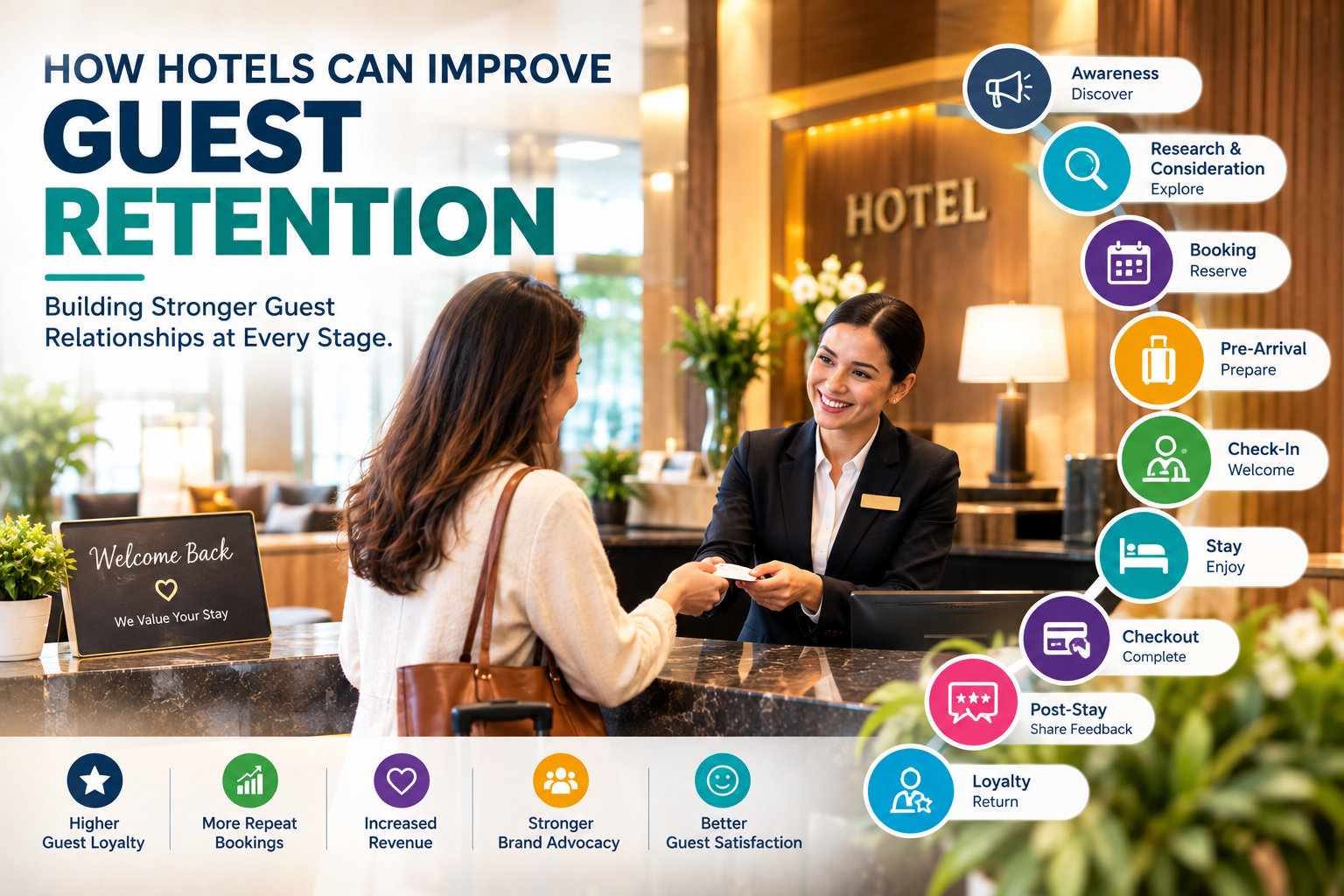
    How Hotels Can Improve Guest Retention: Strategies for Building Long-Term Guest Relationships

    Attracting a new guest is important, but encouraging that guest to return can be equally valuable for a hotel. A guest who has already experienced a property’s service understands its location, facilities, staff, and overall experience. If the stay was positive, that familiarity can create a strong foundation for future bookings.

    Guest retention is therefore an important part of long-term hospitality management. It involves creating experiences that encourage guests to choose the same hotel again while building trust and maintaining meaningful relationships between stays.

    In a competitive hospitality market, hotels cannot rely only on discounts to bring guests back. Consistent service, personalization, convenience, communication, loyalty initiatives, and effective service recovery can all contribute to stronger guest relationships.

    At BookSmart, we believe that guest retention begins with understanding what guests value and consistently delivering an experience that gives them a reason to return.

    What Is Guest Retention in Hospitality?

    Guest retention refers to a hotel’s ability to encourage existing guests to return for future stays rather than choosing another property.

    Retention can involve several types of returning guests, including:

    • Business travelers returning to the same city
    • Families returning for holidays
    • Guests visiting the same destination regularly
    • Corporate travelers with recurring accommodation needs
    • Loyalty program members
    • Guests who recommend the hotel to others

    A strong retention strategy focuses on the entire guest relationship rather than a single booking.

    Why Guest Retention Matters for Hotels

    Existing guests already have some familiarity with a hotel. They may know its services, location, room types, and booking process.

    A returning guest may also require less introductory communication than someone who has never stayed at the property.

    More importantly, repeat guests can become valuable sources of long-term business and referrals.

    Strong retention can help hotels:

    • Increase repeat bookings
    • Strengthen guest loyalty
    • Improve customer lifetime value
    • Encourage direct bookings
    • Generate referrals
    • Build stronger brand relationships
    • Reduce dependence on constant customer acquisition

    However, retention should always be based on genuine guest satisfaction rather than simply trying to prevent guests from considering alternatives.

    Deliver Consistent Guest Experiences

    Consistency is one of the foundations of guest retention.

    A guest who enjoyed excellent service during one visit may expect a similar standard during the next.

    Hotels should therefore establish clear service standards across departments.

    Consistency can include:

    • Room cleanliness
    • Front desk service
    • Check-in and checkout
    • Food quality
    • Response times
    • Maintenance
    • Communication
    • Billing accuracy

    Consistency does not mean every stay needs to be identical. It means guests can reasonably expect the hotel to deliver its promised level of service.

    Personalize the Guest Experience

    Personalization can make returning guests feel recognized and valued.

    Hotels can use appropriate guest information to understand preferences such as room types, communication preferences, dining interests, or previous requests.

    For example, if a guest regularly requests a particular type of room, the hotel can take that preference into account when appropriate.

    Personalization should always be handled responsibly and in accordance with applicable privacy requirements.

    The objective is not to collect as much information as possible, but to use relevant information to make the guest experience more convenient.

    Create an Effective Loyalty Program

    Loyalty programs can provide a structured way to encourage repeat stays.

    Hotels can offer benefits such as:

    • Member-only rates
    • Reward points
    • Room-related benefits
    • Special packages
    • Dining offers
    • Flexible benefits
    • Personalized experiences

    However, successful loyalty programs need to offer benefits that guests actually value.

    A complicated program with difficult-to-understand rules may discourage participation.

    Hotels should make membership easy to understand and provide clear information about how guests can earn and use benefits.

    Make Direct Booking More Valuable

    Hotels can use their direct booking channels to develop stronger relationships with guests.

    When guests book directly through a hotel’s website or other owned channels, the property can communicate with them more directly throughout the customer journey.

    Hotels can make direct booking attractive through appropriate benefits, such as member rates, flexible booking conditions, or additional services.

    The focus should be on providing genuine value rather than simply offering discounts.

    Communicate Before, During, and After the Stay

    Guest relationships do not begin at check-in and end at checkout.

    Hotels can communicate with guests at different stages of the customer lifecycle.

    Before arrival, communication can provide useful information about check-in, transportation, facilities, or special requests.

    During the stay, guests can be given convenient ways to request services or ask questions.

    After checkout, hotels can thank guests, invite feedback, and share relevant information about future stays.

    Communication should be timely and useful rather than excessive.

    Use Guest Feedback to Improve Service

    Guest feedback provides valuable information about what is working and what needs improvement.

    Hotels can collect feedback through:

    • Post-stay surveys
    • Online reviews
    • Direct conversations
    • Digital feedback forms
    • Customer service interactions

    The important step is acting on the information.

    If several guests report the same issue, management should investigate the underlying cause.

    Guests are more likely to develop trust when they see that feedback leads to meaningful improvements.

    Respond Effectively to Complaints

    Even well-managed hotels will occasionally receive complaints.

    The way a hotel responds can influence whether an unhappy guest decides to return.

    Employees should listen carefully, acknowledge the concern, explain the next steps, and work toward an appropriate resolution.

    Service recovery should not simply focus on closing a complaint. Hotels should also analyze recurring complaints to determine whether operational changes are required.

    A problem that is repeatedly solved for individual guests but never addressed at its source can continue affecting future stays.

    Empower Employees to Solve Guest Problems

    Frontline employees often have the greatest influence on the guest experience.

    Giving employees appropriate authority to resolve reasonable guest issues can improve service responsiveness.

    For example, employees may be allowed to provide certain service adjustments or escalate issues through clearly defined procedures.

    Empowerment should be supported by training and clear guidelines.

    Employees need to understand both what they can do independently and when management approval is required.

    Make Returning Guests Feel Recognized

    Recognition can be a simple but meaningful part of guest retention.

    Hotels can acknowledge returning guests through appropriate service interactions, loyalty benefits, or personalized communication.

    Recognition does not always require expensive upgrades or complimentary services.

    A professional welcome, remembering a relevant preference, or making the arrival process easier can create a positive impression.

    The goal is to demonstrate that the hotel values the ongoing relationship.

    Improve Convenience Through Technology

    Technology can remove friction from the guest journey.

    Hotels can use digital tools to provide:

    • Online booking
    • Digital check-in options
    • Mobile communication
    • Digital payments
    • Service requests
    • Personalized notifications
    • Digital loyalty accounts

    Technology should make interactions easier rather than create additional complexity.

    Hotels should also provide human assistance when guests prefer traditional service or need help with digital processes.

    Build a Strong Guest Relationship Through CRM

    Customer Relationship Management systems can help hotels organize guest information and interactions.

    A hospitality CRM can potentially bring together relevant information about bookings, preferences, communication, feedback, and loyalty participation.

    This allows hotels to understand guest relationships more effectively.

    For example, marketing teams can use appropriate historical information to create relevant offers for previous guests.

    CRM systems should be managed carefully, with appropriate privacy controls and responsible use of guest information.

    Create Relevant Offers

    Hotels can encourage repeat stays through offers that match guest interests.

    For example, a business traveler may be interested in convenient weekday accommodation, while a family may be more interested in holiday packages.

    Relevant offers are generally more useful than sending the same promotion to every guest.

    Hotels can use customer segmentation to create communication groups based on factors such as travel purpose, booking behavior, destination preferences, or loyalty status.

    The objective is to make offers more relevant rather than simply increasing the number of promotional messages.

    Stay Connected Between Visits

    The relationship with a guest should not disappear after checkout.

    Hotels can maintain appropriate engagement through:

    • Destination information
    • Seasonal updates
    • Loyalty communications
    • Relevant travel content
    • Special events
    • Personalized offers

    The frequency of communication should depend on guest preferences and the value of the information being shared.

    Too many irrelevant messages can cause guests to disengage.

    Build Emotional Connections

    Hospitality is not only about rooms and facilities. It is also about how guests feel during their stay.

    Employees can create positive emotional connections through genuine communication, empathy, attention to detail, and thoughtful service.

    Small moments can become memorable.

    A warm welcome, assistance during a difficult situation, or thoughtful response to a special request can influence how guests remember a property.

    These experiences can become an important part of a hotel’s relationship with returning guests.

    Maintain Quality Across Every Department

    Guest retention is not the responsibility of the front office alone.

    Housekeeping, food and beverage, maintenance, reservations, sales, security, and management all contribute to the guest experience.

    A hotel may provide excellent reception service, but repeated housekeeping problems can still affect the guest’s decision to return.

    Hotels should therefore monitor service quality across the entire guest journey.

    Cross-department communication can help ensure that guest needs are addressed consistently.

    Use Data to Understand Retention

    Hotels can use data to understand guest retention patterns.

    Useful metrics include:

    • Repeat booking rate
    • Guest lifetime value
    • Loyalty membership
    • Direct booking percentage
    • Guest satisfaction
    • Review trends
    • Cancellation behavior
    • Average number of stays per guest

    These metrics can help hotels identify which guest groups return most frequently and which experiences may influence retention.

    Data should support decision-making rather than replace human understanding of guest needs.

    Make the Booking Process Easy for Returning Guests

    Returning guests should not have to repeat unnecessary steps every time they book.

    Hotels can make repeat booking easier through saved preferences, loyalty accounts, mobile-friendly websites, and streamlined booking processes.

    Where appropriate and permitted, relevant guest information can be used to reduce friction.

    A simple booking experience can remove one of the barriers to choosing the same hotel again.

    Avoid Relying Only on Discounts

    Discounts can attract attention, but they should not become the foundation of guest retention.

    If guests return only when prices are reduced, the hotel may struggle to maintain profitability.

    A stronger retention strategy combines competitive pricing with service quality, convenience, recognition, personalization, and meaningful benefits.

    Guests should have reasons to return beyond price.

    Train Employees for Relationship-Based Hospitality

    Employees need appropriate training to support guest retention.

    Training can cover:

    • Communication
    • Personalization
    • Complaint handling
    • Service recovery
    • Guest recognition
    • Problem-solving
    • Digital tools
    • Cultural awareness

    Employees should understand that every interaction can influence the guest’s perception of the hotel.

    Training should also be continuous rather than limited to the employee’s first few days.

    The Role of Artificial Intelligence in Guest Retention

    Artificial Intelligence can support retention by analyzing guest behavior and identifying patterns.

    Potential applications include:

    • Personalized recommendations
    • Guest segmentation
    • Predictive analytics
    • Automated customer support
    • Sentiment analysis
    • Targeted communication
    • Demand forecasting

    AI can help hotels process large amounts of information efficiently.

    However, guest retention should not become completely automated. Human interaction remains an important part of hospitality, particularly when guests have complex needs or concerns.

    Measuring the Success of Guest Retention Strategies

    Hotels should regularly evaluate whether their retention initiatives are working.

    Important indicators include:

    1. Repeat guest percentage
    2. Repeat booking frequency
    3. Customer lifetime value
    4. Loyalty program engagement
    5. Direct booking rate
    6. Guest satisfaction
    7. Online review trends
    8. Complaint resolution
    9. Referral activity

    These measurements can help management understand which areas require improvement.

    Conclusion

    Guest retention is about creating a hotel experience that guests trust and want to experience again. While pricing and promotions can influence booking decisions, long-term retention depends on a much broader combination of service quality, consistency, personalization, convenience, recognition, communication, and relationship management.

    Hotels can strengthen retention by delivering consistent experiences, creating useful loyalty programs, using CRM systems responsibly, listening to feedback, empowering employees, simplifying technology, and staying connected with guests between visits.

    At BookSmart, we believe that successful guest retention begins with a simple principle: every stay should create a reason for the guest to consider returning. When hotels combine thoughtful hospitality with smart technology and data-driven insights, they can build stronger guest relationships while creating sustainable opportunities for repeat business.

    The future of hospitality will increasingly focus on relationships rather than individual transactions. Hotels that understand their guests, respect their preferences, and consistently deliver meaningful experiences can create a guest journey that continues well beyond a single stay.

  • Hospitality Customer Lifecycle Management: Building Stronger Guest Relationships at Every Stage

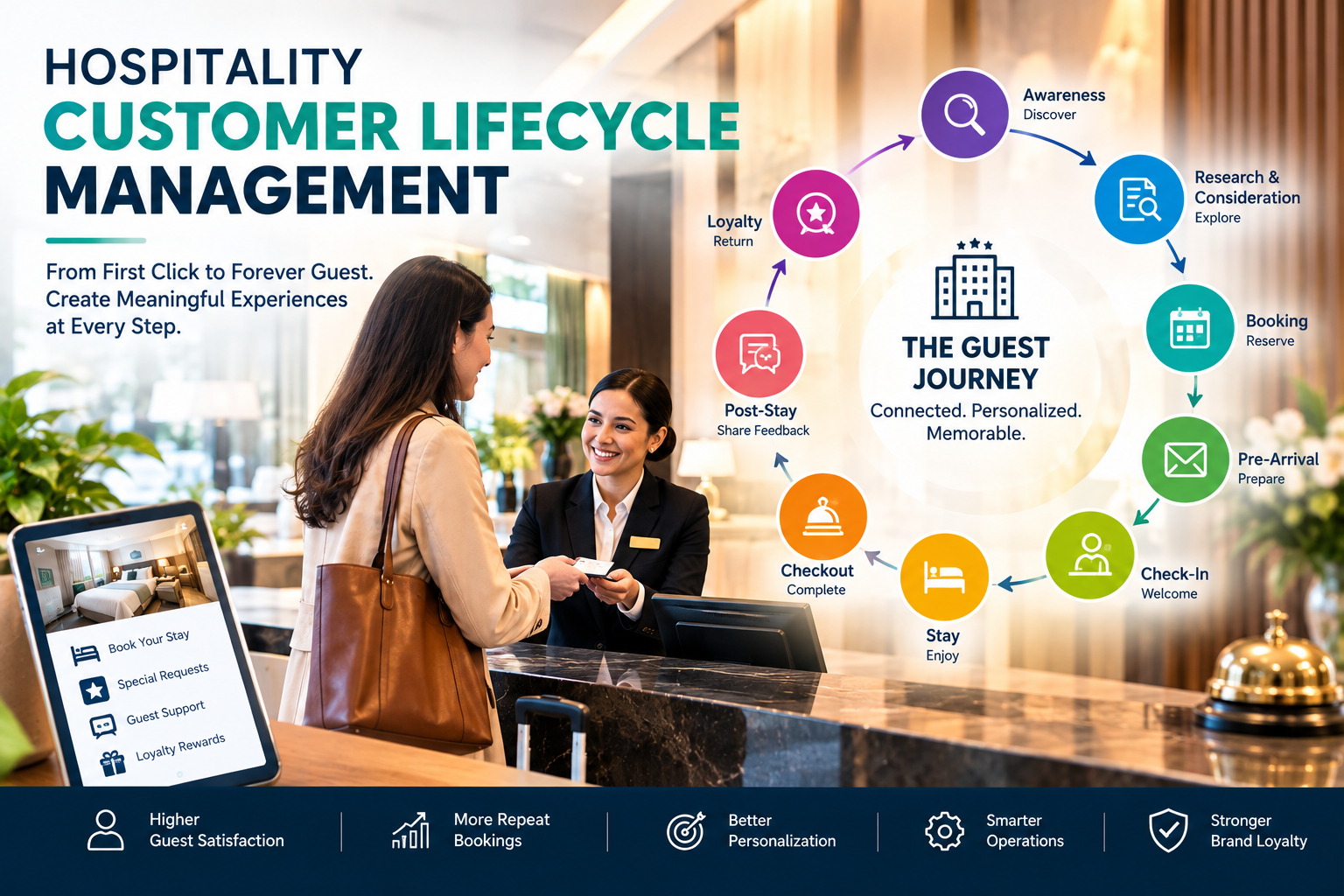
    Hospitality Customer Lifecycle Management: Building Stronger Guest Relationships at Every Stage

    The relationship between a hotel and its guests does not begin when a guest walks through the front door. It starts much earlier, when a potential traveler first discovers a property, visits its website, reads reviews, compares prices, or makes an inquiry. Similarly, the relationship does not necessarily end at checkout. Post-stay communication, reviews, loyalty programs, and future booking opportunities can continue the relationship long after the guest has left.

    This complete journey is known as the customer lifecycle. Hospitality customer lifecycle management focuses on understanding and managing every stage of this journey so hotels can provide relevant experiences, improve guest satisfaction, and build stronger long-term relationships.

    At BookSmart, we believe that effective customer lifecycle management allows hotels to move beyond individual bookings and create meaningful guest relationships that can support repeat business and sustainable growth.

    What Is Hospitality Customer Lifecycle Management?

    Hospitality customer lifecycle management is the process of managing a guest’s interactions with a hotel from the first point of awareness through booking, stay, checkout, and post-stay engagement.

    A typical hotel customer lifecycle can include several stages:

    • Awareness
    • Research and consideration
    • Booking
    • Pre-arrival
    • Check-in
    • Stay
    • Checkout
    • Post-stay engagement
    • Loyalty and repeat booking

    Each stage provides an opportunity for hotels to understand guest expectations and deliver appropriate communication or services.

    The objective is not to communicate with guests constantly. Instead, hotels should provide useful and timely interactions that make the guest journey easier and more personalized.

    Why Customer Lifecycle Management Matters in Hospitality

    Guests interact with hotels through multiple channels. They may discover a property through search engines, social media, travel platforms, recommendations, advertisements, or direct referrals.

    Managing these interactions separately can create inconsistent experiences.

    A customer lifecycle strategy helps hotels connect different touchpoints and develop a more complete understanding of guest needs.

    Effective lifecycle management can help hotels:

    • Improve guest satisfaction
    • Increase direct bookings
    • Encourage repeat stays
    • Personalize communication
    • Strengthen customer loyalty
    • Improve marketing efficiency
    • Identify guest preferences
    • Increase the value of existing customers

    It can also help hotels understand where potential guests are being lost during the booking journey.

    Stage 1: Creating Awareness

    The customer lifecycle begins when travelers become aware of a hotel.

    Hotels can build awareness through websites, search engines, social media, travel platforms, online advertising, content marketing, reviews, and recommendations.

    At this stage, potential guests may not yet be ready to make a booking. They are usually exploring destinations, comparing accommodation options, and forming their initial impressions.

    Hotels should therefore focus on providing useful and accurate information rather than relying only on promotional messaging.

    High-quality photographs, clear property information, location details, amenities, guest reviews, and useful destination content can help travelers understand what the hotel offers.

    Stage 2: Research and Consideration

    Once travelers become interested in a property, they usually begin comparing options.

    They may compare:

    • Room prices
    • Location
    • Amenities
    • Reviews
    • Cancellation policies
    • Dining options
    • Facilities
    • Room types
    • Guest experiences

    This stage is particularly important because travelers can easily switch between competing properties.

    Hotels can improve the consideration stage by providing clear information and making their websites easy to navigate.

    Fast-loading pages, transparent pricing, detailed room descriptions, and simple booking processes can reduce uncertainty.

    Guest reviews are also important because travelers often use the experiences of previous guests to assess a property.

    Stage 3: Booking

    The booking stage is where interest becomes a confirmed reservation.

    A complicated booking process can cause potential guests to abandon their purchase.

    Hotels should make booking as simple as possible across desktop and mobile devices.

    A well-designed booking journey should provide:

    • Clear room options
    • Transparent pricing
    • Available dates
    • Relevant policies
    • Secure payment options
    • Confirmation details

    Hotels can also use booking data to understand guest preferences and prepare for the next stage of the lifecycle.

    Stage 4: Pre-Arrival Engagement

    The customer relationship continues after the reservation is confirmed.

    Pre-arrival communication can help guests prepare for their stay while giving hotels an opportunity to provide useful information.

    Hotels may communicate information about:

    • Check-in times
    • Directions
    • Parking
    • Hotel facilities
    • Dining options
    • Local attractions
    • Special requests
    • Available upgrades

    The goal should be to make the arrival experience easier.

    Hotels should avoid sending excessive messages. Communication should be relevant to the guest’s reservation and preferences.

    Stage 5: Check-In Experience

    The arrival experience creates an important impression.

    Guests may have traveled for several hours before reaching the hotel, so a smooth and welcoming check-in process can set the tone for their stay.

    Technology can support this stage through digital registration, mobile communication, automated notifications, and other convenient options.

    However, technology should complement human hospitality.

    A friendly welcome, clear communication, and willingness to assist can be just as important as an efficient digital process.

    Stage 6: Managing the Guest Stay

    The stay stage is where hotels have the greatest opportunity to deliver their promised experience.

    Every interaction can influence guest satisfaction.

    This includes:

    • Room cleanliness
    • Front desk service
    • Housekeeping
    • Food and beverage
    • Maintenance
    • Concierge support
    • Amenities
    • Response to requests
    • Problem resolution

    Hotels can use customer relationship management systems and guest-service platforms to organize guest preferences and requests.

    For example, if a guest has previously requested a particular room feature or service, relevant information can potentially be used to improve future interactions, subject to appropriate privacy practices.

    Personalization During the Guest Journey

    Personalization has become increasingly important in hospitality.

    Guests may appreciate experiences that reflect their needs and preferences rather than generic communication.

    Personalization can include:

    • Relevant room recommendations
    • Personalized offers
    • Preferred communication channels
    • Customized dining suggestions
    • Special occasion recognition
    • Relevant local recommendations

    However, personalization should be useful rather than intrusive.

    Hotels should use guest information responsibly and transparently, following applicable privacy and data-protection requirements.

    Stage 7: Handling Guest Feedback and Service Recovery

    Not every hotel stay will be perfect.

    Guests may encounter problems involving rooms, service, billing, facilities, or other aspects of their experience.

    Customer lifecycle management should therefore include a structured approach to feedback and service recovery.

    Hotels should make it easy for guests to communicate concerns.

    Once a problem is identified, employees should respond appropriately and attempt to resolve the issue as efficiently as possible.

    A well-managed service recovery experience can influence how guests remember the overall stay.

    Hotels should also analyze recurring complaints to identify operational problems rather than treating each complaint as an isolated incident.

    Stage 8: Checkout

    Checkout is another important lifecycle touchpoint.

    Hotels should aim to make the process efficient and transparent.

    Digital invoices, convenient payment options, and clear billing information can simplify departure.

    Employees can also use the opportunity to thank guests and provide information about future communication or loyalty benefits where appropriate.

    A positive final interaction can help create a strong overall impression.

    Stage 9: Post-Stay Engagement

    The relationship should not automatically end after checkout.

    Hotels can follow up with guests through appropriate post-stay communication.

    This may include:

    • Thank-you messages
    • Feedback requests
    • Review invitations
    • Relevant future offers
    • Loyalty information
    • Destination content

    Post-stay communication should provide genuine value rather than simply sending repeated promotional messages.

    Feedback can also help hotels identify opportunities for operational improvement.

    Using CRM Systems for Customer Lifecycle Management

    Customer Relationship Management systems can play an important role in managing the hospitality customer lifecycle.

    A hotel CRM can help organize information related to guest interactions, preferences, bookings, communication, and loyalty.

    When connected appropriately with other hotel systems, CRM technology can provide a more complete view of the guest relationship.

    For example, marketing teams can use relevant booking information to create more targeted communication, while service teams can access appropriate guest information to support the stay.

    The Role of Data Analytics

    Data analytics can help hotels understand customer behavior across the lifecycle.

    Hotels can analyze metrics such as:

    • Website visits
    • Booking conversion rates
    • Cancellation rates
    • Average booking value
    • Guest satisfaction
    • Repeat booking rates
    • Loyalty participation
    • Review scores
    • Communication engagement

    These insights can help management identify where improvements are needed.

    For example, if many potential guests visit a booking page but do not complete reservations, the hotel may investigate pricing, website usability, booking complexity, or other factors.

    Artificial Intelligence in Customer Lifecycle Management

    Artificial Intelligence is creating new possibilities for hospitality customer lifecycle management.

    AI-powered systems can analyze large amounts of guest and operational data to identify patterns and support personalization.

    Potential applications include:

    • Predictive guest preferences
    • Personalized recommendations
    • Automated customer support
    • Demand forecasting
    • Sentiment analysis
    • Targeted communication
    • Guest segmentation

    AI can help hotels process information more efficiently, but human oversight remains important.

    Guest communication should continue to feel natural and respectful rather than entirely automated.

    Omnichannel Guest Communication

    Modern guests may communicate with hotels through websites, email, mobile applications, messaging platforms, social media, phone calls, and online travel platforms.

    An omnichannel approach aims to provide a consistent experience across these touchpoints.

    For example, a guest who begins an inquiry through a website should not have to repeat all their information when continuing the conversation through another appropriate channel.

    Connecting communication systems can make interactions more convenient for both guests and hotel employees.

    Loyalty and Repeat Bookings

    The final objective of effective customer lifecycle management is not simply completing one transaction.

    Hotels can use lifecycle insights to encourage repeat relationships.

    Loyalty programs may provide benefits such as:

    • Member rates
    • Exclusive offers
    • Room-related benefits
    • Personalized experiences
    • Recognition
    • Reward points

    However, loyalty extends beyond formal programs.

    Guests may return because they trust a hotel, appreciate its service, enjoy its location, or consistently receive a positive experience.

    Consistent service quality is therefore one of the strongest foundations for long-term guest relationships.

    Measuring Customer Lifecycle Performance

    Hotels should measure the effectiveness of their lifecycle strategies.

    Important metrics can include:

    1. Booking conversion rate
    2. Direct booking percentage
    3. Customer acquisition cost
    4. Average booking value
    5. Guest satisfaction
    6. Review performance
    7. Repeat booking rate
    8. Customer lifetime value
    9. Loyalty participation
    10. Post-stay engagement

    These metrics can help hotels understand both marketing performance and the quality of the overall guest relationship.

    Challenges in Customer Lifecycle Management

    Implementing a lifecycle strategy can create several challenges.

    Hotels may deal with fragmented systems, incomplete guest information, inconsistent communication, employee training requirements, and data privacy considerations.

    Another challenge is avoiding excessive personalization or communication.

    Hotels need to find the right balance between being helpful and overwhelming guests.

    Successful lifecycle management requires coordination between marketing, reservations, front office, housekeeping, food and beverage, technology, and management teams.

    The Future of Hospitality Customer Lifecycle Management

    The future of customer lifecycle management will likely become increasingly connected and data-driven.

    AI, CRM platforms, mobile technology, automation, predictive analytics, and integrated hotel systems can help properties understand guest journeys in greater detail.

    Hotels may increasingly anticipate guest needs before they are expressed.

    However, technology should support—not replace—the human side of hospitality.

    Guests still value genuine communication, empathy, attention to detail, and responsive service.

    Conclusion

    Hospitality customer lifecycle management provides hotels with a structured way to understand and improve the complete guest journey. From initial discovery and booking to pre-arrival communication, the stay, checkout, feedback, and future bookings, every interaction can influence the guest relationship.

    Technology, CRM systems, automation, analytics, and AI can help hotels connect these touchpoints and provide more relevant experiences. At the same time, successful lifecycle management depends on strong service, thoughtful communication, responsible data use, and employee engagement.

    At BookSmart, we believe that every guest interaction is an opportunity to create value. Hotels that understand the customer lifecycle can move beyond managing individual bookings and build stronger, more consistent relationships that support guest satisfaction and long-term business growth.

  • The Role of Technology in Housekeeping: How Hotels Are Transforming Room Operations

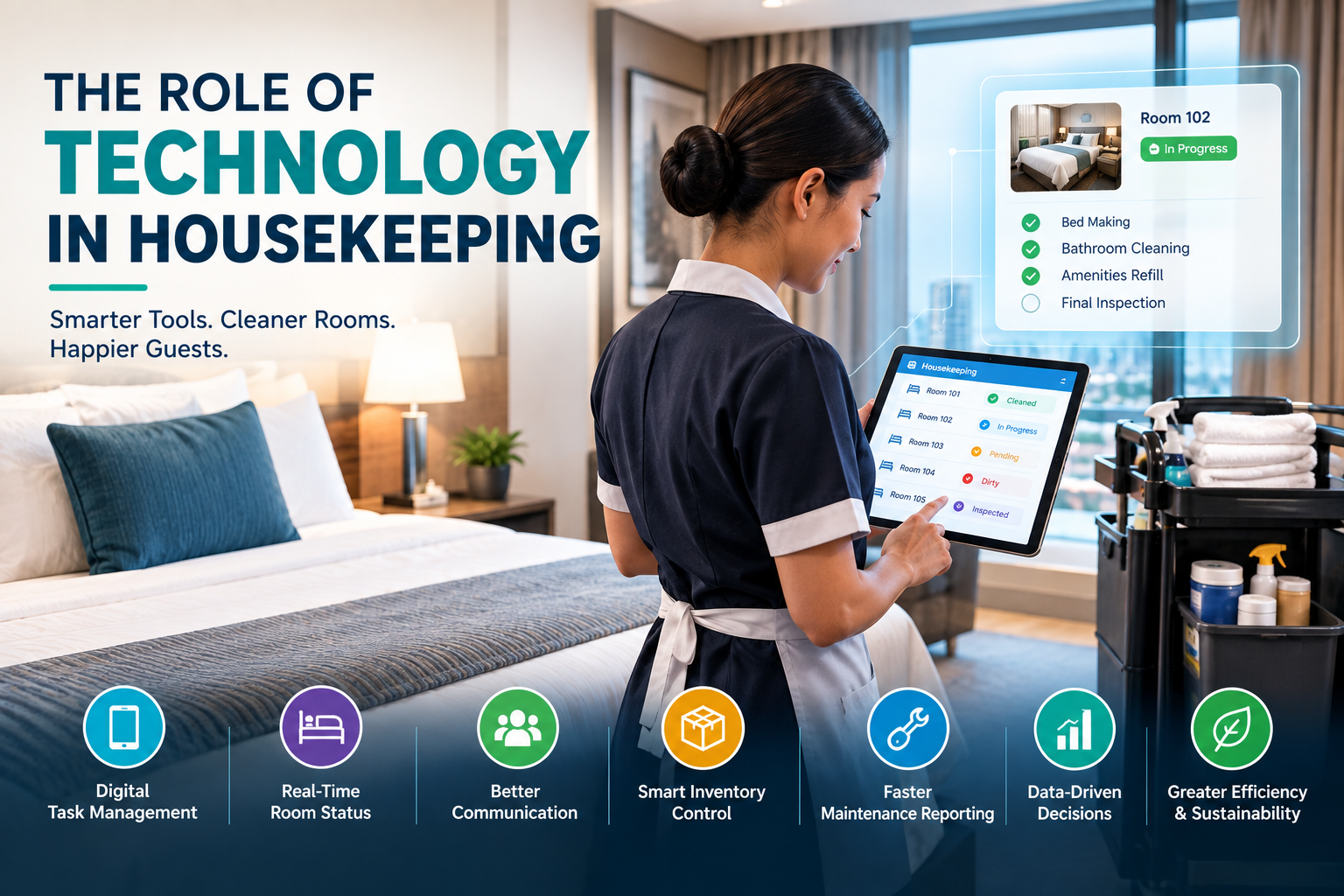
    The Role of Technology in Housekeeping: How Hotels Are Transforming Room Operations

    Housekeeping is one of the most important departments in any hotel. Clean, comfortable, and well-maintained rooms have a direct impact on guest satisfaction and the overall reputation of a property. However, housekeeping is also a highly operational department that involves managing room status, employee schedules, cleaning supplies, maintenance requests, linen, inspections, and changing guest requirements.

    As hotels adopt digital solutions across their operations, technology is transforming the way housekeeping teams work. From mobile housekeeping applications and real-time room-status updates to automated task allocation, smart devices, and data analytics, technology can help housekeeping departments become more organized, responsive, and efficient.

    At BookSmart, we believe that technology should support housekeeping employees rather than replace the human element of hospitality. When implemented thoughtfully, digital tools can reduce administrative work, improve communication, and allow housekeeping teams to focus more effectively on delivering clean and comfortable guest environments.

    Why Technology Matters in Hotel Housekeeping

    Traditional housekeeping operations often depend on paper checklists, phone calls, walkie-talkies, spreadsheets, and manual room-status updates. These methods can work, but they may create delays when hotels become busy.

    A room may be cleaned but not immediately marked as ready. A maintenance issue may take time to reach the engineering team. A supervisor may need to physically check multiple rooms before updating their status.

    Technology can connect these activities.

    A digital housekeeping system can provide employees and managers with real-time information about room assignments, cleaning progress, inspections, maintenance issues, and priority requests.

    This creates a more coordinated workflow between housekeeping and other hotel departments.

    Digital Housekeeping Management Systems

    One of the most significant developments in hotel housekeeping is the adoption of digital housekeeping management systems.

    These platforms can allow housekeeping employees to access room assignments through smartphones or tablets instead of relying on printed lists.

    Employees can see which rooms need cleaning, update their progress, and report problems directly through the system.

    Supervisors can monitor progress without constantly contacting individual employees.

    This can be especially useful during busy periods when large numbers of rooms need to be prepared quickly.

    Real-Time Room Status Updates

    Accurate room-status information is essential for hotel operations.

    Front desk employees need to know whether rooms are vacant, occupied, being cleaned, inspected, or ready for guests.

    Technology allows housekeeping teams to update room status in real time.

    For example, when a room has been cleaned, the employee can update its status through a mobile device. A supervisor can then inspect the room and mark it as ready.

    The front desk can receive the updated information through an integrated hotel system.

    This reduces communication delays and can help hotels make rooms available to arriving guests more efficiently.

    Automated Task Assignment

    Housekeeping managers often need to distribute room-cleaning assignments across employees.

    Digital systems can assist with task allocation based on factors such as room type, floor, workload, priority, and employee availability.

    Instead of manually preparing assignments every morning, managers can use technology to organize workloads more efficiently.

    Automated task allocation can also help supervisors make adjustments when occupancy changes or employees become unavailable.

    However, human judgment remains important. Managers may need to consider employee experience, special guest requirements, room complexity, and other factors that automated systems cannot fully understand.

    Mobile Devices for Housekeeping Teams

    Mobile phones and tablets can give housekeeping employees access to important information while they are working.

    Depending on the hotel’s system, employees may be able to:

    • View room assignments
    • Update room status
    • Report maintenance issues
    • Request supplies
    • Record lost-and-found items
    • Receive special instructions
    • Communicate with supervisors

    This reduces the need to return to a central office simply to receive or provide information.

    It can also reduce paper-based processes and make housekeeping operations more responsive.

    Faster Communication With Maintenance Teams

    Housekeeping employees are often the first people to notice maintenance problems in guest rooms.

    These may include leaking faucets, damaged furniture, malfunctioning lights, air-conditioning problems, plumbing issues, or electrical concerns.

    In a manual system, employees may need to call or inform a supervisor, who then contacts the maintenance team.

    Digital systems can allow housekeeping employees to report maintenance issues immediately.

    The engineering team can receive the request, assign it to a technician, update the status, and notify housekeeping when the issue is resolved.

    This creates a clearer maintenance workflow and reduces the chance of problems being forgotten.

    Technology for Linen Management

    Linen management is another area where technology can support housekeeping operations.

    Hotels need to manage large quantities of bedsheets, towels, pillowcases, uniforms, and other textile products.

    Digital inventory systems can help track linen quantities, usage, replacement requirements, and losses.

    This information can help housekeeping managers identify unusual consumption patterns and maintain appropriate stock levels.

    Technology can also support coordination between housekeeping and laundry operations.

    Smart Inventory Management

    Housekeeping departments use a wide range of supplies, including cleaning products, toiletries, tissues, garbage bags, amenities, and equipment.

    Manual inventory tracking can make it difficult to determine exactly when supplies need to be reordered.

    Digital inventory systems can track stock levels and provide alerts when supplies fall below predefined thresholds.

    This can reduce the risk of running out of essential products while also preventing excessive purchasing.

    Hotels can use historical consumption data to forecast future requirements more accurately.

    Housekeeping Inspections Through Digital Checklists

    Room inspections are essential for maintaining quality standards.

    Traditionally, supervisors may use paper checklists to inspect rooms.

    Digital inspection systems can replace these paper forms with mobile checklists.

    Supervisors can record whether specific areas meet hotel standards and report issues immediately.

    Digital inspection records also make it easier for managers to identify recurring problems.

    For example, if the same issue repeatedly appears in particular rooms, management can investigate whether there is an underlying maintenance or training problem.

    Using Data Analytics in Housekeeping

    Housekeeping generates valuable operational data.

    Hotels can analyze information such as:

    • Average room cleaning time
    • Number of rooms cleaned per employee
    • Room inspection results
    • Maintenance requests
    • Supply consumption
    • Linen usage
    • Guest requests
    • Room readiness times

    This information can help managers understand operational performance.

    For example, if cleaning times consistently increase on certain floors, managers can investigate whether room layouts, equipment, staffing, or other factors are contributing to the difference.

    Data should be used to improve processes rather than simply measure employee performance.

    Predictive Maintenance and Housekeeping

    Technology can also help housekeeping teams identify maintenance issues before they become major problems.

    Smart building systems and connected devices can monitor certain equipment and identify unusual performance.

    For example, a smart system may detect unusual temperature patterns or equipment behavior that could indicate a potential issue.

    Housekeeping employees can also contribute by reporting small problems during routine room cleaning.

    Combining employee observations with technology can support preventive maintenance.

    AI and Intelligent Housekeeping Operations

    Artificial Intelligence is creating new possibilities for hotel housekeeping.

    AI-powered systems can potentially analyze occupancy data, expected arrivals, departures, room priorities, cleaning times, and staffing information to help managers plan workloads.

    AI can also identify patterns in guest requests and operational data.

    For example, if a hotel regularly experiences increased housekeeping demand at particular times, predictive analytics can help managers prepare staffing and room-cleaning schedules.

    AI should remain a decision-support tool rather than completely replacing human judgment.

    Improving Guest Requests

    Guests frequently make housekeeping-related requests, such as asking for additional towels, toiletries, pillows, blankets, or cleaning services.

    Digital guest communication platforms can allow guests to submit requests through mobile applications or other hotel communication channels.

    The request can then be automatically routed to the appropriate department.

    Housekeeping employees can receive the task, complete it, and update its status.

    This provides greater visibility and can help reduce delays.

    Contactless Housekeeping Services

    Technology has also enabled more flexible housekeeping options.

    Guests may be able to communicate their preferred cleaning schedule digitally or request service when convenient.

    Some hotels use digital systems to allow guests to choose whether they want daily housekeeping or specific service times.

    This can help housekeeping teams plan workloads while giving guests greater control over their stay.

    Technology and Employee Training

    Technology is only effective when employees understand how to use it.

    Hotels should provide adequate training whenever new housekeeping systems are introduced.

    Training should cover:

    • Mobile applications
    • Digital room-status updates
    • Maintenance reporting
    • Inventory management
    • Digital inspections
    • Data security
    • Guest communication

    Employees should also understand why the system is being introduced.

    When staff members see how technology reduces unnecessary work and improves communication, adoption can become easier.

    Improving Sustainability Through Technology

    Digital housekeeping technology can support hotel sustainability initiatives.

    Accurate inventory tracking can reduce over-purchasing and waste.

    Smart systems can help optimize cleaning schedules and resource usage.

    Digital communication and checklists can reduce paper consumption.

    Hotels can also use data to monitor water, energy, laundry, and cleaning-product usage.

    Technology therefore has the potential to support both operational efficiency and environmental responsibility.

    Challenges of Technology Adoption in Housekeeping

    Technology can provide significant benefits, but implementation also comes with challenges.

    Hotels may need to manage:

    • Initial technology costs
    • Employee training
    • System integration
    • Device maintenance
    • Internet connectivity
    • Data security
    • Employee resistance to change

    Older hotels may also have legacy systems that are difficult to integrate with modern housekeeping platforms.

    Successful implementation requires careful planning and employee involvement.

    Protecting Guest and Employee Data

    Digital housekeeping systems may contain sensitive operational and guest information.

    Hotels should ensure that systems are protected through appropriate access controls, secure authentication, data protection practices, and employee training.

    Employees should only have access to the information required for their responsibilities.

    Cybersecurity should be considered whenever new digital systems are introduced.

    Balancing Technology With Human Hospitality

    Despite rapid technological development, housekeeping remains a people-centered function.

    Guests expect rooms to be clean, comfortable, and properly maintained. Technology can help employees achieve these goals, but it cannot replace attention to detail, professionalism, and care.

    Hotels should therefore use technology to remove unnecessary administrative work and improve coordination.

    The objective should be to give employees better tools—not to make hospitality feel impersonal.

    The Future of Technology in Housekeeping

    The future of hotel housekeeping is likely to involve greater automation, connected devices, artificial intelligence, robotics, and predictive analytics.

    Robotic technologies may eventually assist with selected repetitive tasks in certain properties.

    AI-driven platforms may help forecast room-cleaning requirements and optimize staffing.

    IoT devices may provide real-time information about equipment and room conditions.

    However, adoption will vary depending on hotel size, budget, infrastructure, and guest expectations.

    Technology will continue to evolve, but successful hotels will focus on solutions that create measurable operational value.

    Conclusion

    Technology is transforming hotel housekeeping by improving communication, room-status visibility, task management, inventory control, inspections, maintenance reporting, and operational planning.

    Digital housekeeping platforms, mobile devices, automated workflows, data analytics, smart inventory systems, and AI-powered tools can help hotels create more efficient and responsive housekeeping operations.

    At BookSmart, we believe technology should empower housekeeping teams rather than replace the human qualities that make hospitality special. When digital tools are combined with skilled employees, clear processes, and strong service standards, hotels can improve operational efficiency while maintaining the cleanliness and comfort guests expect.

    As the hospitality industry continues its digital transformation, housekeeping will become increasingly connected to the wider hotel technology ecosystem. Hotels that adopt technology thoughtfully can build housekeeping operations that are more organized, data-driven, sustainable, and prepared for the future.

  • Hospitality Procurement Automation: Transforming Hotel Purchasing for Greater Efficiency

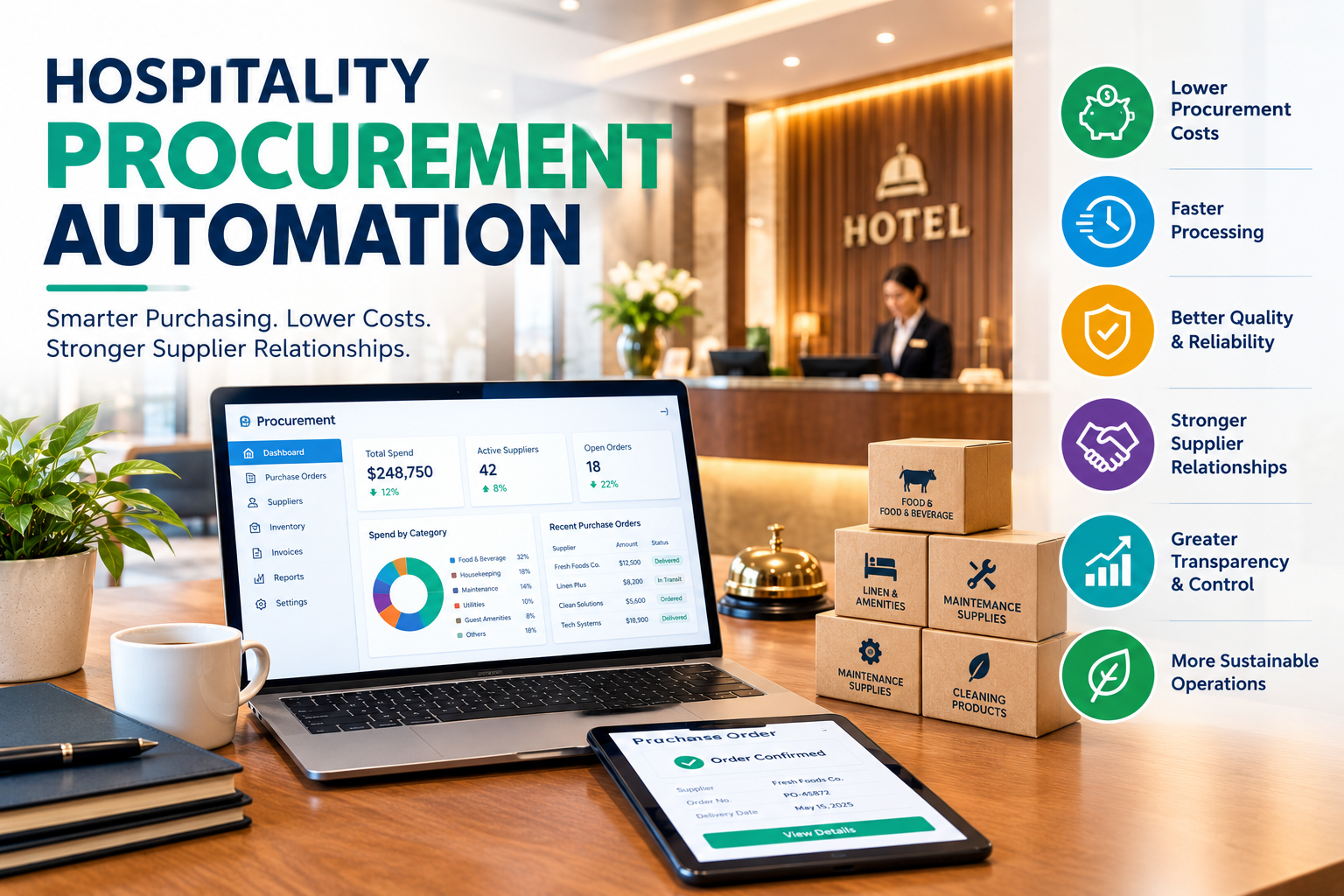
    Hospitality Procurement Automation: Transforming Hotel Purchasing for Greater Efficiency

    Procurement is one of the most important behind-the-scenes functions in the hospitality industry. Hotels continuously purchase food, beverages, linens, toiletries, cleaning supplies, maintenance equipment, technology, furniture, and many other products and services. Managing all these purchases manually can take considerable time and create opportunities for errors, delays, overspending, and communication gaps.

    As hotels become more technology-driven, hospitality procurement automation is emerging as an effective way to simplify purchasing processes. By using digital procurement platforms, automated workflows, data analytics, inventory systems, and supplier management tools, hotels can make purchasing faster, more transparent, and easier to control.

    At BookSmart, we believe that procurement automation can help hotels move beyond manual purchasing and build a more efficient, data-driven, and responsive procurement operation.

    What Is Hospitality Procurement Automation?

    Hospitality procurement automation refers to the use of technology to automate and streamline purchasing activities within hotels and other hospitality businesses.

    Traditional procurement may involve phone calls, emails, spreadsheets, paper purchase orders, manual approvals, and physical invoices. While these methods can work for smaller operations, they become difficult to manage as the number of suppliers, products, and properties increases.

    Automated procurement systems can connect activities such as:

    • Product selection
    • Purchase requests
    • Approval workflows
    • Purchase orders
    • Supplier communication
    • Inventory tracking
    • Invoice processing
    • Payment management
    • Supplier performance monitoring

    The result is a more connected procurement process with fewer repetitive manual tasks.

    Why Procurement Automation Matters in Hospitality

    Hotels operate in an environment where purchasing needs can change quickly. Occupancy levels, events, seasonal demand, restaurant requirements, maintenance issues, and unexpected guest demand can all influence procurement requirements.

    Manual procurement processes may make it difficult to respond quickly.

    Automation can help hotels improve:

    • Purchasing efficiency
    • Cost control
    • Inventory visibility
    • Supplier management
    • Approval processes
    • Order accuracy
    • Financial reporting
    • Procurement transparency

    It can also give managers greater visibility into how much the hotel is spending and where that money is going.

    Automating Purchase Requests

    A procurement process often begins when a department identifies a requirement.

    In a traditional hotel environment, an employee may send an email or submit a paper request. The purchasing team then reviews the request and begins the ordering process.

    An automated system can digitize this workflow.

    Employees can submit purchase requests through a centralized platform. The system can automatically route the request to the appropriate manager based on predefined approval rules.

    This reduces unnecessary communication and makes the status of each request easier to track.

    Automated Purchase Orders

    Once a purchase request has been approved, procurement software can generate purchase orders automatically.

    Purchase orders can include:

    • Product descriptions
    • Quantities
    • Agreed prices
    • Supplier information
    • Delivery requirements
    • Approval details
    • Payment conditions

    Automated purchase orders reduce manual data entry and help create consistent purchasing documentation.

    They also provide a digital record that can be referenced if questions arise later.

    Better Inventory Management

    Inventory management is closely connected to procurement.

    Hotels need enough stock to support daily operations without purchasing excessive quantities.

    Procurement automation can connect inventory data with purchasing workflows. When stock levels reach predefined thresholds, the system can generate alerts or recommend replenishment.

    For example, if housekeeping supplies fall below a specified level, the procurement team can receive an automated notification.

    This can help prevent both stock shortages and unnecessary over-ordering.

    Data-Driven Purchasing Decisions

    One of the major benefits of procurement automation is access to purchasing data.

    Hotels can analyze historical information to understand:

    • What products are purchased most frequently
    • How much is spent on each category
    • Which suppliers receive the most orders
    • How prices change over time
    • Which products experience seasonal demand
    • Where purchasing costs are increasing

    This information can help managers make more informed procurement decisions.

    Instead of relying primarily on estimates or memory, purchasing teams can use actual data to plan future requirements.

    Automated Supplier Management

    Hotels often work with numerous suppliers, making supplier management challenging.

    A procurement platform can maintain centralized supplier information, including contracts, contact details, pricing agreements, delivery records, and performance information.

    Hotels can also track supplier performance using indicators such as:

    • Delivery accuracy
    • Product quality
    • Delivery time
    • Price consistency
    • Response time
    • Contract compliance

    This makes supplier evaluation more structured and transparent.

    Improving Vendor Negotiations

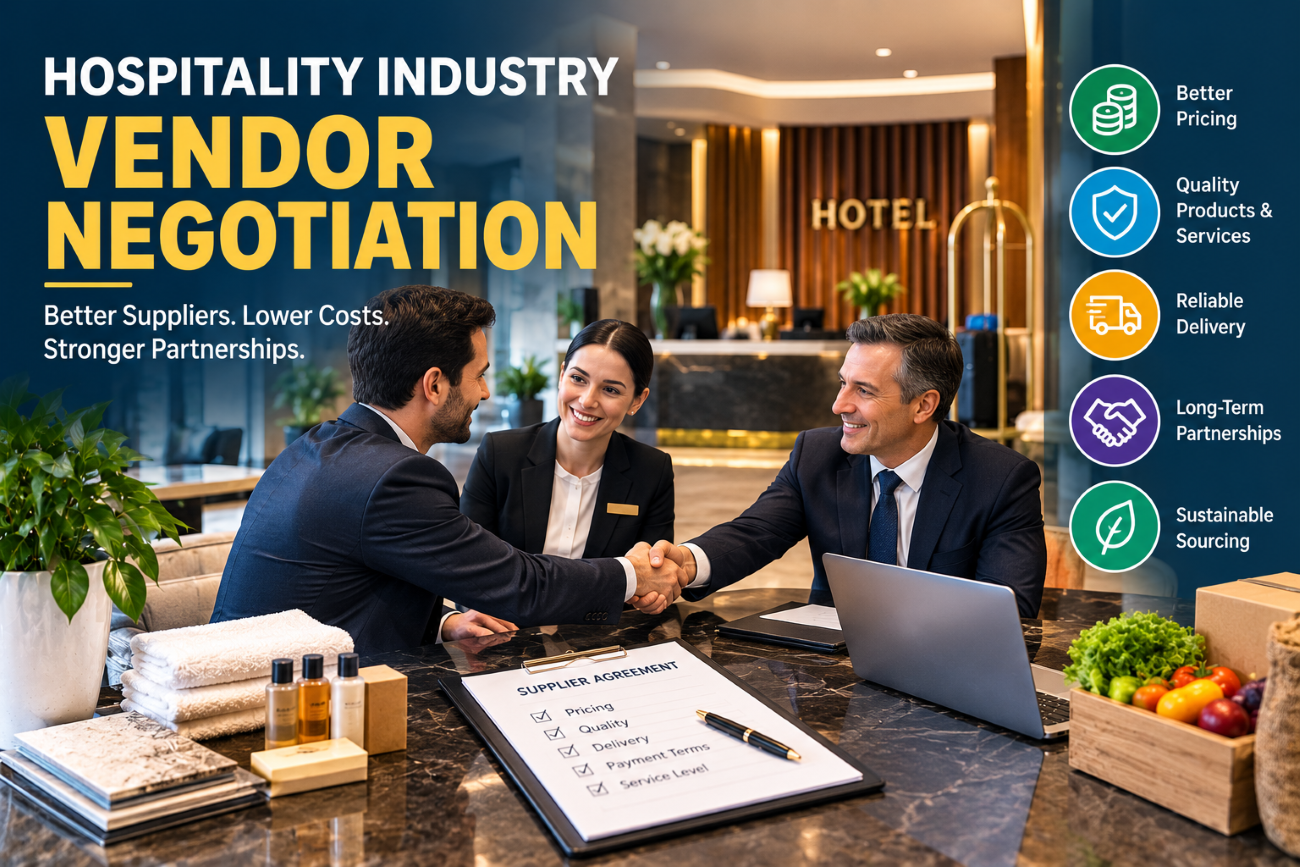
    Procurement automation can also support better vendor negotiations.

    When hotels have detailed purchasing data, they can understand their actual purchasing volumes and spending patterns.

    For example, a hotel may discover that it purchases a particular category of supplies from several vendors at different prices.

    This information can help procurement teams identify opportunities to consolidate purchases or negotiate improved terms.

    Automation does not replace negotiation skills, but it provides better information for negotiation.

    Invoice Processing Automation

    Invoice processing is another area where hotels can benefit from automation.

    Manual invoice processing often requires employees to compare invoices with purchase orders and delivery records.

    Automated systems can help match these documents and identify discrepancies.

    For example, if a supplier invoices the hotel for 100 units but the purchase order shows 80 units, the system can flag the difference for review.

    This can reduce errors and improve financial control.

    Reducing Procurement Errors

    Manual procurement processes can create several types of errors.

    These may include:

    • Incorrect quantities
    • Duplicate orders
    • Wrong supplier selection
    • Incorrect pricing
    • Missing approvals
    • Duplicate invoice payments
    • Outdated product information

    Automated workflows can reduce these risks by applying predefined rules and validation checks.

    Automation does not eliminate the need for human oversight, but it can reduce avoidable administrative mistakes.

    Improving Cost Control

    Procurement has a direct relationship with hotel cost management.

    Automated procurement systems can provide visibility into spending across departments and properties.

    Managers can identify unusual purchasing patterns and compare actual spending against budgets.

    For example, if a department consistently exceeds its purchasing budget, management can investigate the underlying reason.

    This makes procurement an important part of broader hotel financial management.

    Supporting Multi-Property Hotel Groups

    Procurement automation can be especially valuable for hotel groups operating multiple properties.

    Each property may have different purchasing requirements, but certain products can often be standardized.

    A centralized procurement platform can help hotel groups manage common purchasing categories while still allowing properties to address local requirements.

    Group-level purchasing can also create opportunities for volume-based pricing.

    At the same time, hotels can maintain relationships with local suppliers where local sourcing provides operational or guest-experience benefits.

    Automating Approval Workflows

    Procurement approvals can sometimes create delays, particularly when managers are unavailable.

    Automated approval workflows can route requests to the appropriate decision-maker and provide notifications when action is required.

    Approval rules can be based on factors such as:

    • Purchase value
    • Department
    • Product category
    • Supplier
    • Budget allocation

    For example, a low-value routine purchase may require departmental approval, while a large capital purchase may require senior management authorization.

    Clear digital approval structures can improve both speed and accountability.

    Integrating Procurement With Hotel Systems

    The greatest benefits often occur when procurement software is integrated with other hotel technology.

    Potential integrations include:

    • Property Management Systems
    • Accounting software
    • Inventory management platforms
    • Point-of-Sale systems
    • Enterprise Resource Planning systems
    • Supplier platforms
    • Payment systems

    Integration reduces the need to manually transfer information between systems.

    For example, restaurant consumption data can potentially inform inventory levels, which can then support automated replenishment decisions.

    Artificial Intelligence in Procurement

    Artificial Intelligence is creating new opportunities for procurement automation.

    AI-powered tools can analyze historical purchasing data and identify patterns in demand, prices, and supplier performance.

    Potential applications include:

    • Demand forecasting
    • Price trend analysis
    • Supplier recommendations
    • Purchasing anomaly detection
    • Inventory forecasting
    • Automated categorization
    • Spending analysis

    For example, an AI system may identify that a hotel regularly experiences higher demand for particular supplies during certain seasons.

    Procurement teams can use these insights to prepare earlier and avoid last-minute purchasing.

    AI should be used as a decision-support tool, with appropriate human oversight for important procurement decisions.

    Procurement Automation and Sustainability

    Procurement decisions can influence a hotel’s environmental performance.

    Automated systems can help hotels track purchasing categories and identify opportunities for more sustainable sourcing.

    Hotels may use procurement platforms to evaluate suppliers based on factors such as:

    • Sustainable materials
    • Packaging
    • Local sourcing
    • Environmental certifications
    • Waste reduction
    • Ethical sourcing practices

    Digital purchasing records also make it easier to analyze sustainability-related procurement data.

    Improving Procurement Transparency

    Transparency is another important benefit of automation.

    A digital procurement system can provide a clear record of who requested an item, who approved it, which supplier was selected, when the order was placed, and how much was paid.

    This creates greater accountability and makes procurement processes easier to review.

    Transparent processes can also support internal controls and reduce the risk of unauthorized purchases.

    Challenges of Procurement Automation

    Despite its benefits, procurement automation requires careful implementation.

    Hotels may face challenges such as:

    • Initial technology costs
    • Employee resistance to change
    • Integration with legacy systems
    • Data quality problems
    • Employee training requirements
    • Supplier technology limitations
    • Cybersecurity considerations

    Hotels should therefore avoid implementing automation simply because it is technologically available.

    The system should address specific operational challenges and provide measurable business value.

    Preparing Employees for Automated Procurement

    Employees play a central role in successful procurement automation.

    Purchasing teams, department managers, finance employees, and other users should understand how the new system works and why the change is being introduced.

    Training should cover:

    • Creating purchase requests
    • Approval procedures
    • Supplier selection
    • Purchase orders
    • Inventory processes
    • Invoice management
    • Reporting

    Employees should also have opportunities to provide feedback during implementation.

    Measuring the Success of Procurement Automation

    Hotels should establish measurable objectives before implementing procurement automation.

    Useful performance indicators can include:

    • Procurement processing time
    • Purchase order accuracy
    • Invoice processing time
    • Procurement cost savings
    • Inventory turnover
    • Supplier delivery performance
    • Number of manual transactions
    • Purchase approval time

    These metrics can help management determine whether automation is producing meaningful improvements.

    The Future of Hospitality Procurement

    The future of hotel procurement will likely involve increasing levels of automation, integration, and predictive analytics.

    Procurement systems may become more closely connected with hotel occupancy forecasts, restaurant demand, inventory levels, supplier pricing, and financial planning.

    AI-powered systems could help procurement teams anticipate requirements before shortages occur.

    Cloud-based platforms will also make procurement information accessible across properties and departments.

    However, human judgment will remain important. Procurement involves relationships, quality assessment, negotiation, risk management, and strategic decision-making that cannot always be reduced to automated rules.

    Conclusion

    Hospitality procurement automation is changing the way hotels manage purchasing and supplier relationships. By automating purchase requests, approvals, purchase orders, inventory alerts, invoice processing, supplier monitoring, and reporting, hotels can reduce administrative workloads and gain greater visibility into their procurement operations.

    The real value of automation goes beyond saving time. It can help hotels make better purchasing decisions, improve cost control, reduce errors, strengthen supplier management, and respond more effectively to changing operational requirements.

    At BookSmart, we believe that successful procurement automation should combine technology with strong processes and capable people. Hotels that adopt automation thoughtfully can create a procurement function that is faster, more transparent, data-driven, and aligned with broader business objectives.

    As hospitality continues to embrace digital transformation, procurement will become increasingly connected to the wider hotel ecosystem. Businesses that use automation strategically can build more efficient purchasing operations while creating a stronger foundation for sustainable growth.

  • Hospitality Industry Vendor Negotiation: Strategies for Building Better Supplier Relationships

    Hospitality Industry Vendor Negotiation: Strategies for Building Better Supplier Relationships

    Hotels depend on a wide network of vendors and suppliers to keep their operations running smoothly. From food and beverages to linens, cleaning products, technology, maintenance equipment, furniture, amenities, and professional services, vendors play an important role in almost every area of hotel management.

    Because hotels purchase such a wide variety of products and services, vendor negotiation has become an important part of hospitality business management. Effective negotiation can help hotels manage costs, maintain quality, improve delivery reliability, and establish stronger relationships with suppliers.

    However, successful vendor negotiation is not simply about asking for the lowest possible price. A hotel that focuses only on price may end up compromising product quality, service reliability, delivery schedules, or long-term supplier relationships. A more effective approach considers the total value a vendor can provide.

    At BookSmart, we believe that effective hospitality vendor negotiation should create a balance between cost, quality, reliability, flexibility, and long-term business value.

    What Is Vendor Negotiation in the Hospitality Industry?

    Hospitality vendor negotiation is the process through which hotels discuss and agree on pricing, product specifications, payment terms, delivery schedules, service levels, contracts, and other conditions with suppliers.

    Hotels may negotiate with vendors for:

    • Food and beverages
    • Guest room amenities
    • Cleaning supplies
    • Linen and laundry products
    • Furniture and fixtures
    • Technology systems
    • Maintenance services
    • Security services
    • Transportation
    • Marketing services
    • Office supplies
    • Energy and utility-related services

    The negotiation process can take place when selecting a new vendor, renewing an existing contract, expanding hotel operations, or responding to changing market conditions.

    Why Vendor Negotiation Matters for Hotels

    Vendor costs can have a direct impact on hotel profitability.

    Even relatively small changes in purchasing costs can become significant when products are purchased in large quantities or on a regular basis.

    Effective negotiation can help hotels:

    • Control procurement costs
    • Improve product quality
    • Secure reliable delivery
    • Reduce supply disruptions
    • Obtain flexible payment terms
    • Improve service agreements
    • Manage inventory more effectively
    • Build stronger supplier relationships

    However, negotiation should not be treated as a one-time cost-cutting exercise. It should be part of a broader procurement strategy.

    Understand Hotel Requirements Before Negotiating

    Preparation is one of the most important parts of successful vendor negotiation.

    Before contacting a supplier, hotels should understand exactly what they require.

    This includes identifying:

    • Product specifications
    • Expected quantities
    • Quality standards
    • Delivery frequency
    • Required service levels
    • Budget limits
    • Contract duration
    • Payment preferences

    For example, a hotel purchasing linens should define the required material, size, durability, washing requirements, color, and expected lifespan.

    Clear specifications make it easier to compare vendors and negotiate meaningful terms.

    Research the Vendor Market

    Hotels should understand the supplier market before beginning negotiations.

    Research can include comparing multiple vendors, reviewing product specifications, examining market prices, and evaluating supplier capabilities.

    Hotels should also consider whether a vendor has experience working with hospitality businesses.

    A supplier that understands hotel operations may be better prepared to handle urgent requirements, seasonal demand, and large-volume orders.

    Market research gives hotels useful information and reduces dependence on a single supplier’s pricing assumptions.

    Compare Vendors Beyond Price

    Price is important, but it should not be the only factor used to evaluate vendors.

    Hotels should consider the total value of a supplier, including:

    • Product quality
    • Delivery reliability
    • Customer service
    • Warranty
    • Technical support
    • Replacement policies
    • Payment terms
    • Scalability
    • Sustainability practices
    • Response time

    A vendor offering a slightly higher price may provide better quality and fewer operational problems.

    For example, purchasing low-quality maintenance equipment may appear economical initially but could result in frequent repairs and replacement costs.

    Total cost of ownership is therefore often more useful than purchase price alone.

    Negotiate Volume-Based Pricing

    Hotels frequently purchase products in large quantities, which can create opportunities for volume-based pricing.

    Suppliers may offer better rates when hotels commit to larger or recurring orders.

    However, hotels should avoid purchasing excessive quantities simply to obtain a discount.

    Large inventories can create storage costs, spoilage, product expiry, and cash-flow challenges.

    Volume negotiations should therefore be based on realistic consumption patterns.

    Historical purchasing data can help hotels determine appropriate quantities.

    Discuss Payment Terms

    Payment terms can have a significant effect on hotel cash flow.

    Hotels may negotiate terms related to payment deadlines, deposits, installment structures, or early-payment discounts.

    For example, a supplier may offer a discount for payment within a specific period, while another may provide longer payment terms.

    Hotels should compare the overall financial impact rather than automatically choosing the lowest price.

    Payment conditions should also be clearly documented in the final agreement.

    Negotiate Delivery and Lead Times

    Reliable delivery is essential in hospitality.

    A delay in receiving food, linens, cleaning supplies, or maintenance materials can disrupt hotel operations.

    Hotels should negotiate clear delivery expectations, including:

    • Delivery schedules
    • Lead times
    • Emergency orders
    • Minimum order quantities
    • Shipping responsibilities
    • Delivery charges
    • Procedures for delayed shipments

    For critical supplies, hotels may also consider backup suppliers to reduce dependence on a single vendor.

    Establish Quality Standards

    Quality expectations should be clearly defined before entering into a supplier agreement.

    Hotels can specify product standards, inspection procedures, acceptable defect levels, replacement policies, and service requirements.

    For example, food suppliers may need to meet specific quality, packaging, storage, and delivery requirements.

    Clear quality standards reduce misunderstandings and provide a basis for addressing performance problems.

    Negotiate Service-Level Agreements

    For technology, maintenance, security, cleaning, and other service-based vendors, hotels should consider using Service-Level Agreements, commonly known as SLAs.

    An SLA can define:

    • Response times
    • Resolution times
    • Availability requirements
    • Service standards
    • Support hours
    • Escalation procedures
    • Performance measurements

    For example, a hotel technology provider may be expected to respond to critical system failures within a defined period.

    Clear service expectations help both parties understand their responsibilities.

    Build Long-Term Vendor Relationships

    Successful negotiation does not end when the contract is signed.

    Hotels should maintain professional relationships with vendors throughout the partnership.

    Long-term relationships can create advantages such as improved communication, better understanding of hotel requirements, faster issue resolution, and greater flexibility during unexpected situations.

    Hotels should communicate their expectations clearly and provide vendors with appropriate feedback.

    At the same time, suppliers should be evaluated objectively based on performance rather than personal relationships.

    Use Data in Vendor Negotiations

    Data can make hotel procurement negotiations more effective.

    Hotels can analyze historical information such as:

    • Purchase volumes
    • Price changes
    • Delivery performance
    • Product defects
    • Supplier response times
    • Inventory usage
    • Contract spending

    This information allows procurement teams to negotiate from evidence rather than assumptions.

    For example, if a hotel can demonstrate that it purchases a particular product consistently throughout the year, it may have a stronger basis for discussing volume-based pricing.

    Data can also reveal which suppliers consistently meet expectations.

    Centralize Procurement Where Appropriate

    Large hotel groups may benefit from centralized procurement for commonly purchased products.

    Centralization can increase purchasing volume and create stronger negotiating positions.

    For example, multiple properties within the same group may negotiate together for standardized amenities, technology services, or cleaning supplies.

    However, complete centralization is not always suitable.

    Local suppliers may provide advantages in areas such as fresh food, local products, emergency delivery, and regional services.

    A balanced procurement model can combine centralized purchasing with local sourcing where appropriate.

    Avoid Overdependence on One Vendor

    Strong vendor relationships are valuable, but excessive dependence on one supplier can create risks.

    If a primary supplier experiences financial difficulties, production problems, transportation disruptions, or other challenges, the hotel may face shortages.

    Hotels should identify critical suppliers and evaluate whether alternative sources are available.

    Maintaining qualified backup vendors can improve business continuity.

    This does not mean hotels must constantly switch suppliers. Instead, they should maintain enough flexibility to respond when circumstances change.

    Include Sustainability in Vendor Selection

    Sustainability is becoming increasingly relevant to hospitality procurement.

    Hotels may evaluate suppliers based on:

    • Sustainable materials
    • Packaging practices
    • Energy efficiency
    • Waste reduction
    • Ethical sourcing
    • Environmental certifications
    • Local sourcing

    Sustainable procurement can support a hotel’s broader environmental objectives.

    It can also influence brand perception among guests who value responsible business practices.

    However, sustainability claims should be evaluated carefully, and hotels should request appropriate documentation when necessary.

    Technology and Digital Vendor Management

    Technology can simplify vendor management.

    Modern procurement platforms can help hotels manage supplier information, purchase orders, invoices, contracts, approvals, and performance records.

    Digital systems can also provide greater visibility into purchasing patterns.

    Hotels can use this information to identify price changes, duplicate purchases, unusual spending, and opportunities for consolidation.

    Automated workflows can also reduce manual paperwork and improve purchasing controls.

    Vendor Performance Reviews

    Negotiation should continue throughout the vendor relationship through regular performance reviews.

    Hotels can evaluate suppliers using indicators such as:

    • Delivery accuracy
    • Product quality
    • Pricing consistency
    • Response time
    • Service reliability
    • Complaint resolution
    • Contract compliance

    Regular reviews allow hotels to identify problems early.

    They also provide useful information when contracts are renewed or renegotiated.

    Common Vendor Negotiation Mistakes

    Hotels can face several challenges when negotiating with suppliers.

    Common mistakes include:

    • Focusing only on price
    • Entering negotiations without preparation
    • Failing to compare suppliers
    • Ignoring delivery reliability
    • Accepting unclear contract terms
    • Overlooking hidden fees
    • Failing to define quality standards
    • Not reviewing vendor performance
    • Depending too heavily on one supplier

    Avoiding these mistakes can create stronger procurement outcomes.

    Ethical and Transparent Negotiation

    Vendor negotiation should be conducted professionally and ethically.

    Hotels should maintain clear procurement policies and avoid conflicts of interest.

    Supplier selection should be based on relevant business criteria such as quality, price, reliability, service, compliance, and value.

    Transparent procurement processes can reduce operational and reputational risks.

    Clear documentation is also important, particularly when dealing with large contracts or significant purchases.

    Creating a Hospitality Vendor Negotiation Strategy

    Hotels can create a structured approach to vendor negotiation by following several steps:

    1. Identify purchasing requirements.
    2. Analyze historical spending.
    3. Research available suppliers.
    4. Compare quality and pricing.
    5. Define negotiation objectives.
    6. Discuss pricing and volume.
    7. Negotiate payment and delivery terms.
    8. Establish quality and service standards.
    9. Document agreed conditions.
    10. Monitor vendor performance regularly.

    This structured process makes procurement more consistent and measurable.

    The Future of Hospitality Vendor Negotiation

    Technology and data analytics will increasingly influence hotel procurement.

    AI-powered systems may help identify pricing trends, forecast purchasing requirements, evaluate supplier performance, and detect unusual spending patterns.

    Digital procurement platforms can also make vendor comparisons and contract management more efficient.

    At the same time, relationships will remain important. Hospitality businesses will continue to depend on suppliers for reliable products and services, particularly during periods of high demand or disruption.

    The future of vendor negotiation will therefore combine data-driven procurement with strong professional relationships.

    Conclusion

    Hospitality industry vendor negotiation is an important part of managing hotel costs, quality, and operational reliability. Hotels need suppliers that can provide the right products and services at appropriate prices while meeting expected standards for quality, delivery, and support.

    Successful negotiation requires preparation, market research, data analysis, clear expectations, and effective communication. Hotels should evaluate suppliers based on overall value rather than focusing only on the lowest price.

    At BookSmart, we believe that strong vendor relationships can become an important part of efficient hotel management. When hotels approach procurement strategically, they can improve cost control, strengthen supply reliability, and create partnerships that support long-term operational success.

    As the hospitality industry becomes more technology-driven and competitive, vendor negotiation will continue to evolve. Hotels that combine smart procurement practices, digital tools, performance measurement, and ethical relationship management can build a more resilient and efficient supply network.

  • How Hotels Can Reduce Operational Costs: Practical Strategies for More Efficient Hotel Management

    How Hotels Can Reduce Operational Costs: Practical Strategies for More Efficient Hotel Management

    Running a hotel involves managing a wide range of expenses every day. From employee salaries and utilities to housekeeping supplies, food inventory, maintenance, technology, procurement, and marketing, operational costs can quickly add up. At the same time, hotels must maintain high service standards and deliver a comfortable experience to guests.

    This makes cost management one of the most important responsibilities in modern hospitality management. Cutting operational costs does not mean cutting essential services or compromising guest satisfaction. Instead, it involves identifying unnecessary expenses, improving processes, using resources more efficiently, and making better decisions based on accurate data.

    At BookSmart, we believe that hotels can achieve sustainable cost efficiency by combining thoughtful planning, technology, employee involvement, and continuous operational improvement.

    Understanding Hotel Operational Costs

    Hotel operational costs are the expenses involved in running a property on a daily basis. These costs can vary depending on the hotel’s size, location, category, occupancy levels, facilities, and business model.

    Common hotel operating expenses include:

    • Employee wages and benefits
    • Electricity and water
    • Housekeeping supplies
    • Food and beverage inventory
    • Maintenance
    • Technology
    • Laundry
    • Procurement
    • Marketing
    • Insurance
    • Administrative expenses

    Some costs are relatively fixed, while others change according to occupancy and business activity. Understanding this difference helps hotel managers identify where cost optimization is possible.

    The first step toward reducing costs is therefore not immediately cutting expenses, but understanding where money is being spent and why.

    Analyze Expenses Regularly

    Hotels should regularly review their operating expenses to identify unnecessary spending and changing cost patterns.

    Monthly or quarterly financial reviews can reveal areas where expenses are increasing faster than revenue.

    Management can compare current spending with:

    • Previous periods
    • Budget targets
    • Occupancy levels
    • Department performance
    • Supplier prices
    • Industry benchmarks

    For example, if housekeeping costs increase significantly while occupancy remains stable, management can investigate whether the increase is related to staffing, supplies, laundry, overtime, or another factor.

    Regular analysis allows hotels to address problems before they become larger financial challenges.

    Improve Staff Scheduling

    Labor is one of the largest operational expenses for many hotels. However, reducing staff indiscriminately can negatively affect service quality.

    Instead, hotels can improve workforce scheduling by matching staffing levels with actual demand.

    Occupancy forecasts, reservations, group bookings, events, seasonal trends, and historical data can help managers determine how many employees are required during different periods.

    For example, staffing levels may need to be higher during peak check-in periods and lower during quieter hours.

    Technology-based workforce scheduling tools can help managers create more efficient schedules while reducing unnecessary overtime and understaffing.

    Cross-Train Employees

    Cross-training employees can provide greater flexibility while supporting cost efficiency.

    Employees who understand multiple functions can assist other departments when demand changes.

    For example, an employee with experience in front office operations may be able to support reservations during busy periods. Similarly, employees can be trained to perform multiple related tasks within housekeeping or food and beverage operations.

    Cross-training does not mean expecting employees to perform unlimited responsibilities. Instead, it creates a more adaptable workforce and reduces dependence on a single role or individual.

    It can also provide employees with opportunities to develop new skills.

    Reduce Energy Consumption

    Energy is a significant expense for hotels because properties operate continuously.

    Heating, cooling, lighting, hot water, kitchens, laundry, elevators, and other systems can consume large amounts of electricity and fuel.

    Hotels can reduce energy costs through:

    • Energy-efficient lighting
    • Smart thermostats
    • Occupancy sensors
    • Efficient HVAC systems
    • Building management systems
    • Regular equipment maintenance
    • Energy monitoring
    • Employee awareness programs

    Smart energy management can help hotels identify areas where consumption is unnecessarily high.

    The objective should be to eliminate waste rather than reduce guest comfort.

    Manage Water Consumption

    Water management can also contribute to lower operating costs.

    Hotels use water in guest rooms, kitchens, laundry facilities, swimming pools, landscaping, and cleaning operations.

    Water-efficient fixtures, leak detection systems, efficient laundry practices, and responsible housekeeping procedures can reduce consumption.

    Hotels should also monitor water usage regularly.

    Unexpected increases in consumption may indicate leaks or equipment problems that require immediate attention.

    Optimize Housekeeping Operations

    Housekeeping directly affects both hotel quality and operating costs.

    Hotels can improve housekeeping efficiency by coordinating room cleaning with occupancy, expected arrivals, departures, and guest preferences.

    Digital housekeeping systems can provide real-time information about room status and maintenance requirements.

    Better coordination can reduce unnecessary room inspections, communication delays, and repeated work.

    Hotels can also review the use of cleaning supplies and establish appropriate inventory controls to prevent over-ordering and wastage.

    Reduce Food Waste

    Food and beverage operations can generate significant waste if inventory is not managed properly.

    Hotels can use demand forecasting to estimate food requirements based on occupancy, events, restaurant reservations, and historical consumption.

    Other strategies include:

    • Monitoring portion sizes
    • Improving inventory rotation
    • Using appropriate storage methods
    • Tracking expired products
    • Reviewing buffet quantities
    • Repurposing suitable ingredients responsibly
    • Monitoring purchasing patterns

    Reducing food waste can lower purchasing costs while supporting sustainability objectives.

    Improve Procurement and Supplier Management

    Procurement has a major impact on hotel profitability.

    Hotels purchase everything from food and beverages to linens, cleaning supplies, furniture, maintenance equipment, and technology.

    Businesses can improve procurement efficiency by consolidating suitable purchases, negotiating contracts, comparing suppliers, and establishing clear purchasing policies.

    Supplier performance should also be reviewed regularly.

    The lowest purchase price is not always the lowest overall cost. Quality, reliability, delivery times, warranty terms, and product lifespan should also be considered.

    A cheaper product that requires frequent replacement may ultimately cost more.

    Use Technology to Reduce Manual Work

    Technology can help hotels reduce administrative costs by automating repetitive processes.

    Examples include:

    • Digital reservations
    • Automated guest communication
    • Electronic invoices
    • Digital staff checklists
    • Inventory management
    • Automated reporting
    • Online payments
    • Digital maintenance requests

    Automation can reduce repetitive administrative work and allow employees to focus on tasks that require human interaction and decision-making.

    However, hotels should evaluate technology based on actual business needs. Investing in unnecessary software can create additional costs rather than reducing them.

    Preventive Maintenance Saves Money

    Unexpected equipment failures can be expensive.

    A malfunctioning air-conditioning unit, refrigerator, boiler, elevator, washing machine, or kitchen appliance can disrupt operations and require urgent repairs.

    Preventive maintenance helps hotels identify potential problems before they become major failures.

    Maintenance schedules should cover critical equipment and building systems.

    Hotels can also use digital maintenance platforms to track service history, inspections, repair costs, and upcoming maintenance requirements.

    Preventive maintenance can reduce emergency repair expenses and extend equipment lifespan.

    Reduce Laundry Costs

    Laundry is an important operational expense, particularly for hotels with high occupancy.

    Hotels can reduce laundry costs through efficient washing equipment, optimized laundry schedules, appropriate detergent usage, and water and energy management.

    Guest linen-reuse programs can also reduce unnecessary washing.

    Such programs should be communicated clearly and implemented in a way that gives guests control over their preferences.

    Hotels should also monitor linen inventory to reduce losses and unnecessary replacement costs.

    Control Inventory More Effectively

    Excess inventory ties up money and can create storage and wastage problems.

    Insufficient inventory, on the other hand, can lead to operational disturbances and emergency purchasing.

    Hotels should establish appropriate stock levels based on actual usage.

    Digital inventory management systems can help monitor:

    • Current stock
    • Usage rates
    • Reorder points
    • Supplier deliveries
    • Expiry dates
    • Inventory value

    Regular inventory audits can identify discrepancies and reduce unnecessary purchasing.

    Improve Digital and Marketing Efficiency

    Marketing is essential for generating bookings, but hotels should monitor the return generated by different marketing activities.

    Instead of spending equally across every channel, hotels can analyze which campaigns and distribution channels generate meaningful bookings.

    Website performance, direct booking rates, online advertising, social media campaigns, email marketing, and travel distribution platforms can be evaluated based on their costs and results.

    Improving direct bookings where appropriate can also help hotels reduce dependency on channels that charge commissions.

    The objective is not simply to spend less on marketing but to spend more effectively.

    Reduce Paper-Based Processes

    Paper, printing, storage, and manual documentation may appear to be small expenses, but they can accumulate over time.

    Hotels can digitize suitable processes such as:

    • Guest communications
    • Staff checklists
    • Internal reports
    • Maintenance requests
    • Invoices
    • Training records
    • Inventory documentation

    Digital processes can reduce material costs while also improving accessibility as well as operational efficiency.

    Sensitive information should, however, be managed securely and according to applicable privacy requirements.

    Use Data for Better Cost Decisions

    Data analytics can help hotel managers understand where operational costs are coming from.

    Management can track metrics such as:

    • Cost per occupied room
    • Energy cost per room
    • Labor cost percentage
    • Food cost percentage
    • Maintenance expenses
    • Inventory turnover
    • Laundry cost per occupied room

    These metrics provide a clearer picture of operational performance.

    For example, if the cost per occupied room increases even though occupancy remains stable, managers can investigate the underlying reasons rather than making arbitrary budget cuts.

    Avoid Cost Cutting That Hurts Guest Experience

    One of the biggest risks in hotel cost management is reducing expenses without considering their effect on guests.

    Removing important services, reducing cleanliness standards, understaffing critical departments, or lowering product quality can damage guest satisfaction.

    Negative reviews and declining customer loyalty may ultimately cost more than the original savings.

    Hotels should therefore focus on eliminating waste and improving efficiency rather than simply reducing spending.

    The right question is not, “What can we cut?” but rather, “How can we deliver the same or better value using resources more effectively?”

    Involve Employees in Cost Management

    Employees often have important insights into operational inefficiencies because they experience hotel processes every day.

    Management can encourage employees to identify:

    • Repetitive tasks
    • Unnecessary purchases
    • Equipment problems
    • Supply wastage
    • Communication gaps
    • Inefficient processes

    Creating a culture where employees can suggest improvements can uncover cost-saving opportunities that management may not notice.

    Employees should also understand that cost management is about responsible resource use rather than simply reducing budgets.

    Create Department-Level Budgets

    Instead of managing costs only at the property level, hotels can establish budgets for individual departments.

    Departments such as housekeeping, food and beverage, maintenance, front office, and administration can track their own expenses.

    Managers can compare actual spending against budgets and investigate significant differences.

    Department-level accountability makes financial management more transparent and encourages teams to think carefully about resource use.

    Build a Long-Term Cost Optimization Strategy

    Cost management should be an ongoing process.

    Hotels should regularly review their operations and identify opportunities for improvement.

    A long-term strategy can include:

    1. Monitoring operational expenses.
    2. Improving workforce scheduling.
    3. Reducing energy and water waste.
    4. Optimizing procurement.
    5. Improving inventory management.
    6. Automating repetitive processes.
    7. Using preventive maintenance.
    8. Reducing food and laundry waste.
    9. Measuring departmental performance.
    10. Protecting guest experience while improving efficiency.

    This approach creates sustainable cost management instead of temporary savings.

    The Future of Hotel Cost Management

    Technology will play an increasingly important role in controlling hotel operating costs.

    Artificial Intelligence can support demand forecasting, workforce planning, procurement analysis, and energy optimization.

    IoT devices can monitor equipment and building systems, while automation can reduce repetitive administrative work.

    Cloud-based platforms can give hotel managers access to financial and operational information in real time.

    However, technology alone will not solve cost challenges. Hotels still need effective processes, skilled employees, responsible management, and continuous evaluation.

    Conclusion

    Reducing hotel operational costs is not about making indiscriminate cuts. It is about improving the way resources are used while maintaining the quality of the guest experience.

    Hotels can control costs by analyzing expenses, optimizing staff schedules, improving procurement, reducing energy and water consumption, managing inventory, preventing equipment failures, reducing food and laundry waste, and using technology strategically.

    At BookSmart, we believe that competent cost management should create greater efficiency without compromising hospitality. When hotels combine financial discipline with smart technology, employee involvement, and data-informed decision-making, they can build stronger operations and improve long-term profitability.

    The future of hospitality will require hotels to be both guest-focused and resource-conscious. Businesses that continuously look for smarter ways to operate will be better positioned to manage costs, respond to changing market conditions, and deliver consistent value to their guests.

  • Hospitality and Smart Energy Management: Building More Efficient and Sustainable Hotels

    Hospitality and Smart Energy Management: Building More Efficient and Sustainable Hotels

    Energy is one of the most important resources in the hospitality industry. Hotels operate around the clock, with lighting, heating, cooling, hot water, kitchens, laundry facilities, elevators, electronic systems, and guest-room equipment consuming energy every day. As operating costs increase and sustainability becomes a greater priority, hotels are looking for smarter ways to manage their energy consumption without compromising guest comfort.

    Smart energy management provides a practical approach to this challenge. By combining digital technology, automation, sensors, data analytics, and efficient equipment, hotels can monitor how energy is being used and identify opportunities to reduce unnecessary consumption. The objective is not simply to use less energy, but to use energy more intelligently.

    At BookSmart, we believe smart energy management can help hospitality businesses improve operational efficiency, control costs, support sustainability initiatives, and create more responsible hotel operations.

    What Is Smart Energy Management in Hospitality?

    Smart energy management refers to the use of technology and data to monitor, control, and optimize energy consumption across a hotel. Traditional energy management often depends on fixed schedules or manual monitoring. Smart systems can respond dynamically to occupancy, room usage, weather conditions, equipment performance, and other operational factors.

    A smart energy management system may connect lighting, heating, ventilation, air conditioning, water heating, building systems, and other equipment to a centralized platform. Hotel managers can then monitor consumption and identify unusual patterns or areas of waste.

    For example, an empty guest room does not need to operate at exactly the same temperature as an occupied room. Smart controls can adjust energy use according to room occupancy while maintaining comfortable conditions when guests return.

    Why Energy Management Matters for Hotels

    Energy represents a significant operating expense for many hospitality businesses. Hotels require energy not only for guest rooms but also for kitchens, restaurants, laundry, offices, common areas, pools, conference facilities, and other amenities.

    Poor energy management can result in unnecessary consumption and higher operating costs. At the same time, excessive energy use can increase a property’s environmental footprint.

    Smart energy management can help hotels:

    • Reduce unnecessary energy consumption
    • Control operating costs
    • Improve equipment efficiency
    • Monitor energy performance
    • Reduce environmental impact
    • Support sustainability goals
    • Identify equipment problems
    • Improve operational decision-making

    The benefits can extend beyond financial savings. Efficient energy management can become part of a hotel’s broader sustainability and guest-experience strategy.

    Smart HVAC Systems

    Heating, ventilation, and air conditioning systems are among the most important energy-consuming systems in hotels.

    Smart HVAC technology can adjust temperature and airflow based on factors such as room occupancy, outdoor temperature, time of day, and guest preferences.

    For example, when a room becomes vacant, the system can automatically adjust its temperature settings. When a guest is expected to arrive, the room can gradually return to a comfortable setting.

    Hotels can also use smart HVAC controls in meeting rooms, restaurants, and other public areas.

    Instead of operating every system at maximum capacity throughout the day, hotels can match energy consumption with actual demand.

    Occupancy Sensors and Smart Rooms

    Occupancy sensors can play an important role in hotel energy management.

    Sensors can detect whether a guest room or public area is occupied and trigger appropriate changes in lighting, temperature, or other systems.

    Smart room technology can also allow guests to control lighting and temperature through connected devices or room controls.

    The key is to design these systems around convenience. Energy-saving features should operate naturally without making guests feel that comfort has been sacrificed.

    When technology works in the background, hotels can improve energy efficiency while maintaining a positive guest experience.

    Intelligent Lighting Management

    Lighting is another area where hotels can achieve greater efficiency.

    Traditional lighting systems may remain active even when areas are unoccupied. Smart lighting systems can use occupancy sensors, schedules, and daylight information to adjust lighting automatically.

    Hotels can also use energy-efficient lighting technology throughout guest rooms, corridors, restaurants, conference areas, and outdoor spaces.

    For example, corridor lighting can be adjusted based on occupancy and time of day rather than operating at the same level continuously.

    Smart lighting can therefore reduce unnecessary energy use while maintaining appropriate visibility and ambiance.

    Real-Time Energy Monitoring

    One of the major advantages of smart energy management is visibility.

    A hotel cannot effectively manage energy consumption without understanding where and when energy is being used.

    Digital energy monitoring systems can provide information about consumption across different areas of a property.

    Managers can monitor:

    • Guest rooms
    • HVAC systems
    • Kitchens
    • Laundry
    • Swimming pools
    • Restaurants
    • Conference spaces
    • Common areas

    Real-time information can reveal unusual consumption patterns and help management identify areas requiring attention.

    Instead of waiting for monthly utility bills, hotel teams can make decisions using current operational data.

    Predictive Maintenance and Energy Efficiency

    Equipment that is not operating properly may consume more energy than necessary.

    A malfunctioning HVAC unit, refrigerator, boiler, pump, or other system can increase energy consumption while reducing performance.

    Smart monitoring systems can identify unusual equipment behavior and alert maintenance teams.

    Predictive maintenance can help hotels address potential problems before they become major failures.

    This approach can improve equipment performance, reduce downtime, and potentially extend the useful life of important systems.

    Smart Water Heating and Management

    Hot water is essential in hospitality and can require substantial amounts of energy.

    Hotels can improve efficiency by using smart water heating systems that monitor demand and adjust heating accordingly.

    Efficient boilers, heat pumps, insulation, water-saving fixtures, and temperature controls can also reduce energy requirements.

    Hotels should consider both water consumption and the energy required to heat and distribute that water.

    Combining water and energy management can produce broader operational benefits.

    Renewable Energy Integration

    Smart energy management can also support the integration of renewable energy.

    Hotels may use technologies such as solar photovoltaic systems to generate electricity on-site where suitable.

    However, generating renewable energy is only one part of the equation. Hotels also need to understand when energy is being produced and when it is being consumed.

    Smart energy platforms can help monitor generation and consumption, allowing businesses to make better use of available energy.

    Battery storage and other technologies may also support energy management where appropriate and economically viable.

    Energy Management in Hotel Kitchens

    Hotel kitchens operate equipment such as ovens, refrigerators, freezers, dishwashers, exhaust systems, and cooking appliances for extended periods.

    Poorly managed kitchen equipment can result in significant energy waste.

    Hotels can improve kitchen energy efficiency by:

    • Maintaining refrigeration equipment
    • Turning off suitable equipment when not required
    • Using energy-efficient appliances
    • Monitoring cooking schedules
    • Maintaining appropriate refrigerator temperatures
    • Preventing unnecessary heat loss
    • Training kitchen employees

    Smart monitoring can help identify equipment that consumes unusually high amounts of energy.

    Laundry and Energy Optimization

    Laundry operations can be another major source of energy and water consumption.

    Hotels process large quantities of towels, bedsheets, uniforms, and other linens.

    Efficient washing machines, dryers, boilers, and water-heating systems can reduce resource consumption.

    Hotels can also use data to optimize laundry schedules according to occupancy and demand.

    Guest participation can contribute as well. Clear linen-reuse programs can reduce unnecessary washing while giving guests the opportunity to participate in sustainability initiatives.

    Using Data Analytics for Energy Decisions

    Data analytics can turn energy information into useful operational insights.

    Hotels can compare energy consumption with occupancy levels, weather conditions, room usage, and other factors.

    For example, management may discover that energy consumption remains unusually high even when occupancy is low. This could indicate inefficient equipment, poor scheduling, or systems operating unnecessarily.

    Energy performance indicators can help management track progress over time.

    Useful measurements may include energy consumption per occupied room or energy use by specific hotel departments.

    Data-driven management makes energy improvement more measurable and easier to evaluate.

    Employee Training and Energy Awareness

    Technology is important, but employees remain essential to successful energy management.

    Staff members influence energy consumption through everyday activities.

    Housekeeping teams, kitchen employees, maintenance staff, front desk teams, and managers can all contribute to energy efficiency.

    Hotels can provide training on:

    • Turning off unused equipment
    • Reporting equipment problems
    • Using HVAC systems appropriately
    • Managing lighting
    • Operating kitchen equipment efficiently
    • Following sustainability procedures

    Employees should understand why energy management matters and how their actions contribute to hotel performance.

    Guest Participation in Smart Energy Management

    Guests can also contribute to responsible energy use.

    Hotels can provide simple options that allow guests to participate without reducing comfort.

    Examples include:

    • Optional linen reuse
    • Energy-efficient room controls
    • Clear sustainability information
    • Smart temperature controls
    • Digital communication instead of unnecessary printed materials

    Communication should be informative rather than demanding.

    Guests are more likely to participate when sustainability initiatives are convenient and clearly explained.

    Reducing Energy Costs Without Reducing Guest Comfort

    A common concern is that energy-saving measures could negatively affect the guest experience.

    However, smart energy management focuses on eliminating unnecessary consumption rather than reducing essential comfort.

    For example, automatically adjusting an empty room’s temperature is different from making an occupied room uncomfortably warm or cold.

    The best systems operate intelligently in the background.

    Hotels should monitor guest feedback when introducing new energy technologies to ensure that efficiency improvements do not create unintended service problems.

    Challenges in Implementing Smart Energy Management

    Although smart energy systems offer many benefits, implementation requires planning.

    Hotels may face challenges such as:

    • Initial investment costs
    • Integration with existing systems
    • Employee training
    • Technology maintenance
    • Data management
    • Cybersecurity concerns
    • Compatibility between devices

    Older properties may also have legacy infrastructure that makes modernization more complicated.

    Hotels should therefore develop an implementation plan based on their property size, energy profile, budget, and operational priorities.

    Starting with high-consumption areas can help demonstrate measurable results before expanding the program.

    The Role of Hotel Management

    Management plays an important role in creating an effective energy strategy.

    Leaders should establish clear goals, monitor performance, allocate responsibilities, and ensure that employees understand the hotel’s energy objectives.

    Energy management should not be treated as the responsibility of one department alone.

    Housekeeping, engineering, food and beverage, front office, finance, and senior management can all contribute to better energy performance.

    Cross-department collaboration makes it easier to identify opportunities and implement changes.

    Smart Energy Management and Sustainability

    Energy efficiency is closely connected to hotel sustainability.

    Reducing unnecessary energy consumption can help hotels lower their environmental impact while controlling operating costs.

    Energy management can also support broader sustainability initiatives involving carbon reduction, resource conservation, responsible operations, and environmental reporting.

    For hotels working toward sustainability certifications, energy monitoring and efficiency measures may also form part of their broader environmental management efforts, depending on the certification requirements.

    The Future of Smart Energy in Hospitality

    The future of hotel energy management is likely to become increasingly automated and data-driven.

    Artificial Intelligence can potentially analyze large amounts of energy data and identify patterns that may not be immediately visible to hotel managers.

    IoT-connected devices can provide continuous information about building systems and equipment.

    Smart buildings may increasingly adjust energy consumption automatically based on occupancy, weather, demand, and operational conditions.

    As these technologies develop, hotels will have more opportunities to create flexible energy systems that respond to real-time conditions.

    However, technology should always support clear business objectives. Hotels should evaluate whether a solution genuinely improves efficiency, reliability, guest experience, or sustainability before investing in it.

    Conclusion

    Smart energy management is becoming an important part of modern hotel operations. By combining sensors, automation, connected systems, data analytics, efficient equipment, and employee awareness, hotels can better understand and control how energy is consumed.

    From smart HVAC systems and occupancy sensors to intelligent lighting, predictive maintenance, energy monitoring, renewable energy, and efficient hotel kitchens, there are many opportunities to improve energy performance.

    At BookSmart, we believe that smart energy management should be viewed as a long-term operational strategy rather than a short-term cost-cutting exercise. The goal is to create hotels that use resources intelligently while maintaining the comfort and service guests expect.

    As hospitality technology continues to advance, smart energy management can help hotels become more efficient, sustainable, and adaptable. By investing thoughtfully in technology and combining it with responsible human practices, hotels can build operations that are better prepared for the future of hospitality.

  • Hospitality Industry Automation Trends: How Technology Is Transforming Modern Hotels

    The hospitality industry has always been built around people, service, and memorable experiences. But today, technology is changing how those experiences are delivered. Hotels, resorts, restaurants, and other hospitality businesses are increasingly using automation to improve efficiency, reduce repetitive work, personalize guest interactions, and respond faster to changing customer expectations.

    Hospitality automation is no longer limited to self-check-in kiosks or automated booking confirmations. Artificial intelligence (AI), robotics, Internet of Things (IoT) devices, cloud-based hotel management systems, smart rooms, automated revenue management, and digital guest services are becoming part of everyday hotel operations. In 2026, the shift is moving further toward connected and intelligent systems that can coordinate multiple parts of the guest journey.

    For hotel businesses, automation is not necessarily about replacing employees. Instead, its greatest value comes from reducing repetitive tasks and allowing employees to spend more time on meaningful guest interactions. As automation becomes more sophisticated, hotels that combine technology with human hospitality can create faster, smoother, and more personalized experiences.

    What Is Hospitality Automation?

    Hospitality automation refers to the use of software, artificial intelligence, connected devices, robotics, and other technologies to perform or streamline tasks that traditionally require manual intervention.

    These tasks can range from accepting reservations and sending guest communications to managing room temperatures, assigning housekeeping tasks, processing payments, monitoring energy consumption, and predicting maintenance requirements.

    Modern automation increasingly connects these individual processes. For example, information collected during booking can be used to personalize the guest’s stay, while data from connected room devices can help hotel teams identify maintenance or energy-saving opportunities.

    Research into smart hospitality shows that AI and IoT can work together to support personalization, operational efficiency, predictive services, and intelligent service delivery.

    1. AI-Powered Guest Service Automation

    Artificial intelligence is becoming one of the most important technologies in hospitality automation. AI-powered chatbots and virtual assistants can answer common guest questions, provide information about hotel facilities, assist with reservations, and support guests before, during, and after their stay.

    Instead of waiting for a staff member to respond to every routine question, guests can receive immediate assistance through websites, mobile applications, or messaging platforms.

    AI can also analyze guest preferences and previous interactions to make recommendations. For example, a returning guest might receive suggestions for dining, spa services, room upgrades, or local activities based on relevant information available to the hotel.

    The next step is agentic AI, where AI systems can perform more complex tasks rather than simply answering questions. Hospitality technology reports indicate that agentic automation is beginning to influence areas such as discovery, booking, service, and operational support.

    2. Automated Check-In and Digital Keys

    Long reception queues can negatively affect the first impression of a hotel. Automated check-in systems are helping hotels make arrival more convenient.

    Mobile check-in, self-service kiosks, digital registration, and digital room keys allow guests to complete several arrival steps without depending entirely on front-desk staff.

    Digital keys can also allow guests to access rooms using smartphones or other approved digital credentials. This creates a more flexible arrival experience, particularly for travelers arriving late at night or during busy periods.

    Automation does not eliminate the importance of reception teams. Instead, it gives employees more time to assist guests who need personal attention, solve unusual problems, and provide a warmer welcome.

    3. Smart Rooms and IoT Automation

    Smart rooms are another major hospitality automation trend. IoT-connected devices can allow different room systems to communicate with each other and respond to guest preferences.

    Smart lighting, automated curtains, connected thermostats, voice-controlled devices, smart televisions, and sensor-based systems can create a more convenient room environment.

    For example, a hotel can automatically adjust temperature settings when a room becomes occupied or reduce energy consumption when the room is vacant. Research on AIoT-enabled hospitality highlights the potential for connected systems to combine real-time information with intelligent decision-making and personalized service.

    For hotels, smart-room automation can therefore provide two benefits at the same time: a better guest experience and more efficient resource management.

    4. Robotics in Hotel Operations

    Robotics is gradually moving from being a futuristic concept to a practical automation tool in hospitality.

    Hotels are experimenting with robots for tasks such as room-service delivery, luggage transportation, cleaning support, navigation assistance, and other repetitive activities. Research published in 2026 also identifies reception, concierge, housekeeping, and delivery as important areas where hotel robotics can support operations.

    Robots are particularly useful for repetitive or physically demanding tasks. Instead of expecting employees to spend large portions of their shifts transporting supplies or completing routine deliveries, hotels can use robotic systems where appropriate.

    The goal is not to make hospitality completely robotic. Human employees remain essential for empathy, problem-solving, relationship building, and situations that require judgment.

    5. Automated Housekeeping Management

    Housekeeping is one of the most operationally demanding departments in a hotel. Automation can help managers coordinate room cleaning, prioritize tasks, and communicate room-status changes more efficiently.

    Modern hotel systems can connect housekeeping operations with reservations and front-office information. When a guest checks out, the system can update the room status and help housekeeping teams identify which rooms should be cleaned next.

    Some hotels are also exploring robotic assistance for cleaning, linen movement, and supply transportation.

    This approach can reduce unnecessary communication and help housekeeping teams focus their time where it is most needed. In 2026, emerging hotel technology includes robotic assistance specifically designed to reduce housekeeping workloads.

    6. Predictive Maintenance Through Automation

    Unexpected equipment failures can affect guest satisfaction and increase operating costs. Predictive maintenance uses sensors, historical information, and AI-powered analysis to identify potential problems before equipment fails.

    For example, connected systems can monitor HVAC equipment, elevators, refrigeration systems, pumps, or other critical infrastructure. If the system detects unusual behavior, it can alert maintenance teams before a major failure occurs.

    This changes maintenance from a reactive model to a more proactive one.

    Instead of waiting for a guest to report that an air conditioner is not working, a hotel may be able to identify an equipment problem earlier and address it before it disrupts the guest experience.

    7. Automated Revenue Management

    Revenue management is another area where automation is becoming increasingly valuable.

    Hotel room prices can change according to demand, occupancy, booking patterns, seasonality, local events, competitor activity, and other market factors. Automated revenue-management systems can analyze large amounts of information and recommend or apply pricing adjustments.

    AI is also being used to improve visibility, distribution, pricing, loyalty, and personalized offers. BCG notes that AI-enabled hotel systems can support more targeted offers and improved revenue opportunities while also helping operators manage costs and productivity.

    For hotel managers, automated revenue tools can reduce the amount of time spent manually reviewing data and allow teams to concentrate on broader commercial strategies.

    8. Automated Guest Communication

    Communication is an essential part of the guest journey, but manually sending every message can consume significant staff time.

    Automation allows hotels to send timely communications such as booking confirmations, pre-arrival instructions, check-in information, service reminders, feedback requests, and post-stay messages.

    These communications can also be personalized. Instead of sending exactly the same message to every guest, hotels can tailor communication according to booking details, preferences, and the stage of the guest journey.

    The result is a more consistent communication experience without creating additional administrative work for hotel employees.

    9. Automated Energy Management

    Sustainability is becoming increasingly important for the hospitality industry, and automation can support hotels in controlling energy consumption.

    Smart sensors can detect room occupancy and help control lighting, heating, ventilation, and air conditioning. Automated energy-management systems can also monitor consumption patterns and identify areas where energy is being wasted.

    AI-powered HVAC systems are among the technologies being explored and implemented by hotels to improve operational efficiency.

    Energy automation can therefore contribute to both sustainability goals and cost management.

    10. Personalized Automation

    One of the most interesting developments in hospitality is the combination of automation and personalization.

    Traditional automation often means doing the same task faster. Modern hospitality automation increasingly means using information to provide a more relevant experience.

    For example, a hotel might remember a guest’s preferred room temperature, communication preference, favorite breakfast option, or previous service choices—subject to appropriate consent and privacy practices.

    AI and IoT can work together to use historical and real-time information to create more personalized experiences. Research on smart hospitality describes AIoT as a pathway toward more intelligent and personalized customer experiences.

    This creates an important distinction: the future of hospitality automation is not simply about removing human interaction. It is about making interactions more relevant.

    11. Automated Food and Beverage Operations

    Automation is also entering hotel restaurants, cafés, bars, and room-service operations.

    Digital menus, automated ordering, self-service payment, kitchen-management software, inventory systems, and robotic delivery solutions can reduce friction in food and beverage operations.

    Automation can help staff track orders more accurately, identify inventory requirements, reduce manual data entry, and coordinate service during busy periods.

    However, food and beverage experiences still depend heavily on hospitality and human connection. Automation works best when it removes unnecessary friction without making the experience feel impersonal.

    12. Integrated Hotel Management Systems

    Perhaps the biggest trend is not one individual technology but the integration of multiple technologies.

    A modern hotel may use a property management system, customer relationship management platform, booking engine, payment system, housekeeping application, revenue-management solution, IoT infrastructure, and AI tools.

    When these systems operate independently, employees may need to enter information repeatedly. Integrated platforms can reduce these gaps and create a more connected operational environment.

    Integration is also one of the major challenges facing hospitality businesses adopting AI. A 2026 industry study found that 50% of surveyed hotels and restaurants identified integration as a top challenge in implementing AI solutions.

    This means hotels should not adopt automation simply because a technology is new. They should evaluate whether it can work effectively with their existing systems.

    Benefits of Hospitality Automation

    When implemented strategically, automation can provide several benefits:

    • Faster service: Routine requests and processes can be handled more quickly.
    • Improved operational efficiency: Employees spend less time on repetitive administrative tasks.
    • Better personalization: Data can help hotels understand guest preferences.
    • Reduced operational costs: Automation can improve resource utilization and reduce avoidable waste.
    • Improved consistency: Automated processes can reduce errors and maintain service standards.
    • Better employee productivity: Staff can focus on tasks that require creativity, empathy, and judgment.
    • Stronger decision-making: AI and analytics can help managers make data-driven decisions.
    • Improved sustainability: Smart systems can help control energy and resource consumption.

    Challenges Hotels Need to Consider

    Despite its advantages, hospitality automation comes with challenges.

    The first is implementation cost. Smart infrastructure, robotics, AI systems, sensors, and software integrations can require substantial investment.

    The second is employee training. Staff need to understand how automated systems work and how to intervene when technology cannot resolve a problem.

    The third is data privacy and cybersecurity. Hotels manage sensitive guest information, and greater connectivity increases the importance of secure systems, access controls, and responsible data management.

    Finally, hotels need to consider the human experience. Guests do not necessarily want every interaction automated. Some travelers value convenience, while others appreciate speaking with a real person.

    Successful hotels will therefore focus on the right balance between digital convenience and human hospitality.

    The Future of Hospitality Automation

    The future of hotel automation will likely be increasingly intelligent, connected, and proactive.

    Instead of isolated systems performing individual tasks, hotels are moving toward interconnected platforms where AI, IoT, robotics, guest data, property systems, and operational applications work together.

    The concept of the “AI-first hotel” is already emerging, with AI and automation being used to improve productivity, staffing efficiency, guest experience, revenue opportunities, and operational performance.

    At the same time, the role of employees will evolve. Rather than competing directly with technology, hospitality professionals will increasingly work alongside automated systems. Employees will be able to focus on emotional intelligence, personalized service, problem-solving, and experiences that technology cannot easily reproduce.

    Conclusion

    Hospitality industry automation is transforming the way hotels operate and serve their guests. From AI-powered assistants and digital check-in to smart rooms, predictive maintenance, robotics, automated housekeeping, revenue management, and energy optimization, automation is becoming part of almost every stage of the hotel journey.

    However, the most successful approach is not to automate everything. Hotels need to identify where automation genuinely improves the guest experience and operational performance while preserving the human connection that makes hospitality special.

    The future belongs to hotels that can combine smart technology with genuine human service. Automation can make a hotel faster, more efficient, and more responsive—but thoughtful hospitality is what turns a stay into an experience.

  • Hospitality Workforce Training Models: Building Skilled, Confident, and Future-Ready Hotel Teams

    The hospitality industry is built around people. From the front desk employee welcoming a guest to the housekeeping team preparing rooms, restaurant staff serving meals, maintenance professionals keeping facilities running, and managers coordinating operations, every employee contributes to the overall guest experience.

    However, hospitality is also a fast-changing industry. Guest expectations are evolving, technology is transforming hotel operations, and businesses are increasingly expected to deliver personalized, efficient, and consistent service. These changes make workforce training more important than ever.

    A strong hospitality workforce training model helps hotels develop employee skills, improve service quality, reduce operational mistakes, and prepare teams for changing business requirements. Instead of treating training as a one-time activity, modern hotels are increasingly adopting continuous learning models that combine practical experience, digital education, mentoring, and performance development.

    At BookSmart, we believe that investing in people is one of the most effective ways for hospitality businesses to strengthen their operations and create memorable guest experiences.

    What Are Hospitality Workforce Training Models?

    Hospitality workforce training models are structured approaches that hotels and other hospitality businesses use to develop employee knowledge, technical abilities, communication skills, and professional behavior.

    Training can cover a wide range of areas, including:

    • Guest service
    • Front office operations
    • Housekeeping
    • Food and beverage service
    • Hotel technology
    • Communication
    • Leadership
    • Safety and security
    • Problem-solving
    • Sales and marketing
    • Data management
    • Sustainability

    Different employees require different types of training. A new front desk employee may need detailed training on reservations and check-in procedures, while a department manager may require leadership, financial, and workforce management training.

    The best training model is therefore one that matches learning requirements with specific job responsibilities.

    Why Workforce Training Matters in Hospitality

    Guest expectations are closely connected to employee performance.

    A hotel may have attractive facilities and advanced technology, but poor service can quickly affect guest satisfaction and online reviews.

    Effective training helps employees understand how to perform their responsibilities consistently and confidently.

    A strong workforce training program can help hotels achieve:

    • Better guest satisfaction
    • Improved employee productivity
    • More consistent service
    • Fewer operational errors
    • Higher employee confidence
    • Stronger employee retention
    • Better leadership development
    • Faster onboarding
    • Improved compliance
    • Greater adaptability to technology

    Training can also help employees understand how their individual responsibilities contribute to the hotel’s overall goals.

    On-the-Job Training Model

    On-the-job training is one of the most common approaches in hospitality.

    New employees learn by performing their actual responsibilities under the guidance of experienced colleagues or supervisors.

    For example, a new housekeeping employee may learn room preparation by working alongside an experienced team member.

    Similarly, a front desk employee can learn check-in procedures through supervised practice.

    The major advantage of on-the-job training is that employees learn in real operational situations.

    However, hotels should ensure that experienced employees use standardized procedures when training new staff. Otherwise, different employees may learn different methods for performing the same task.

    Classroom-Based Training

    Traditional classroom training remains useful for certain hospitality skills.

    Hotels can organize workshops or structured sessions covering subjects such as:

    • Customer service
    • Workplace safety
    • Food hygiene
    • Communication
    • Company policies
    • Hotel procedures
    • Compliance requirements

    Classroom training allows employees to learn together and ask questions.

    It can also be useful when introducing new policies across multiple departments.

    However, classroom sessions should be interactive rather than relying entirely on lectures. Role-playing, case studies, demonstrations, and group activities can make training more practical.

    Digital and E-Learning Models

    Digital learning has become increasingly important in hospitality.

    Employees can access online courses, videos, quizzes, training modules, and digital resources through computers or mobile devices.

    E-learning offers several advantages:

    • Flexible learning schedules
    • Consistent training content
    • Easy progress tracking
    • Reduced classroom requirements
    • Faster distribution of new information
    • Convenient employee access

    Digital training is particularly useful for hotel groups operating across multiple properties because the same training materials can be distributed to employees in different locations.

    Hotels can combine online learning with practical training to create a blended learning experience.

    Blended Learning Model

    Blended learning combines digital education with instructor-led and practical training.

    For example, employees may first complete an online module about guest communication and then participate in a face-to-face role-playing session.

    This approach combines the flexibility of digital learning with the practical benefits of human interaction.

    A blended model can be especially effective for hospitality because many hotel skills require both knowledge and hands-on practice.

    Employees need to understand not only what to do but also how to apply their knowledge in real guest situations.

    Mentorship and Coaching

    Mentorship programs connect less-experienced employees with experienced professionals.

    A mentor can help employees understand workplace expectations, develop professional skills, and navigate operational challenges.

    Coaching can be particularly valuable for employees preparing for supervisory or management roles.

    For example, a department manager could coach a high-potential employee on leadership, communication, scheduling, and decision-making.

    Mentorship also helps transfer practical knowledge that may not be captured in formal training materials.

    Cross-Training Employees

    Cross-training allows employees to learn responsibilities outside their primary roles.

    For example, front office employees may learn basic reservations management, while food and beverage employees may receive training on event operations.

    Cross-training can create a more flexible workforce.

    During busy periods, employees with multiple skills can support departments experiencing increased demand.

    It can also help employees understand how different departments work together.

    Cross-training may improve collaboration because employees gain a broader understanding of the hotel’s operations.

    Simulation and Role-Playing Training

    Hospitality employees frequently encounter situations that require communication and problem-solving.

    Role-playing allows employees to practice these situations before they occur in real life.

    Training scenarios can include:

    • Handling an unhappy guest
    • Responding to a booking problem
    • Managing a service complaint
    • Dealing with a special request
    • Responding to an emergency
    • Handling difficult communication

    Simulation-based learning gives employees a safe environment to make mistakes and receive feedback.

    It can increase confidence and improve decision-making during real situations.

    Microlearning for Hotel Employees

    Hospitality employees often have demanding schedules, making long training sessions difficult to organize.

    Microlearning addresses this challenge by breaking training into short learning modules.

    A lesson might focus on a single topic, such as:

    • How to handle a guest complaint
    • Proper phone etiquette
    • Data security basics
    • Food safety reminders
    • Housekeeping standards

    Employees can complete short modules during suitable periods without disrupting operations significantly.

    Microlearning can also be used for regular refresher training.

    Leadership Development Programs

    Hotels need strong leaders at every level.

    Leadership training can help supervisors and managers develop skills in:

    • Team management
    • Communication
    • Conflict resolution
    • Performance management
    • Financial planning
    • Decision-making
    • Employee motivation
    • Strategic thinking

    Leadership programs should not be limited to senior executives.

    Hotels can identify high-performing employees early and provide development opportunities that prepare them for future leadership roles.

    This creates a stronger internal talent pipeline.

    Technology Training for Hospitality Employees

    Technology is increasingly integrated into hotel operations.

    Employees may use Property Management Systems, Customer Relationship Management platforms, Point-of-Sale systems, digital payment tools, mobile applications, revenue management software, and other technologies.

    Introducing new technology without proper training can create frustration and operational errors.

    Hotels should provide role-specific technology training before and after implementation.

    Employees should understand both the technical process and the purpose of the system.

    For example, front desk staff should understand how reservation information flows through the hotel rather than simply learning which buttons to click.

    Customer Experience Training

    Customer experience should be a central part of hospitality workforce development.

    Employees should understand how small interactions influence a guest’s perception of the hotel.

    Training can cover:

    • Active listening
    • Empathy
    • Professional communication
    • Personalization
    • Problem-solving
    • Complaint resolution
    • Cultural awareness

    Employees should also be encouraged to understand the difference between following procedures and genuinely helping guests.

    Good training gives employees the confidence to make appropriate decisions when unexpected situations arise.

    Sustainability Training

    As sustainability becomes increasingly important in hospitality, employees need to understand how everyday actions affect environmental performance.

    Training may cover:

    • Energy conservation
    • Water management
    • Waste separation
    • Sustainable housekeeping
    • Responsible food handling
    • Reduction of single-use products

    Employees play an important role in implementing sustainability policies.

    Even sophisticated sustainability systems can fail if employees do not understand how to use them correctly.

    Safety and Compliance Training

    Safety and legal compliance are essential components of hospitality training.

    Depending on their responsibilities, employees may require training related to:

    • Fire safety
    • Emergency procedures
    • Food hygiene
    • Workplace safety
    • Guest privacy
    • Cybersecurity
    • Accessibility
    • Security procedures

    Training should be updated whenever relevant regulations, technologies, or hotel procedures change.

    Regular refresher sessions can help keep important knowledge current.

    Personalized Training Paths

    Employees do not all have the same learning requirements.

    A personalized training model allows hotels to create learning paths based on an employee’s role, experience, performance, and career goals.

    For example, a new housekeeping employee might follow a foundational operations program, while an experienced supervisor could receive advanced leadership and workforce planning training.

    Personalized learning can make training more relevant and improve employee engagement.

    Using Performance Data to Improve Training

    Hotels can use performance information to determine whether training is producing meaningful results.

    Useful indicators may include:

    • Guest satisfaction scores
    • Complaint frequency
    • Employee performance
    • Service response times
    • Operational errors
    • Employee retention
    • Training completion rates

    If a particular problem continues despite training, management should investigate whether the training content, process, or operational environment needs improvement.

    Training should solve real business problems rather than simply increase the number of completed courses.

    Measuring Training Effectiveness

    A successful training program should be measurable.

    Hotels can evaluate training through:

    1. Employee assessments
    2. Practical demonstrations
    3. Guest feedback
    4. Manager evaluations
    5. Operational performance
    6. Employee surveys
    7. Retention data

    The most important question is whether employees are applying what they learned.

    Completion certificates alone do not demonstrate improved performance.

    Creating a Continuous Learning Culture

    The strongest hospitality training programs create a culture where learning becomes part of everyday work.

    Employees should feel comfortable asking questions, sharing ideas, requesting feedback, and learning from mistakes.

    Managers can encourage this culture through regular team discussions, coaching sessions, refresher training, and recognition of employee development.

    Continuous learning also helps hotels adapt to changing guest expectations and technology.

    The Future of Hospitality Workforce Training

    The future of hospitality training is likely to become more digital, personalized, and data-driven.

    Artificial Intelligence can potentially recommend learning content based on employee performance and role requirements.

    Virtual reality and simulation technologies may provide realistic environments for practicing guest interactions, emergency procedures, and operational tasks.

    Mobile learning can make training accessible to employees wherever they work.

    However, technology should complement human learning rather than replace it.

    Hospitality remains a people-focused industry, and communication, empathy, judgment, and teamwork are skills that require meaningful human interaction.

    Conclusion

    Hospitality workforce training is a strategic investment in both employees and guest experience. Hotels that provide structured learning opportunities can build more confident teams, improve service consistency, reduce operational errors, and prepare employees for future responsibilities.

    Different training models—including on-the-job learning, classroom sessions, e-learning, blended learning, mentorship, cross-training, simulations, microlearning, and leadership development—can be combined to create a comprehensive workforce development strategy.

    At BookSmart, we believe that the best hospitality businesses are those that invest continuously in their people. When employees have the right knowledge, skills, confidence, and support, they are better equipped to deliver the personalized experiences that guests remember.

    As hospitality continues to evolve, workforce training will move beyond basic job instruction. It will become an ongoing process of skill development, innovation, leadership growth, and continuous improvement—helping hotels build teams that are ready not only for today’s challenges but also for the future of hospitality.