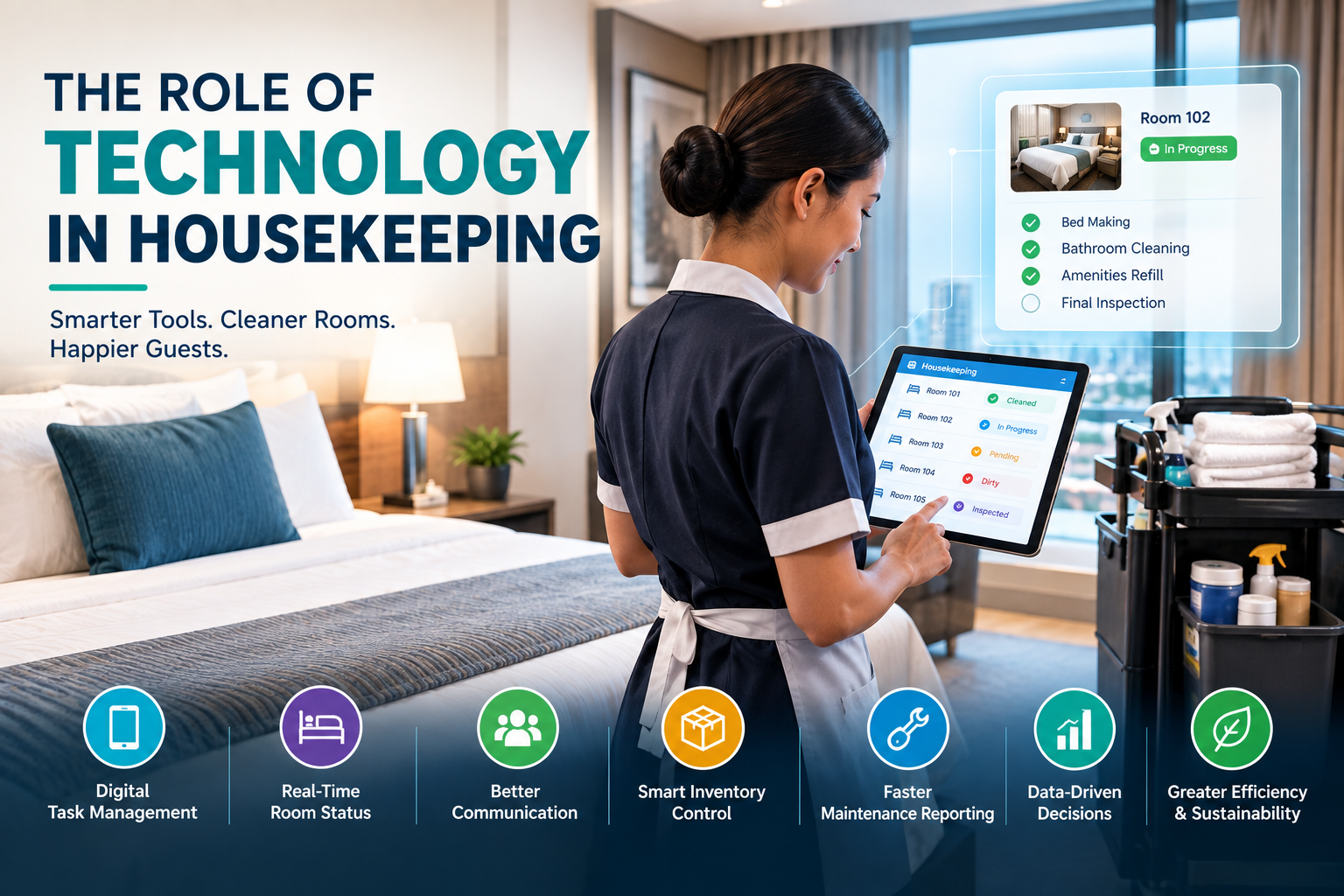
Housekeeping is one of the most important departments in any hotel. Clean, comfortable, and well-maintained rooms have a direct impact on guest satisfaction and the overall reputation of a property. However, housekeeping is also a highly operational department that involves managing room status, employee schedules, cleaning supplies, maintenance requests, linen, inspections, and changing guest requirements.
As hotels adopt digital solutions across their operations, technology is transforming the way housekeeping teams work. From mobile housekeeping applications and real-time room-status updates to automated task allocation, smart devices, and data analytics, technology can help housekeeping departments become more organized, responsive, and efficient.
At BookSmart, we believe that technology should support housekeeping employees rather than replace the human element of hospitality. When implemented thoughtfully, digital tools can reduce administrative work, improve communication, and allow housekeeping teams to focus more effectively on delivering clean and comfortable guest environments.
Why Technology Matters in Hotel Housekeeping
Traditional housekeeping operations often depend on paper checklists, phone calls, walkie-talkies, spreadsheets, and manual room-status updates. These methods can work, but they may create delays when hotels become busy.
A room may be cleaned but not immediately marked as ready. A maintenance issue may take time to reach the engineering team. A supervisor may need to physically check multiple rooms before updating their status.
Technology can connect these activities.
A digital housekeeping system can provide employees and managers with real-time information about room assignments, cleaning progress, inspections, maintenance issues, and priority requests.
This creates a more coordinated workflow between housekeeping and other hotel departments.
Digital Housekeeping Management Systems
One of the most significant developments in hotel housekeeping is the adoption of digital housekeeping management systems.
These platforms can allow housekeeping employees to access room assignments through smartphones or tablets instead of relying on printed lists.
Employees can see which rooms need cleaning, update their progress, and report problems directly through the system.
Supervisors can monitor progress without constantly contacting individual employees.
This can be especially useful during busy periods when large numbers of rooms need to be prepared quickly.
Real-Time Room Status Updates
Accurate room-status information is essential for hotel operations.
Front desk employees need to know whether rooms are vacant, occupied, being cleaned, inspected, or ready for guests.
Technology allows housekeeping teams to update room status in real time.
For example, when a room has been cleaned, the employee can update its status through a mobile device. A supervisor can then inspect the room and mark it as ready.
The front desk can receive the updated information through an integrated hotel system.
This reduces communication delays and can help hotels make rooms available to arriving guests more efficiently.
Automated Task Assignment
Housekeeping managers often need to distribute room-cleaning assignments across employees.
Digital systems can assist with task allocation based on factors such as room type, floor, workload, priority, and employee availability.
Instead of manually preparing assignments every morning, managers can use technology to organize workloads more efficiently.
Automated task allocation can also help supervisors make adjustments when occupancy changes or employees become unavailable.
However, human judgment remains important. Managers may need to consider employee experience, special guest requirements, room complexity, and other factors that automated systems cannot fully understand.
Mobile Devices for Housekeeping Teams
Mobile phones and tablets can give housekeeping employees access to important information while they are working.
Depending on the hotel’s system, employees may be able to:
- View room assignments
- Update room status
- Report maintenance issues
- Request supplies
- Record lost-and-found items
- Receive special instructions
- Communicate with supervisors
This reduces the need to return to a central office simply to receive or provide information.
It can also reduce paper-based processes and make housekeeping operations more responsive.
Faster Communication With Maintenance Teams
Housekeeping employees are often the first people to notice maintenance problems in guest rooms.
These may include leaking faucets, damaged furniture, malfunctioning lights, air-conditioning problems, plumbing issues, or electrical concerns.
In a manual system, employees may need to call or inform a supervisor, who then contacts the maintenance team.
Digital systems can allow housekeeping employees to report maintenance issues immediately.
The engineering team can receive the request, assign it to a technician, update the status, and notify housekeeping when the issue is resolved.
This creates a clearer maintenance workflow and reduces the chance of problems being forgotten.
Technology for Linen Management
Linen management is another area where technology can support housekeeping operations.
Hotels need to manage large quantities of bedsheets, towels, pillowcases, uniforms, and other textile products.
Digital inventory systems can help track linen quantities, usage, replacement requirements, and losses.
This information can help housekeeping managers identify unusual consumption patterns and maintain appropriate stock levels.
Technology can also support coordination between housekeeping and laundry operations.
Smart Inventory Management
Housekeeping departments use a wide range of supplies, including cleaning products, toiletries, tissues, garbage bags, amenities, and equipment.
Manual inventory tracking can make it difficult to determine exactly when supplies need to be reordered.
Digital inventory systems can track stock levels and provide alerts when supplies fall below predefined thresholds.
This can reduce the risk of running out of essential products while also preventing excessive purchasing.
Hotels can use historical consumption data to forecast future requirements more accurately.
Housekeeping Inspections Through Digital Checklists
Room inspections are essential for maintaining quality standards.
Traditionally, supervisors may use paper checklists to inspect rooms.
Digital inspection systems can replace these paper forms with mobile checklists.
Supervisors can record whether specific areas meet hotel standards and report issues immediately.
Digital inspection records also make it easier for managers to identify recurring problems.
For example, if the same issue repeatedly appears in particular rooms, management can investigate whether there is an underlying maintenance or training problem.
Using Data Analytics in Housekeeping
Housekeeping generates valuable operational data.
Hotels can analyze information such as:
- Average room cleaning time
- Number of rooms cleaned per employee
- Room inspection results
- Maintenance requests
- Supply consumption
- Linen usage
- Guest requests
- Room readiness times
This information can help managers understand operational performance.
For example, if cleaning times consistently increase on certain floors, managers can investigate whether room layouts, equipment, staffing, or other factors are contributing to the difference.
Data should be used to improve processes rather than simply measure employee performance.
Predictive Maintenance and Housekeeping
Technology can also help housekeeping teams identify maintenance issues before they become major problems.
Smart building systems and connected devices can monitor certain equipment and identify unusual performance.
For example, a smart system may detect unusual temperature patterns or equipment behavior that could indicate a potential issue.
Housekeeping employees can also contribute by reporting small problems during routine room cleaning.
Combining employee observations with technology can support preventive maintenance.
AI and Intelligent Housekeeping Operations
Artificial Intelligence is creating new possibilities for hotel housekeeping.
AI-powered systems can potentially analyze occupancy data, expected arrivals, departures, room priorities, cleaning times, and staffing information to help managers plan workloads.
AI can also identify patterns in guest requests and operational data.
For example, if a hotel regularly experiences increased housekeeping demand at particular times, predictive analytics can help managers prepare staffing and room-cleaning schedules.
AI should remain a decision-support tool rather than completely replacing human judgment.
Improving Guest Requests
Guests frequently make housekeeping-related requests, such as asking for additional towels, toiletries, pillows, blankets, or cleaning services.
Digital guest communication platforms can allow guests to submit requests through mobile applications or other hotel communication channels.
The request can then be automatically routed to the appropriate department.
Housekeeping employees can receive the task, complete it, and update its status.
This provides greater visibility and can help reduce delays.
Contactless Housekeeping Services
Technology has also enabled more flexible housekeeping options.
Guests may be able to communicate their preferred cleaning schedule digitally or request service when convenient.
Some hotels use digital systems to allow guests to choose whether they want daily housekeeping or specific service times.
This can help housekeeping teams plan workloads while giving guests greater control over their stay.
Technology and Employee Training
Technology is only effective when employees understand how to use it.
Hotels should provide adequate training whenever new housekeeping systems are introduced.
Training should cover:
- Mobile applications
- Digital room-status updates
- Maintenance reporting
- Inventory management
- Digital inspections
- Data security
- Guest communication
Employees should also understand why the system is being introduced.
When staff members see how technology reduces unnecessary work and improves communication, adoption can become easier.
Improving Sustainability Through Technology
Digital housekeeping technology can support hotel sustainability initiatives.
Accurate inventory tracking can reduce over-purchasing and waste.
Smart systems can help optimize cleaning schedules and resource usage.
Digital communication and checklists can reduce paper consumption.
Hotels can also use data to monitor water, energy, laundry, and cleaning-product usage.
Technology therefore has the potential to support both operational efficiency and environmental responsibility.
Challenges of Technology Adoption in Housekeeping
Technology can provide significant benefits, but implementation also comes with challenges.
Hotels may need to manage:
- Initial technology costs
- Employee training
- System integration
- Device maintenance
- Internet connectivity
- Data security
- Employee resistance to change
Older hotels may also have legacy systems that are difficult to integrate with modern housekeeping platforms.
Successful implementation requires careful planning and employee involvement.
Protecting Guest and Employee Data
Digital housekeeping systems may contain sensitive operational and guest information.
Hotels should ensure that systems are protected through appropriate access controls, secure authentication, data protection practices, and employee training.
Employees should only have access to the information required for their responsibilities.
Cybersecurity should be considered whenever new digital systems are introduced.
Balancing Technology With Human Hospitality
Despite rapid technological development, housekeeping remains a people-centered function.
Guests expect rooms to be clean, comfortable, and properly maintained. Technology can help employees achieve these goals, but it cannot replace attention to detail, professionalism, and care.
Hotels should therefore use technology to remove unnecessary administrative work and improve coordination.
The objective should be to give employees better tools—not to make hospitality feel impersonal.
The Future of Technology in Housekeeping
The future of hotel housekeeping is likely to involve greater automation, connected devices, artificial intelligence, robotics, and predictive analytics.
Robotic technologies may eventually assist with selected repetitive tasks in certain properties.
AI-driven platforms may help forecast room-cleaning requirements and optimize staffing.
IoT devices may provide real-time information about equipment and room conditions.
However, adoption will vary depending on hotel size, budget, infrastructure, and guest expectations.
Technology will continue to evolve, but successful hotels will focus on solutions that create measurable operational value.
Conclusion
Technology is transforming hotel housekeeping by improving communication, room-status visibility, task management, inventory control, inspections, maintenance reporting, and operational planning.
Digital housekeeping platforms, mobile devices, automated workflows, data analytics, smart inventory systems, and AI-powered tools can help hotels create more efficient and responsive housekeeping operations.
At BookSmart, we believe technology should empower housekeeping teams rather than replace the human qualities that make hospitality special. When digital tools are combined with skilled employees, clear processes, and strong service standards, hotels can improve operational efficiency while maintaining the cleanliness and comfort guests expect.
As the hospitality industry continues its digital transformation, housekeeping will become increasingly connected to the wider hotel technology ecosystem. Hotels that adopt technology thoughtfully can build housekeeping operations that are more organized, data-driven, sustainable, and prepared for the future.
Leave a Reply