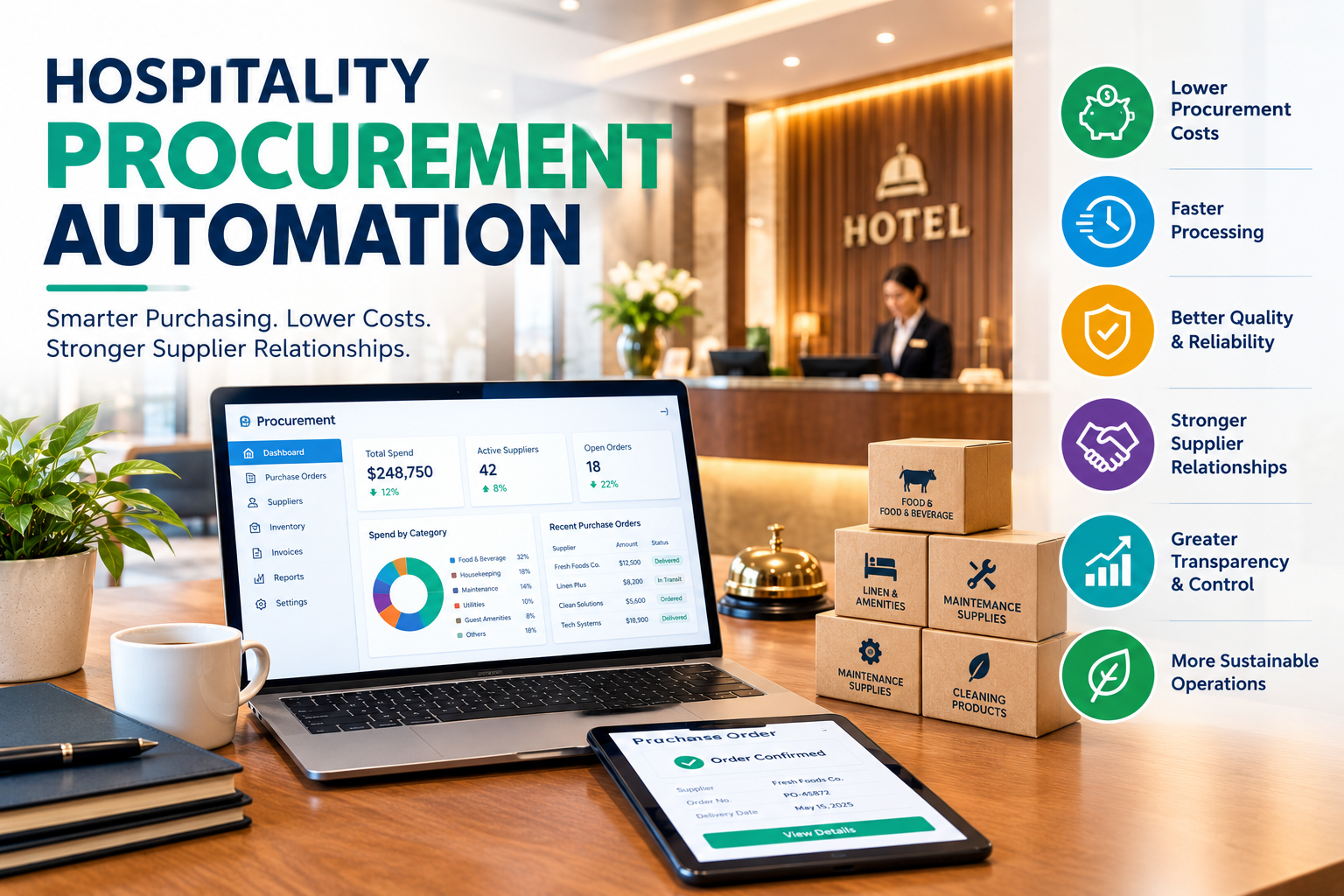
Procurement is one of the most important behind-the-scenes functions in the hospitality industry. Hotels continuously purchase food, beverages, linens, toiletries, cleaning supplies, maintenance equipment, technology, furniture, and many other products and services. Managing all these purchases manually can take considerable time and create opportunities for errors, delays, overspending, and communication gaps.
As hotels become more technology-driven, hospitality procurement automation is emerging as an effective way to simplify purchasing processes. By using digital procurement platforms, automated workflows, data analytics, inventory systems, and supplier management tools, hotels can make purchasing faster, more transparent, and easier to control.
At BookSmart, we believe that procurement automation can help hotels move beyond manual purchasing and build a more efficient, data-driven, and responsive procurement operation.
What Is Hospitality Procurement Automation?
Hospitality procurement automation refers to the use of technology to automate and streamline purchasing activities within hotels and other hospitality businesses.
Traditional procurement may involve phone calls, emails, spreadsheets, paper purchase orders, manual approvals, and physical invoices. While these methods can work for smaller operations, they become difficult to manage as the number of suppliers, products, and properties increases.
Automated procurement systems can connect activities such as:
- Product selection
- Purchase requests
- Approval workflows
- Purchase orders
- Supplier communication
- Inventory tracking
- Invoice processing
- Payment management
- Supplier performance monitoring
The result is a more connected procurement process with fewer repetitive manual tasks.
Why Procurement Automation Matters in Hospitality
Hotels operate in an environment where purchasing needs can change quickly. Occupancy levels, events, seasonal demand, restaurant requirements, maintenance issues, and unexpected guest demand can all influence procurement requirements.
Manual procurement processes may make it difficult to respond quickly.
Automation can help hotels improve:
- Purchasing efficiency
- Cost control
- Inventory visibility
- Supplier management
- Approval processes
- Order accuracy
- Financial reporting
- Procurement transparency
It can also give managers greater visibility into how much the hotel is spending and where that money is going.
Automating Purchase Requests
A procurement process often begins when a department identifies a requirement.
In a traditional hotel environment, an employee may send an email or submit a paper request. The purchasing team then reviews the request and begins the ordering process.
An automated system can digitize this workflow.
Employees can submit purchase requests through a centralized platform. The system can automatically route the request to the appropriate manager based on predefined approval rules.
This reduces unnecessary communication and makes the status of each request easier to track.
Automated Purchase Orders
Once a purchase request has been approved, procurement software can generate purchase orders automatically.
Purchase orders can include:
- Product descriptions
- Quantities
- Agreed prices
- Supplier information
- Delivery requirements
- Approval details
- Payment conditions
Automated purchase orders reduce manual data entry and help create consistent purchasing documentation.
They also provide a digital record that can be referenced if questions arise later.
Better Inventory Management
Inventory management is closely connected to procurement.
Hotels need enough stock to support daily operations without purchasing excessive quantities.
Procurement automation can connect inventory data with purchasing workflows. When stock levels reach predefined thresholds, the system can generate alerts or recommend replenishment.
For example, if housekeeping supplies fall below a specified level, the procurement team can receive an automated notification.
This can help prevent both stock shortages and unnecessary over-ordering.
Data-Driven Purchasing Decisions
One of the major benefits of procurement automation is access to purchasing data.
Hotels can analyze historical information to understand:
- What products are purchased most frequently
- How much is spent on each category
- Which suppliers receive the most orders
- How prices change over time
- Which products experience seasonal demand
- Where purchasing costs are increasing
This information can help managers make more informed procurement decisions.
Instead of relying primarily on estimates or memory, purchasing teams can use actual data to plan future requirements.
Automated Supplier Management
Hotels often work with numerous suppliers, making supplier management challenging.
A procurement platform can maintain centralized supplier information, including contracts, contact details, pricing agreements, delivery records, and performance information.
Hotels can also track supplier performance using indicators such as:
- Delivery accuracy
- Product quality
- Delivery time
- Price consistency
- Response time
- Contract compliance
This makes supplier evaluation more structured and transparent.
Improving Vendor Negotiations
Procurement automation can also support better vendor negotiations.
When hotels have detailed purchasing data, they can understand their actual purchasing volumes and spending patterns.
For example, a hotel may discover that it purchases a particular category of supplies from several vendors at different prices.
This information can help procurement teams identify opportunities to consolidate purchases or negotiate improved terms.
Automation does not replace negotiation skills, but it provides better information for negotiation.
Invoice Processing Automation
Invoice processing is another area where hotels can benefit from automation.
Manual invoice processing often requires employees to compare invoices with purchase orders and delivery records.
Automated systems can help match these documents and identify discrepancies.
For example, if a supplier invoices the hotel for 100 units but the purchase order shows 80 units, the system can flag the difference for review.
This can reduce errors and improve financial control.
Reducing Procurement Errors
Manual procurement processes can create several types of errors.
These may include:
- Incorrect quantities
- Duplicate orders
- Wrong supplier selection
- Incorrect pricing
- Missing approvals
- Duplicate invoice payments
- Outdated product information
Automated workflows can reduce these risks by applying predefined rules and validation checks.
Automation does not eliminate the need for human oversight, but it can reduce avoidable administrative mistakes.
Improving Cost Control
Procurement has a direct relationship with hotel cost management.
Automated procurement systems can provide visibility into spending across departments and properties.
Managers can identify unusual purchasing patterns and compare actual spending against budgets.
For example, if a department consistently exceeds its purchasing budget, management can investigate the underlying reason.
This makes procurement an important part of broader hotel financial management.
Supporting Multi-Property Hotel Groups
Procurement automation can be especially valuable for hotel groups operating multiple properties.
Each property may have different purchasing requirements, but certain products can often be standardized.
A centralized procurement platform can help hotel groups manage common purchasing categories while still allowing properties to address local requirements.
Group-level purchasing can also create opportunities for volume-based pricing.
At the same time, hotels can maintain relationships with local suppliers where local sourcing provides operational or guest-experience benefits.
Automating Approval Workflows
Procurement approvals can sometimes create delays, particularly when managers are unavailable.
Automated approval workflows can route requests to the appropriate decision-maker and provide notifications when action is required.
Approval rules can be based on factors such as:
- Purchase value
- Department
- Product category
- Supplier
- Budget allocation
For example, a low-value routine purchase may require departmental approval, while a large capital purchase may require senior management authorization.
Clear digital approval structures can improve both speed and accountability.
Integrating Procurement With Hotel Systems
The greatest benefits often occur when procurement software is integrated with other hotel technology.
Potential integrations include:
- Property Management Systems
- Accounting software
- Inventory management platforms
- Point-of-Sale systems
- Enterprise Resource Planning systems
- Supplier platforms
- Payment systems
Integration reduces the need to manually transfer information between systems.
For example, restaurant consumption data can potentially inform inventory levels, which can then support automated replenishment decisions.
Artificial Intelligence in Procurement
Artificial Intelligence is creating new opportunities for procurement automation.
AI-powered tools can analyze historical purchasing data and identify patterns in demand, prices, and supplier performance.
Potential applications include:
- Demand forecasting
- Price trend analysis
- Supplier recommendations
- Purchasing anomaly detection
- Inventory forecasting
- Automated categorization
- Spending analysis
For example, an AI system may identify that a hotel regularly experiences higher demand for particular supplies during certain seasons.
Procurement teams can use these insights to prepare earlier and avoid last-minute purchasing.
AI should be used as a decision-support tool, with appropriate human oversight for important procurement decisions.
Procurement Automation and Sustainability
Procurement decisions can influence a hotel’s environmental performance.
Automated systems can help hotels track purchasing categories and identify opportunities for more sustainable sourcing.
Hotels may use procurement platforms to evaluate suppliers based on factors such as:
- Sustainable materials
- Packaging
- Local sourcing
- Environmental certifications
- Waste reduction
- Ethical sourcing practices
Digital purchasing records also make it easier to analyze sustainability-related procurement data.
Improving Procurement Transparency
Transparency is another important benefit of automation.
A digital procurement system can provide a clear record of who requested an item, who approved it, which supplier was selected, when the order was placed, and how much was paid.
This creates greater accountability and makes procurement processes easier to review.
Transparent processes can also support internal controls and reduce the risk of unauthorized purchases.
Challenges of Procurement Automation
Despite its benefits, procurement automation requires careful implementation.
Hotels may face challenges such as:
- Initial technology costs
- Employee resistance to change
- Integration with legacy systems
- Data quality problems
- Employee training requirements
- Supplier technology limitations
- Cybersecurity considerations
Hotels should therefore avoid implementing automation simply because it is technologically available.
The system should address specific operational challenges and provide measurable business value.
Preparing Employees for Automated Procurement
Employees play a central role in successful procurement automation.
Purchasing teams, department managers, finance employees, and other users should understand how the new system works and why the change is being introduced.
Training should cover:
- Creating purchase requests
- Approval procedures
- Supplier selection
- Purchase orders
- Inventory processes
- Invoice management
- Reporting
Employees should also have opportunities to provide feedback during implementation.
Measuring the Success of Procurement Automation
Hotels should establish measurable objectives before implementing procurement automation.
Useful performance indicators can include:
- Procurement processing time
- Purchase order accuracy
- Invoice processing time
- Procurement cost savings
- Inventory turnover
- Supplier delivery performance
- Number of manual transactions
- Purchase approval time
These metrics can help management determine whether automation is producing meaningful improvements.
The Future of Hospitality Procurement
The future of hotel procurement will likely involve increasing levels of automation, integration, and predictive analytics.
Procurement systems may become more closely connected with hotel occupancy forecasts, restaurant demand, inventory levels, supplier pricing, and financial planning.
AI-powered systems could help procurement teams anticipate requirements before shortages occur.
Cloud-based platforms will also make procurement information accessible across properties and departments.
However, human judgment will remain important. Procurement involves relationships, quality assessment, negotiation, risk management, and strategic decision-making that cannot always be reduced to automated rules.
Conclusion
Hospitality procurement automation is changing the way hotels manage purchasing and supplier relationships. By automating purchase requests, approvals, purchase orders, inventory alerts, invoice processing, supplier monitoring, and reporting, hotels can reduce administrative workloads and gain greater visibility into their procurement operations.
The real value of automation goes beyond saving time. It can help hotels make better purchasing decisions, improve cost control, reduce errors, strengthen supplier management, and respond more effectively to changing operational requirements.
At BookSmart, we believe that successful procurement automation should combine technology with strong processes and capable people. Hotels that adopt automation thoughtfully can create a procurement function that is faster, more transparent, data-driven, and aligned with broader business objectives.
As hospitality continues to embrace digital transformation, procurement will become increasingly connected to the wider hotel ecosystem. Businesses that use automation strategically can build more efficient purchasing operations while creating a stronger foundation for sustainable growth.
Leave a Reply