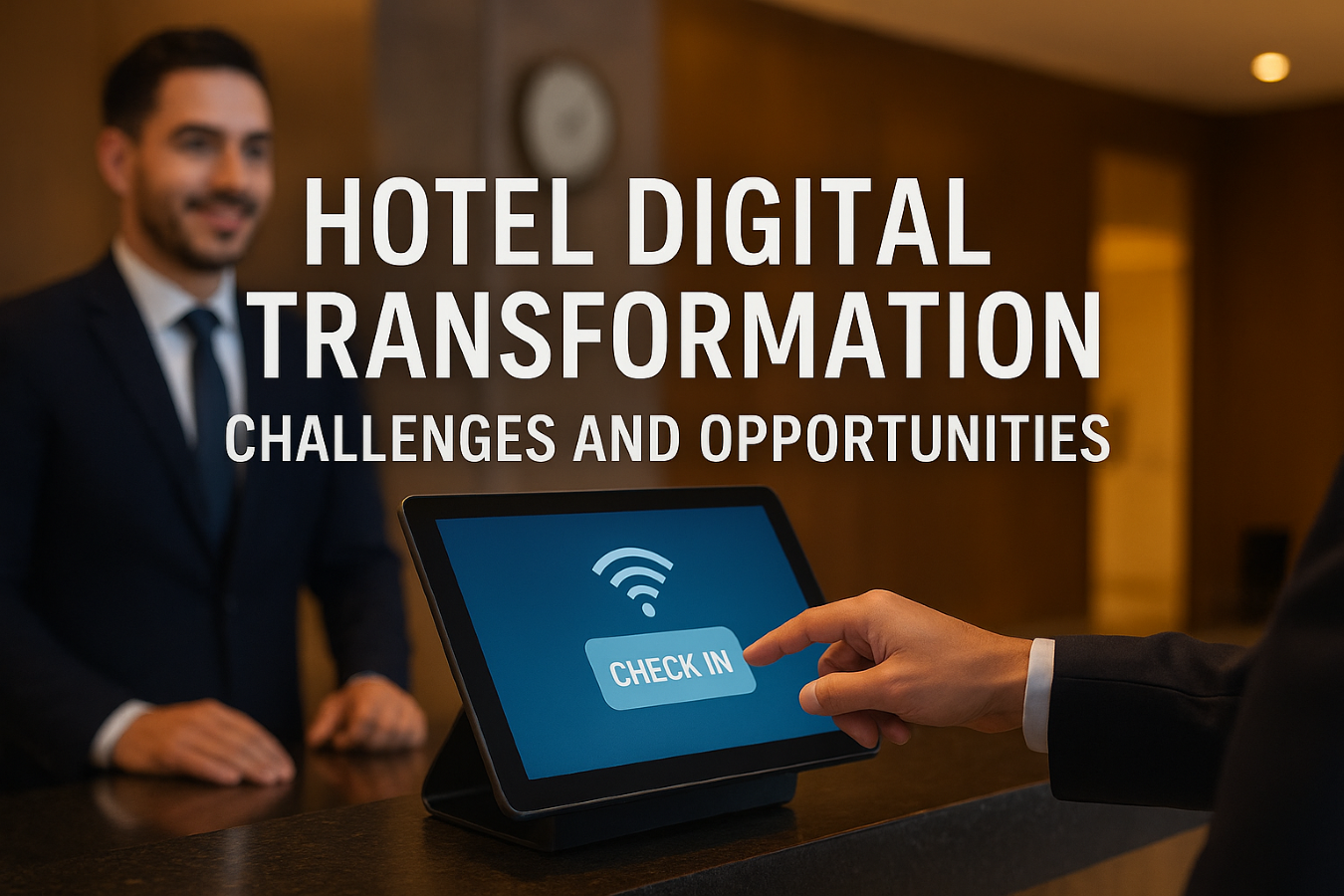
The hospitality industry is undergoing a remarkable shift. With technology shaping how guests search, book, and experience their stays, digital transformation in hotels is no longer optional—it’s essential. From smart rooms and AI chatbots to data-driven personalization, the digital wave is redefining what it means to deliver exceptional guest experiences.
At Booksmart, we believe that hotels embracing digital innovation can unlock new levels of efficiency, revenue, and guest satisfaction. However, this transformation doesn’t come without challenges. Let’s explore the key challenges and opportunities that digital transformation presents for the hotel industry.
1. The Changing Face of Hospitality
Today’s travelers expect seamless, technology-driven experiences. They want to check in with their phones, unlock rooms with digital keys, and receive personalized recommendations based on their preferences. This shift means hotels must evolve from traditional service models to tech-enabled ecosystems that blend comfort with convenience.
Digital transformation in hospitality isn’t just about upgrading systems—it’s about reimagining the entire guest journey. From pre-booking engagement to post-stay feedback, every touchpoint matters. Yet, many hotels struggle to make this transition smoothly.
2. The Challenges in Hotel Digital Transformation
While the benefits are immense, the path to digital transformation can be complex. Let’s look at the major challenges hotels face:
a. Legacy Systems and Integration Issues
Many hotels still rely on outdated Property Management Systems (PMS) or fragmented software solutions. These legacy systems often don’t communicate with newer platforms, creating data silos and inefficiencies.
Without integration between booking engines, CRM, and guest management tools, hotels miss valuable insights that could drive personalization and operational efficiency.
b. High Implementation Costs
Upgrading to smart systems, IoT devices, or AI-based tools requires significant investment. Smaller or independent hotels may hesitate due to budget constraints, fearing long payback periods.
However, the cost of inaction—lost bookings, poor guest satisfaction, and inefficiency—can be much higher in the long run.
c. Data Privacy and Security Concerns
With digitalization comes the responsibility of handling sensitive guest data. Any security breach can damage reputation and trust. Ensuring compliance with regulations like GDPR and implementing strong cybersecurity measures is a must—but it also adds complexity.
d. Resistance to Change
In many hotels, employees and management are accustomed to traditional ways of working. Introducing automation or digital tools can meet resistance from staff, who fear redundancy or struggle to adapt to new technologies.
Without proper training and change management, digital adoption often falls short of expectations.
e. Connectivity and Infrastructure Limitations
For hotels in remote or developing regions, poor internet connectivity and outdated hardware can hinder digital adoption. Technology is only as effective as the infrastructure that supports it.
3. Opportunities Created by Digital Transformation
Despite these challenges, digital transformation offers a wealth of opportunities for hotels willing to embrace innovation. Here’s how forward-thinking hospitality businesses are leveraging technology to gain a competitive edge:
a. Enhanced Guest Experience
Personalization is at the heart of modern hospitality. With digital tools, hotels can track guest preferences, anticipate needs, and tailor experiences.
Imagine a guest receiving a personalized room setup, custom dining recommendations, or a “welcome back” message—all driven by intelligent data analytics.
At Booksmart, we help hotels harness data to create guest experiences that feel personal, seamless, and memorable.
b. Streamlined Operations and Efficiency
Automation is transforming how hotels manage check-ins, housekeeping, and customer service. Self-service kiosks, AI chatbots, and digital payment systems reduce manual work while speeding up operations.
This not only saves time and labor costs but also allows hotel staff to focus on what they do best—delivering exceptional hospitality.
c. Revenue Growth Through Smart Insights
Data analytics enables hotels to make data-backed decisions—from dynamic pricing to demand forecasting. Using AI-driven insights, hotels can optimize room rates, predict seasonal trends, and boost occupancy rates.
Digital marketing tools also empower hotels to target potential guests more effectively through social media, SEO, and retargeting campaigns.
d. Sustainability and Smart Energy Management
Sustainability is no longer a trend—it’s a necessity. Smart energy systems allow hotels to monitor and reduce electricity and water usage. Automated lighting, temperature control, and waste management systems not only cut costs but also attract eco-conscious travelers.
e. Greater Flexibility and Scalability
Cloud-based systems have made it easier for hotels to scale operations across multiple locations. Real-time data sharing ensures consistency in service, pricing, and guest management.
For chains and boutique hotels alike, this flexibility makes it easier to expand while maintaining operational control and quality standards.
4. The Role of Booksmart in Hotel Digital Transformation
At Booksmart, we understand that digital transformation isn’t just about adopting technology—it’s about adopting the right technology strategically. We work with hotels to analyze existing systems, identify gaps, and develop a custom digital roadmap aligned with their business goals.
Our expertise includes:
- Integrating modern PMS and CRM systems
- Developing seamless booking platforms and mobile apps
- Enhancing online visibility through digital marketing and SEO
- Implementing data security and privacy compliance measures
- Training hotel teams for smooth digital adoption
By combining innovation with hospitality insight, Booksmart helps hotels create smarter operations, happier guests, and stronger bottom lines.
5. The Future of Digital Hospitality
The future of hotels is hyperconnected, personalized, and data-driven. Emerging technologies like artificial intelligence (AI), Internet of Things (IoT), and augmented reality (AR) will soon redefine guest engagement.
Imagine virtual room tours before booking, AI-driven concierge services, or voice-activated controls that make every guest feel at home. These aren’t distant dreams—they’re the next steps in hospitality’s evolution.
Hotels that act today will be tomorrow’s leaders.
Conclusion
Digital transformation in the hotel industry is both a challenge and an opportunity. While integration, cost, and cultural resistance can slow progress, the rewards—improved guest satisfaction, operational excellence, and increased profitability—are too significant to ignore.
At Booksmart, we believe that technology should enhance hospitality, not replace it. The most successful hotels will be those that combine human warmth with digital intelligence—offering experiences that are not only efficient but unforgettable.
Leave a Reply