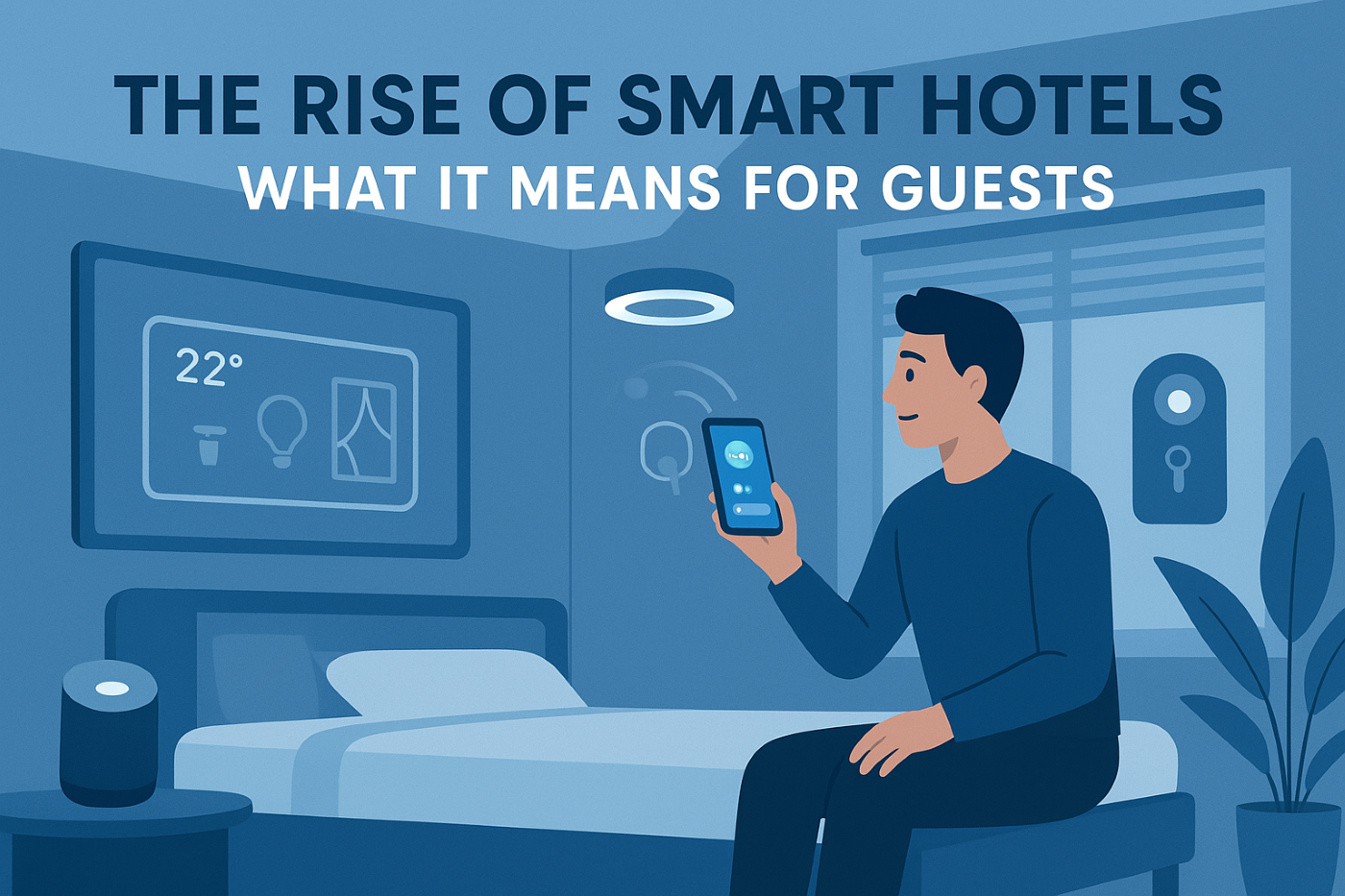
In the age of technology-driven transformation, the hospitality industry is undergoing a digital revolution. The modern traveler no longer seeks just a comfortable bed and room service—they desire convenience, personalization, and seamless experiences powered by technology. This evolution has given birth to smart hotels — properties that leverage automation, artificial intelligence, the Internet of Things (IoT), and data analytics to redefine guest experiences.
At BookSmart, we believe that the future of hospitality lies in smart, connected, and personalized travel experiences. The rise of smart hotels is not just a passing trend; it’s a paradigm shift reshaping how hotels operate, interact with guests, and deliver value.
Let’s explore what smart hotels mean, how they benefit guests, and why they represent the future of travel and accommodation.
What Are Smart Hotels?
A smart hotel integrates advanced technologies such as IoT devices, AI-driven systems, cloud computing, and mobile applications to provide intelligent, automated, and personalized services to guests. Everything from room lighting and temperature control to check-in, entertainment, and security can be managed through digital platforms or even voice commands.
In simple terms, smart hotels are designed to anticipate and fulfill guests’ needs automatically, reducing manual effort while enhancing comfort and efficiency.
Imagine checking into your room without standing in a queue, adjusting the lighting through your smartphone, or having an AI-powered concierge recommend dining options based on your preferences—all from the comfort of your bed. That’s the promise of smart hospitality.
1. Seamless and Contactless Check-In Experience
Gone are the days when guests had to wait at the front desk to check in or fill out lengthy forms. Smart hotels enable digital check-in and check-out experiences through mobile apps or self-service kiosks.
Using facial recognition or QR codes, guests can instantly access their rooms upon arrival. This not only saves time but also aligns perfectly with the post-pandemic preference for contactless services.
For frequent travelers, this feature eliminates repetitive registration steps, making every stay smoother and more personalized. At BookSmart, we’ve seen that hotels adopting digital check-in technologies have significantly improved guest satisfaction scores.
2. Voice-Activated Rooms and AI Assistants
Smart hotels are redefining convenience with voice-controlled technologies. Guests can now control room functions—such as lighting, curtains, television, and temperature—simply by speaking.
AI assistants like Alexa for Hospitality or custom in-room bots are becoming the new concierge, helping guests order room service, book a spa appointment, or request housekeeping without lifting a finger.
This not only enhances accessibility but also provides a futuristic experience that delights tech-savvy travelers. It’s comfort reimagined through innovation.
3. Personalized Guest Experiences through Data
Data is the backbone of every smart hotel. By analyzing guest behavior, preferences, and feedback, hotels can tailor services to each visitor.
For example, if a guest prefers a specific room temperature, favorite cuisine, or a particular pillow type, the system automatically adjusts these before check-in. Returning guests enjoy a sense of familiarity as their preferences are remembered and replicated—creating a truly personalized stay.
This level of customization strengthens brand loyalty. Guests feel valued when hotels understand and anticipate their needs—something BookSmart helps partner hotels achieve through intelligent data analytics.
4. IoT-Enabled Comfort and Convenience
The Internet of Things (IoT) connects devices within the hotel ecosystem to deliver a smarter environment. Smart thermostats, lighting systems, and motion sensors automatically adjust based on guest presence and preferences.
For instance:
- The lights dim automatically when a guest settles in for the night.
- The air conditioner turns off when the guest leaves the room, saving energy.
- The TV greets the guest by name and suggests entertainment options.
These small yet meaningful touches create a blend of luxury and sustainability, enhancing comfort while optimizing energy use—a win-win for both guests and hoteliers.
5. Enhanced Security and Privacy
Modern travelers value security as much as comfort. Smart hotels incorporate biometric systems, digital key cards, and AI-powered surveillance to ensure safety without intrusion.
Guests can unlock their rooms via smartphone apps, eliminating the risk of lost keys or unauthorized access. Meanwhile, advanced monitoring systems ensure that guest data and privacy remain fully protected.
Security protocols are designed to be discreet yet highly effective, ensuring guests feel safe at all times. At BookSmart, we work with hotels that use encryption and cloud-based monitoring to maintain the highest data protection standards.
6. Smart Energy Management and Sustainability
Sustainability is no longer optional—it’s a global responsibility. Smart hotels are leading the way by adopting eco-friendly technologies.
Automated systems control electricity, water usage, and air conditioning to reduce waste. Solar energy panels, smart sensors, and water-recycling mechanisms contribute to greener operations.
For guests, this means staying in environmentally conscious hotels without compromising on comfort. The knowledge that their stay supports sustainability adds emotional value to the experience—especially among millennial and Gen Z travelers who prefer eco-conscious brands.
7. Smart Entertainment and Connectivity
With the rise of digital lifestyles, guests expect hotels to provide high-speed internet, streaming options, and seamless connectivity. Smart hotels go beyond this by integrating smart TVs, casting features, and personalized media libraries.
Guests can stream Netflix or YouTube from their devices, enjoy curated playlists, or even explore virtual concierge services. Some hotels offer AR/VR-based local tours that enhance the travel experience even before guests step out.
This hyper-connected environment ensures guests are always entertained, informed, and connected—exactly what today’s traveler demands.
8. Predictive Maintenance for Hassle-Free Stays
One of the lesser-known benefits of smart hotels is predictive maintenance. IoT devices can detect issues before they become problems—whether it’s a malfunctioning AC unit, leaking faucet, or failing Wi-Fi router.
By alerting staff proactively, hotels can fix problems quickly, ensuring uninterrupted comfort for guests. This not only improves operational efficiency but also minimizes guest complaints.
When guests experience seamless service without disruption, it builds trust and enhances the brand reputation—something BookSmart continually promotes through its hotel technology partners.
9. Integration with Mobile Apps for Total Control
Smart hotels offer guests the power of control through mobile applications. With a single app, guests can manage bookings, unlock doors, order food, adjust lighting, or even contact staff.
This mobile-first experience aligns perfectly with modern travelers’ expectations. Everything they need is just a tap away—simplifying interactions and empowering guests with autonomy during their stay.
Furthermore, hotels use these apps to share promotions, upsell services, and gather instant feedback, creating a two-way communication channel that strengthens relationships.
10. AI Chatbots and 24/7 Virtual Support
AI chatbots have become an integral part of smart hospitality. Available 24/7, they handle common queries like booking requests, directions, and amenity information—instantly and efficiently.
Guests no longer need to wait for a front desk response. Chatbots provide immediate answers while freeing up staff for personalized guest interactions.
This blend of automation and human touch ensures every guest feels heard, supported, and valued throughout their journey.
11. The Human Element: Technology with a Heart
While smart technologies dominate the hospitality landscape, the human touch remains irreplaceable. The goal is not to replace hospitality professionals but to empower them to deliver higher-quality service.
Automation handles repetitive tasks, while hotel staff focus on creating memorable moments—greeting guests, resolving unique concerns, or adding personal touches. The combination of smart systems and empathetic service creates a holistic, memorable experience that defines the future of hospitality.
12. The Future Outlook of Smart Hotels
The concept of smart hotels is still evolving. In the coming years, we can expect even greater integration of AI, robotics, and augmented reality (AR).
- Robots may deliver food or luggage to rooms.
- AI will predict guest preferences even before arrival.
- Virtual reality could offer immersive previews of hotel amenities or local attractions.
As these innovations mature, hotels that embrace smart technologies early will gain a significant competitive edge. Guests, in turn, will benefit from hyper-personalized, efficient, and sustainable stays.
At BookSmart, we are helping partner hotels adapt to this transformation by offering digital marketing, AI integration, and tech-driven guest engagement strategies that attract the modern traveler.
Conclusion: A Smarter Future for Hospitality
The rise of smart hotels marks the beginning of a new era—one where technology and hospitality merge to create unforgettable guest experiences. For travelers, it means convenience, personalization, safety, and sustainability. For hoteliers, it means efficiency, loyalty, and long-term growth.
At BookSmart, we believe that the future of travel lies in embracing innovation with purpose. Smart hotels aren’t just redefining comfort; they’re reshaping the very essence of hospitality—making every stay smarter, smoother, and more meaningful.
Leave a Reply