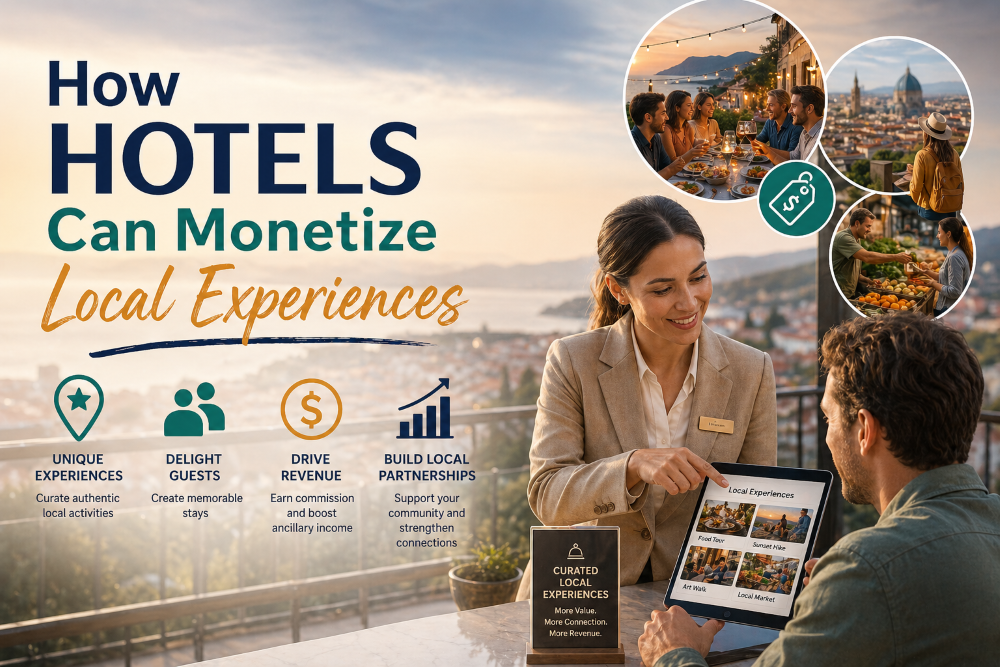
In today’s experience-driven travel economy, guests are no longer satisfied with just a comfortable room—they want meaningful, authentic, and memorable experiences. This shift has opened a powerful revenue opportunity for hotels: monetizing local experiences.
From cultural tours and food trails to adventure activities and wellness retreats, hotels can go beyond accommodation and become curators of destination experiences. For BookSmart, this strategy is not just about increasing revenue—it’s about enhancing guest satisfaction, differentiation, and brand value.
The Rise of Experience-Based Travel
Modern travelers, especially millennials and Gen Z, prioritize experiences over material luxury. They seek:
- local culture
- authentic interactions
- unique activities
- personalized journeys
This trend is part of the broader experience economy, where memories matter more than amenities.
Hotels that tap into this mindset can transform themselves from service providers into experience enablers.
What Are Local Experiences?
Local experiences are activities that connect guests with the destination’s culture, people, and environment.
These can include:
- guided city tours
- street food walks
- heritage site visits
- cooking classes
- art and craft workshops
- nature treks
- wellness sessions (yoga, Ayurveda)
- cultural performances
Instead of outsourcing these entirely, hotels can package, promote, and monetize them.
Why Monetizing Experiences Matters
There are three major benefits:
1. Additional Revenue Streams
Hotels earn commissions or direct income from experiences.
2. Higher Guest Satisfaction
Guests value convenience and curated recommendations.
3. Competitive Differentiation
Hotels stand out by offering more than just rooms.
For BookSmart, this creates a win-win model—more revenue for hotels and richer experiences for guests.
Partnering with Local Businesses
The easiest way to monetize experiences is through partnerships.
Hotels can collaborate with:
- local tour operators
- travel guides
- restaurants
- artisans
- wellness practitioners
For example:
- a hotel in Jaipur can partner with local craftsmen for block printing workshops
- a property in Rishikesh can offer yoga and meditation sessions
Hotels can earn commissions or bundle these services into packages.
Creating In-House Experiences
Hotels can also design their own experiences.
Examples include:
- chef-led cooking classes
- wine tasting evenings
- cultural nights with local music
- storytelling sessions about local history
- rooftop dining experiences
These in-house offerings have higher profit margins since the hotel controls pricing and delivery.
Bundling Experiences with Room Packages
One of the most effective monetization strategies is bundling.
Instead of selling rooms alone, hotels can create packages such as:
- “Stay + Food Tour”
- “Weekend Getaway + Adventure Activity”
- “Wellness Retreat Package”
Bundled packages simplify decision-making for guests and increase average booking value.
They also improve booking conversion by offering more perceived value.
Leveraging Digital Platforms
Technology plays a major role in experience monetization.
Hotels can:
- integrate experiences into their booking engine
- promote them on mobile apps
- showcase them on websites and social media
- enable one-click add-ons during booking
Online travel platforms like Airbnb have already popularized the concept of “Experiences”, proving strong demand in this space.
Hotels can adopt similar models to stay competitive.
Personalization for Higher Revenue
Personalized experiences can significantly increase upselling opportunities.
For example:
- couples → romantic dinners, sunset cruises
- families → theme parks, kid-friendly activities
- solo travelers → walking tours, local meetups
Using guest data, hotels can recommend relevant experiences during booking or check-in.
This targeted approach improves both satisfaction and revenue.
Promoting Experiences Through Storytelling
Guests don’t just buy activities—they buy stories.
Hotels should use storytelling to promote experiences:
- highlight local culture
- showcase real guest experiences
- use videos and visuals
- feature local personalities
For example, instead of saying “city tour available,” describe:
“Explore hidden streets, taste authentic street food, and discover the untold stories of the city with our guided experience.”
This emotional appeal increases conversions.
Training Staff to Upsell Experiences
Front desk staff and concierge teams play a key role.
They should be trained to:
- recommend experiences confidently
- understand guest preferences
- suggest relevant activities
- upsell naturally during conversations
A well-informed staff can significantly boost experience bookings.
Pricing Strategies for Experiences
Hotels can monetize experiences in different ways:
- Commission Model → earn a percentage from partners
- Fixed Pricing → buy low, sell at higher margin
- Premium Packaging → bundle luxury experiences
- Dynamic Pricing → adjust based on demand
The right pricing strategy depends on the hotel’s positioning and target audience.
Building Local Brand Identity
Experiences also strengthen brand positioning.
A hotel that promotes:
- local culture
- authentic food
- community engagement
becomes more than just a place to stay—it becomes part of the destination.
This builds stronger emotional connections and long-term loyalty.
Challenges to Consider
While monetizing experiences offers great potential, hotels must manage:
- quality control of partner services
- guest safety and liability
- consistent service standards
- pricing transparency
- operational coordination
Poorly managed experiences can harm brand reputation.
Future of Experience Monetization
The future lies in:
- AI-based experience recommendations
- immersive digital previews
- hyper-local curated activities
- sustainable tourism experiences
- community-driven travel
Hotels that invest early in this space will gain a strong competitive edge.
Conclusion
Monetizing local experiences is one of the most powerful growth opportunities in modern hospitality.
It allows hotels to increase revenue, enhance guest satisfaction, and differentiate themselves in a crowded market.
For BookSmart, the key takeaway is clear: the future of hospitality is not just about where guests stay—but what they experience.
Hotels that successfully integrate local experiences into their offerings will not only earn more but also create unforgettable journeys that guests will remember long after checkout.
Leave a Reply