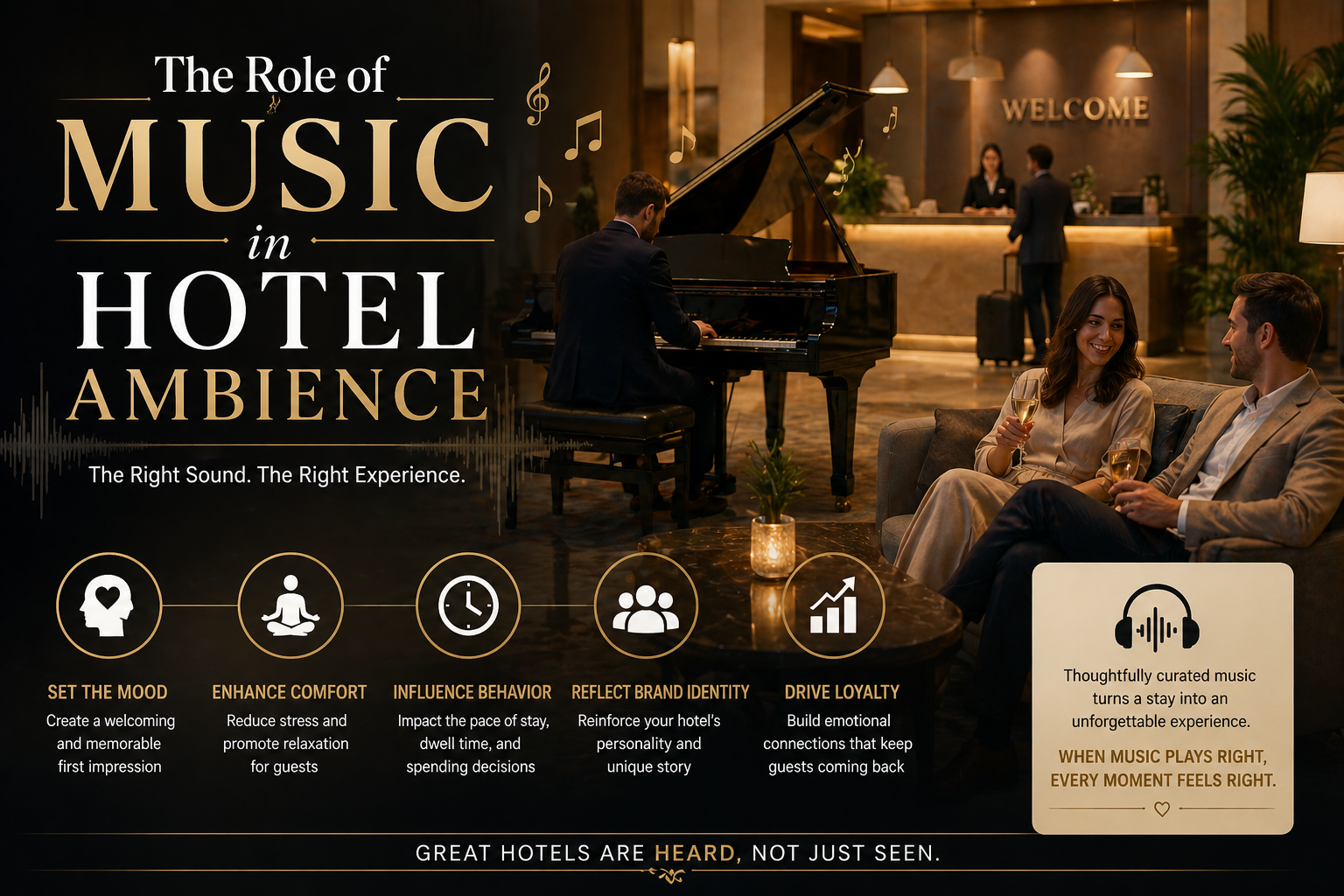
In the hospitality industry, ambience is everything. From lighting and scent to design and service, every detail contributes to how a guest perceives a hotel. Among these elements, music plays a uniquely powerful yet often underestimated role. It is invisible, yet deeply influential—shaping emotions, behavior, and overall guest experience without being consciously noticed.
For hotels aiming to create memorable stays, music is not just background noise; it is a strategic tool that enhances atmosphere, reinforces brand identity, and influences guest satisfaction. For BookSmart, understanding the role of music in hotel ambience is essential for crafting immersive and emotionally engaging hospitality experiences.
Music as an Emotional Trigger
Music has a direct connection to human emotions. It can calm, energize, uplift, or even evoke nostalgia within seconds.
In a hotel setting:
- soft instrumental music can create relaxation
- upbeat tunes can energize social spaces
- ambient sounds can reduce stress and anxiety
When guests enter a lobby or lounge, music immediately sets the emotional tone. A well-chosen soundtrack can make a space feel welcoming, luxurious, or vibrant.
This emotional connection often shapes how guests remember their stay.
First Impressions and Atmosphere
The first few minutes of a guest’s arrival are crucial.
As guests step into the lobby, they begin forming impressions—not just visually, but audibly. Music works alongside lighting, scent, and decor to create a cohesive atmosphere.
For example:
- a luxury hotel may use classical or soft jazz
- a boutique hotel may play indie or cultural music
- a beach resort may use tropical or acoustic sounds
This alignment between music and brand identity enhances the overall ambience and creates a consistent sensory experience.
Reinforcing Brand Identity
Music can act as a subtle branding element.
Just like logos and interior design, sound contributes to brand perception. Hotels can use music to communicate their personality:
- premium hotels → calm, elegant, slow-tempo music
- business hotels → neutral, focus-friendly background music
- lifestyle hotels → trendy, upbeat playlists
Some global hotel brands even curate signature playlists to create a recognizable identity across properties.
For BookSmart, this highlights how music can strengthen brand recall and differentiation.
Enhancing Guest Comfort
Music can make spaces feel more comfortable and less intimidating.
Silence in large hotel lobbies or corridors can feel awkward or cold. Background music fills this gap and creates a sense of warmth and liveliness.
In waiting areas, music reduces perceived waiting time. Guests feel more relaxed and less impatient when pleasant music is playing.
This psychological effect improves overall guest satisfaction.
Influencing Guest Behavior
Music can subtly influence how guests behave.
Research in environmental psychology shows that tempo and volume can affect:
- how long guests stay in a space
- how much they spend
- how they interact with the environment
For example:
- slower music encourages guests to linger longer
- faster music increases turnover in busy areas
- soft music promotes calm and relaxed behavior
Restaurants and hotel cafes often use this strategy to manage guest flow and enhance dining experiences.
Zoning Music for Different Spaces
A hotel is made up of multiple environments, each with its own purpose.
Music should be tailored to each zone:
Lobby:
Welcoming, neutral, brand-aligned music
Restaurant:
Depends on cuisine and time of day
Spa:
Calm, slow, meditative sounds
Bar or Lounge:
Energetic, social, mood-lifting tracks
Corridors:
Minimal or very subtle ambient music
This zoning approach ensures that music supports the function of each space.
Cultural and Local Influence
Music can also reflect local culture and enhance authenticity.
Hotels can incorporate regional music styles to connect guests with the destination.
For example:
- traditional Indian instrumental music in heritage hotels
- folk or regional sounds in cultural destinations
- local language songs in boutique properties
This adds depth to the guest experience and creates a stronger sense of place.
Technology and Smart Music Systems
Modern hotels are using technology to manage music more effectively.
Smart audio systems allow hotels to:
- schedule playlists by time of day
- adjust volume automatically
- customize music for different zones
- adapt music based on guest demographics
Some advanced systems even use AI to match music with occupancy levels or guest mood.
This ensures consistency and enhances operational efficiency.
Music and Memory
One of the most powerful aspects of music is its link to memory.
Guests often associate specific songs or sounds with places and experiences. A well-curated soundtrack can make a stay more memorable.
When guests hear similar music later, it can trigger positive memories of their hotel experience.
This emotional recall strengthens brand connection and loyalty.
Avoiding Common Mistakes
While music is powerful, poor execution can have negative effects.
Common mistakes include:
- playing music too loud
- using inappropriate genres
- repeating the same playlist frequently
- not aligning music with brand identity
- ignoring cultural sensitivity
Hotels must ensure that music enhances rather than disrupts the guest experience.
The Future of Music in Hospitality
The role of music in hospitality is becoming more sophisticated.
Future trends include:
- personalized in-room music experiences
- voice-controlled music systems
- AI-curated playlists
- integration with smart room technology
Hotels may soon allow guests to customize music settings according to their preferences, creating a more personalized stay.
Conclusion
Music is a powerful yet subtle element that shapes hotel ambience in profound ways.
It influences emotions, enhances comfort, reinforces branding, and creates memorable experiences for guests.
For BookSmart, the key takeaway is clear: music is not just background sound—it is a strategic tool that can elevate the entire guest experience.
Hotels that thoughtfully design their sound environment will not only improve guest satisfaction but also create lasting impressions that go beyond the physical space.
Leave a Reply