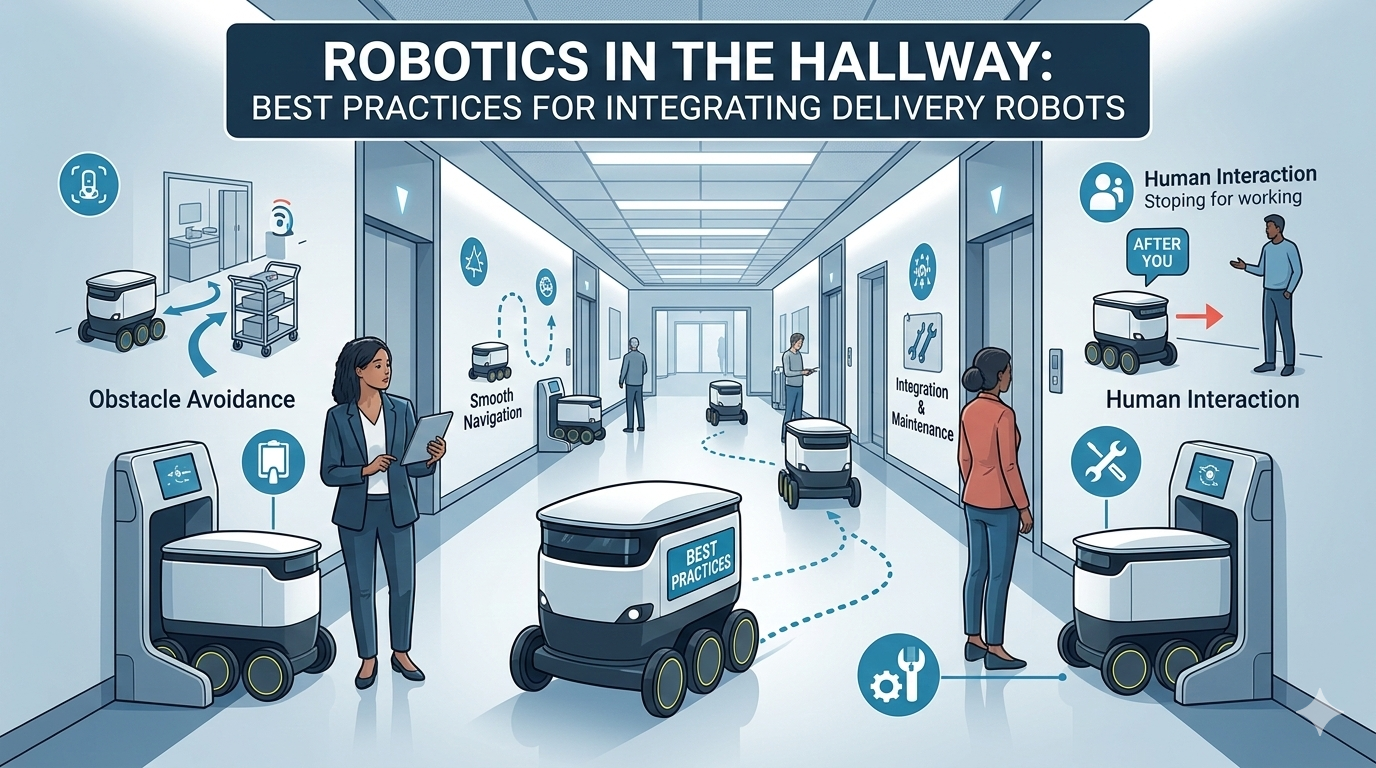
Automation is no longer confined to manufacturing floors or airport terminals. Today, robots are quietly moving through hotel corridors, delivering towels, room service orders, toiletries, and late-night snacks — transforming how hospitality operations function behind the scenes.
Delivery robots have rapidly emerged as one of the most practical applications of service automation in hotels. From improving operational efficiency to enhancing guest novelty and safety, robotic hallway delivery is redefining service expectations. However, successful implementation requires more than purchasing a robot and setting it loose in corridors.
Hotels must carefully balance technology, guest experience, staff collaboration, and infrastructure readiness. This article explores best practices for integrating delivery robots effectively while maintaining the human-centered essence of hospitality.
Why Hotels Are Turning to Delivery Robots
Labor shortages, rising operational costs, and evolving guest expectations are pushing hotels toward automation solutions.
Delivery robots help address several operational challenges:
- Reducing repetitive staff tasks
- Supporting lean night-shift operations
- Enabling contactless service
- Improving delivery speed
- Enhancing brand innovation perception
Rather than replacing employees, robots primarily handle routine logistics, allowing staff to focus on high-value guest interactions.
Understanding the Role of Hallway Robots
Delivery robots typically operate within controlled indoor environments such as hotel floors. Their responsibilities may include:
- Room service delivery
- Amenity drop-offs
- Laundry transport
- Retail item delivery
- Guest-request fulfillment
Modern robots use sensors, cameras, mapping software, and elevator integrations to navigate autonomously.
The goal is simple: automate movement, not hospitality.
Step 1: Define Clear Use Cases Before Deployment
One of the biggest mistakes hotels make is adopting robotics without operational clarity.
Before integration, management should identify:
- High-frequency delivery requests
- Departments experiencing workload strain
- Peak service bottlenecks
- Night-time staffing gaps
Common successful use cases include:
- Late-night amenity requests
- Food delivery from in-house outlets
- Housekeeping supply runs
Starting with a focused application ensures measurable ROI and smoother adoption.
Step 2: Prepare Infrastructure and Layout
Robots perform best in environments designed for predictability.
Hotels should assess:
Corridor Width and Obstacles
Narrow hallways, decorative furniture, or irregular layouts can interrupt navigation.
Elevator Integration
Robots must communicate with elevators through IoT-enabled control systems to move between floors autonomously.
Wi-Fi Stability
Consistent connectivity is essential for navigation updates and remote monitoring.
Flooring Conditions
Highly reflective surfaces, thick carpets, or uneven thresholds may affect sensor accuracy.
Infrastructure readiness significantly impacts robot reliability and guest perception.
Step 3: Design a Seamless Guest Experience
Guests should perceive robots as an enhancement — not a complication.
Best practices include:
- Sending notifications when delivery arrives
- Providing simple pickup instructions
- Using friendly voice or screen interactions
- Branding robots to match hotel personality
Many hotels name their robots or give them digital personalities, creating memorable interactions that guests often share on social media.
The experience should feel delightful rather than mechanical.
Step 4: Integrate Robots with Existing Systems
Robots achieve maximum efficiency when connected to hotel technology ecosystems.
Key integrations include:
- Property Management Systems (PMS)
- Guest request platforms
- Mobile apps
- Room service ordering systems
- Smart elevators
Automation workflows allow requests to trigger deliveries automatically, minimizing manual coordination.
For example:
A guest orders extra towels via the app → housekeeping confirms → robot dispatches automatically.
This reduces communication delays between departments.
Step 5: Train Staff for Collaboration — Not Competition
Employee acceptance determines long-term success.
Staff may initially fear job displacement or operational complexity. Transparent communication is essential.
Training should emphasize that robots:
- Handle repetitive transport tasks
- Reduce physical strain
- Support faster response times
- Allow employees to focus on personalized service
Hotels that position robots as team assistants rather than replacements achieve higher adoption rates.
Assigning a “robot champion” within operations teams also helps manage troubleshooting and confidence building.
Step 6: Establish Operational Protocols
Clear procedures prevent confusion during daily operations.
Hotels should define:
- Delivery scheduling rules
- Charging and maintenance routines
- Emergency override procedures
- Cleaning and sanitation protocols
- Manual delivery backup plans
Robots require consistent monitoring just like any other operational asset.
Preventive maintenance avoids service interruptions that negatively affect guest perception.
Step 7: Prioritize Safety and Privacy
Guest trust is critical when introducing autonomous machines into private hospitality spaces.
Important considerations include:
- Collision avoidance systems
- Speed limitations in guest areas
- Secure camera data handling
- Restricted floor access permissions
- Emergency stop functions
Robots should never compromise guest privacy or comfort.
Clear communication about data usage reassures guests unfamiliar with robotic technologies.
Step 8: Monitor Performance and ROI
Successful integration depends on continuous evaluation.
Hotels should track:
- Delivery completion time
- Staff time saved
- Guest satisfaction scores
- Maintenance costs
- Usage frequency
- Social media engagement
Interestingly, robots often generate marketing value beyond operational savings through viral guest experiences.
Analytics help determine expansion opportunities or workflow adjustments.
Human Touch Still Matters
Despite technological advancement, hospitality remains deeply emotional.
Robots cannot replace empathy, problem-solving, or personalized care. Instead, they remove friction from routine processes.
The most successful hotels combine:
Automation efficiency + Human warmth
For example:
A robot delivers amenities quickly, while staff follow up personally to ensure guest satisfaction.
Technology supports service — it does not define it.
Common Implementation Mistakes to Avoid
Hotels integrating robotics should avoid:
- Deploying robots without staff training
- Over-automating guest interaction
- Ignoring infrastructure compatibility
- Treating robots as marketing gimmicks only
- Failing to maintain consistent uptime
Poor execution can make innovation feel inconvenient rather than impressive.
The Future of Robotic Hospitality
Delivery robots represent only the beginning of automation in hospitality environments.
Emerging developments include:
- AI-powered service coordination
- Multi-robot fleet management
- Predictive delivery based on guest behavior
- Integration with smart rooms
- Autonomous back-of-house logistics
As technology matures, robots will increasingly operate as invisible infrastructure — quietly enhancing service speed and operational intelligence.
Conclusion
Robotics in hotel hallways signals a major evolution in hospitality operations. When thoughtfully implemented, delivery robots improve efficiency, reduce workload pressure, and elevate guest experience through speed and novelty.
However, successful integration depends on strategy, infrastructure readiness, staff collaboration, and guest-centric design.
Hotels that treat robotics as a service enhancement rather than a replacement for human hospitality will gain the greatest advantage.
The future hotel corridor may include autonomous helpers — but exceptional service will always remain human at heart.
Leave a Reply