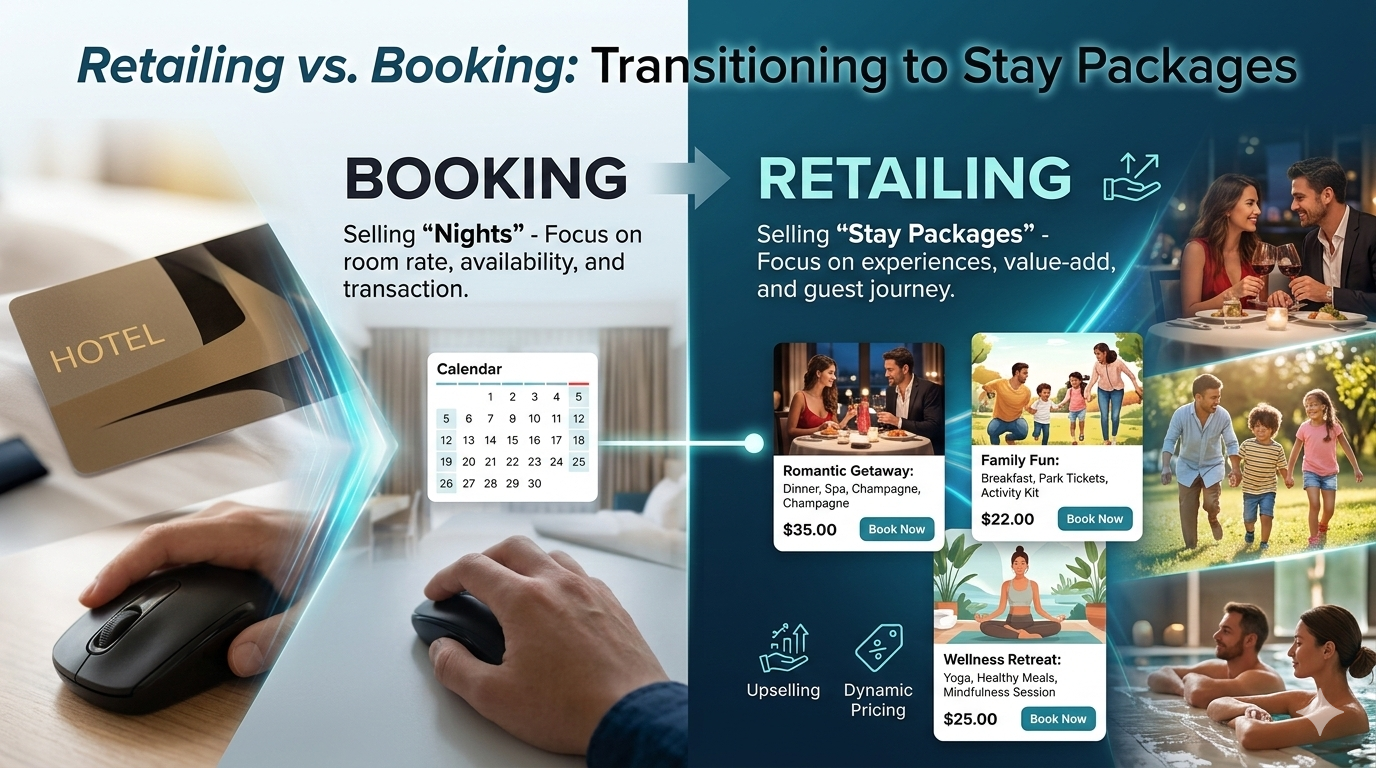
The hospitality industry is undergoing one of its most important commercial transformations in decades. For years, hotels focused on a simple transaction: selling rooms by the night. Availability, occupancy rates, and average daily rate (ADR) dominated revenue strategies. But today’s travelers are no longer just booking accommodation — they are purchasing experiences.
Modern guests want curated moments, personalization, convenience, and emotional value. This shift has sparked a major evolution from traditional room booking models toward retail-style stay packages that bundle accommodation with experiences, services, and lifestyle offerings.
Hotels that successfully transition from selling “nights” to selling “stay packages” are discovering higher revenue opportunities, stronger brand loyalty, and improved guest satisfaction. This article explores why the shift is happening, how it works, and how hospitality brands can successfully adopt a retail mindset.
The Problem with Selling Room Nights
Traditional hotel booking operates much like inventory clearance. Rooms are perishable assets — once a night passes unsold, revenue is permanently lost. As a result, hotels often compete primarily on price.
This model creates several challenges:
- Heavy dependence on online travel agencies (OTAs)
- Price wars with competitors
- Limited differentiation
- Low emotional connection with guests
- Revenue restricted to accommodation alone
When hotels sell only rooms, they unintentionally commoditize themselves. Guests compare prices instead of experiences, making loyalty fragile and margins thinner.
In contrast, retail industries thrive by packaging products into compelling value propositions. Hospitality is now adopting the same philosophy.
What Does “Retailing Hospitality” Mean?
Retailing hospitality means shifting from a transactional booking model to an experience-driven product model.
Instead of:
“One Deluxe Room for Two Nights”
Hotels sell:
“Weekend Wellness Escape with Spa Therapy, Breakfast Experience, Late Checkout, and Local Cultural Tour”
The focus moves from where guests sleep to how guests feel during their stay.
Stay packages combine multiple services into a single purchasable offering, similar to curated retail bundles or subscription experiences.
Common package components include:
- Dining experiences
- Spa treatments
- Transportation services
- Local excursions
- Event access
- Wellness programs
- Pet services
- Workspace amenities
- Family entertainment
This transformation turns hospitality into an experiential retail ecosystem.
Why Guests Prefer Stay Packages
1. Decision Simplicity
Travel planning fatigue is real. Guests often spend hours coordinating restaurants, activities, and logistics separately.
Packages eliminate friction by offering ready-made experiences.
Convenience becomes a major selling point — especially for millennials, families, and corporate travelers seeking efficiency.
2. Perceived Value Over Price
Guests evaluate bundled offerings differently than standalone room rates.
A ₹12,000 nightly rate may feel expensive.
But a ₹18,000 “Romantic Escape Package” including dinner, spa access, and upgrades feels valuable.
Retail psychology shifts focus from cost to benefit.
3. Experience-Led Travel Trends
Modern travelers prioritize:
- Wellness
- Cultural immersion
- Personal growth
- Social media–worthy experiences
- Work-life balance
Stay packages directly align with experiential travel expectations rather than basic accommodation needs.
Revenue Advantages for Hotels
Transitioning to stay packages delivers measurable financial benefits.
Increased Average Spend Per Guest
Bundling encourages guests to pre-purchase services they might otherwise skip. Revenue moves beyond room income into food, wellness, recreation, and partnerships.
Reduced OTA Dependency
Unique packages are harder to compare across platforms. This encourages direct bookings through hotel websites, improving margins.
Better Demand Management
Packages help fill low-demand periods by targeting specific traveler segments:
- Midweek remote-work packages
- Monsoon wellness retreats
- Festive family stays
- Off-season adventure deals
Instead of discounting rooms, hotels add value.
Predictable Operational Planning
Pre-sold experiences allow departments to forecast demand more accurately for:
- Spa staffing
- Restaurant preparation
- Activity scheduling
- Housekeeping workload
This improves operational efficiency.
Thinking Like a Retail Brand
To succeed, hotels must adopt retail principles rather than traditional reservation thinking.
Productization of Experiences
Retail brands sell clearly defined products. Hotels should do the same.
Examples include:
- “Digital Nomad Productivity Stay”
- “Couples Reconnection Retreat”
- “Family Discovery Weekend”
- “Pet Luxury Vacation”
Each package should have:
- A clear audience
- Defined benefits
- Emotional storytelling
- Transparent inclusions
Seasonal Collections
Retailers launch seasonal collections — hospitality can mirror this strategy.
Examples:
- Summer Adventure Collection
- Festive Celebration Packages
- Winter Wellness Series
- Monsoon Culinary Escapes
Rotating packages maintain excitement and encourage repeat visits.
Visual Merchandising Online
Hotel websites should resemble e-commerce platforms rather than reservation engines.
Key elements include:
- Experience-focused imagery
- Package comparison layouts
- Lifestyle storytelling
- Add-on customization options
Guests should feel like they are shopping, not booking.
The Role of Technology in Package Retailing
Technology enables scalable package selling.
Dynamic Packaging Systems
Modern booking engines allow guests to customize experiences in real time by adding services during checkout.
Data Personalization
Guest history helps recommend packages aligned with preferences, such as wellness-focused or family-oriented stays.
Mobile Upselling
Pre-arrival emails and apps can offer upgrades, excursions, or dining reservations before check-in.
Technology transforms static reservations into interactive retail journeys.
Partner Ecosystems: Expanding Value Without High Costs
Hotels do not need to create every experience internally.
Strategic partnerships with local businesses can enhance packages while supporting community economies.
Potential partners include:
- Tour operators
- Artists and cultural groups
- Adventure companies
- Wellness instructors
- Restaurants
- Transportation providers
This approach expands offerings without heavy capital investment while strengthening destination authenticity.
Marketing Stay Packages Effectively
A retail transition requires marketing evolution.
Sell Outcomes, Not Features
Instead of:
“Room with breakfast included”
Use:
“Wake up to a slow morning with curated local breakfast experiences.”
Emotion drives conversions.
Use Storytelling Content
Blogs, reels, and guest stories showcasing experiences outperform static promotions.
Highlight moments:
- Sunset dinners
- Family bonding activities
- Wellness transformations
- Local explorations
Guests imagine themselves within the experience.
Segment-Based Campaigns
Different packages should target specific psychographic audiences:
- Remote professionals
- Wellness seekers
- Celebration travelers
- Adventure enthusiasts
- Luxury pet owners
Precision marketing increases relevance and booking intent.
Operational Challenges — and How to Solve Them
Transitioning isn’t without hurdles.
Internal Department Coordination
Packages require collaboration between rooms, F&B, spa, and concierge teams.
Solution: Cross-department revenue planning meetings.
Pricing Complexity
Bundles must balance profitability and perceived value.
Solution: Analyze contribution margins instead of individual department revenue.
Staff Training
Employees must understand experiences, not just room categories.
Solution: Train teams as experience ambassadors rather than service executors.
The Future: Hospitality as Experience Commerce
The next phase of hospitality resembles experience commerce platforms rather than traditional hotels.
Emerging trends include:
- Subscription-based stays
- Lifestyle memberships
- Hybrid work-and-leisure programs
- Wellness residencies
- Personalized travel ecosystems
Guests increasingly choose brands that curate lifestyles, not just lodging.
Hotels that embrace retail thinking will evolve into experience hubs — places where memories are designed intentionally rather than accidentally.
Conclusion
The hospitality industry is moving beyond occupancy metrics toward experience value creation. Selling room nights alone limits both revenue potential and brand differentiation.
By transitioning from booking-focused models to retail-style stay packages, hotels unlock new profit streams, deepen guest relationships, and stand out in an increasingly competitive market.
The question is no longer:
“How many rooms did we sell?”
It is:
“What experiences did our guests buy — and remember?”
Hotels that answer this question successfully will define the future of modern hospitality.
Leave a Reply