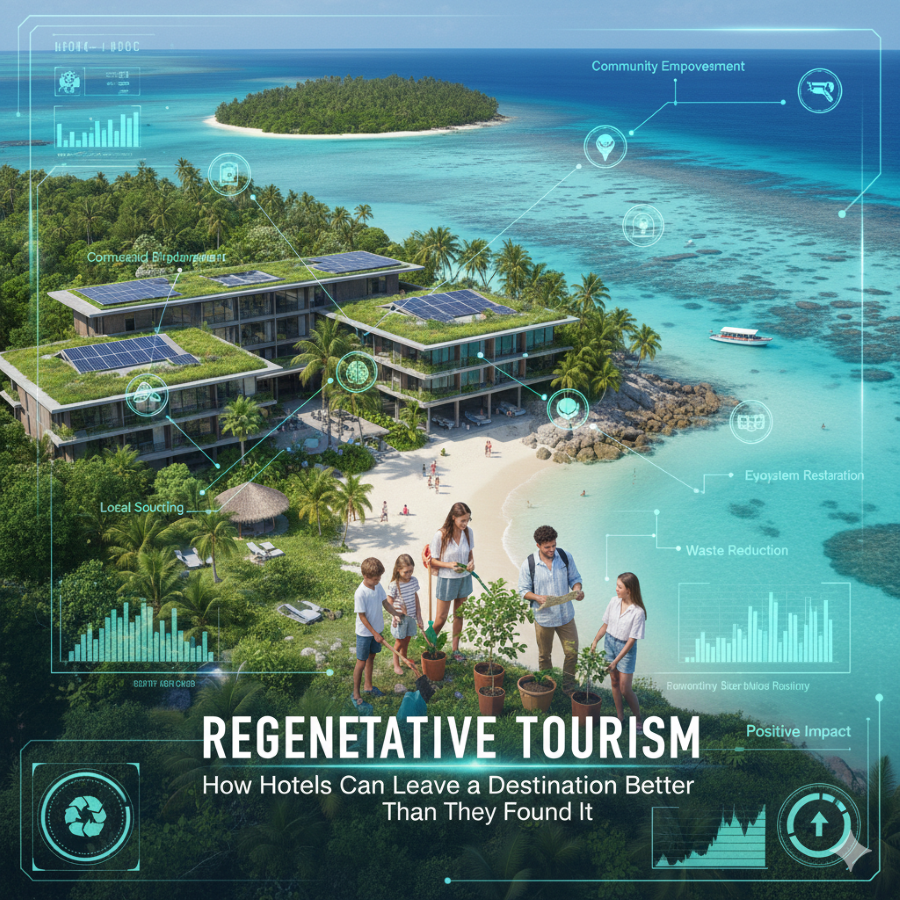
For decades, the goal of sustainable tourism was simple: do less harm. Hotels focused on reducing waste, saving water, and minimizing environmental damage. While this was an important step, a new and more powerful movement is emerging—regenerative tourism.
Regenerative tourism goes beyond sustainability. It asks a bigger question:
What if hotels could leave a destination better than they found it?
Instead of simply preserving places, regenerative hotels actively restore ecosystems, strengthen local communities, and create positive impact.
At Booksmart, we see regenerative tourism not just as a trend, but as the future of hospitality—one where hotels become contributors, not consumers, of the destinations they serve.
What Is Regenerative Tourism?
Regenerative tourism is an approach to travel and hospitality that focuses on actively improving environmental, cultural, and social systems.
Sustainable tourism aims to reduce negative impact.
Regenerative tourism aims to create positive impact.
It focuses on:
- Restoring natural ecosystems
- Supporting local communities
- Reviving cultural heritage
- Strengthening local economies
It transforms hospitality from passive presence to active contribution.
Why Sustainability Is No Longer Enough
Sustainability focuses on maintaining balance.
But many destinations are already damaged.
They need restoration.
For example:
- Beaches suffer from pollution
- Coral reefs are dying
- Forests are shrinking
- Local cultures are disappearing
Simply reducing harm will not reverse this damage.
Regeneration is required.
Hotels have the power to lead this change.
The Shift from “Less Harm” to “More Good”
Traditional sustainability asks:
“How can we reduce our footprint?”
Regenerative tourism asks:
“How can we increase our positive footprint?”
This mindset shift changes everything.
Hotels become:
- Environmental restorers
- Cultural protectors
- Community partners
Not just accommodation providers.
Why Regenerative Tourism Matters to Modern Guests
Today’s travelers are more conscious than ever.
They care about:
- Environmental impact
- Community wellbeing
- Ethical travel
Many guests prefer hotels that align with their values.
Especially younger generations.
This shift is influencing booking decisions.
Guests don’t just ask:
“How nice is the hotel?”
They ask:
“What does this hotel stand for?”
Environmental Regeneration: Restoring Nature
One of the most important roles hotels can play is restoring natural ecosystems.
This includes:
Reforestation Programs
Hotels can plant trees to restore forests.
This improves:
- Biodiversity
- Air quality
- Climate stability
Some hotels involve guests in tree planting.
This creates meaningful experiences.
Ocean and Marine Restoration
Coastal hotels can support:
- Coral reef restoration
- Beach cleanups
- Marine conservation
For example, brands like Six Senses invest in coral restoration and marine protection programs around their resorts.
This protects fragile ecosystems.
It also protects the future of tourism itself.
Wildlife Protection
Hotels can protect local wildlife by:
- Preserving habitats
- Supporting conservation programs
This maintains ecological balance.
Community Regeneration: Empowering Local People
Regenerative tourism is not just about nature.
It is about people.
Hotels can strengthen local communities through:
Hiring Local Staff
Employing local residents creates:
- Jobs
- Financial stability
- Economic growth
It ensures tourism benefits the community.
Supporting Local Businesses
Hotels can source:
- Food from local farmers
- Products from local artisans
This supports local economies.
It keeps money within the community.
Education and Skill Development
Some hotels provide:
- Hospitality training programs
- Education support
This empowers future generations.
Brands like Accor have introduced community-focused initiatives that support local employment and social development.
This creates long-term impact.
Cultural Regeneration: Protecting Identity
Tourism can sometimes erase local culture.
Regenerative tourism protects it.
Hotels can preserve culture by:
- Promoting local traditions
- Supporting cultural events
- Using local design and architecture
This keeps culture alive.
It also creates authentic guest experiences.
Guests want to experience real destinations.
Not generic hotels.
Economic Regeneration: Creating Long-Term Prosperity
Tourism can either extract wealth—or create it.
Regenerative hotels focus on creating shared prosperity.
This includes:
- Fair wages
- Supporting local suppliers
- Investing in community development
This builds stronger economies.
Stronger communities create stronger destinations.
How Regenerative Tourism Improves Guest Experience
Regenerative tourism doesn’t just help destinations.
It improves guest satisfaction.
Guests experience:
- Deeper connection to destination
- More meaningful travel
- Greater emotional fulfillment
Guests feel part of something positive.
This creates memorable experiences.
Memories drive loyalty.
Business Benefits for Hotels
Regenerative tourism is not just ethical.
It is strategic.
It improves key business outcomes.
Stronger Brand Reputation
Guests respect responsible brands.
This improves brand image.
Higher Guest Loyalty
Guests return to hotels aligned with their values.
Premium Pricing Power
Guests are willing to pay more for meaningful experiences.
Better Guest Reviews
Guests often mention sustainability and impact in reviews.
This influences future bookings.
Real-World Leadership in Regenerative Hospitality
Global hospitality leaders are investing in regenerative practices.
For example, Marriott International has introduced environmental and community programs focused on reducing environmental impact and supporting local communities.
These efforts reflect the industry’s direction.
Regeneration is becoming mainstream.
Not niche.
From Luxury to Legacy: A New Definition of Hospitality
Traditionally, luxury meant:
- Expensive design
- Premium service
Today, luxury includes:
- Meaning
- Purpose
- Positive impact
Guests want travel to enrich their lives.
Not harm the world.
Regenerative tourism delivers this.
The Emotional Power of Purpose-Driven Travel
Guests increasingly seek purpose.
They want their travel to matter.
Regenerative hotels offer this opportunity.
Guests can:
- Plant trees
- Support local communities
- Protect nature
This creates emotional connection.
Emotional connection creates loyalty.
Technology Supporting Regenerative Tourism
Technology helps hotels improve impact.
Examples include:
- Energy management systems
- Water conservation systems
- Waste tracking tools
Technology makes regeneration measurable.
It improves efficiency.
Challenges of Implementing Regenerative Tourism
Regenerative tourism requires commitment.
Challenges include:
Investment Costs
Restoration programs require funding.
But long-term benefits outweigh costs.
Long-Term Vision
Regeneration takes time.
Results are not immediate.
Hotels must think long-term.
Cultural Sensitivity
Hotels must work respectfully with communities.
Collaboration is essential.
How Hotels Can Start the Regenerative Journey
Hotels can begin with simple steps:
Protect Natural Resources
Reduce waste.
Restore ecosystems.
Support Local Communities
Hire locally.
Buy locally.
Invest locally.
Preserve Culture
Celebrate local traditions.
Use local design.
Educate Guests
Encourage guests to participate.
This creates shared responsibility.
The Future of Hospitality Is Regenerative
The hospitality industry is entering a new era.
Guests expect more than comfort.
They expect responsibility.
Hotels will no longer be judged only by:
- Room quality
- Service
But also by:
- Environmental impact
- Community impact
Regeneration will become a competitive advantage.
Why Regenerative Tourism Is a Business Imperative
Regenerative tourism is not just about ethics.
It is about survival.
Destinations damaged by tourism lose their appeal.
Destinations restored by tourism thrive.
Hotels must protect their greatest asset:
The destination itself.
The Booksmart Perspective
At Booksmart, we believe the future of hospitality lies in contribution.
Hotels must become partners in the destination.
Not just visitors within it.
Regenerative tourism transforms hospitality into a force for good.
It creates value for:
- Guests
- Communities
- Nature
- Businesses
This is the future of meaningful travel.
Conclusion
Regenerative tourism represents a powerful evolution in hospitality.
It moves beyond sustainability toward restoration and renewal.
Hotels that embrace regenerative practices can leave destinations better than they found them.
They create positive environmental, social, and economic impact.
They build stronger brands.
They create deeper guest loyalty.
And most importantly, they protect the future of travel itself.
Because the most successful hotels of tomorrow will not just serve guests.
They will serve the world.
Leave a Reply