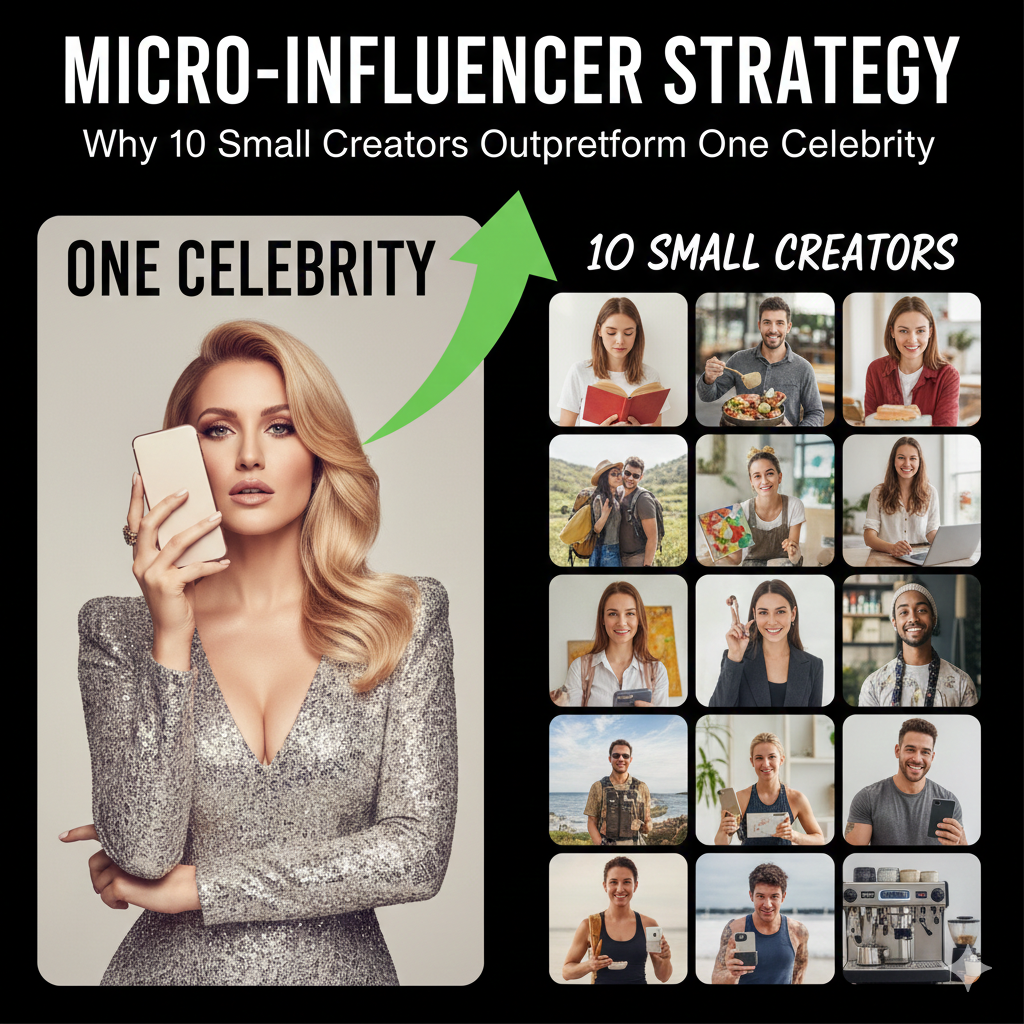
For years, brands believed that celebrity endorsements were the ultimate marketing tool. A famous face, millions of followers, and massive visibility seemed like the perfect formula for success. But today, the rules of influence have changed. Consumers are smarter, more selective, and more skeptical of traditional celebrity promotions.
In this new digital landscape, micro-influencers are proving to be more powerful, more trusted, and more effective than celebrities. Instead of investing your entire budget in one big name, partnering with 10 small creators can often deliver better results, stronger engagement, and higher returns.
At Booksmart, we believe this shift represents the future of marketing. In this article, we explore why micro-influencer strategy works, how it outperforms celebrity marketing, and how brands can use it effectively.
Understanding Micro-Influencers
Micro-influencers are content creators who typically have 1,000 to 100,000 followers on social media platforms like Instagram, YouTube, TikTok, or LinkedIn.
Unlike celebrities, micro-influencers are:
- More relatable
- More accessible
- More trusted by their audience
- Focused on specific niches
They may not have millions of followers, but what they have is far more valuable—authentic influence.
Their followers listen, trust, and act on their recommendations.
The Problem with Celebrity Influencers
Celebrity marketing still has value, but it comes with serious limitations.
1. Low Trust Levels
Today’s consumers know celebrities are paid large amounts for promotions.
This creates skepticism.
People often think:
“They’re promoting it for money, not because they actually use it.”
Trust is weak.
2. Low Engagement Rates
Celebrities may have millions of followers, but engagement is often low.
Likes and comments represent a small percentage of their audience.
Many followers are passive.
They watch—but they don’t act.
3. Extremely High Cost
Celebrity promotions can cost:
- Thousands
- Lakhs
- Even crores
This makes them inaccessible for most brands.
And the return is not always guaranteed.
4. Broad, Not Targeted Audience
Celebrities have general audiences.
But brands need specific customers.
For example:
A fitness brand needs fitness-focused buyers—not random followers.
Micro-influencers solve this problem.
Why Micro-Influencers Are More Effective
Micro-influencers outperform celebrities for several powerful reasons.
1. Higher Trust and Authenticity
Micro-influencers build close relationships with their followers.
They respond to comments.
They share real experiences.
They feel like friends—not distant celebrities.
When they recommend a product, people believe them.
Trust leads to action.
This is the foundation of successful marketing.
2. Higher Engagement Rates
Micro-influencers typically have much higher engagement rates than celebrities.
Their followers:
- Comment more
- Ask questions
- Share opinions
- Make purchases
Their audience is active.
Not passive.
Engagement drives conversions.
3. Better Target Audience Reach
Micro-influencers focus on specific niches.
Examples include:
- Fitness
- Food
- Fashion
- Technology
- Business
- Travel
This means brands can reach the exact customers they want.
Instead of broadcasting to everyone, they speak directly to the right people.
This improves marketing efficiency.
4. Cost-Effective Marketing
One celebrity may cost the same as 10 to 50 micro-influencers combined.
With the same budget, brands can:
- Reach multiple audiences
- Test different markets
- Reduce risk
This increases return on investment.
Micro-influencers provide more value for money.
5. Multiple Voices Create Stronger Impact
When one celebrity promotes a product, it feels like advertising.
But when 10 different creators recommend the same product, it creates social proof.
People think:
“Everyone is using this.”
This builds credibility.
Repetition strengthens trust.
Trust increases sales.
6. More Authentic Content Creation
Micro-influencers are content creators first.
They understand:
- Their audience
- Their platform
- What works
They create natural, engaging content.
Not forced advertisements.
This makes promotions more effective.
The Psychology Behind Micro-Influencer Success
The success of micro-influencers is rooted in human psychology.
People trust:
- People like themselves
- People they relate to
- People they interact with
Not distant celebrities.
Micro-influencers feel real.
Their lifestyle feels achievable.
Their recommendations feel genuine.
This drives buying decisions.
Real-World Example Scenario
Imagine a new healthy snack brand.
Option 1: Hire one celebrity.
Result:
- Huge reach
- Low engagement
- Limited trust
Option 2: Hire 10 fitness micro-influencers.
Result:
- Targeted audience
- High engagement
- Strong trust
- Multiple content pieces
Which is more effective?
The micro-influencer strategy wins.
Long-Term Brand Building Benefits
Micro-influencers don’t just create sales.
They build communities.
Over time, they become brand advocates.
Their audience begins to associate the brand with trust.
This creates long-term growth.
Celebrity promotions are often short-term.
Micro-influencer relationships are long-term.
More Content, More Marketing Power
Working with multiple micro-influencers creates:
- More posts
- More videos
- More reviews
- More brand mentions
This increases brand visibility.
It also provides reusable content for marketing.
This multiplies value.
Reduced Risk Compared to Celebrity Marketing
If one celebrity campaign fails, the entire budget is wasted.
But with 10 micro-influencers:
Even if 2 or 3 underperform, others succeed.
Risk is spread.
This makes the strategy safer.
Stronger Connection with Modern Consumers
Today’s consumers prefer authenticity over fame.
They follow creators who:
- Share real opinions
- Show real experiences
- Provide real value
Micro-influencers meet these expectations.
Celebrities often don’t.
This is why micro-influencers win.
How Brands Can Build a Successful Micro-Influencer Strategy
Micro-influencer marketing works best when done correctly.
Here are key steps.
1. Choose Relevant Influencers
Focus on:
- Audience relevance
- Engagement rate
- Content quality
Not just follower count.
Relevance matters most.
2. Work with Multiple Creators
Instead of one big influencer, partner with many small ones.
This increases reach and impact.
3. Allow Creative Freedom
Micro-influencers understand their audience best.
Let them create content in their own style.
This improves authenticity.
4. Build Long-Term Relationships
Don’t treat it as one-time promotion.
Long-term partnerships build stronger trust.
5. Track Performance
Measure:
- Engagement
- Clicks
- Conversions
Optimize based on results.
Micro-Influencers and the Future of Marketing
Marketing is shifting from fame to trust.
From reach to relationships.
From celebrity power to community power.
Micro-influencers represent this future.
Even large global brands are now focusing on micro-creators.
Because they deliver results.
Why This Strategy Is Perfect for Growing Brands
Micro-influencer marketing is ideal for:
- Startups
- Small businesses
- D2C brands
- Local brands
It provides:
- Affordable marketing
- Targeted customers
- Strong engagement
It allows smaller brands to compete with larger ones.
The Booksmart Perspective
At Booksmart, we see micro-influencer strategy as more than just marketing.
It’s about building trust.
It’s about building relationships.
It’s about connecting with real people.
In today’s digital world, influence is not about how many people follow you.
It’s about how many people trust you.
And trust lives with micro-influencers.
Not celebrities.
Conclusion
The era of celebrity-dominated marketing is changing.
Micro-influencers are proving that 10 small creators can outperform one celebrity in engagement, trust, cost-efficiency, and conversions.
They offer authentic connections, targeted reach, and stronger influence.
For brands that want sustainable growth, loyal customers, and better returns, micro-influencer strategy is the smart choice.
At Booksmart, we believe the future belongs to creators who connect—not just celebrities who broadcast.
Because real influence is not measured in millions of followers.
It is measured in trust.
Leave a Reply