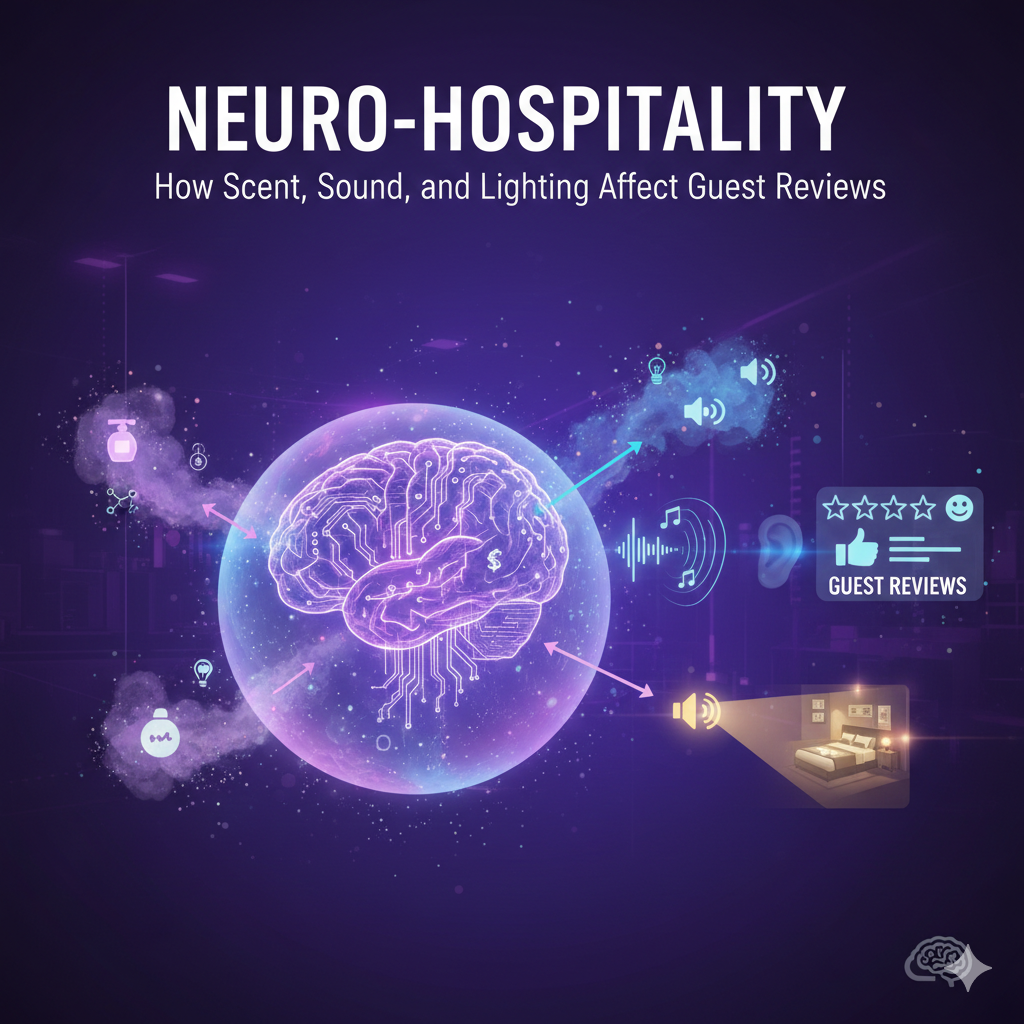
Walk into a luxury hotel lobby and notice what you feel before you even reach the front desk. The soft lighting relaxes your eyes. The subtle scent in the air feels calming. Gentle background music slows your thoughts. Within seconds, your brain has already formed an impression—often before you speak to a single staff member.
This is not accidental. It is neuro-hospitality, the science of designing guest experiences based on how the human brain responds to sensory stimuli.
Today, hotels, restaurants, and hospitality brands are using scent, sound, and lighting strategically to influence guest emotions, satisfaction, and ultimately, reviews.
At Booksmart, we believe neuro-hospitality represents the future of guest experience. Because guest reviews are not driven only by service—they are driven by how guests feel.
This article explores how sensory design shapes guest perception and how hospitality businesses can use it to improve satisfaction, loyalty, and ratings.
What is Neuro-Hospitality?
Neuro-hospitality is the application of neuroscience and psychology in hospitality design to influence guest mood, comfort, and behavior.
It focuses on how the brain responds to sensory inputs such as:
- Scent
- Sound
- Lighting
- Texture
- Temperature
- Space
These sensory elements directly affect:
- Emotional state
- Comfort level
- Stress levels
- Memory formation
- Decision-making
And most importantly—guest reviews.
Because guests don’t review rooms.
They review feelings.
Why Guest Reviews Are Emotion-Driven
Most guests evaluate their experience emotionally, not logically.
They may not remember:
- The exact room size
- The thread count of sheets
But they remember:
- How relaxed they felt
- How comfortable the space was
- How welcome they felt
This is because the brain stores emotional memories more strongly than factual ones.
Neuro-hospitality influences these emotional memories.
Positive sensory experiences lead to positive reviews.
Negative sensory experiences lead to poor reviews.
The Power of Scent in Guest Experience
Scent is the most powerful and emotional human sense.
It is directly connected to the brain’s emotional and memory center.
This is why certain smells instantly trigger memories.
How Scent Affects Guest Perception
A pleasant scent can make guests feel:
- Relaxed
- Safe
- Comfortable
- Luxurious
An unpleasant smell can instantly destroy the experience.
Even if everything else is perfect.
Guests may not consciously notice a good scent.
But they immediately notice a bad one.
Impact on Guest Reviews
Hotels and restaurants with signature scents often receive reviews mentioning:
- Fresh atmosphere
- Clean feeling
- Relaxing environment
Scent creates subconscious comfort.
Comfort improves ratings.
Examples of Strategic Scent Use
Hospitality businesses use scent in:
- Hotel lobbies
- Guest rooms
- Spas
- Restaurants
Common scent strategies include:
- Lavender for relaxation
- Citrus for freshness
- Vanilla for warmth
- Sandalwood for luxury
These scents influence mood.
Mood influences reviews.
The Role of Sound in Guest Satisfaction
Sound shapes emotional experience more than most people realize.
Noise can increase stress.
Music can reduce stress.
Silence can feel peaceful—or uncomfortable.
Sound design is critical.
How Sound Affects the Brain
Sound influences:
- Heart rate
- Stress levels
- Relaxation
- Focus
Harsh or loud noise triggers tension.
Soft, slow music promotes calmness.
The brain constantly evaluates sound for safety and comfort.
Impact on Guest Reviews
Guests often complain about:
- Noisy rooms
- Loud hallways
- Traffic sounds
- Loud restaurant environments
Noise leads to poor sleep.
Poor sleep leads to negative reviews.
On the other hand, pleasant sound environments improve experience.
Guests feel more relaxed.
Relaxed guests give better reviews.
Strategic Sound Design in Hospitality
Smart hospitality businesses use:
- Soft background music in lobbies
- Calm music in restaurants
- Soundproof rooms
- Noise control systems
Music tempo also matters.
Slow tempo encourages relaxation.
Fast tempo increases stress.
The right sound improves guest satisfaction.
Lighting: The Most Underrated Experience Factor
Lighting has a direct impact on mood, comfort, and perception.
Yet many hospitality businesses overlook its importance.
Lighting affects:
- Emotional state
- Energy levels
- Comfort
- Perceived luxury
Lighting can make a space feel:
- Warm
- Cold
- Welcoming
- Stressful
How Lighting Affects Guest Emotions
Warm lighting creates:
- Comfort
- Relaxation
- Luxury feeling
Harsh white lighting creates:
- Tension
- Clinical feeling
- Discomfort
This is why hospitals use white lighting.
And luxury hotels use warm lighting.
Lighting communicates emotional signals.
Impact on Guest Reviews
Guests rarely say:
“The lighting was perfect.”
But they say:
“The room felt cozy.”
Or:
“The room felt cold.”
This emotional reaction is caused by lighting.
Good lighting improves comfort.
Comfort improves reviews.
Smart Lighting Strategies
Effective hospitality lighting includes:
- Warm bedside lighting
- Soft ambient lighting
- Adjustable room lighting
- Natural light access
Lighting should adapt to guest needs.
Flexibility improves satisfaction.
How Sensory Experience Shapes Guest Memory
Guest reviews are based on memory.
Memory is shaped by emotion.
Emotion is shaped by sensory experience.
This creates a chain reaction:
Sensory Design → Emotion → Memory → Review
If guests feel calm and comfortable, they remember the experience positively.
If they feel stressed or uncomfortable, they remember negatively.
Even small sensory details matter.
Neuro-Hospitality and Perceived Luxury
Luxury is not defined only by expensive furniture.
Luxury is defined by emotional comfort.
Sensory design creates perceived luxury.
A room with:
- Perfect scent
- Calm sound
- Warm lighting
Feels more luxurious.
Even if the physical space is average.
This increases perceived value.
Higher perceived value leads to better reviews.
Impact on Business Performance
Better sensory experience leads to:
- Higher guest ratings
- Better online reviews
- More repeat customers
- Stronger brand image
Guest reviews directly affect revenue.
Even a small rating increase improves bookings.
Neuro-hospitality directly impacts profit.
Common Sensory Mistakes in Hospitality
Many businesses unknowingly damage guest experience.
Common mistakes include:
Poor Scent Management
- No scent strategy
- Bad odors
- Overpowering artificial scents
Balance is critical.
Noise Problems
- Thin walls
- Loud equipment
- Poor sound insulation
Noise destroys comfort.
Harsh Lighting
- Bright white lighting
- No adjustable lighting
This creates discomfort.
The Competitive Advantage of Neuro-Hospitality
Modern guests expect more than basic service.
They expect experience.
Businesses using neuro-hospitality gain advantage.
Because they influence guest emotion.
Emotion drives loyalty.
Loyalty drives growth.
Sensory experience becomes a business tool.
Future of Neuro-Hospitality
Neuro-hospitality is becoming more advanced.
Future innovations include:
- Personalized room scent
- Adaptive lighting systems
- Smart sound environments
- Mood-based room settings
Technology will allow fully customized guest experiences.
This will redefine hospitality.
How Hospitality Businesses Can Apply Neuro-Hospitality
Even small changes make big impact.
Practical steps include:
Improve Scent
- Maintain freshness
- Use subtle signature scent
Control Sound
- Reduce noise
- Use calm background music
Upgrade Lighting
- Use warm lighting
- Offer adjustable lighting
These changes improve guest perception immediately.
The Booksmart Perspective
At Booksmart, we believe hospitality is not just about service.
It is about psychology.
It is about emotion.
It is about how guests feel.
Guests may forget what they ate.
They may forget what they saw.
But they never forget how they felt.
Neuro-hospitality shapes those feelings.
And those feelings shape reviews.
Conclusion
Neuro-hospitality reveals a powerful truth:
Guest reviews are driven by sensory experience, not just service quality.
Scent influences comfort.
Sound influences relaxation.
Lighting influences mood.
Together, they shape guest emotion, memory, and satisfaction.
Hospitality businesses that understand this gain a powerful competitive advantage.
Because when you design for the brain, you design for experience.
And when you design for experience, guests reward you with loyalty—and five-star reviews.
Leave a Reply