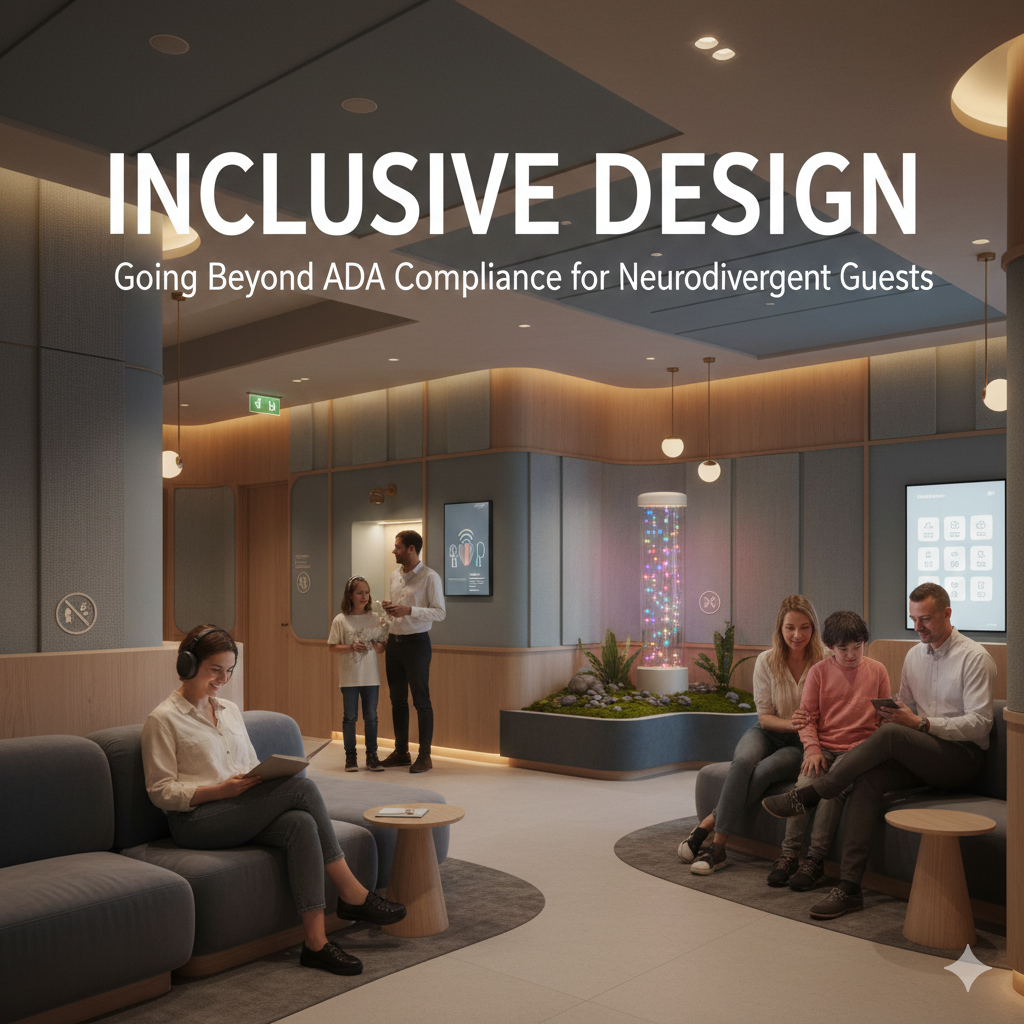
Hospitality has always been about making people feel welcome. Traditionally, accessibility efforts in hotels have focused on physical accommodations such as ramps, elevators, and wheelchair-accessible rooms to comply with legal standards. While these features remain essential, they represent only one dimension of accessibility.
Today, forward-thinking hotels are recognizing a broader and often overlooked group of travelers: neurodivergent guests.
Neurodivergence includes individuals with autism, ADHD, sensory processing differences, dyslexia, anxiety disorders, and other cognitive variations. These guests may not require physical accessibility features, but they often experience hotels differently due to sensory sensitivities, communication preferences, and environmental factors.
Inclusive design that goes beyond minimum compliance is not just socially responsible—it is a strategic opportunity to improve guest experience, build loyalty, and serve a wider audience.
At Booksmart, we believe inclusive hospitality means designing environments where every guest feels comfortable, respected, and understood.
Understanding Neurodivergent Guests in Hospitality
Neurodivergent individuals experience the world in unique ways. Hotel environments, which are often busy, noisy, and unpredictable, can sometimes create discomfort or stress.
Common challenges may include:
- Sensitivity to bright lighting
- Difficulty with loud or sudden noises
- Anxiety in crowded or unfamiliar spaces
- Overwhelm from complex layouts
- Preference for clear, structured communication
These challenges do not make travel impossible—but thoughtful design can make it significantly easier and more enjoyable.
Inclusive design acknowledges these needs proactively.
Why Inclusive Design Matters More Than Ever
There are millions of neurodivergent travelers worldwide, and this number continues to grow as awareness and diagnosis improve.
Additionally, neurodivergent travelers often travel with:
- Families
- Caregivers
- Support companions
By accommodating one neurodivergent guest, hotels often serve multiple guests.
Inclusive design expands market reach while enhancing overall guest satisfaction.
Importantly, many inclusive design features benefit all guests—not just neurodivergent individuals.
Moving Beyond Minimum Compliance
Legal accessibility standards primarily focus on physical disabilities. However, neurodivergent accessibility involves sensory, cognitive, and emotional comfort.
This shift requires hotels to think differently.
Inclusive design asks:
- Is the environment calming?
- Is navigation intuitive?
- Is communication clear?
- Are sensory triggers minimized?
These questions reshape how hotels approach guest experience.
Creating Sensory-Friendly Guest Rooms
Guest rooms should serve as safe, calming spaces.
Hotels can enhance comfort by offering:
Adjustable Lighting
Bright lighting can be overwhelming for some guests. Providing adjustable lighting options allows guests to control their environment.
Warm, dimmable lighting promotes relaxation.
Sound Control
Noise can be a major stressor.
Solutions include:
- Enhanced soundproofing
- Quiet-floor options
- White noise machines
Reducing unexpected noise improves comfort.
Simple, Predictable Layouts
Clear and uncluttered room design reduces confusion and anxiety.
Consistency helps guests feel secure.
Designing Calming Public Spaces
Hotel lobbies and public areas can be overwhelming due to noise, crowds, and visual stimulation.
Inclusive hotels create quieter alternatives.
Examples include:
- Quiet lounges
- Low-sensory waiting areas
- Calm seating zones away from busy entrances
These spaces provide relief from sensory overload.
Clear and Accessible Communication
Communication plays a crucial role in inclusive hospitality.
Hotels should focus on:
Simple Language
Avoid overly complex instructions.
Clear communication reduces confusion.
Visual Guides
Maps, signage, and visual instructions help guests navigate independently.
Visual clarity builds confidence.
Pre-Arrival Information
Providing detailed information before arrival helps guests prepare mentally.
This may include:
- Photos of the hotel
- Virtual tours
- Clear check-in instructions
Predictability reduces anxiety.
Staff Training: The Human Element of Inclusion
Physical design is only part of the solution. Staff interactions are equally important.
Training staff to understand neurodiversity helps them:
- Communicate patiently
- Avoid assumptions
- Respond calmly to guest needs
- Provide respectful assistance
Empathy creates meaningful guest experiences.
Inclusive service is as important as inclusive design.
Offering Flexible Check-In and Service Options
Busy front desks can be stressful.
Hotels can offer alternatives such as:
- Mobile check-in
- Self-service kiosks
- Flexible arrival times
These options reduce waiting and crowd exposure.
Guests gain greater control over their experience.
Providing Sensory-Friendly Amenities
Small additions can make a significant difference.
Examples include:
- Sensory kits with calming items
- Weighted blankets
- Noise-canceling headphones
These tools help guests manage sensory input.
Thoughtful amenities demonstrate care and understanding.
Supporting Families Traveling with Neurodivergent Children
Families traveling with neurodivergent children often face unique challenges.
Hotels can help by offering:
- Flexible dining options
- Quiet play areas
- Patient, understanding staff
Supporting families builds long-term loyalty.
Parents remember hotels that make their children feel comfortable.
Technology as a Tool for Inclusion
Technology can enhance accessibility.
Examples include:
- Mobile apps for contactless service
- Digital room controls
- Virtual concierge support
Technology reduces social pressure and increases independence.
Guests interact on their own terms.
Benefits for All Guests
Inclusive design benefits everyone.
Features such as:
- Clear signage
- Quiet spaces
- Adjustable lighting
Improve comfort universally.
Inclusive design enhances overall guest experience.
It is not a niche strategy—it is a universal improvement.
Business Benefits of Inclusive Hospitality
Inclusive design delivers strong business value.
These include:
Increased Guest Loyalty
Guests who feel comfortable return.
Positive Reputation
Inclusive hotels attract positive reviews.
Competitive Differentiation
Inclusion sets hotels apart.
Expanded Market Reach
Hotels serve a wider audience.
Inclusive design strengthens brand positioning.
Overcoming Common Misconceptions
Some hotels believe inclusive design is expensive or complicated.
In reality, many improvements are simple and affordable.
Examples include:
- Staff training
- Clear communication
- Minor design adjustments
Inclusion is more about awareness than cost.
Small changes create meaningful impact.
The Future of Inclusive Hospitality
As awareness of neurodiversity grows, inclusive design will become a standard expectation.
Guests will increasingly choose hotels that prioritize comfort, understanding, and accessibility.
Hotels that act now will gain leadership advantage.
Inclusive hospitality represents the future of guest experience.
Creating Emotionally Safe Environments
Hospital stays involve emotional experiences.
Guests want to feel:
- Safe
- Comfortable
- Respected
- Understood
Inclusive design supports emotional well-being.
It reflects genuine hospitality values.
Conclusion
Inclusive design that goes beyond basic accessibility compliance represents an important evolution in hospitality. By considering the needs of neurodivergent guests, hotels can create environments that are calmer, clearer, and more comfortable for everyone.
At Booksmart, we believe true hospitality means welcoming every guest fully—not just meeting minimum requirements, but thoughtfully designing experiences that respect individual differences.
Hotels that embrace inclusive design will not only serve more guests—they will create deeper connections, stronger loyalty, and a more compassionate future for hospitality.
Leave a Reply