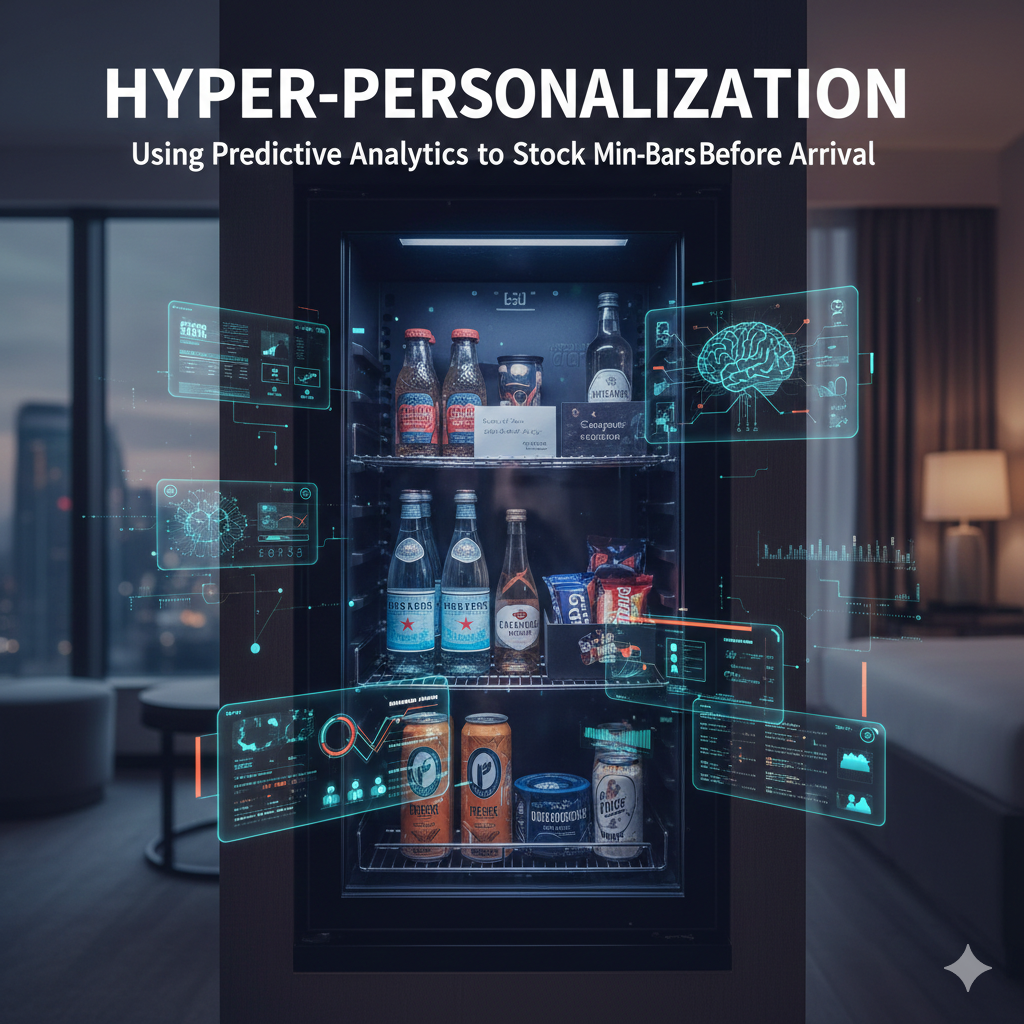
In hospitality, the smallest details often create the biggest impressions. A handwritten welcome note, a preferred pillow type, or a guest’s favorite snack waiting in their room can transform a routine stay into a memorable experience. Among these touches, the hotel mini-bar—once seen as a generic amenity—is undergoing a quiet revolution.
Today, thanks to predictive analytics and data-driven insights, hotels can stock mini-bars based on individual guest preferences before they even arrive. This shift toward hyper-personalization is redefining guest satisfaction, boosting ancillary revenue, and helping hotels stand out in an increasingly competitive market.
At Booksmart, we see predictive mini-bar personalization not just as a novelty, but as a powerful strategy that blends technology with thoughtful hospitality.
The Evolution of the Hotel Mini-Bar
Traditionally, hotel mini-bars followed a standard formula: a few soft drinks, snacks, bottled water, and perhaps some alcoholic beverages. These offerings were designed for broad appeal, not individual relevance.
However, guest expectations have changed dramatically.
Modern travelers want experiences tailored specifically to them. They expect hotels to understand their preferences, anticipate their needs, and deliver personalized comfort without being asked.
Predictive analytics makes this possible.
Instead of offering the same items to every guest, hotels can now stock mini-bars with products guests are most likely to enjoy.
What Is Predictive Analytics in Hospitality?
Predictive analytics uses historical data, behavioral patterns, and algorithms to forecast future preferences and actions.
In the context of hotel mini-bars, predictive analytics analyzes data such as:
- Previous mini-bar purchases
- Food and beverage preferences
- Loyalty program profiles
- Guest demographics
- Length and purpose of stay
- Booking channel
- Cultural preferences
- Seasonal trends
This information helps hotels predict what a specific guest will want during their stay.
The result is a mini-bar that feels personally curated.
How Hyper-Personalized Mini-Bars Improve Guest Experience
Personalization creates emotional impact.
Imagine a guest who always orders sparkling water during previous stays. When they arrive and find their preferred brand already in their room, it communicates something powerful: the hotel remembers them.
This creates:
- A sense of recognition
- Emotional connection
- Increased guest satisfaction
- Stronger brand loyalty
Guests feel valued—not treated like anonymous customers.
This emotional connection drives repeat business.
Driving Higher Mini-Bar Revenue
Mini-bars have historically faced declining usage due to high prices and irrelevant offerings.
Hyper-personalization reverses this trend.
When guests find items they genuinely want, they are far more likely to consume them.
Predictive stocking increases:
- Mini-bar usage rates
- Per-guest revenue
- Overall ancillary revenue
Instead of pushing generic inventory, hotels offer relevant products that naturally sell.
This improves both guest experience and profitability.
Supporting Health and Lifestyle Preferences
Modern guests often have specific dietary and lifestyle preferences.
These may include:
- Healthy snacks
- Vegan products
- Gluten-free items
- Low-sugar beverages
- Organic products
Predictive analytics helps hotels align mini-bar offerings with these preferences.
Guests appreciate options that support their lifestyle choices.
This strengthens brand perception and trust.
Cultural and Regional Personalization
Guest preferences vary significantly across regions and cultures.
For example:
- International travelers may prefer familiar products from home
- Business travelers may prefer energy drinks or healthy snacks
- Leisure travelers may prefer indulgent treats
Predictive analytics helps hotels understand and accommodate these differences.
Culturally relevant personalization enhances comfort and convenience.
Reducing Waste and Improving Efficiency
Traditional mini-bar stocking often leads to unused inventory and waste.
Predictive analytics improves efficiency by stocking only relevant items.
This reduces:
- Expired products
- Overstocking
- Inventory costs
It also supports sustainability goals.
Smarter stocking means less waste and better resource management.
Integration with Hotel Technology Systems
Hyper-personalized mini-bars rely on integration between various hotel systems.
These include:
- Property Management Systems (PMS)
- Customer Relationship Management (CRM) platforms
- Point-of-Sale (POS) systems
- Loyalty programs
- Inventory management systems
These systems share data that enables accurate predictions.
Automation ensures seamless execution.
Real-Time Adaptation and Continuous Learning
Predictive systems improve over time.
Each guest interaction adds new data.
For example:
If a guest consistently consumes certain items, the system learns and adjusts future stocking recommendations.
This creates increasingly accurate personalization.
The experience becomes better with every stay.
Enhancing VIP and Loyalty Guest Recognition
Hyper-personalized mini-bars are especially valuable for loyalty members and VIP guests.
These guests expect recognition and exclusive treatment.
Personalized mini-bars reinforce loyalty benefits.
This strengthens retention and lifetime value.
Guests feel appreciated and understood.
Supporting Premium and Boutique Hotel Positioning
Luxury and boutique hotels thrive on unique, memorable experiences.
Predictive mini-bar personalization aligns perfectly with these brand promises.
It adds:
- Exclusivity
- Attention to detail
- Elevated service perception
These factors differentiate hotels from competitors.
Personalization becomes part of the brand identity.
The Role of Artificial Intelligence in Predictive Personalization
Artificial Intelligence enhances predictive analytics by identifying patterns that humans cannot easily detect.
AI can analyze:
- Complex guest behavior
- Purchase patterns
- Seasonal trends
- Preference correlations
This improves prediction accuracy.
AI helps hotels deliver personalization at scale.
Privacy and Ethical Considerations
Personalization must respect guest privacy.
Hotels must ensure:
- Transparent data usage
- Secure data storage
- Compliance with privacy regulations
- Ethical handling of guest information
Guests must feel safe and respected.
Trust is essential for successful personalization.
Operational Implementation: Practical Considerations
Hotels implementing predictive mini-bar stocking should focus on:
Staff Training
Staff must understand personalization goals and processes.
Inventory Flexibility
Supply chains must support diverse product options.
Technology Integration
Systems must communicate effectively.
Data Accuracy
Reliable data is critical for accurate predictions.
Operational alignment ensures success.
Marketing Advantages of Personalized Mini-Bars
Hyper-personalization creates strong marketing opportunities.
Guests often share personalized experiences on social media.
This generates:
- Positive reviews
- Brand visibility
- Organic marketing
Personalization becomes a competitive differentiator.
Word-of-mouth strengthens brand reputation.
The Future of Mini-Bar Personalization
The future holds even greater possibilities.
Hotels may integrate:
- Real-time guest preference updates
- Mobile app customization before arrival
- Dynamic pricing based on demand
- Wellness-focused offerings
Mini-bars may evolve into fully customized in-room retail experiences.
Technology will continue enhancing personalization.
Challenges Hotels Must Address
While promising, predictive mini-bar personalization presents challenges.
These include:
- Technology investment costs
- Data integration complexity
- Operational adjustments
- Privacy management
However, the long-term benefits outweigh these challenges.
Strategic implementation delivers strong ROI.
Strategic Benefits Beyond Revenue
Hyper-personalized mini-bars deliver broader business benefits.
They help hotels:
- Strengthen guest relationships
- Increase loyalty
- Improve brand differentiation
- Enhance guest satisfaction
- Increase lifetime value
Personalization supports long-term success.
Conclusion
Hyper-personalization powered by predictive analytics is transforming the hotel mini-bar from a generic amenity into a strategic guest experience tool. By anticipating preferences and stocking rooms accordingly, hotels can create memorable moments, increase revenue, and build stronger guest relationships.
At Booksmart, we believe the future of hospitality lies in anticipating guest needs before they are expressed. Personalized mini-bars represent a perfect example of how technology and human-centered service can work together to create exceptional experiences.
The hotels that embrace predictive personalization today will define the standard for guest experience tomorrow.
Leave a Reply