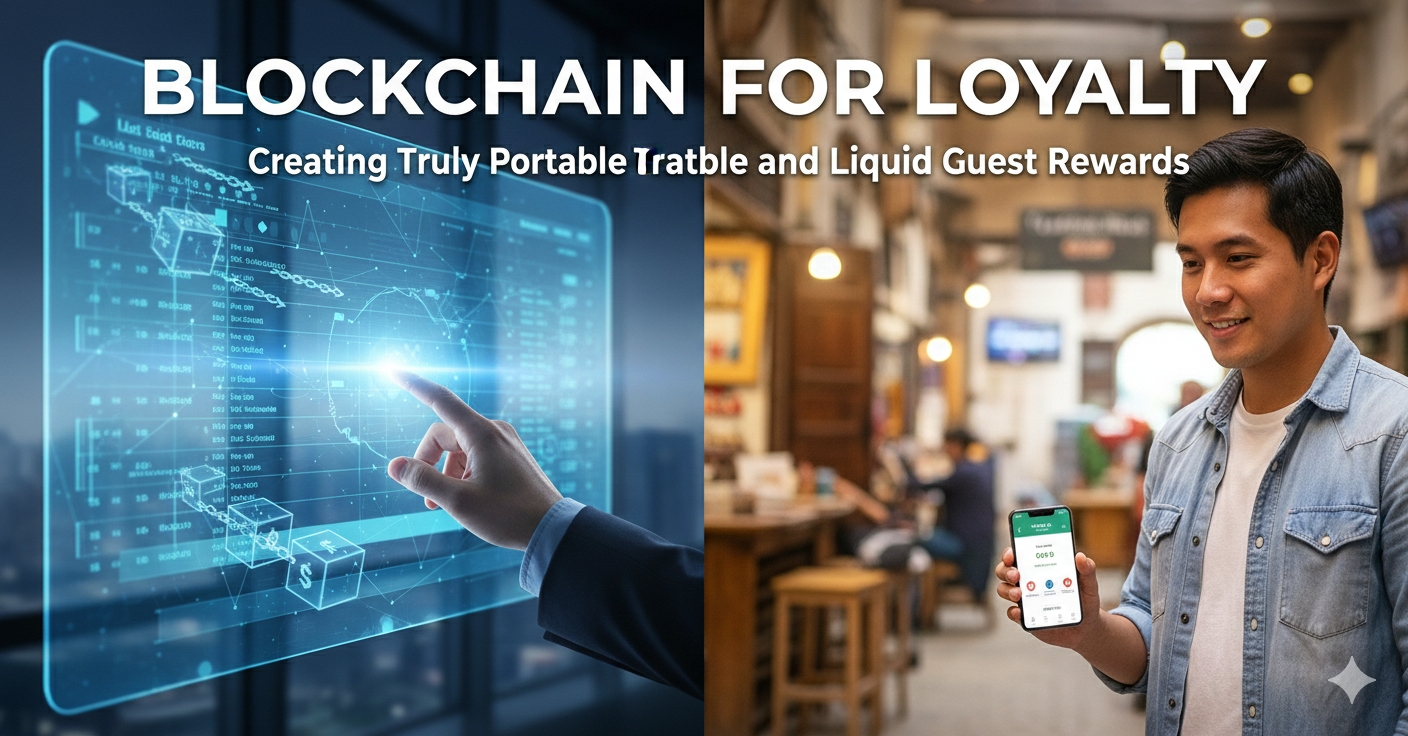
Hotel loyalty programs were once simple: stay more nights, earn more points, redeem for a free room. But today’s travelers are more mobile, digitally savvy, and value-driven than ever before. They expect flexibility, transparency, and real value—not points locked inside a single brand ecosystem with complex rules and limited redemption options.
This is where blockchain technology enters the conversation. By enabling portable, liquid, and interoperable loyalty rewards, blockchain has the potential to fundamentally reshape how hotels build guest loyalty in the digital age.
For the hospitality industry, blockchain-based loyalty isn’t about hype—it’s about solving long-standing structural problems that traditional loyalty programs can no longer ignore.
The Limitations of Traditional Hotel Loyalty Programs
Despite their popularity, conventional loyalty programs suffer from several critical challenges:
Lack of Portability
Points are usually confined to a single brand or chain, limiting their real-world usefulness.
Low Perceived Value
Complex redemption rules, blackout dates, and devaluations erode trust and engagement.
High Liability Costs
Unused points sit on balance sheets as liabilities, creating financial pressure for brands.
Fragmented Guest Identity
Travelers interact with multiple hotels, airlines, and experiences—but loyalty remains siloed.
As a result, many guests participate passively without emotional attachment.
Why Loyalty Needs a Structural Rethink
Modern travelers value:
- Freedom of choice
- Transparency
- Ownership of digital assets
- Seamless experiences across brands
In a world of digital wallets, NFTs, and decentralized finance, static loyalty points feel outdated. Blockchain offers a framework to reimagine loyalty as a transferable digital asset rather than a closed accounting system.
Understanding Blockchain-Based Loyalty
At its core, blockchain is a decentralized, tamper-proof ledger that records transactions transparently and securely.
When applied to loyalty programs, blockchain enables:
- Tokenized rewards instead of traditional points
- Guest-owned loyalty assets stored in digital wallets
- Interoperability across brands and platforms
- Real-time settlement and tracking
This creates loyalty rewards that behave more like currency and less like coupons.
What Does “Portable and Liquid” Loyalty Really Mean?
Portability
Guests can use rewards across multiple hotels, brands, or partner ecosystems without friction.
Liquidity
Rewards can be exchanged, traded, gifted, or redeemed instantly—sometimes even converted into other digital or real-world value.
Together, these qualities transform loyalty from a marketing tactic into a guest-centric value system.
How Blockchain Solves Core Loyalty Challenges
1. True Ownership of Rewards
Blockchain allows loyalty points to exist as tokens in a guest’s digital wallet. This means:
- No expiration surprises
- No unilateral devaluation
- Transparent tracking
Guests feel genuine ownership, which increases emotional loyalty.
2. Cross-Brand and Cross-Industry Redemption
Blockchain enables interoperability between:
- Hotels
- Airlines
- Restaurants
- Experiences
- Retail and lifestyle brands
A guest could earn rewards at a hotel and redeem them for dining, wellness, or even travel services elsewhere.
3. Reduced Fraud and Breakage
Immutable ledgers reduce fraud, duplication, and accounting discrepancies. Smart contracts automate:
- Reward issuance
- Redemption rules
- Partner settlements
This lowers administrative overhead and operational risk.
4. Personalization at Scale
Blockchain-based loyalty systems can integrate with guest profiles and preferences, enabling:
- Tailored rewards
- Dynamic offers
- Experience-based incentives
Loyalty becomes contextual, not generic.
Tokenization: The Heart of Blockchain Loyalty
Tokenized loyalty replaces traditional points with digital tokens that can represent:
- Stay credits
- Experience access
- Tier status
- Exclusive privileges
These tokens can be:
- Earned
- Traded
- Gifted
- Burned upon redemption
This flexibility increases perceived value and engagement.
Use Cases for Blockchain Loyalty in Hospitality
1. Universal Hotel Loyalty Tokens
Independent hotels and boutique brands can collaborate on shared loyalty ecosystems, competing with large chains without sacrificing identity.
2. Experience-Based Rewards
Instead of free nights, tokens can unlock:
- Local tours
- Wellness sessions
- Cultural experiences
- Dining events
This aligns loyalty with modern experiential travel trends.
3. Dynamic Tier Systems
Guest status can be represented as blockchain credentials, updating in real time based on engagement—not just nights stayed.
4. Secondary Market Opportunities
In controlled environments, guests could trade or transfer rewards, increasing liquidity while maintaining brand oversight.
Benefits for Hotels and Brands
Blockchain loyalty isn’t just guest-friendly—it’s strategically powerful for operators.
Lower Program Costs
Automation reduces manual reconciliation and administrative effort.
Stronger Partner Ecosystems
Shared platforms enable collaborative growth instead of isolated competition.
Improved Guest Data Integrity
Blockchain creates a single source of truth for loyalty transactions.
Higher Engagement Rates
When rewards feel valuable and flexible, guests interact more frequently.
Addressing Common Concerns
Is Blockchain Too Complex for Guests?
Not if designed correctly. Guests don’t need to understand blockchain—only the benefits. User-friendly apps abstract the technology.
What About Regulation and Compliance?
Well-designed systems comply with data protection, financial, and consumer regulations through permissioned blockchains and smart contracts.
Is It Secure?
Blockchain offers stronger security than traditional centralized databases when implemented responsibly.
Integrating Blockchain with Existing Systems
Hotels don’t need to rebuild everything from scratch.
Blockchain loyalty platforms can integrate with:
- Property Management Systems (PMS)
- Customer Relationship Management (CRM)
- Booking engines
- Mobile apps
Gradual adoption reduces risk and complexity.
The Role of Web3 and Digital Identity
Blockchain loyalty aligns naturally with Web3 concepts:
- Decentralized identity
- Digital wallets
- NFT-based memberships
This positions hotels for future digital ecosystems while staying relevant today.
From Transactional to Emotional Loyalty
Traditional loyalty programs reward transactions. Blockchain loyalty enables relationship-based loyalty, rewarding:
- Engagement
- Advocacy
- Experiences
- Community participation
This deepens emotional connection beyond discounts and freebies.
The Competitive Advantage for Early Adopters
Hotels that embrace blockchain loyalty early can:
- Differentiate in crowded markets
- Attract tech-savvy travelers
- Build scalable partner networks
- Future-proof loyalty investments
Waiting too long risks irrelevance as guest expectations evolve.
The Future of Loyalty Is Guest-Owned
As digital ownership becomes mainstream, guests will expect control over their rewards. Blockchain shifts loyalty power dynamics—from brands to travelers—without sacrificing profitability.
Hotels that adapt will move from points programs to value ecosystems.
Conclusion
Blockchain has the potential to redefine hotel loyalty by making rewards truly portable, liquid, and meaningful. By enabling guest-owned, interoperable, and transparent loyalty systems, hotels can move beyond outdated models and create deeper, more resilient relationships.
At Booksmart, we believe the future of hospitality loyalty lies in trust, flexibility, and shared value. Blockchain is not just a technology upgrade—it’s a mindset shift toward loyalty that works for both guests and brands.
Leave a Reply