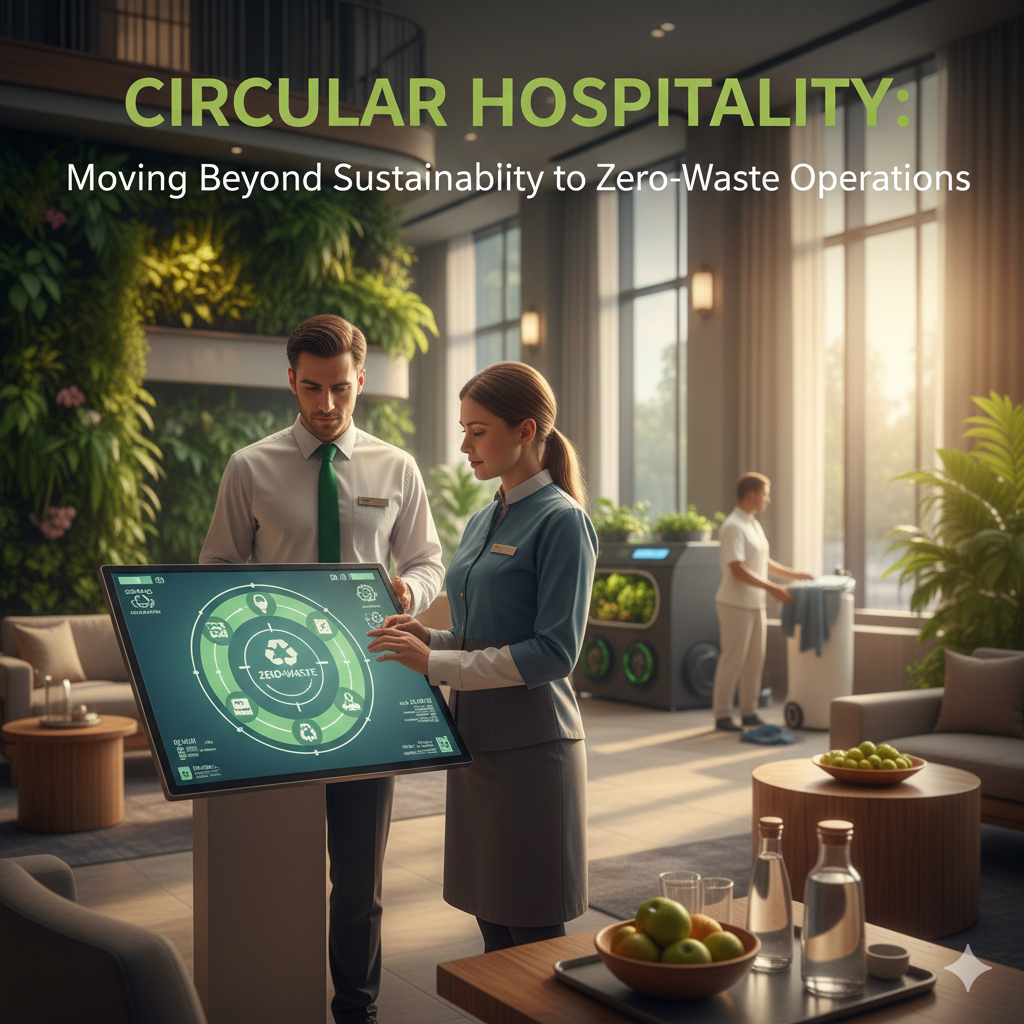
For years, sustainability has been a defining conversation in hospitality. Energy-efficient lighting, towel-reuse programs, and eco-certifications have become standard practices across hotels worldwide. Yet as climate urgency intensifies and traveler awareness deepens, incremental sustainability is no longer enough.
The hospitality industry is now being called to take the next step: circular hospitality—a model that moves beyond minimizing harm to actively eliminating waste through regenerative, closed-loop systems.
Zero-waste operations are not a distant ideal. They are becoming a strategic, operational, and reputational imperative for hotels that want to remain relevant in a resource-constrained future.
From Sustainability to Circularity: What’s the Difference?
Traditional sustainability focuses on doing “less bad”—reducing energy consumption, water usage, and waste. Circular hospitality, by contrast, focuses on designing waste out of the system entirely.
In a circular model:
- Materials are reused, repurposed, or regenerated
- Waste becomes a resource
- Products are designed for longevity and recyclability
- Linear “take-make-dispose” thinking is replaced with continuous cycles
For hotels, this means rethinking operations from procurement to guest experience.
Why Zero-Waste Hospitality Matters Now
Several converging forces are accelerating the shift toward circular operations:
Rising Environmental Expectations
Guests, especially Millennials and Gen Z, expect hotels to demonstrate genuine environmental responsibility.
Regulatory Pressure
Governments are tightening regulations on waste management, plastics, and emissions.
Cost Volatility
Resource scarcity and rising utility costs make waste reduction a financial necessity.
Brand Differentiation
Circular practices create powerful storytelling opportunities and competitive advantage.
Zero waste is no longer just ethical—it’s economical.
Understanding Zero-Waste in the Hotel Context
Zero-waste does not mean producing absolutely no waste. It means diverting the vast majority of waste from landfills and incineration through thoughtful design and management.
The goal is to:
- Reduce
- Reuse
- Recycle
- Regenerate
Hotels that achieve high diversion rates are already proving that zero-waste is operationally achievable.
Circular Procurement: The Foundation of Zero-Waste Operations
Everything begins with what hotels choose to buy.
Sustainable Sourcing
Hotels can prioritize:
- Reusable or refillable products
- Compostable packaging
- Durable materials over single-use items
Procurement decisions directly determine waste output.
Supplier Partnerships
Working with circular suppliers allows hotels to:
- Take back packaging
- Refill amenities
- Source locally to reduce transport waste
Long-term partnerships replace transactional purchasing.
Rethinking Guest Rooms Through a Circular Lens
Guest rooms are a major source of waste, particularly from disposable amenities.
Refillable Amenity Systems
Replacing single-use toiletries with refillable dispensers dramatically reduces plastic waste.
Durable, Repairable Furnishings
Choosing furniture designed for repair rather than replacement extends lifecycle value.
Smart Linen Programs
Data-driven housekeeping schedules reduce unnecessary laundering, saving water and energy.
Circular design doesn’t compromise comfort—it enhances it.
Food and Beverage: Closing the Loop
Food waste is one of the largest contributors to hotel landfill output.
Preventing Food Waste
Strategies include:
- Accurate demand forecasting
- Smaller, more frequent buffet replenishment
- Portion control and menu engineering
Prevention is always the most effective solution.
Food Redistribution and Composting
Surplus food can be:
- Donated to local organizations
- Composted on-site or off-site
- Used in closed-loop gardens
Organic waste becomes a resource rather than a liability.
Water and Energy as Circular Resources
Circular hospitality treats water and energy as renewable systems.
Water Reuse Systems
Greywater recycling can support:
- Landscaping
- Toilet flushing
- Cooling systems
This reduces freshwater demand significantly.
Renewable Energy Integration
Solar, wind, and geothermal systems help hotels generate clean energy while reducing long-term costs.
Energy circularity strengthens operational resilience.
Housekeeping and Operations: Small Changes, Big Impact
Day-to-day operations offer countless opportunities for circular improvements.
Reusable Cleaning Tools
Microfiber cloths and reusable containers replace disposable products.
Concentrated Cleaning Solutions
Reducing packaging and transport emissions while maintaining cleanliness standards.
Waste Segregation Systems
Clear sorting systems improve recycling and composting success.
Staff engagement is critical to making these systems work.
Engaging Guests in the Circular Journey
Zero-waste hospitality succeeds when guests are active participants.
Transparent Communication
Inform guests about:
- Waste reduction efforts
- How they can contribute
- The impact of their choices
Transparency builds trust, not inconvenience.
Experience-Based Education
Hotels can offer:
- Behind-the-scenes sustainability tours
- Farm-to-table dining experiences
- Circular workshops or talks
Education transforms sustainability into storytelling.
Technology as an Enabler of Circular Hospitality
Digital tools make zero-waste operations measurable and scalable.
Hotels can use technology to:
- Track waste streams
- Monitor energy and water usage
- Optimize procurement and inventory
- Measure diversion rates
Data turns intention into action.
The Role of Staff Culture and Training
Circular hospitality is as much about people as systems.
Empowered Teams
Staff trained in circular principles make better decisions at every touchpoint.
Ownership and Accountability
Clear KPIs and incentives reinforce sustainable behavior.
When teams believe in the mission, results follow.
Economic Benefits of Zero-Waste Operations
Contrary to common belief, circular hospitality often reduces costs.
Benefits include:
- Lower waste disposal fees
- Reduced procurement costs
- Energy and water savings
- Increased guest loyalty
Sustainability and profitability are no longer opposites.
Challenges on the Path to Circularity
Initial Investment
Some circular systems require upfront capital, though ROI is often strong.
Supplier Limitations
Not all regions have mature circular supply chains yet.
Behavior Change
Shifting mindsets takes time—but leadership commitment accelerates adoption.
The Future of Hospitality Is Regenerative
The next phase of hospitality goes beyond zero-waste toward regenerative impact—hotels that leave destinations better than they found them.
This includes:
- Restoring ecosystems
- Supporting local communities
- Regenerating resources
Circular hospitality is the foundation of this future.
Conclusion
Circular hospitality represents a powerful evolution from sustainability to zero-waste operations. By redesigning systems, engaging stakeholders, and embracing innovation, hotels can eliminate waste while enhancing guest experience and profitability.
At Booksmart, we believe that the future of hospitality lies in closing the loop—operationally, environmentally, and socially. Hotels that embrace circularity today will define industry leadership tomorrow.
Leave a Reply