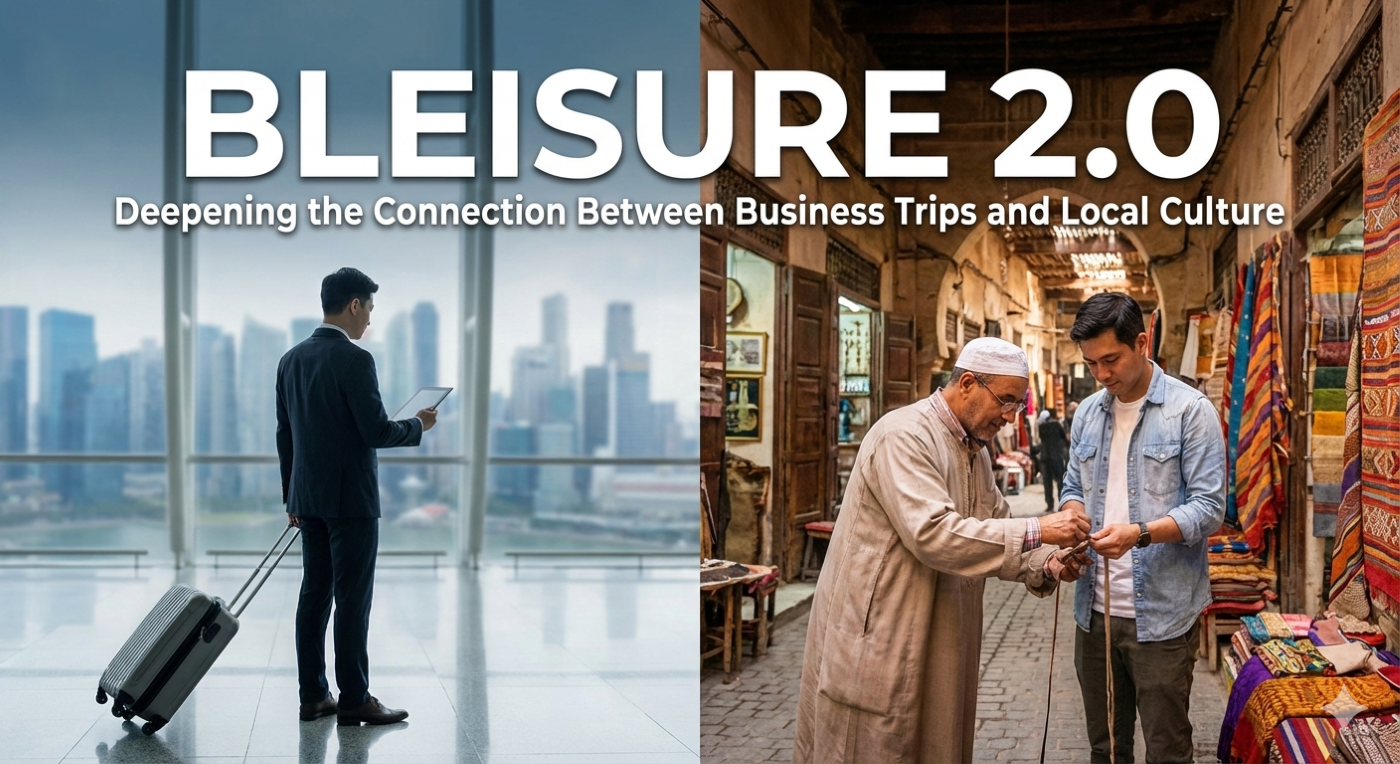
Business travel is no longer just about boardrooms, packed schedules, and rushed airport transfers. Over the past decade, the concept of bleisure—blending business and leisure—has reshaped how professionals travel. But as traveler expectations mature, we are entering a new phase: Bleisure 2.0.
This evolution goes far beyond extending a business trip by a weekend. Bleisure 2.0 is about immersive cultural connection, meaningful local experiences, and hotels acting as facilitators of authentic engagement rather than passive accommodation providers.
For the hospitality industry, this shift represents a powerful opportunity to redefine value, deepen guest relationships, and unlock new revenue streams.
Understanding Bleisure 2.0
Traditional bleisure focused on convenience—adding a city tour, spa visit, or leisure day to an otherwise work-focused trip. Bleisure 2.0, however, is driven by deeper motivations:
- Travelers want to experience destinations like locals
- Professionals seek balance, wellness, and enrichment
- Work trips are becoming more flexible and purpose-driven
- Cultural authenticity matters more than luxury alone
Bleisure 2.0 travelers don’t just visit a destination—they want to understand it.
Why Bleisure Travel Is Growing Faster Than Ever
Several forces are accelerating the rise of Bleisure 2.0:
Hybrid and Remote Work Culture
Flexible work policies allow travelers to blend meetings with personal exploration without taking formal leave.
Younger Workforce Expectations
Millennials and Gen Z professionals prioritize experiences, cultural learning, and personal growth.
Wellness and Mental Health Awareness
Travel is increasingly seen as a way to recharge, not just perform.
Corporate Acceptance
Companies recognize that happier, well-rested employees are more productive and loyal.
This shift has made business travel less transactional and more human.
Local Culture as the New Luxury
In Bleisure 2.0, cultural immersion has become the new status symbol.
Instead of generic luxury offerings, travelers value:
- Authentic local food
- Cultural storytelling
- Neighborhood exploration
- Interaction with local communities
Hotels that enable these experiences stand out in a crowded market.
How Hotels Can Enable Cultural Bleisure Experiences
1. Curated Local Experiences
Hotels can move beyond brochures and concierge desks by offering thoughtfully curated cultural activities.
Examples include:
- Guided heritage walks with local historians
- Art workshops led by regional artists
- Cooking classes featuring local cuisine
- Visits to markets, craft centers, or cultural institutions
These experiences transform a stay into a story worth remembering.
2. Locally Inspired Design and Atmosphere
Design plays a powerful role in storytelling.
Bleisure-friendly hotels incorporate:
- Local art and materials
- Regional architectural elements
- Cultural narratives woven into interiors
This creates an immediate sense of place, even during short stays.
3. Food as a Cultural Connector
Dining is one of the most impactful ways to experience culture.
Hotels can:
- Highlight regional dishes and ingredients
- Partner with local chefs
- Offer tasting menus that tell a story
- Host cultural food events
For bleisure travelers, meals are no longer routine—they are explorations.
Blending Business Amenities with Cultural Touchpoints
Bleisure 2.0 requires seamless integration, not separation, of work and culture.
Culturally Enhanced Meeting Spaces
Meeting rooms can feature:
- Local artwork
- Regional design elements
- Cultural refreshments
Even formal business environments can reflect the destination’s identity.
Flexible Scheduling and Programming
Hotels can offer:
- Evening cultural events after meetings
- Early-morning wellness or mindfulness sessions
- Short cultural experiences that fit tight schedules
This respects professional commitments while enabling enrichment.
Technology’s Role in Cultural Bleisure
Digital tools help personalize and scale Bleisure 2.0 experiences.
Hotels can use technology to:
- Recommend local experiences via apps
- Enable self-guided cultural tours
- Provide multilingual cultural content
- Customize itineraries based on guest interests
Technology enhances access without replacing human connection.
Partnerships with Local Communities
Authentic cultural engagement cannot be manufactured—it must be collaborative.
Hotels should partner with:
- Local guides and artisans
- Cultural institutions
- Neighborhood businesses
- Community organizations
These partnerships ensure authenticity while supporting the local economy.
Sustainability and Responsible Travel
Bleisure 2.0 travelers are increasingly conscious of their impact.
Hotels can align with this mindset by:
- Promoting responsible tourism practices
- Supporting local businesses
- Reducing environmental footprint
- Encouraging slow, meaningful travel
Cultural immersion and sustainability naturally reinforce each other.
Revenue Opportunities in Bleisure 2.0
Cultural bleisure is not just experiential—it’s profitable.
Extended Stays
Cultural engagement encourages travelers to add leisure days.
Experience-Based Upselling
Paid cultural experiences, classes, and tours increase ancillary revenue.
Repeat Visits
Positive cultural connections create emotional loyalty.
Corporate Partnerships
Companies increasingly prefer hotels that enhance employee experience.
Marketing Bleisure 2.0 Experiences
To attract modern bleisure travelers, hotels must shift their messaging.
Storytelling Over Selling
Highlight:
- Local stories
- Cultural moments
- Human connections
Bleisure travelers respond to emotion, not just amenities.
SEO and Digital Visibility
Optimize content for keywords such as:
- Bleisure travel experiences
- Business and leisure hotels
- Cultural business travel
- Workation-friendly hotels
Strong digital presence ensures discoverability.
Challenges and How to Overcome Them
Time Constraints
Offer modular, short-duration cultural experiences.
Cultural Sensitivity
Work closely with local partners to avoid superficial representation.
Operational Complexity
Standardize processes while maintaining authenticity.
The Role of Hotel Staff in Bleisure 2.0
Staff are cultural ambassadors.
Training should focus on:
- Local knowledge
- Storytelling
- Personalized recommendations
- Cultural sensitivity
Human interaction often defines the guest’s most memorable moments.
Future Outlook: Bleisure as the New Normal
As business travel continues to evolve, the line between work and leisure will blur further. Bleisure 2.0 is not a niche—it is becoming the default expectation.
Hotels that:
- Embrace local culture
- Design for flexibility
- Prioritize meaningful experiences
will lead the next era of hospitality.
Conclusion
Bleisure 2.0 represents a powerful reimagining of business travel—one that values cultural connection as much as professional efficiency. By deepening ties between business trips and local culture, hotels can transform short stays into lasting memories.
At Booksmart, we believe the future of bleisure lies in authentic engagement, thoughtful design, and human-centered experiences. Hotels that champion this approach will not only capture demand—but redefine what business travel truly means.
Leave a Reply