For decades, hotel revenue strategies revolved around one primary metric: the room night. Occupancy, ADR, and RevPAR were the pillars of success. But as competition intensifies, operating costs rise, and guest behavior evolves, hotels are realizing a powerful truth—the guest room alone is no longer enough.
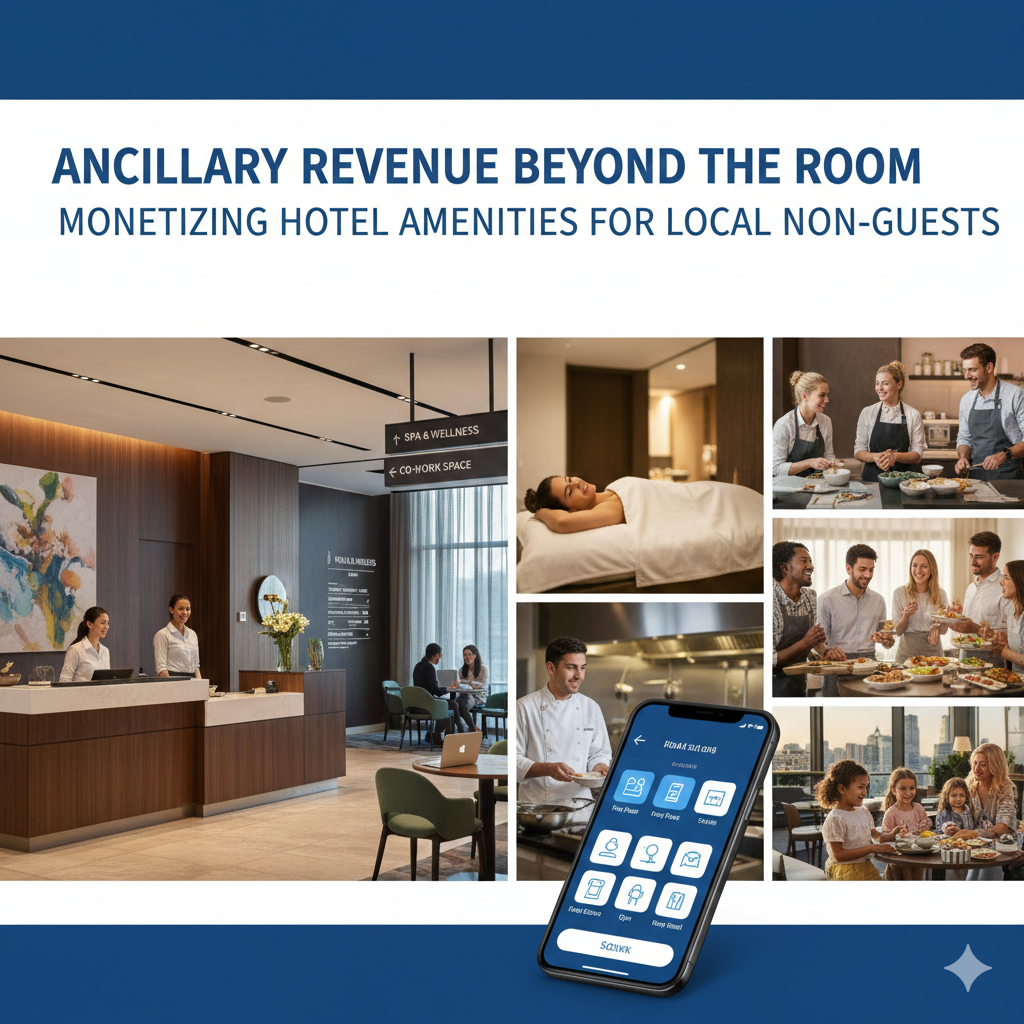
Today’s most forward-thinking hotels are unlocking ancillary revenue beyond the room, especially by opening their amenities to local non-guests. From spas and restaurants to pools, gyms, coworking spaces, and curated experiences, hotels are transforming from closed guest-only environments into vibrant community hubs.
This shift is not about discounting exclusivity—it’s about maximizing asset utilization, building local relevance, and creating diversified, resilient revenue streams.
Why Hotels Are Looking Beyond In-House Guests
Many hotel amenities operate below capacity for large portions of the day or year. Spas have empty treatment rooms midweek, restaurants struggle during off-peak hours, and meeting spaces sit unused between events.
At the same time:
- Locals seek premium experiences without travel
- Remote work has increased demand for flexible spaces
- Wellness, dining, and social experiences are becoming lifestyle choices
Hotels already have the infrastructure, staff, and ambiance—making locals a natural next audience.
The Strategic Value of Local Non-Guest Revenue
Monetizing amenities for locals delivers benefits far beyond incremental income.
Better Asset Utilization
Fixed assets generate revenue even when occupancy is low.
Reduced Dependence on Travel Demand
Local revenue provides stability during seasonal dips or travel disruptions.
Brand Visibility and Loyalty
Locals who engage with hotel amenities often become future guests, advocates, or event bookers.
Higher Lifetime Value
A local spa member or regular diner may generate more annual revenue than a one-time overnight guest.
Key Hotel Amenities with Local Revenue Potential
1. Food & Beverage Outlets
Hotel restaurants and bars are often underutilized by non-guests due to perception rather than quality.
Opportunities include:
- Opening restaurants fully to the public
- Hosting themed dining nights or chef collaborations
- Weekend brunches and happy hours
- Rooftop bars as local social destinations
Positioning matters—locals should feel welcomed, not secondary.
2. Spas and Wellness Centers
Spas are among the most monetizable amenities for locals.
Local-focused offerings include:
- Monthly or annual spa memberships
- Wellness packages for residents
- Corporate wellness partnerships
- Off-peak treatment discounts
Consistency, not one-time visits, drives profitability.
3. Fitness Centers and Pools
Hotels often have premium fitness and pool facilities that sit idle outside peak guest hours.
Monetization strategies:
- Gym memberships for locals
- Pool access passes
- Morning fitness classes
- Wellness events and retreats
Clear scheduling ensures guest experience remains unaffected.
4. Coworking and Day-Use Spaces
The rise of remote and hybrid work has created demand for flexible, well-designed workspaces.
Hotels can offer:
- Day-use rooms
- Coworking lounges
- Meeting rooms by the hour
- Business memberships
This turns hotels into weekday productivity hubs.
5. Events, Experiences, and Classes
Experiences are high-margin and brand-enhancing.
Ideas include:
- Cooking or mixology classes
- Art exhibitions and workshops
- Live music or cultural evenings
- Wellness and mindfulness sessions
Experiential revenue also strengthens emotional connection to the brand.
Designing Offers That Work for Both Guests and Locals
The key challenge is balance.
Clear Zoning and Scheduling
Separate time slots or areas for locals and guests prevent overcrowding and friction.
Tiered Access
Different access levels for guests, members, and day users protect exclusivity.
Guest-First Policy
In-house guests should always feel prioritized—even when amenities are open to locals.
Pricing Strategies for Local Monetization
Pricing must reflect value without undercutting the guest experience.
Dynamic Pricing
Offer:
- Off-peak discounts for locals
- Premium pricing during high-demand periods
Membership Models
Recurring revenue from memberships creates predictability and loyalty.
Bundled Packages
Combine dining, wellness, and experiences for higher perceived value.
Marketing to the Local Audience
Hotels must actively communicate that locals are welcome.
Local-Focused Messaging
Use language that emphasizes:
- Accessibility
- Lifestyle benefits
- Community connection
Avoid overly “touristy” positioning.
Channels That Work
- Social media
- Local influencers
- Community partnerships
- Email marketing
- Google Maps and local SEO
Visibility is critical—many locals simply don’t know what hotels offer.
Technology as a Revenue Enabler
Efficient monetization requires seamless systems.
Hotels should leverage:
- Online booking for amenities
- Mobile payments
- CRM systems to track local customers
- Data analytics to optimize pricing and demand
Technology reduces friction and improves scalability.
Operational Considerations and Staff Alignment
Opening amenities to locals changes operations.
Staff Training
Teams must be trained to:
- Serve both guests and locals equally
- Handle higher footfall
- Maintain brand standards
Operational SOPs
Clear processes prevent service breakdowns during peak overlap times.
Managing Brand Perception and Exclusivity
A common fear is that welcoming locals will dilute the hotel’s image.
In reality, well-curated access enhances prestige.
Luxury brands already do this successfully by:
- Controlling volume
- Curating experiences
- Maintaining service excellence
Exclusivity is about experience quality, not exclusion.
Revenue Impact and Measurement
To evaluate success, hotels should track:
- Ancillary revenue per available square meter
- Local vs guest spend ratios
- Repeat local customers
- Cross-conversion to overnight stays
Data-driven optimization ensures sustainable growth.
Case for Resilience and Future-Proofing
Hotels that diversified revenue beyond rooms proved more resilient during market disruptions. Local monetization:
- Cushions revenue volatility
- Builds community goodwill
- Creates multiple demand sources
Resilience is no longer optional—it’s strategic.
The Future: Hotels as Lifestyle Destinations
The most successful hotels of the future will not be closed ecosystems. They will function as:
- Social hubs
- Wellness centers
- Cultural venues
- Business spaces
Rooms will remain important—but amenities will drive brand relevance.
Conclusion
Ancillary revenue beyond the room is no longer an optional experiment—it is a strategic imperative. By monetizing amenities for local non-guests, hotels can unlock hidden value, strengthen community ties, and build more resilient business models.
At Booksmart, we believe the future of hospitality lies in thinking beyond the guest room. Hotels that embrace their role as local lifestyle destinations will not only increase revenue—but also deepen relevance in the lives of the communities they serve.
Leave a Reply