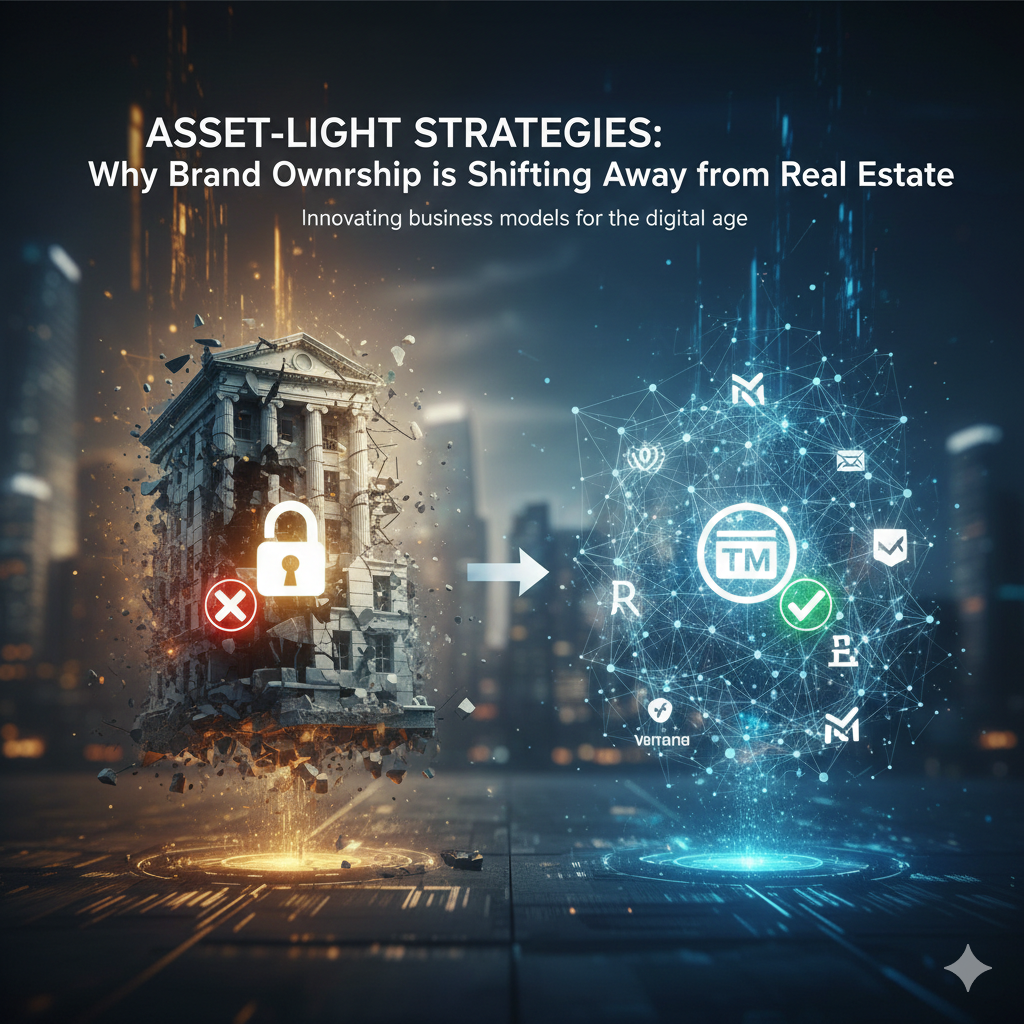
For decades, owning physical assets—especially real estate—was considered the ultimate marker of success for brands, particularly in capital-intensive industries like hospitality, retail, and travel. Hotels owned their buildings, retailers owned flagship stores, and growth was closely tied to property acquisition.
Today, that model is rapidly changing.
Across industries, brand ownership is shifting away from real estate toward asset-light strategies that prioritize brand strength, operational expertise, and scalability over bricks and mortar. From global hotel chains to lifestyle brands and digital-first companies, the focus is no longer on what you own, but on what you control.
This article explores why asset-light strategies are gaining momentum, how they work, and what this shift means for the future of brand ownership.
Understanding the Asset-Light Model
An asset-light strategy allows a company to grow and operate with minimal ownership of physical assets. Instead of owning properties or infrastructure, brands focus on:
- Brand management
- Operations and standards
- Marketing and distribution
- Technology and data
Physical assets are owned by third-party investors, franchisees, or landlords.
In hospitality, this often takes the form of:
- Franchise agreements
- Management contracts
- Leasing and licensing models
Why Brands Are Moving Away from Real Estate Ownership
1. Capital Efficiency and Financial Flexibility
Real estate requires significant upfront investment and long-term capital lock-in. Asset-light models allow brands to:
- Reduce capital expenditure
- Improve return on invested capital (ROIC)
- Free up cash for innovation and expansion
This financial agility is especially valuable in uncertain economic environments.
2. Faster and Scalable Growth
Owning property slows expansion. Asset-light brands can:
- Enter new markets quickly
- Scale globally without heavy investment
- Adapt faster to demand shifts
This speed-to-market is a major competitive advantage.
3. Reduced Financial Risk
Real estate ownership exposes brands to:
- Market volatility
- High fixed costs
- Property maintenance liabilities
By shifting asset risk to owners or investors, brands protect their balance sheets and stabilize earnings.
The Hospitality Industry as a Leading Example
The hospitality sector offers a clear illustration of asset-light transformation.
Major hotel brands now focus on:
- Brand standards and guest experience
- Loyalty programs
- Technology platforms
- Global distribution
While real estate is owned by:
- Developers
- Institutional investors
- High-net-worth individuals
This separation of brand and asset ownership has become the industry norm.
The Rise of Brand as the Primary Asset
In an asset-light world, the brand itself becomes the most valuable asset.
Strong brands deliver:
- Pricing power
- Guest trust and loyalty
- Consistent demand
Real estate provides the stage—but the brand creates the value.
Technology as an Enabler of Asset-Light Strategies
Digital platforms make asset-light models possible at scale.
Key enablers include:
- Centralized property management systems
- Global reservation and distribution networks
- Data-driven revenue management
- Digital marketing and loyalty platforms
Technology allows brands to maintain control without physical ownership.
Shifting Investor Preferences
Investors increasingly prefer asset-light businesses because they offer:
- Higher margins
- Predictable cash flows
- Lower capital risk
- Easier scalability
This has made asset-light brands more attractive in public markets and private equity portfolios.
Operational Focus Over Asset Management
When brands no longer manage buildings, they can focus on:
- Service excellence
- Experience design
- Staff training and culture
- Innovation and differentiation
Operational mastery becomes the growth engine.
Franchising and Management Contracts Explained
Franchising
The brand licenses its name, systems, and standards to an owner.
Benefits:
- Rapid expansion
- Minimal capital investment
- Local market expertise
Management Contracts
The brand manages daily operations while the owner retains asset ownership.
Benefits:
- Greater control over service quality
- Stable management fees
- Strong brand alignment
Both models support asset-light growth.
Challenges of Asset-Light Strategies
While powerful, asset-light models are not without challenges.
Quality Control
Maintaining consistent standards across owned and non-owned properties requires:
- Robust SOPs
- Auditing systems
- Strong brand governance
Brand Reputation Risk
Operational failures by owners or partners can damage the brand.
Clear contracts and performance monitoring are essential.
Reduced Asset Appreciation
Brands no longer benefit directly from property value appreciation, relying instead on fee-based income.
Why Real Estate Still Matters—But Differently
Asset-light does not mean asset-ignorant.
Brands still influence:
- Design standards
- Location selection
- Development guidelines
However, ownership is no longer required to shape the experience.
Asset-Light Strategies Beyond Hospitality
This shift is visible across industries:
- Retail brands moving to licensing and marketplaces
- Restaurants expanding via franchising
- Mobility and travel platforms owning few physical assets
The focus is increasingly on ecosystems, not infrastructure.
Resilience in Times of Crisis
Asset-light brands proved more resilient during global disruptions. Lower fixed costs and flexible structures allowed:
- Faster cost adjustments
- Reduced financial exposure
- Quicker recovery
Resilience is now a strategic priority.
The Future of Brand Ownership
As markets evolve, asset-light strategies will continue to dominate.
Future brands will:
- Own customer relationships
- Control data and technology
- Shape experiences
- Partner for physical assets
Ownership will be strategic, not symbolic.
Conclusion
The shift away from real estate ownership marks a fundamental change in how brands grow and compete. Asset-light strategies empower companies to scale faster, reduce risk, and focus on what truly differentiates them—brand, experience, and operational excellence.
At Booksmart, we believe the future belongs to brands that understand one simple truth: value is no longer built by owning everything, but by orchestrating everything well. In a world where flexibility beats permanence, asset-light is not just a strategy—it is the new foundation of brand success.
Leave a Reply