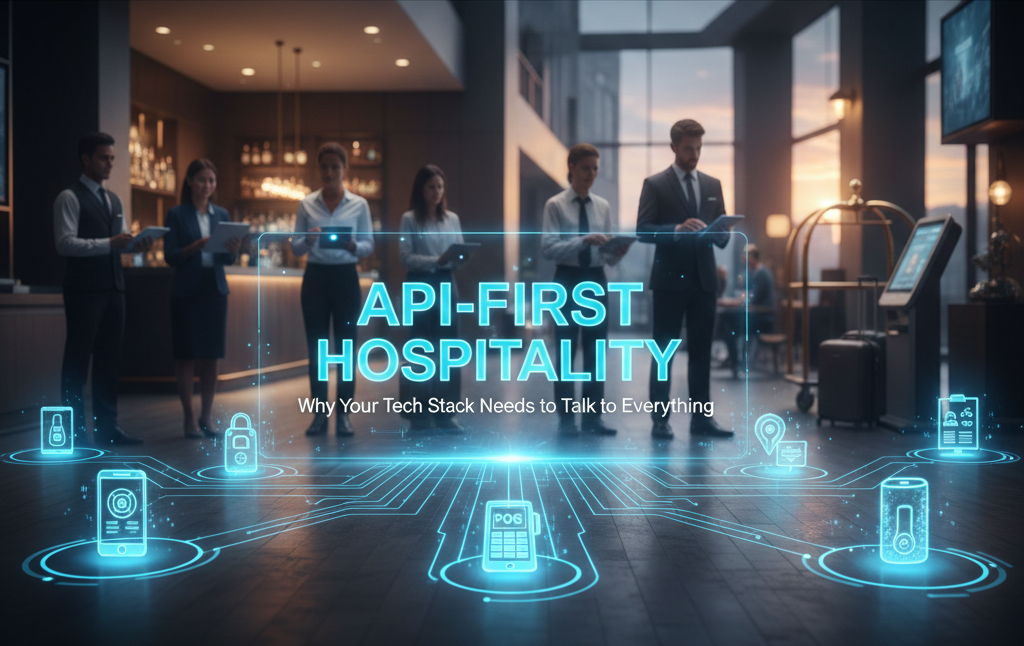
The modern hospitality industry runs on technology. From reservations and revenue management to guest messaging and smart room controls, hotels depend on a growing ecosystem of digital tools to deliver seamless experiences. Yet many hospitality businesses still struggle with disconnected systems, manual workarounds, and data silos that slow operations and frustrate guests.
This is where API-first hospitality comes in.
An API-first approach allows hotel technology systems to communicate effortlessly with one another, creating a connected, flexible, and future-ready tech stack. In an era of personalization, automation, and real-time decision-making, your technology cannot afford to work in isolation.
This article explores what API-first hospitality means, why it matters, and how hotels can benefit from building a tech stack that truly “talks to everything.”
Understanding API-First Hospitality
An API (Application Programming Interface) is a set of rules that allows different software systems to exchange data and functionality. An API-first approach means designing systems with integration in mind from the start, rather than adding connectivity later as an afterthought.
In hospitality, this means your:
- Property Management System (PMS)
- Channel Manager
- Booking Engine
- Revenue Management System (RMS)
- CRM and guest messaging platforms
- Point-of-Sale systems
- Smart room and IoT solutions
can all communicate smoothly and securely.
The Problem with Traditional, Siloed Tech Stacks
Many hotels operate with technology acquired over time—often from different vendors and for different purposes. The result is a fragmented ecosystem.
Common Challenges Include:
- Duplicate data entry
- Inconsistent guest information
- Delayed reporting
- Manual reconciliation
- Limited personalization
When systems don’t communicate, staff compensate with spreadsheets, emails, and workarounds—wasting time and increasing error rates.
Why API-First Matters in Modern Hospitality
1. Seamless Guest Experiences
Guests expect continuity across every touchpoint. An API-first tech stack ensures:
- Guest preferences flow from booking to check-out
- Room readiness aligns with arrival time
- Payments, loyalty, and messaging stay synchronized
A connected backend creates a frictionless frontend experience.
2. Real-Time Data for Smarter Decisions
APIs enable real-time data sharing between systems, empowering hotels to:
- Adjust pricing dynamically
- Monitor occupancy and demand
- Respond instantly to guest requests
Decision-making becomes proactive rather than reactive.
3. Faster Innovation and Scalability
An API-first approach allows hotels to:
- Add new tools without overhauling systems
- Replace outdated software easily
- Pilot innovations quickly
This flexibility is essential in a fast-evolving industry.
Key Areas Where API-First Hospitality Delivers Value
Reservations and Distribution
APIs connect:
- Booking engines
- OTAs
- Channel managers
- PMS
This ensures availability, rates, and inventory remain accurate across all platforms—reducing overbooking and revenue leakage.
Revenue Management
When PMS, RMS, and market intelligence tools share data via APIs, hotels can:
- Optimize pricing in real time
- Forecast demand more accurately
- React faster to market shifts
Revenue strategies become data-driven and agile.
Guest Personalization and CRM
APIs enable a unified guest profile by connecting:
- Booking history
- Preferences
- Communication records
- On-property behavior
This allows hotels to deliver personalized offers, tailored messaging, and memorable stays.
Operations and Housekeeping
API integrations streamline:
- Room status updates
- Maintenance requests
- Task assignments
Front desk and housekeeping teams work in sync, improving efficiency and turnaround times.
Payments and Financial Systems
Secure APIs connect PMS, POS, and payment gateways to:
- Enable contactless payments
- Reduce reconciliation errors
- Improve fraud detection
Financial transparency improves across departments.
API-First and the Rise of Smart Hospitality
Smart rooms, mobile keys, voice assistants, and IoT devices depend on APIs to function seamlessly.
An API-first foundation allows:
- Room settings to adjust automatically
- Guest preferences to trigger personalized experiences
- Maintenance issues to be flagged instantly
Without APIs, smart hospitality remains fragmented and underutilized.
Benefits for Hotel Staff and Management
Reduced Manual Work
Automation replaces repetitive tasks, freeing staff to focus on guest service.
Improved Collaboration
Shared data creates alignment across departments.
Better Visibility
Management gains access to unified dashboards and actionable insights.
Security and Reliability in API-First Systems
A common misconception is that APIs increase security risks. In reality, well-designed APIs enhance control.
Security Best Practices Include:
- Authentication and authorization protocols
- Encrypted data transmission
- Rate limiting and monitoring
- Regular audits
Modern API frameworks are built with security as a priority.
Challenges in Adopting an API-First Approach
While the benefits are compelling, adoption requires careful planning.
Legacy Systems
Older platforms may lack modern APIs, requiring upgrades or middleware solutions.
Vendor Compatibility
Not all vendors offer open or well-documented APIs.
Change Management
Teams need training to understand and trust integrated systems.
How Hotels Can Transition to API-First Hospitality
1. Audit Your Current Tech Stack
Identify:
- Data silos
- Manual processes
- Integration gaps
This provides a roadmap for improvement.
2. Prioritize Open and Flexible Vendors
Choose technology partners that:
- Offer robust APIs
- Provide clear documentation
- Support integrations
Vendor openness is key to long-term success.
3. Start Small, Then Scale
Begin with high-impact integrations, such as:
- PMS and channel manager
- PMS and CRM
Gradual implementation reduces risk.
4. Invest in Integration Expertise
Whether in-house or external, integration expertise ensures:
- Reliable connections
- Data accuracy
- System stability
APIs require thoughtful governance.
API-First as a Competitive Advantage
Hotels with connected tech stacks can:
- Respond faster to guest needs
- Personalize experiences at scale
- Innovate without disruption
In a competitive market, agility is a powerful differentiator.
The Future of Hospitality Is Interoperable
As AI, automation, and personalization become standard, interoperability will be non-negotiable.
Future-ready hotels will:
- Use APIs to power AI agents
- Integrate third-party innovations seamlessly
- Build modular, adaptive ecosystems
API-first is not a trend—it is a foundation.
Conclusion
In today’s hospitality landscape, technology cannot operate in isolation. An API-first approach ensures your tech stack communicates effortlessly, unlocking efficiency, innovation, and exceptional guest experiences. By investing in interoperability, hotels future-proof their operations and position themselves for long-term success.
At Booksmart, we believe that the smartest hospitality systems are the ones that listen, connect, and evolve together. In an industry where experience is everything, an API-first strategy ensures your technology speaks the same language as your guests.
Leave a Reply