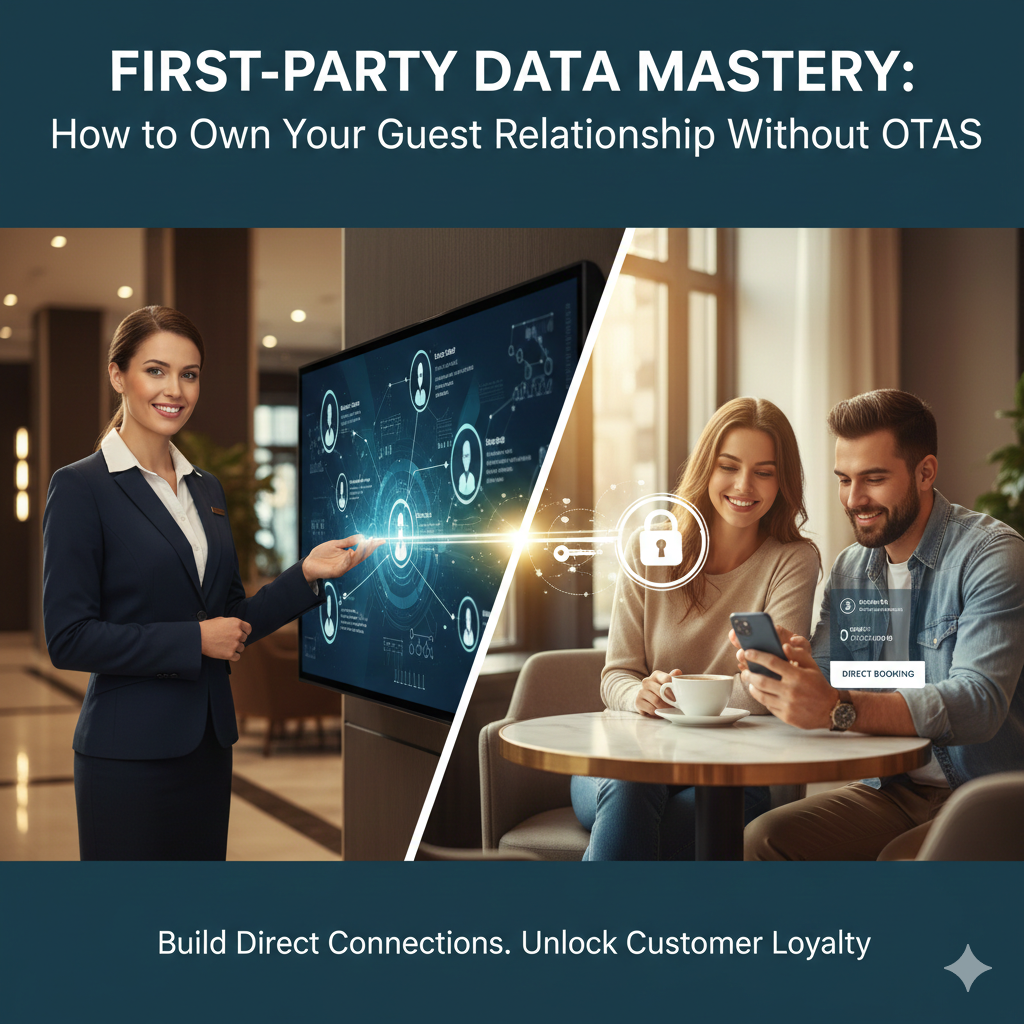
Online Travel Agencies (OTAs) have become powerful distribution partners in hospitality. They offer visibility, global reach, and instant bookings. But that convenience comes at a cost—high commissions, limited guest data access, and weakened direct relationships.
In an increasingly digital marketplace, data is the real currency. Hotels that rely too heavily on third-party channels risk surrendering ownership of their most valuable asset: the guest relationship.
The future belongs to hotels that master first-party data—collecting, managing, and activating guest information directly to drive loyalty, personalization, and long-term profitability.
At Booksmart, we believe that reducing OTA dependence isn’t about abandoning them entirely. It’s about building a direct, data-driven ecosystem where hotels control their own guest journey.
What Is First-Party Data in Hospitality?
First-party data is information a hotel collects directly from guests through its own channels.
This includes:
- Booking behavior on the brand website
- Stay history and preferences
- On-property spending patterns
- Email engagement
- Loyalty program interactions
- Feedback and survey responses
- Mobile app usage
Unlike third-party data, first-party data is:
- Owned by the hotel
- More accurate and reliable
- Privacy-compliant when properly managed
- Strategically actionable
It forms the foundation of direct guest relationships.
The OTA Dependency Dilemma
OTAs are effective demand generators—but they create limitations:
Commission Costs
OTA commissions can significantly reduce profit margins.
Data Restrictions
Hotels often receive limited guest contact information.
Brand Dilution
Guests may associate their booking experience more with the OTA than the hotel brand.
Reduced Pricing Control
Rate parity agreements limit flexibility.
Without first-party data, hotels remain reactive rather than proactive.
Why First-Party Data Is a Strategic Advantage
1. Direct Revenue Growth
When guests book directly, hotels:
- Avoid commission fees
- Increase net profitability
- Gain pricing flexibility
Direct bookings are not just cheaper—they’re more profitable long term.
2. Personalization That Drives Loyalty
Guests expect tailored experiences.
With first-party data, hotels can:
- Remember room preferences
- Offer relevant upsells
- Anticipate special occasions
- Deliver personalized pre-arrival communication
Personalization strengthens emotional loyalty.
3. Lifecycle Marketing Power
First-party data allows hotels to communicate beyond a single stay.
Through email and CRM automation, hotels can:
- Re-engage past guests
- Offer targeted promotions
- Encourage repeat visits
- Cross-sell amenities
This transforms one-time stays into ongoing relationships.
Building a Strong Direct Booking Ecosystem
Owning guest relationships requires more than just collecting emails.
1. Optimized Brand Website
Your website should be:
- Fast and mobile-friendly
- Easy to navigate
- Equipped with seamless booking functionality
- Designed to highlight value over price
The direct booking experience must compete with OTAs in usability.
2. Compelling Direct Booking Incentives
Guests need a reason to book directly.
Examples include:
- Exclusive member rates
- Complimentary upgrades
- Flexible cancellation policies
- Value-added perks
Incentives should emphasize experience, not just discounts.
3. Loyalty Programs That Deliver Value
Even independent hotels can create simplified loyalty systems.
Effective programs:
- Reward repeat behavior
- Offer experiential benefits
- Encourage direct engagement
Loyalty programs are data engines disguised as rewards systems.
The Role of CRM and Data Integration
Data without structure is useless.
Hotels must integrate:
- Property Management Systems (PMS)
- Customer Relationship Management (CRM) platforms
- Booking engines
- Marketing automation tools
A unified guest profile enables consistent communication across touchpoints.
Collecting Data Ethically and Transparently
Trust is essential in data collection.
Hotels must:
- Clearly communicate privacy policies
- Obtain explicit consent
- Follow data protection regulations
- Protect stored information securely
Ethical data practices build long-term trust.
Turning Data into Actionable Insights
Data collection is only the first step. Activation drives value.
Hotels can analyze:
- Booking lead times
- Seasonal travel patterns
- Spending behavior
- Channel performance
These insights inform pricing, marketing, and operational decisions.
Reducing OTA Dependence Without Eliminating Them
The goal is balance—not elimination.
Strategic approaches include:
- Using OTAs for exposure in new markets
- Targeting OTA guests for future direct bookings
- Encouraging loyalty enrollment during stays
OTAs can serve as acquisition channels, while first-party data drives retention.
On-Property Data Collection Opportunities
Guest engagement doesn’t stop at check-in.
Hotels can capture valuable data through:
- Mobile apps
- Wi-Fi sign-ins
- Feedback surveys
- F&B and spa bookings
- Digital concierge services
Each touchpoint strengthens the guest profile.
Personalized Marketing in Action
Imagine a returning guest who:
- Prefers high floors
- Visits annually for an anniversary
- Frequently books spa treatments
With first-party data, the hotel can:
- Send a personalized anniversary offer
- Pre-block a preferred room
- Offer a spa package upgrade
That level of personalization is impossible through OTA-only relationships.
Measuring Success: Key KPIs
To track first-party data effectiveness, hotels should monitor:
- Direct booking percentage
- Customer acquisition cost
- Repeat guest ratio
- Email engagement rates
- Customer lifetime value (CLV)
Data-driven performance metrics ensure strategy alignment.
Technology as an Enabler, Not a Replacement
Technology supports first-party data mastery—but strategy drives results.
Hotels should prioritize:
- Clean data architecture
- Staff training
- Cross-department collaboration
- Continuous optimization
Human insight remains essential.
Overcoming Common Challenges
Short-Term Revenue Pressure
OTAs provide immediate volume, but long-term strategy favors direct relationships.
Internal Silos
Marketing, operations, and revenue teams must align around shared data goals.
Technology Complexity
Choosing scalable, integrated platforms reduces friction.
Commitment and leadership alignment are critical.
Future-Proofing Guest Relationships
As third-party cookies phase out and privacy regulations tighten, first-party data becomes even more valuable.
Hotels that:
- Control their data
- Understand their guests
- Personalize consistently
will remain competitive regardless of platform shifts.
Conclusion
Mastering first-party data is not just a marketing strategy—it is a business transformation. By owning guest relationships directly, hotels reduce OTA dependency, improve profitability, and create deeper emotional connections.
At Booksmart, we believe that the most successful hotels of the future will not compete solely on price or distribution reach. They will compete on relationship ownership—powered by intelligent, ethical, and strategic use of first-party data.
When you own the relationship, you own the future.
Leave a Reply