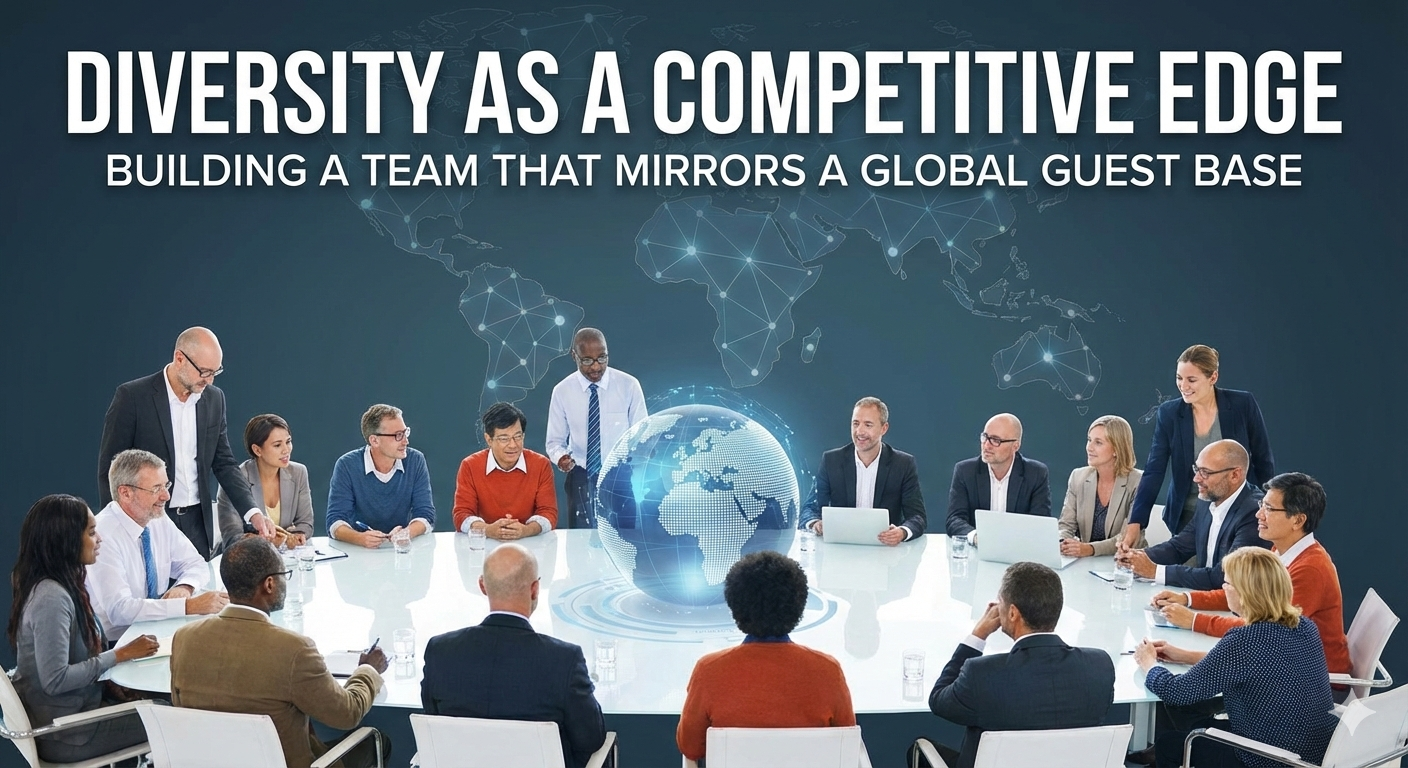
Hospitality has always been a people-first industry. Hotels welcome guests from every corner of the world, each bringing different cultures, expectations, languages, and values. Yet while guest profiles have become increasingly global, many hotel teams still struggle to reflect that same diversity internally.
Today, diversity is no longer just a moral or social priority—it is a strategic competitive advantage. Hotels that build diverse, inclusive teams are better equipped to understand their guests, deliver personalized service, and compete in an increasingly globalized marketplace.
At Booksmart, we see diversity not as a checkbox, but as a powerful business driver that directly impacts guest satisfaction, employee engagement, and long-term brand resilience.
The Global Guest Has Changed—Has Your Team?
Modern hotels serve:
- International business travelers
- Multi-generational families
- Digital nomads
- Cultural tourists
- Guests with varied accessibility needs
These guests expect empathy, cultural awareness, and nuanced service. A workforce that mirrors this diversity naturally understands these needs—often without being told.
When teams lack diversity, hotels risk miscommunication, unconscious bias, and missed opportunities to connect.
Understanding Diversity Beyond Demographics
True diversity goes far beyond visible characteristics. In hospitality, it includes:
- Cultural and ethnic backgrounds
- Languages and communication styles
- Gender and age diversity
- Educational and socio-economic experiences
- Neurodiversity and different ways of thinking
When these perspectives come together, they create richer problem-solving, better service recovery, and more innovative guest experiences.
Why Diversity Is a Competitive Advantage in Hospitality
1. Deeper Cultural Intelligence
A diverse team brings built-in cultural fluency. Employees who understand customs, etiquette, and preferences can anticipate guest needs and avoid cultural missteps.
This leads to:
- Smoother interactions
- Greater guest comfort
- Higher satisfaction scores
Cultural intelligence is increasingly as important as operational efficiency.
2. Improved Guest Trust and Emotional Connection
Guests feel more comfortable when they see themselves represented.
Whether through language, cultural understanding, or shared experiences, representation builds trust. That trust translates into:
- Stronger emotional connections
- Positive reviews
- Repeat visits
Hospitality is about belonging—and diversity reinforces that feeling.
3. Stronger Problem-Solving and Innovation
Diverse teams approach challenges from multiple perspectives.
In fast-paced hotel environments, this means:
- More creative solutions
- Better crisis response
- Reduced groupthink
Innovation thrives where different viewpoints are valued and heard.
Diversity and the Employee Experience
Diversity is not just about guests—it profoundly impacts employees too.
Increased Engagement and Retention
Employees who feel seen, respected, and included are more loyal and motivated.
Access to Broader Talent Pools
Inclusive hiring expands access to skills and perspectives that homogeneous teams miss.
Leadership Development
Diverse teams create stronger leadership pipelines by nurturing talent from all backgrounds.
In a labor-constrained industry, retention and engagement are priceless.
Inclusion: The Key to Making Diversity Work
Diversity alone is not enough. Without inclusion, diverse teams cannot perform at their best.
Inclusion means:
- Every voice is heard
- Differences are respected
- Opportunities are equitable
- Psychological safety is prioritized
Hotels that foster inclusion turn diversity into a living advantage—not a static statistic.
Recruiting for a Global Mindset
Building diverse teams starts with how hotels attract and hire talent.
Bias-Aware Recruitment
Structured interviews, diverse hiring panels, and standardized criteria reduce unconscious bias.
Local and Global Hiring Strategies
Hotels can tap into local communities while welcoming international talent.
Skills Over Stereotypes
Focusing on transferable skills and attitude rather than background opens doors to untapped potential.
Recruitment sets the tone for the entire employee journey.
Language Diversity as a Service Asset
Language is one of hospitality’s most valuable tools.
Multilingual teams:
- Improve guest communication
- Reduce service friction
- Enhance safety and clarity
Rather than treating language skills as optional, leading hotels recognize them as strategic assets.
Training for Cultural Competence
Diversity must be supported through continuous learning.
Effective training includes:
- Cultural sensitivity workshops
- Inclusive leadership development
- Bias awareness programs
- Conflict resolution skills
Training equips teams to navigate differences with confidence and respect.
Leadership’s Role in Championing Diversity
Diversity initiatives succeed or fail at the leadership level.
Inclusive leaders:
- Model respectful behavior
- Address bias promptly
- Promote fairness and transparency
- Hold themselves accountable
When leaders take diversity seriously, teams follow.
Representation in Leadership Matters
Guests and employees notice who holds decision-making power.
Hotels benefit when leadership reflects the diversity of their teams and guests. Representation:
- Builds credibility
- Inspires future leaders
- Strengthens internal trust
Diverse leadership is not symbolic—it’s strategic.
Creating Inclusive Work Environments
Operational practices must support inclusion.
This includes:
- Fair scheduling and workload distribution
- Respect for cultural and religious practices
- Accessibility for employees with disabilities
- Clear anti-discrimination policies
Inclusion must be woven into daily operations—not reserved for policy documents.
Diversity and Guest Experience Design
Diverse teams contribute directly to better guest experience design.
They help hotels:
- Adapt services for different cultures
- Design inclusive amenities
- Anticipate accessibility needs
- Personalize interactions
What feels “normal” to one group may feel exclusionary to another—diversity prevents blind spots.
Technology and Data Supporting Inclusion
Digital tools can help track progress and identify gaps.
Hotels can use data to:
- Monitor hiring and promotion patterns
- Measure engagement across demographics
- Identify training needs
Data-driven insights turn intentions into measurable outcomes.
Overcoming Common Challenges
Resistance to Change
Education and transparent communication reduce fear and misunderstanding.
Tokenism
Real inclusion requires meaningful participation—not symbolic gestures.
Cultural Misalignment
Open dialogue and continuous learning help teams grow together.
Challenges are inevitable—but they are manageable with commitment.
Diversity as a Brand Differentiator
In a competitive market, values matter.
Hotels known for inclusivity:
- Attract socially conscious travelers
- Appeal to younger demographics
- Strengthen employer branding
Diversity becomes part of the brand promise—not just an internal initiative.
Future-Proofing Hospitality Through Diversity
As travel becomes more global and guest expectations more nuanced, homogeneous teams will struggle to keep up.
Diverse, inclusive teams are:
- More adaptable
- More empathetic
- Better prepared for change
They represent the future of hospitality excellence.
Conclusion
Diversity is no longer a “nice-to-have” in hospitality—it is a competitive edge. By building teams that mirror a global guest base, hotels can deliver more authentic service, foster stronger employee engagement, and create resilient, future-ready brands.
At Booksmart, we believe that the most successful hotels of tomorrow will be those that embrace diversity not just in who they serve, but in who they are. When teams reflect the world they welcome, hospitality becomes more human, more inclusive, and more powerful.
Leave a Reply