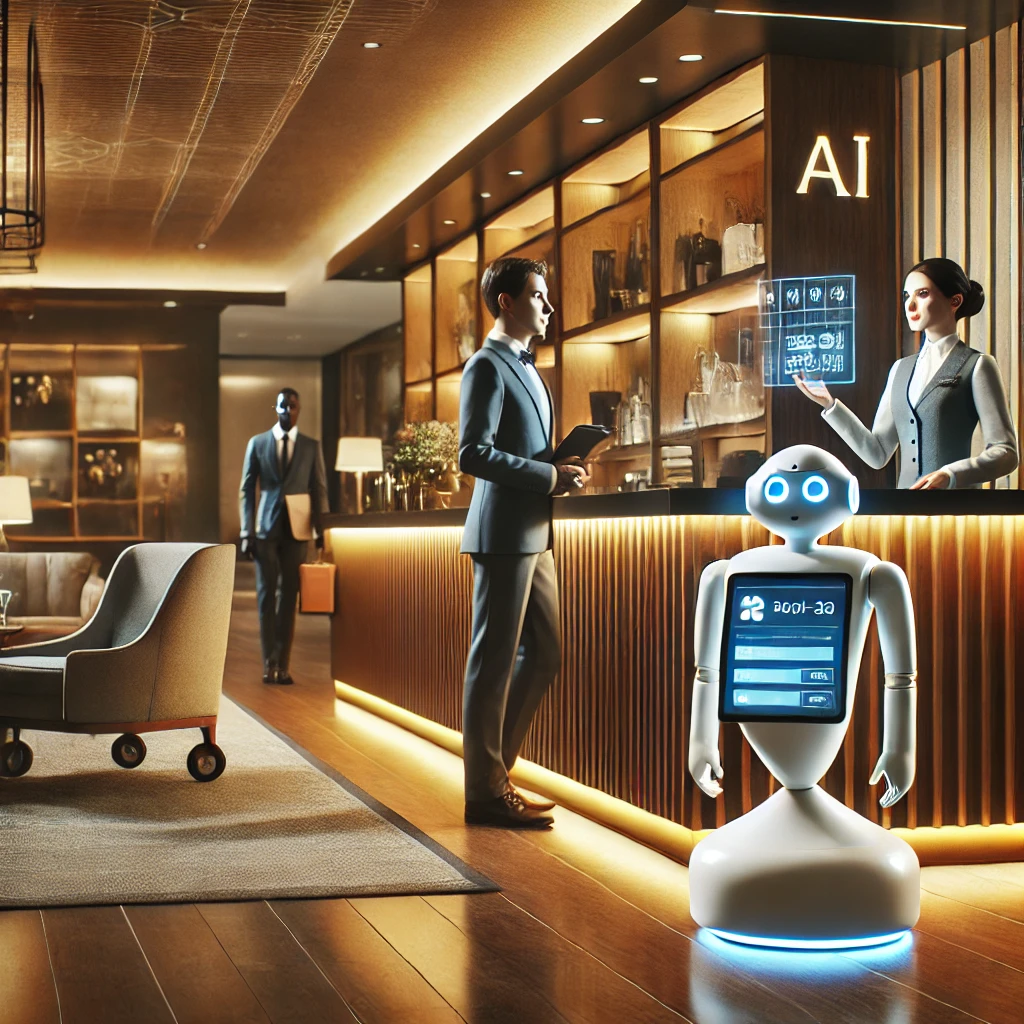
The hospitality industry is built around understanding people, anticipating their needs, and creating memorable experiences. However, modern travelers increasingly expect more than comfortable rooms and quality service. They want hotels to understand their preferences, provide relevant recommendations, and make every stage of their stay convenient and meaningful. Artificial intelligence (AI) is helping hotels meet these expectations by transforming how guest information is analyzed and how personalized services are delivered. Hospitality industry AI personalization is becoming an important strategy for hotels seeking to improve guest satisfaction, strengthen loyalty, and remain competitive in a rapidly evolving market.
Traditionally, hotel personalization depended heavily on employees remembering guest preferences, reviewing previous visits, and responding to individual requests. Although this human approach remains valuable, it can be difficult to maintain consistently across large properties and multiple locations. AI-powered systems can analyze relevant information, identify patterns, predict potential needs, and help hotels deliver more suitable experiences at scale. From personalized room recommendations and customized dining suggestions to intelligent communication and tailored loyalty offers, AI is creating new opportunities to make hospitality more responsive without losing its human touch.
What Is AI Personalization in Hospitality?
AI personalization in hospitality refers to the use of artificial intelligence technologies to understand guest preferences and provide more relevant services, recommendations, and communications. These technologies can analyze appropriate data from reservations, loyalty programs, previous stays, service requests, guest feedback, and other authorized interactions.
Using machine learning, predictive analytics, natural language processing, and recommendation systems, hotels can identify patterns that help them understand what different guests may value.
For example, a returning guest who regularly requests a quiet room may be offered a similar room preference when available. A family traveling with children may receive information about family-friendly facilities, while a business traveler may be shown details about meeting rooms, workspace amenities, and transportation.
AI does not need to make every decision independently. In many cases, it supports hotel employees by providing useful insights so they can deliver more relevant and timely service.
Why AI Personalization Matters for Hotels
Guest expectations have changed significantly as digital services across other industries have become more personalized. Travelers increasingly appreciate relevant recommendations, convenient communication, and services that reflect their individual needs.
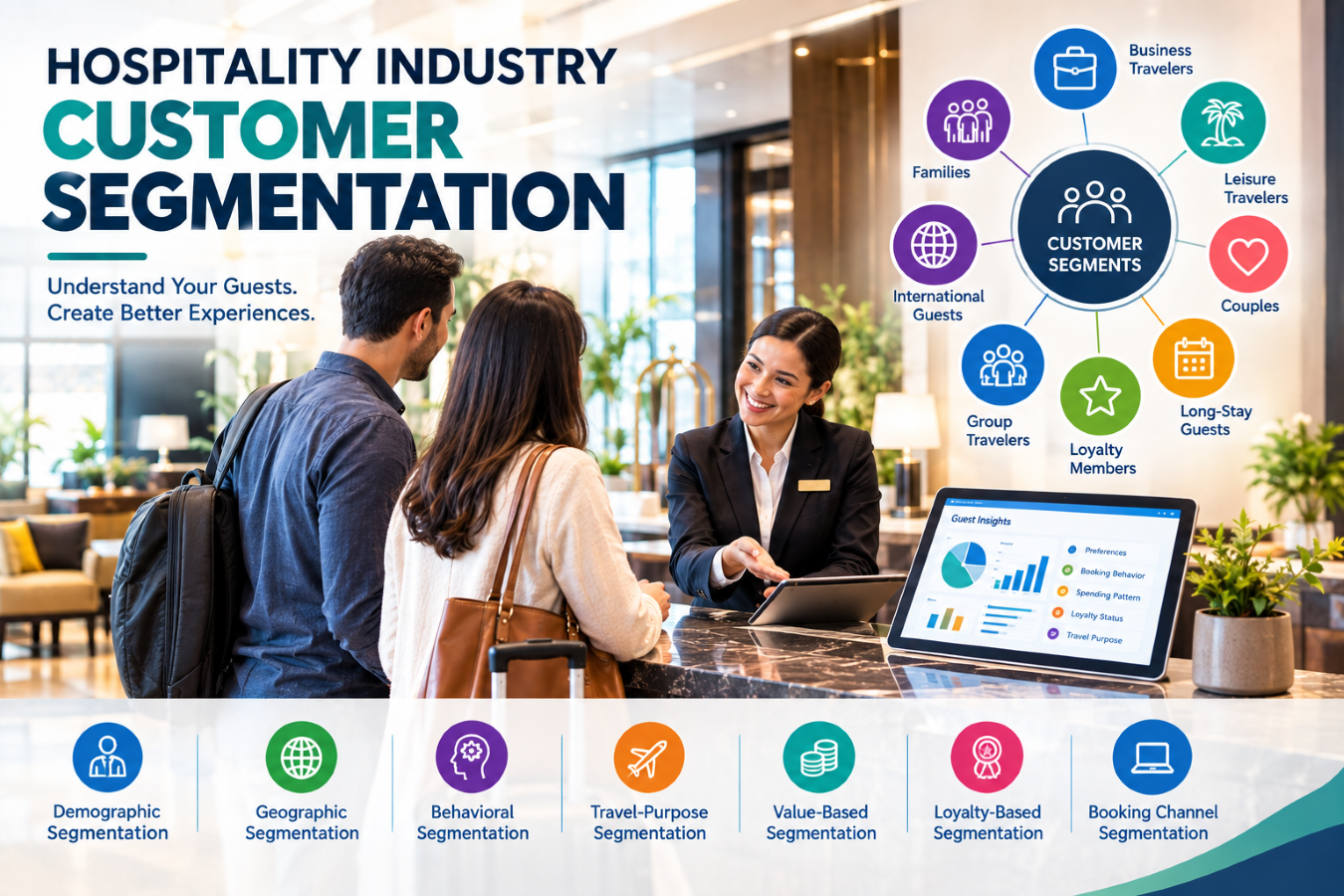
AI personalization helps hotels respond to these expectations while managing the complexity of serving different guest segments. Instead of providing identical offers and messages to everyone, hotels can tailor selected interactions to different preferences and travel purposes.
Personalization can also improve operational efficiency. Employees may spend less time searching through records or manually identifying preferences when relevant information is presented through integrated hotel systems.
When implemented thoughtfully, these improvements can contribute to stronger guest satisfaction, more relevant service recommendations, increased repeat bookings, and better use of hotel resources.
Personalized Booking Experiences
The booking stage provides an important opportunity for AI-driven personalization. Intelligent recommendation systems can help travelers identify suitable room categories, facilities, packages, and services based on their stated preferences and available booking information.
For example, a guest searching for a relaxing weekend stay may receive suggestions for rooms with scenic views, spa facilities, or dining experiences. A business traveler may be shown rooms with suitable workspaces and convenient access to meeting facilities.
AI can also support conversational booking assistants that answer routine questions about room availability, amenities, policies, and reservation procedures.
However, recommendations should remain transparent and useful. Hotels should clearly communicate prices, availability, and conditions rather than allowing automated suggestions to create unrealistic expectations.
Personalized Room Preferences
Room selection is another area where AI can improve the guest experience. Hotels can use authorized preference records to help accommodate requests involving room location, bed type, accessibility, temperature preferences, or other relevant features.
If a returning guest consistently requests a room away from elevators, a hotel system could highlight that preference for staff before arrival. Where inventory and operational conditions allow, the hotel may be able to assign a suitable room in advance.
AI can also help hotels forecast room preferences across guest segments, supporting better inventory planning.
These systems should assist employees rather than promise that every preference can always be fulfilled. Availability, maintenance, accessibility requirements, and other operational factors must still be considered.
AI-Powered Personalized Communication
Communication is a major part of the guest journey, and AI can help hotels make it more relevant. Automated systems can deliver information according to the guest’s booking stage, preferred communication channel, language, or service needs.
Before arrival, guests may receive check-in instructions and transportation information. During their stay, they may receive relevant updates about facilities, restaurant reservations, or requested services. After departure, they may receive a digital invoice or an invitation to provide feedback.
Natural language processing can also help virtual assistants understand common guest questions and provide timely responses.
Hotels should ensure that automated communication remains accurate, respectful, and easy to opt out of where appropriate. Guests should also be able to contact a human employee when their requests require personal attention.
Personalized Dining and Experience Recommendations
AI can help hotels recommend dining options, activities, and additional services that match guest interests. Recommendations may be informed by stated preferences, previous purchases, travel purpose, or other appropriately collected information.
A guest interested in wellness might appreciate information about spa treatments and fitness facilities. A family may find value in recommendations for suitable dining options or local activities. A guest attending a business conference may prefer convenient meal options and transportation information.
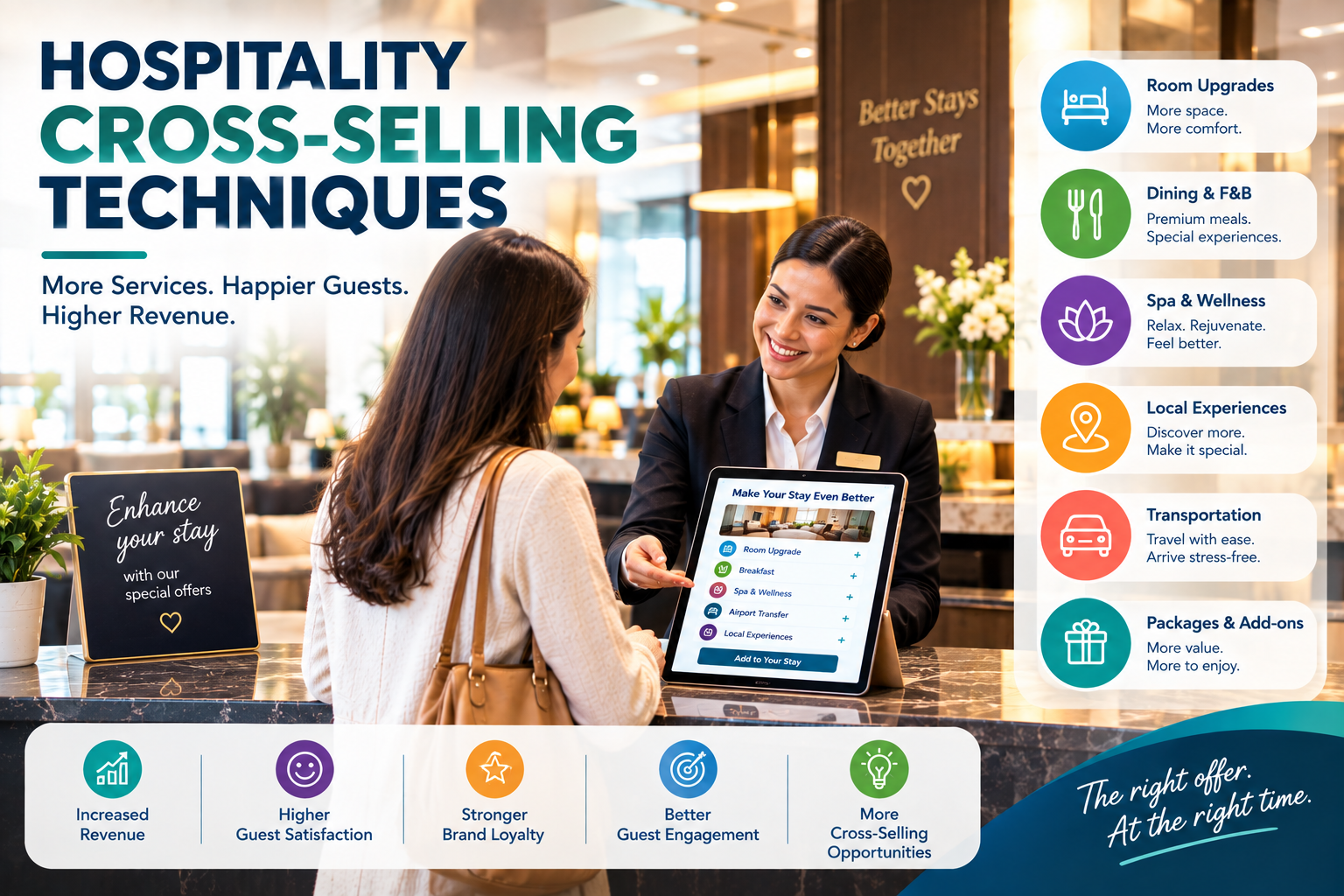
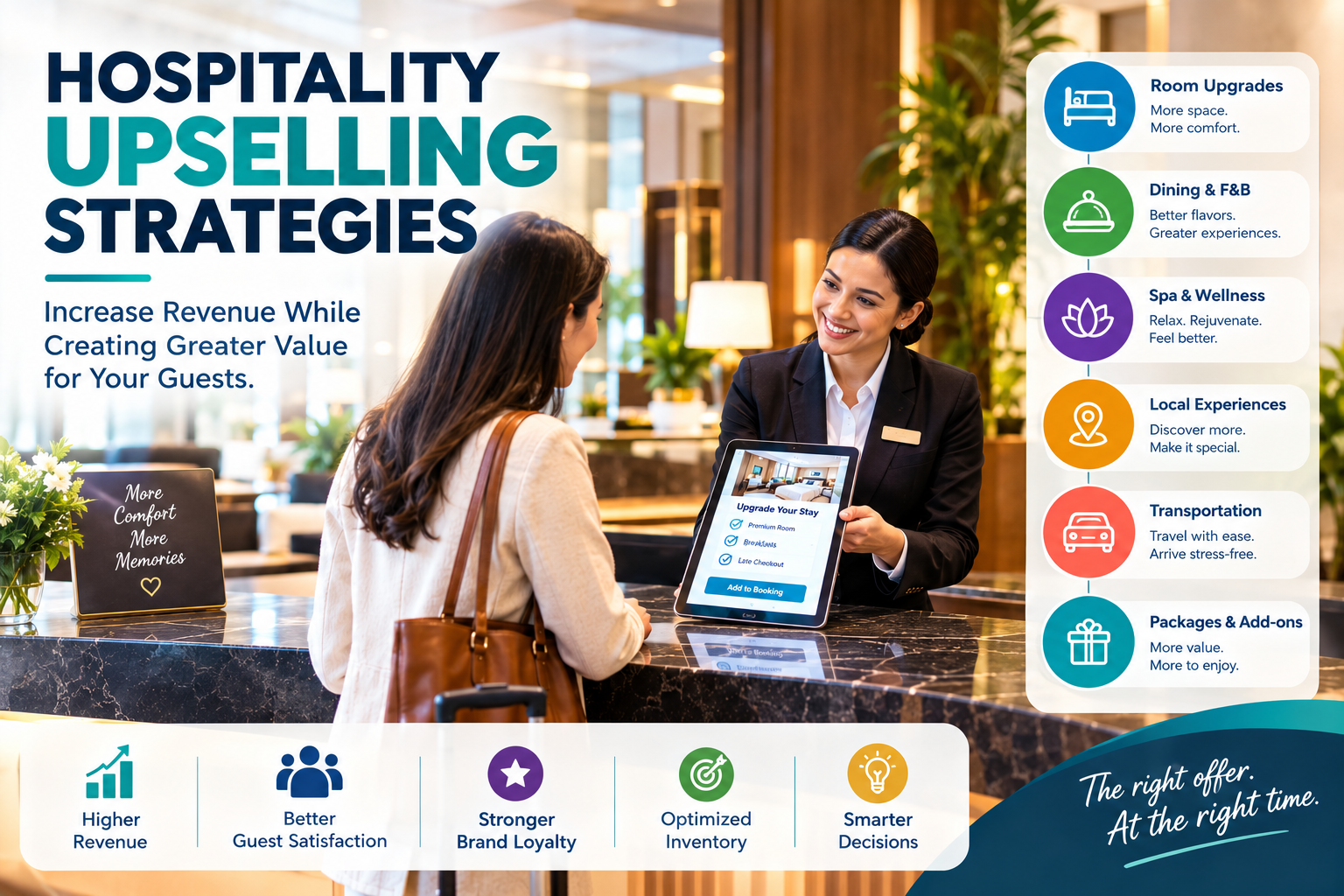
These recommendations can introduce guests to services they might otherwise overlook while helping hotels increase revenue from restaurants, wellness facilities, tours, and other experiences.
The key is relevance. Repeated or poorly timed promotions can frustrate guests, so hotels should focus on providing useful suggestions at appropriate moments.
AI Personalization Throughout the Guest Journey
AI can connect personalization across multiple stages of a hotel stay.
Before arrival: Hotels can provide relevant booking information, arrival guidance, room preferences, and optional services.
During the stay: AI-powered tools can help guests discover facilities, request assistance, obtain answers to routine questions, and receive relevant recommendations.
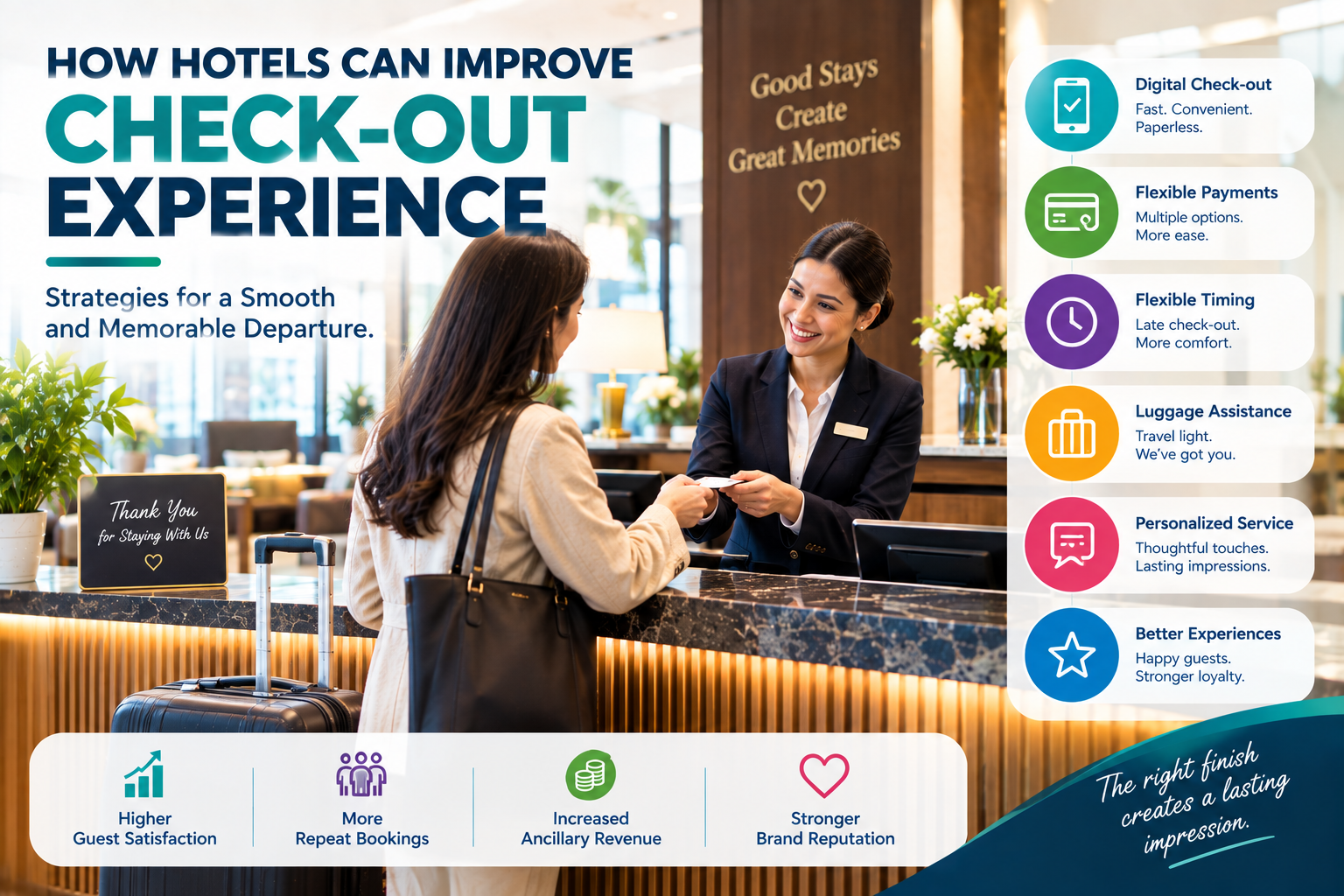
At departure: Systems can simplify check-out, identify outstanding service requests, and help prepare accurate billing information.
After departure: Hotels can analyze feedback, support appropriate follow-up communication, and use lessons from previous stays to improve future experiences.
A connected approach makes personalization more consistent. However, hotels should avoid using every available piece of information simply because it exists. Only relevant and appropriately obtained data should inform the guest experience.
AI Chatbots and Virtual Concierge Services
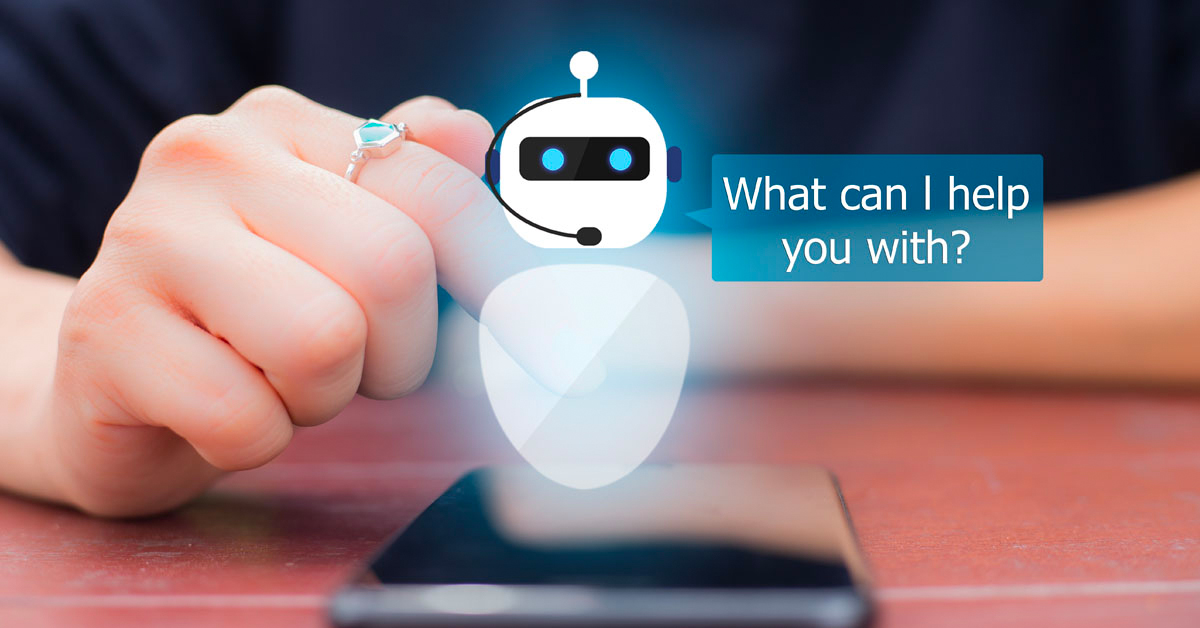
AI chatbots and virtual concierge tools can provide assistance around the clock, depending on the hotel’s technology and staffing arrangements. Guests can ask about restaurant hours, hotel facilities, booking policies, transportation, or available services through a website, app, or supported messaging channel.
Multilingual capabilities can be especially useful for international travelers who prefer communicating in their own language.
These tools can reduce the workload associated with repetitive questions and allow employees to focus on more complex requests.
Nevertheless, chatbots need reliable information and clear escalation procedures. If an AI assistant cannot answer a question confidently, it should acknowledge the limitation and direct the guest to an appropriate employee instead of inventing an answer.
AI and Hotel Loyalty Programs
Loyalty programs can become more relevant when supported by AI-driven insights. Instead of sending identical promotions to every member, hotels can identify offers that better match individual preferences and booking patterns.
A guest who frequently books wellness packages might receive information about relevant spa experiences, while another who often travels for business may value flexible booking options or suitable work facilities.
AI can also help hotels identify guests who may be disengaging from a loyalty program and evaluate opportunities to improve their experience.
These insights should be used responsibly. Hotels must avoid making unfair assumptions about guests and should ensure that loyalty benefits, eligibility rules, and pricing remain clear.
Improving Hotel Operations Through Predictive Insights
AI personalization is not limited to guest-facing services. It can also help hotel teams anticipate demand and allocate resources more effectively.
For example, demand forecasting can help managers prepare staffing levels for busy periods. Analysis of service requests can reveal recurring guest needs, while operational data can help housekeeping teams plan work more efficiently.
When guest preferences are combined appropriately with operational information, hotels may be able to prepare selected services before guests request them.
However, predictive insights should be treated as decision-support tools rather than guarantees. Human oversight remains important, particularly when forecasts affect room assignments, staffing, or individual guest treatment.
Data Privacy and Ethical AI Personalization
Personalization depends on data, making privacy and security essential. Guests may be uncomfortable if a hotel appears to know personal details they never intentionally shared or uses information in unexpected ways.
Hotels should explain how guest information is collected and used, obtain consent where required, and provide appropriate choices regarding personalized communication. Sensitive information should not be collected or used without a legitimate and lawful basis.
Security measures should include access controls, encryption where appropriate, vendor assessments, data-retention policies, and regular reviews of systems and processes.
Hotels should also evaluate AI systems for bias, inaccurate assumptions, and inconsistent recommendations. Personalization should improve service quality without discriminating against guests or reducing their access to essential services.
Challenges of Implementing AI Personalization
Despite its potential, AI personalization can be difficult to implement successfully. Integrating data from booking engines, property management systems, customer relationship management platforms, and loyalty systems may require significant technical effort.
Data quality is another challenge. Incomplete, outdated, or duplicated records can lead to irrelevant recommendations and incorrect assumptions.
Implementation costs, employee training, technology maintenance, and cybersecurity also require careful planning. Smaller hotels may benefit from starting with established tools that address a specific problem instead of investing in a large, complex AI platform immediately.
Employee acceptance is equally important. Hotel teams need to understand how AI-generated recommendations work, when they should be reviewed, and how to correct inaccurate information.
Measuring the Success of AI Personalization
Hotels should measure whether AI personalization creates meaningful improvements rather than evaluating success only by the number of automated interactions.
Useful performance indicators include guest satisfaction scores, repeat booking rates, loyalty engagement, response times, service-request completion, relevant offer conversion, and guest complaints about communication or recommendations.
Hotels can also compare results before and after implementation, conduct controlled tests where appropriate, and gather direct feedback from guests and employees.
Revenue-related metrics should be evaluated alongside service quality and customer trust. A recommendation system that increases short-term purchases but damages guest satisfaction may not deliver sustainable value.
The Future of AI Personalization in Hospitality
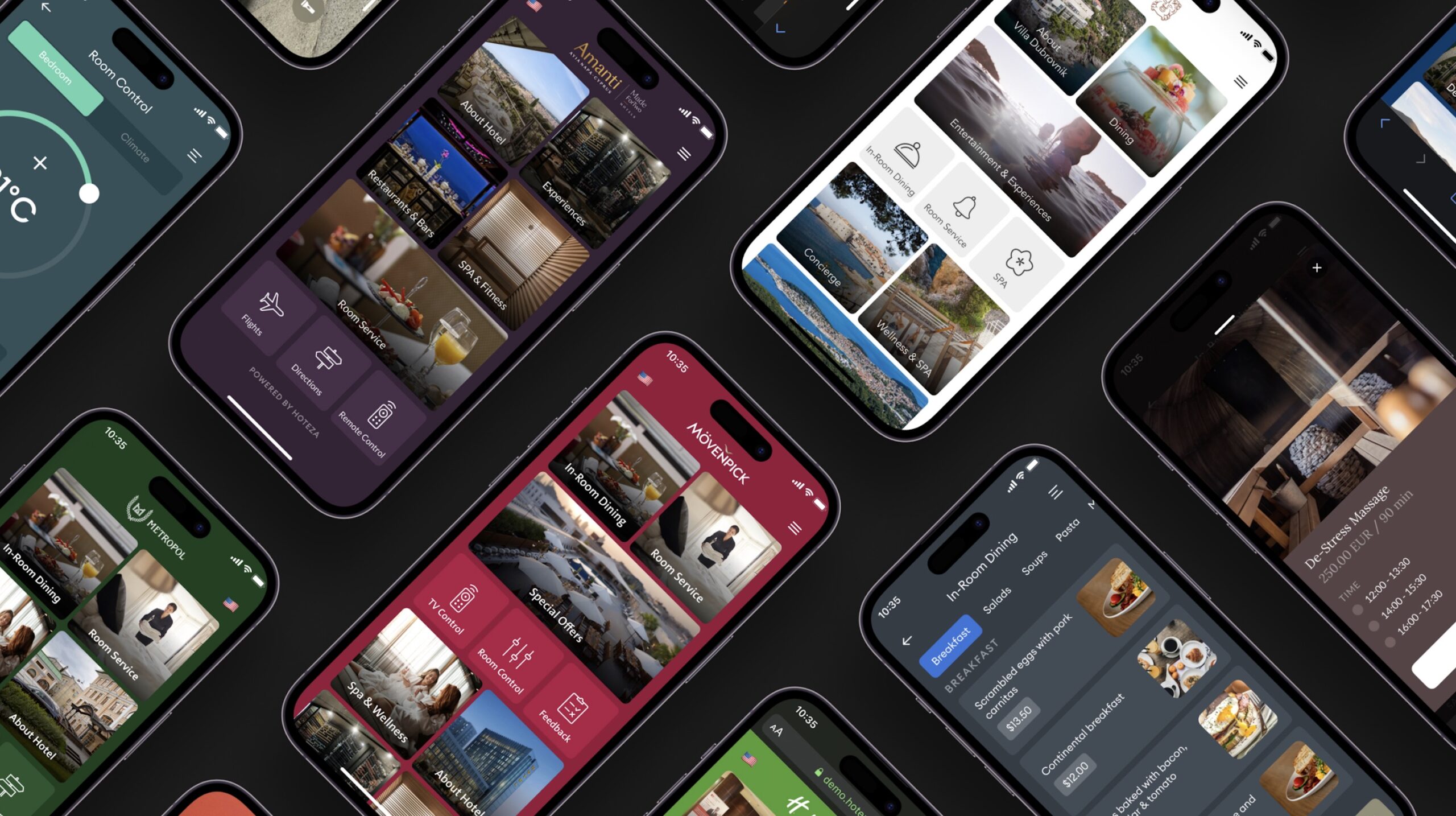
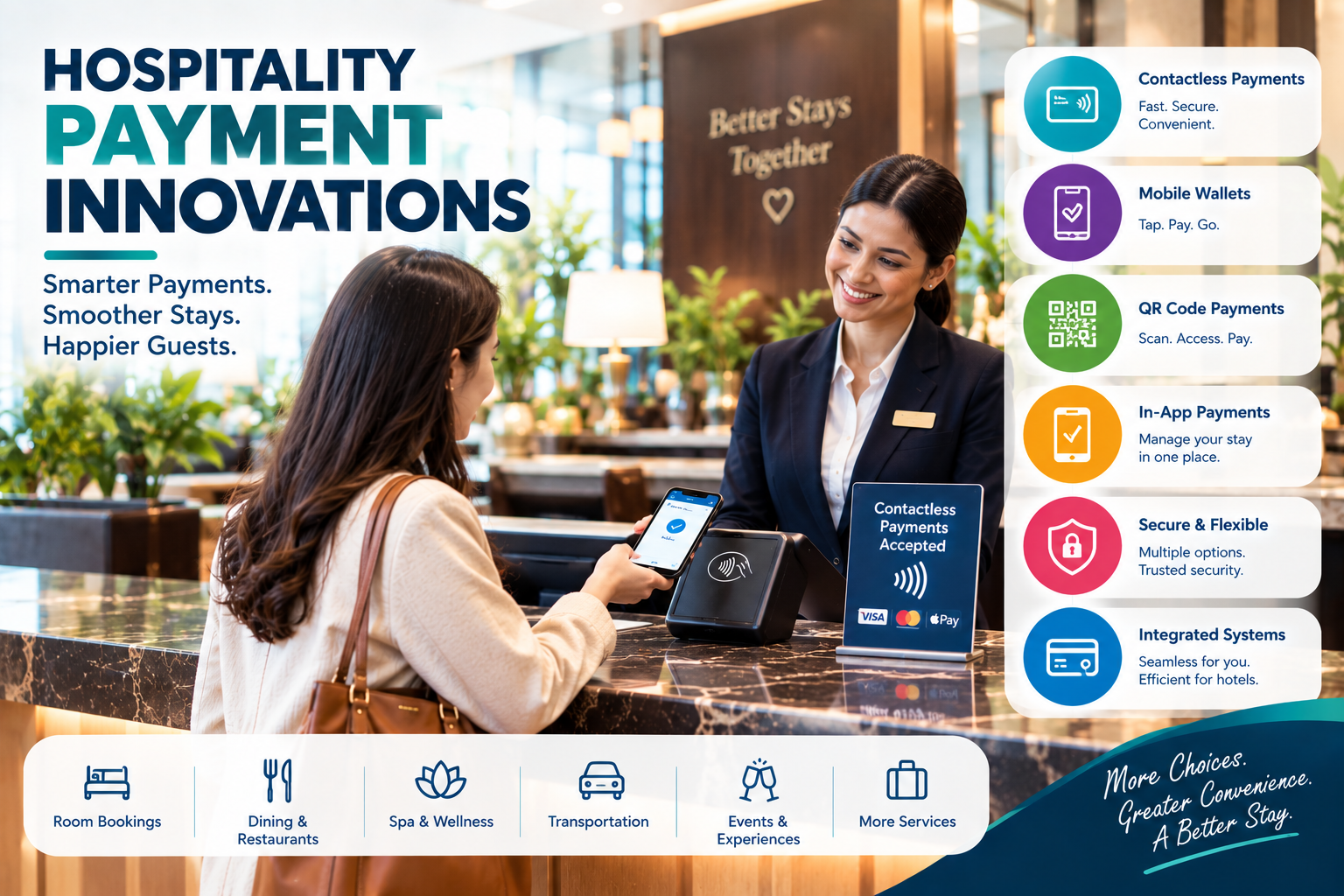
The future of AI personalization will likely involve more connected hotel platforms, conversational assistants, predictive services, and intelligent recommendations. AI may increasingly help coordinate preferences across booking, room access, dining, payments, concierge services, and loyalty programs.
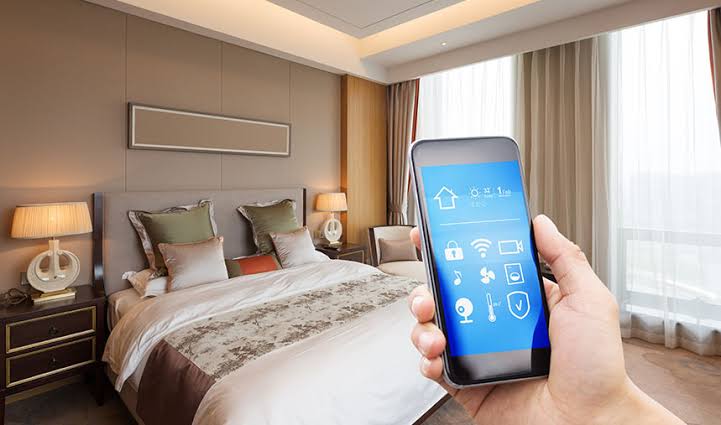
Advances in language technology could also make digital assistance more natural and accessible to international travelers. Meanwhile, smart-room systems may support personalized environmental settings where guests have given appropriate permission and the technology is available.
The most successful hotels will be those that combine automation with thoughtful human service. AI can identify patterns and support decisions, but empathy, judgment, and genuine hospitality remain essential to creating memorable stays.
Conclusion
Hospitality industry AI personalization is changing how hotels understand guest needs and deliver tailored experiences. From intelligent booking recommendations and personalized communication to virtual concierge services, loyalty programs, and predictive operational insights, AI can help hotels make guest interactions more relevant and efficient.
However, effective personalization requires more than advanced technology. Hotels need reliable data, secure systems, transparent practices, employee training, and a clear understanding of what guests actually value.
When used responsibly, AI can help hotels deliver convenience without sacrificing the personal attention that defines hospitality. BookSmart believes that the future of personalized hospitality lies in combining intelligent technology with genuine human care, creating experiences that make every guest feel understood, respected, and welcome.