Running a successful hotel involves much more than providing comfortable rooms and friendly service. Behind every smooth guest experience is a complex network of departments, employees, technology, suppliers, and processes working together. When these operations are inefficient, hotels can experience higher costs, employee frustration, service delays, and lower guest satisfaction.
Operational efficiency has therefore become a major priority for modern hospitality businesses. Hotels need to find ways to deliver excellent service while using their time, workforce, resources, and technology effectively.
Improving hotel operational efficiency does not necessarily mean making operations faster at every stage. It means finding smarter ways to complete tasks, reducing unnecessary work, preventing errors, and ensuring that employees can focus on activities that create genuine value for guests.
At BookSmart, we believe that hotels can achieve stronger operational performance by combining well-designed processes, trained employees, data-driven decision-making, and appropriate technology.
What Is Operational Efficiency in Hotels?
Hotel operational efficiency refers to how effectively a hotel uses its available resources to deliver quality services while controlling costs and minimizing waste.
Resources can include:
- Employees
- Time
- Money
- Energy
- Equipment
- Technology
- Inventory
- Physical space
An efficient hotel does not simply try to reduce expenses. Instead, it focuses on achieving the right balance between cost, productivity, service quality, and guest satisfaction.
For example, reducing housekeeping staff may lower labor costs temporarily, but if it causes room-cleaning delays, the hotel could lose guest satisfaction and revenue. True efficiency means optimizing the entire process rather than focusing on one expense.
Why Operational Efficiency Matters
Efficient operations create benefits throughout the hotel.
When processes work effectively, employees spend less time dealing with repetitive tasks and operational problems. Guests experience faster service and fewer inconveniences.
Improved operational efficiency can help hotels achieve:
- Lower operating costs
- Better employee productivity
- Faster guest service
- Reduced operational errors
- Improved room turnover
- Better resource utilization
- Higher guest satisfaction
- Stronger profitability
Efficiency also makes hotels more adaptable when demand changes.
During busy periods, efficient processes help employees manage increased workloads. During quieter periods, hotels can avoid unnecessary resource consumption.
Analyze Existing Hotel Processes
Before making operational improvements, hotels should understand how their current processes work.
Management can map important workflows such as:
- Reservations
- Check-in
- Check-out
- Housekeeping
- Maintenance
- Food and beverage service
- Inventory management
- Guest complaints
- Billing and payments
The objective is to identify unnecessary steps, duplication of work, communication gaps, and bottlenecks.
For example, if housekeeping employees repeatedly contact the front desk to confirm room status, integrating their systems could eliminate unnecessary communication and save time.
Small process improvements across multiple departments can create significant operational gains.
Optimize Housekeeping Operations
Housekeeping is one of the most important operational departments in a hotel.
Room availability directly influences revenue, while cleanliness strongly affects guest satisfaction.
Hotels can improve housekeeping efficiency by using digital room-status systems that provide real-time information about:
- Vacant rooms
- Occupied rooms
- Rooms requiring cleaning
- Rooms inspected and ready
- Maintenance issues
Housekeeping teams can then prioritize rooms based on expected arrivals and operational requirements.
Hotels can also analyze average cleaning times to identify process improvements without compromising cleaning standards.
Improve Staff Scheduling
Labor is one of the largest operating expenses for many hotels.
Effective scheduling ensures that the right number of employees are available at the right time.
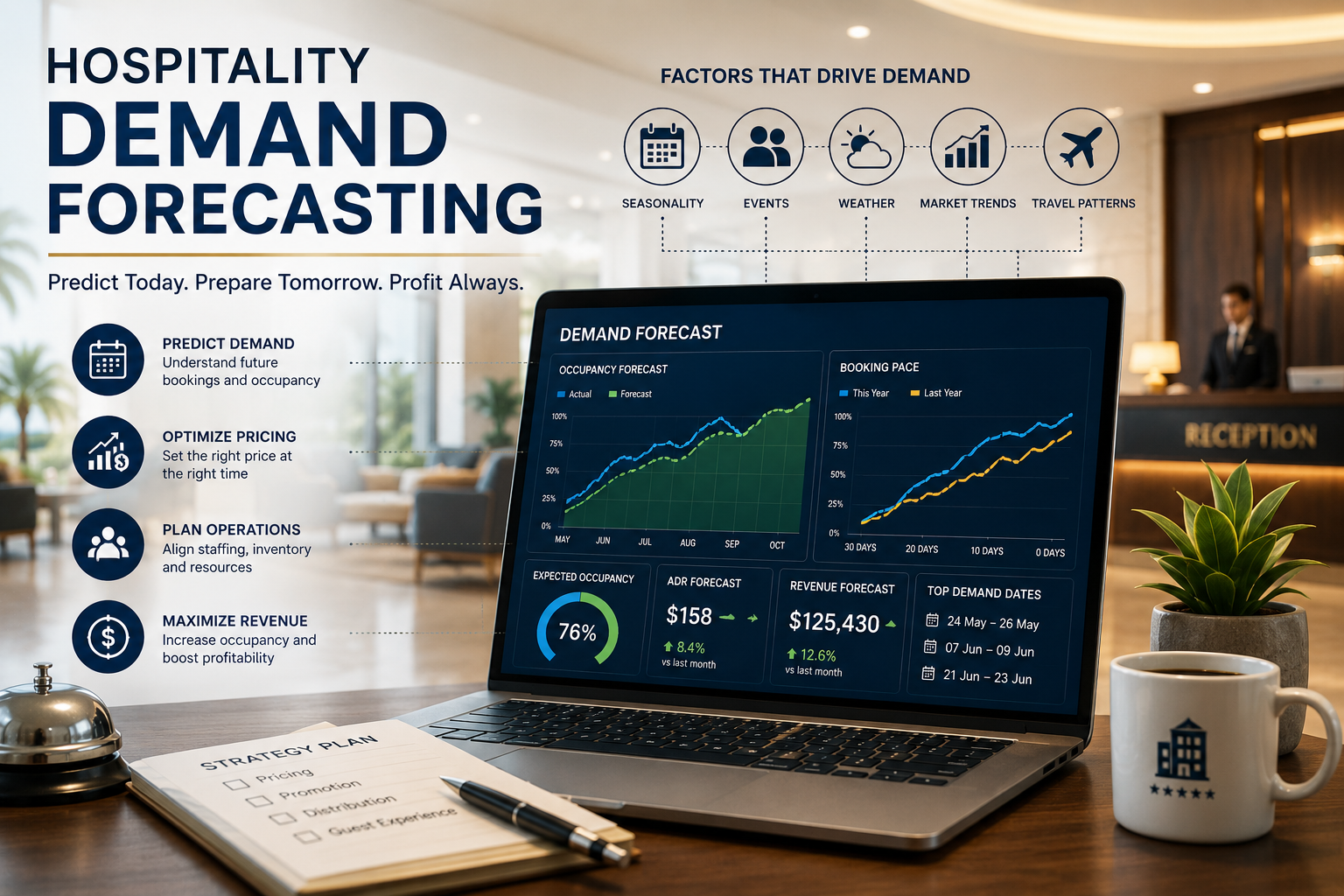
Hotels can analyze historical occupancy, reservations, events, seasonal demand, and expected check-in patterns to create more accurate schedules.
Technology can assist with workforce scheduling by identifying periods of high demand and allocating staff accordingly.
Better scheduling can reduce both understaffing and overstaffing.
Employees are also less likely to experience unnecessary workload pressure when staffing levels reflect actual demand.
Use Technology to Automate Repetitive Tasks
Automation can significantly improve hotel operational efficiency.
Many administrative tasks can be automated or simplified, including:
- Reservation confirmations
- Guest notifications
- Payment reminders
- Check-in instructions
- Feedback requests
- Inventory alerts
- Staff notifications
- Basic reporting
Automation allows employees to spend more time on guest interaction and problem-solving.
However, hotels should automate tasks thoughtfully. Not every guest interaction should become automated.
Personal attention remains one of the most important elements of hospitality.
Introduce Digital Check-In and Check-Out
Traditional check-in processes can create queues during busy periods.
Digital check-in allows guests to complete some steps before arriving at the property.
Depending on the hotel’s technology setup, guests may be able to provide required information, review booking details, and receive instructions through a digital platform.
Digital check-out can similarly reduce front desk workload.
These systems can improve convenience while allowing employees to focus on guests who require personalized assistance.
Hotels should still maintain human support for guests who prefer traditional service or have special requirements.
Integrate Hotel Technology Systems
One of the biggest operational challenges in hotels is disconnected technology.
A hotel may use separate systems for reservations, housekeeping, customer relationship management, payments, accounting, inventory, and revenue management.
When these systems do not communicate effectively, employees may need to enter the same information multiple times.
System integration can create a more connected operational environment.
For example, when a room is marked as ready by housekeeping, the updated status can automatically become available to the front desk.
Integrated systems reduce manual data entry and improve information accuracy.
Improve Inventory Management
Hotels need to maintain a wide range of supplies.
These include:
- Linen
- Toiletries
- Cleaning products
- Food ingredients
- Beverages
- Office supplies
- Maintenance materials
Poor inventory management can result in shortages, excessive purchasing, expired products, and unnecessary storage costs.
Hotels can use digital inventory systems to monitor stock levels and establish reorder points.
Historical usage data can also help predict future requirements.
Better inventory management reduces waste while ensuring that essential supplies remain available.
Use Data for Better Decision-Making
Data is one of the most valuable resources available to modern hotels.
Hotels generate data through bookings, guest feedback, room occupancy, restaurant sales, housekeeping operations, and other activities.
Management can analyze this information to identify inefficiencies.
Useful operational metrics may include:
- Average room cleaning time
- Check-in waiting time
- Staff productivity
- Maintenance response time
- Energy consumption
- Inventory turnover
- Guest complaint frequency
- Room readiness time
Data allows managers to identify patterns instead of relying entirely on assumptions.
Strengthen Communication Between Departments
Poor communication can create significant operational inefficiencies.
For example, if the front desk does not know that a room requires maintenance, the room may be assigned to a guest before the issue is resolved.
Hotels can improve communication through centralized digital systems, internal messaging platforms, task management tools, and clear escalation procedures.
Daily operational briefings can also help departments coordinate priorities.
The goal is to ensure that important information reaches the right employee at the right time.
Adopt Preventive Maintenance
Waiting for equipment to fail can be expensive.
Unexpected problems with elevators, air-conditioning systems, kitchen equipment, plumbing, electrical infrastructure, or other critical systems can disrupt hotel operations.
Preventive maintenance helps identify and resolve problems before they become major failures.
Hotels can create maintenance schedules based on equipment type, usage, manufacturer recommendations, and historical performance.
IoT sensors and predictive maintenance technologies can also provide early warnings for certain equipment problems.
This approach can reduce downtime and extend equipment life.
Improve Energy Efficiency
Energy is a major operating expense for hotels.
Heating, cooling, lighting, hot water, kitchens, laundry, and other facilities can consume substantial amounts of energy.
Hotels can improve efficiency through:
- Smart lighting
- Energy-efficient appliances
- Occupancy-based temperature controls
- Building management systems
- Efficient HVAC equipment
- Regular equipment maintenance
Energy monitoring systems can help identify unusual consumption patterns.
Reducing unnecessary energy usage lowers costs while also supporting sustainability goals.
Standardize Operating Procedures
Standard Operating Procedures, commonly known as SOPs, provide employees with clear instructions for performing important tasks.
Hotels can develop SOPs for:
- Guest check-in
- Room cleaning
- Complaint handling
- Emergency response
- Food preparation
- Maintenance requests
- Lost-and-found procedures
- Checkout
- Inventory management
Standardization reduces confusion and helps maintain consistent service quality.
SOPs should be reviewed regularly and updated when processes or technology change.
Invest in Employee Training
Technology alone cannot create operational efficiency.
Employees need the knowledge and skills to use systems effectively and make good decisions.
Training should cover both technical skills and hospitality skills.
Employees should understand:
- Hotel systems
- Operational procedures
- Guest communication
- Problem-solving
- Safety practices
- Data security
- Department-specific responsibilities
Cross-training employees can also improve flexibility.
For example, employees with knowledge of multiple functions may be able to support another department during busy periods.
Improve Guest Complaint Management
Guest complaints can reveal operational weaknesses.
Instead of treating complaints only as customer service problems, hotels can analyze them for recurring patterns.
If guests frequently complain about slow room service, management should investigate the underlying process.
If many guests report delays at check-in, the hotel can examine staffing, system performance, or reservation workflows.
A structured complaint management process turns feedback into an operational improvement tool.
Reduce Unnecessary Paperwork
Paper-based processes can create administrative delays and increase the possibility of lost or incorrect information.
Hotels can digitize suitable processes such as:
- Staff checklists
- Maintenance requests
- Inventory records
- Guest communications
- Expense approvals
- Internal reports
- Training records
Digital workflows can improve accessibility and reduce repetitive data entry.
However, hotels should ensure that digital information is stored securely and handled according to applicable privacy requirements.
Measure Efficiency Regularly
Operational efficiency cannot improve without measurement.
Hotels should establish key performance indicators and review them regularly.
For example:
| Operational Area | Useful Metric |
|---|---|
| Housekeeping | Average room cleaning time |
| Front Desk | Average check-in time |
| Maintenance | Average response time |
| Inventory | Stock turnover |
| Staffing | Labor productivity |
| Energy | Energy consumption per occupied room |
| Guest Service | Complaint resolution time |
The purpose of measurement is not to pressure employees. It is to identify opportunities for improvement.
Metrics should always be considered alongside service quality and guest satisfaction.
Balance Efficiency With Guest Experience
One of the biggest mistakes hotels can make is pursuing efficiency at the expense of hospitality.
A process may be faster but still create a poor guest experience.
For example, fully automated check-in may reduce front desk workload, but some guests may prefer a personal welcome.
Hotels should therefore use efficiency strategies that support—not replace—the human side of hospitality.
The best operational model combines technology and human interaction.
Build a Culture of Continuous Improvement
Operational efficiency should not be treated as a one-time project.
Hotels should encourage employees to identify problems and suggest improvements.
Frontline employees often understand operational challenges better than management because they experience these processes every day.
Hotels can create feedback systems where employees can report:
- Repetitive tasks
- System problems
- Communication gaps
- Resource shortages
- Guest service challenges
Management can then evaluate these suggestions and implement practical improvements.
A culture of continuous improvement can create long-term operational advantages.
The Future of Hotel Operational Efficiency
The future of hotel operations will increasingly involve Artificial Intelligence, automation, connected devices, predictive analytics, and cloud-based systems.
AI can help forecast demand, optimize staffing, analyze guest feedback, and identify operational patterns.
IoT devices can monitor equipment and building systems in real time.
Automation can reduce repetitive administrative work.
Cloud technology can allow hotel teams to access operational information from different locations and devices.
However, successful hotels will not simply adopt technology for its own sake. They will focus on technology that solves real operational problems and improves the guest experience.
Conclusion
Improving hotel operational efficiency requires a combination of smart processes, capable employees, effective technology, and continuous measurement.
Hotels can improve efficiency by optimizing housekeeping, improving staff scheduling, automating repetitive tasks, integrating systems, managing inventory carefully, using data, strengthening communication, adopting preventive maintenance, and investing in employee training.
The goal should never be to make hospitality feel mechanical. Instead, operational efficiency should remove unnecessary complexity so employees have more time and resources to focus on what matters most: the guest.
At BookSmart, we believe that efficient hotel operations create the foundation for better service, stronger profitability, and sustainable growth. Hotels that continuously examine their processes and embrace practical innovation can build operations that are not only more efficient today but also more adaptable to the changing expectations of tomorrow’s travelers.