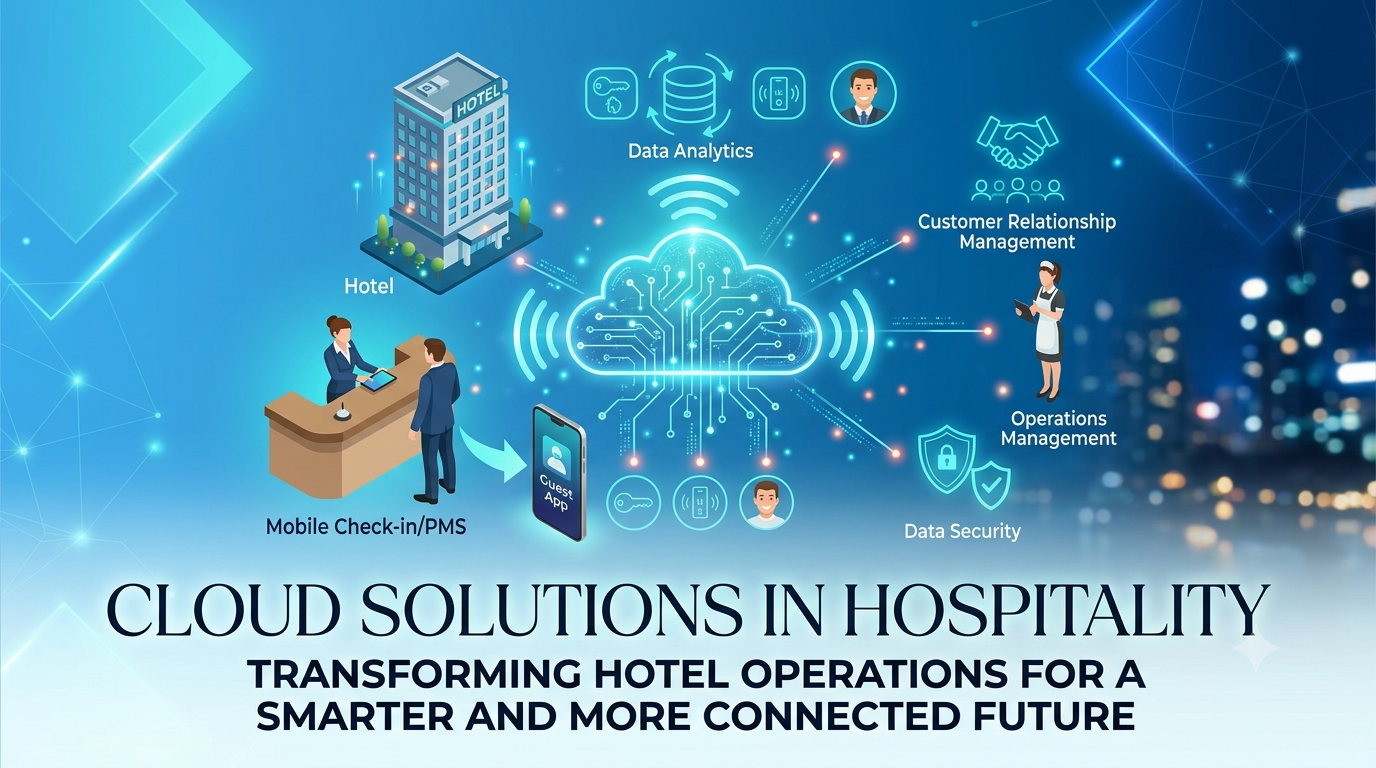
The hospitality industry is undergoing a major digital transformation as hotels and hospitality businesses adopt innovative technologies to improve operations and deliver better guest experiences. Among the technologies driving this transformation, cloud solutions have emerged as one of the most important tools for modern hotel management.
From cloud-based Property Management Systems (PMS) and reservation platforms to customer relationship management, revenue optimization, accounting, analytics, and communication tools, cloud technology is changing the way hotels manage their businesses. Instead of relying on traditional software installed on individual computers or servers, hotels can access essential systems through secure internet-connected platforms.
Cloud solutions provide hospitality businesses with greater flexibility, scalability, accessibility, and efficiency. They also make it easier for hotel teams to collaborate, access real-time information, and respond quickly to changing guest expectations.
At BookSmart, we believe that cloud technology is becoming an essential foundation for the future of hospitality. By adopting the right cloud solutions, hotels can streamline operations, reduce technology complexity, improve guest service, and make smarter business decisions.
What Are Cloud Solutions in Hospitality?
Cloud solutions are software platforms and digital services hosted on remote servers and accessed through the internet. Instead of storing applications and data exclusively on computers located within a hotel, cloud systems allow authorized users to securely access information from different devices and locations.
In hospitality, cloud solutions can support almost every area of hotel management. These include:
- Property management
- Online reservations
- Customer relationship management
- Revenue management
- Accounting and finance
- Housekeeping
- Maintenance
- Inventory management
- Marketing automation
- Data analytics
- Guest communication
- Workforce management
Because these systems can often be integrated, hotels can create a connected digital ecosystem that improves communication between departments.
Why Cloud Technology Matters for Hotels
Traditional hotel software can require expensive hardware, complex installations, and dedicated IT resources. Cloud technology offers an alternative approach that is more flexible and easier to scale.
Hotel employees can access cloud platforms from authorized computers, tablets, and mobile devices, allowing them to work more efficiently.
For example, a hotel manager can monitor occupancy and revenue from outside the property, while a housekeeping supervisor can update room status through a mobile device.
Cloud solutions also make it easier for hotel groups to manage multiple properties and centralize information.
As the hospitality industry becomes increasingly digital, cloud technology provides the infrastructure needed to support modern operations.
Cloud-Based Property Management Systems
The Property Management System is at the heart of hotel operations, and cloud-based PMS platforms are becoming increasingly popular.
A cloud PMS manages reservations, room availability, guest profiles, check-ins, check-outs, billing, and housekeeping coordination.
Because the system is hosted in the cloud, authorized employees can access real-time information without being physically connected to a hotel server.
Cloud PMS platforms can also integrate with booking engines, online travel agencies, payment systems, CRM platforms, and revenue management tools.
This creates a more connected environment where information flows smoothly between different hotel functions.
Cloud-Based Reservation Management
Online booking is one of the most important revenue channels for modern hotels.
Cloud-based reservation systems allow hotels to manage bookings from multiple channels in real time.
When a guest makes a reservation through the hotel’s website, the availability can automatically update across connected distribution platforms.
This reduces the risk of overbooking and ensures that room information remains accurate.
Cloud reservation systems also support direct bookings, promotional campaigns, package offers, and automated booking confirmations.
For guests, this creates a faster and more convenient booking experience.
Improving Accessibility and Remote Management
One of the greatest benefits of cloud technology is accessibility.
Hotel managers no longer need to be physically present at a specific workstation to access important business information.
With secure credentials and appropriate permissions, authorized employees can monitor hotel performance from almost anywhere with an internet connection.
This is particularly valuable for hospitality groups managing multiple properties.
Regional managers can review performance across different locations, while corporate teams can access centralized reports and analytics.
Remote accessibility also improves flexibility during emergencies or unexpected operational situations.
Cloud Solutions for Customer Relationship Management
Cloud-based CRM systems help hotels build stronger relationships with guests.
These platforms collect information about booking history, preferences, loyalty activity, communication, and guest interactions.
Hotel teams can use this information to personalize services and marketing campaigns.
For example, returning guests can receive personalized offers based on their previous stays.
Cloud CRM systems also make it easier for different departments to access relevant guest information, ensuring consistent service throughout the customer journey.
Personalized interactions can improve guest satisfaction and increase loyalty.
Cloud-Based Revenue Management
Revenue management is essential for maximizing hotel profitability.
Cloud-based revenue management systems analyze occupancy, booking patterns, competitor pricing, historical data, and market demand.
Hotels can use these insights to adjust room rates based on changing conditions.
Because cloud systems process data in real time, revenue managers can respond quickly to market changes.
Dynamic pricing helps hotels optimize revenue during both high-demand and low-demand periods.
Cloud-based analytics also make revenue reports accessible to managers across different locations.
Supporting Housekeeping and Maintenance
Cloud technology can improve coordination between hotel departments.
Cloud-based housekeeping systems provide real-time information about room status, cleaning schedules, guest requests, and priority tasks.
Housekeeping employees can update room information through mobile devices, allowing front desk staff to see changes immediately.
Maintenance teams can also use cloud platforms to receive work orders, track repairs, and schedule preventive maintenance.
This improves communication and reduces delays that can negatively affect guest experiences.
Cloud-Based Data Analytics
Modern hotels generate large amounts of data every day.
Information comes from reservations, guest interactions, payments, marketing campaigns, online reviews, and operational activities.
Cloud analytics platforms collect and organize this data, providing managers with valuable insights into business performance.
Hotels can analyze occupancy rates, revenue, guest satisfaction, marketing effectiveness, staffing performance, and operational costs.
Real-time dashboards help managers identify trends and make faster decisions.
Cloud analytics also supports predictive forecasting, helping hotels anticipate demand and plan resources more effectively.
Cloud Technology and Guest Experience
Cloud solutions indirectly improve the guest experience by making hotel operations more connected.
For example, when a guest makes a reservation, information can automatically flow into the property management system and customer profile.
Before arrival, automated systems can send personalized messages or check-in instructions.
During the stay, guest requests can be shared with the appropriate departments in real time.
After departure, the system can automatically send feedback surveys or loyalty offers.
This connected approach creates a smoother and more personalized guest journey.
Cost Efficiency and Scalability
Cloud solutions can help hotels manage technology costs more effectively.
Traditional systems often require significant investments in servers, hardware, software installations, and maintenance.
Cloud platforms typically operate through subscription-based models, allowing businesses to choose solutions according to their needs.
Cloud technology is also highly scalable.
A small boutique hotel can adopt essential cloud tools and expand its technology infrastructure as the business grows.
Hotel groups can add new properties to centralized platforms without completely rebuilding their technology environment.
This flexibility makes cloud solutions suitable for businesses of different sizes.
Improving Collaboration Between Departments
Effective communication is essential for successful hotel operations.
Cloud platforms allow employees across different departments to access updated information in real time.
Front desk teams can view housekeeping updates, restaurant staff can access relevant guest information, and managers can monitor operational performance through centralized dashboards.
This reduces information silos and improves collaboration.
When employees have access to accurate information, they can respond to guest needs more quickly and deliver more consistent service.
Cloud Solutions and Sustainability
Cloud technology can also contribute to more sustainable hospitality operations.
By reducing dependence on physical servers and paper-based processes, cloud systems can help minimize resource consumption.
Digital check-ins, electronic invoices, online reports, and digital communication reduce paper usage.
Cloud analytics can also help hotels monitor energy consumption, water usage, and waste.
By identifying areas of inefficiency, hotels can take steps to reduce resource consumption and support sustainability goals.
Data Security and Privacy
Security is an important consideration when adopting cloud solutions.
Hotels manage sensitive information, including guest identities, payment details, contact information, and booking records.
Cloud providers typically use security measures such as encryption, access controls, authentication, monitoring, and regular system updates.
However, hotels must still establish strong internal security policies.
Employees should receive appropriate cybersecurity training, and access to sensitive information should be limited according to job responsibilities.
Hotels must also comply with applicable data protection and privacy requirements.
Choosing reputable technology providers and maintaining strong security practices are essential for protecting guest trust.
Challenges of Cloud Adoption
Despite its many advantages, moving to cloud-based systems can present challenges.
Hotels may need to invest time and resources in migrating data, integrating systems, training employees, and updating operational processes.
Reliable internet connectivity is also essential for cloud-based operations.
Employees may initially resist changes to familiar workflows, making training and communication important parts of implementation.
Hotels should carefully evaluate providers based on security, reliability, scalability, integration capabilities, customer support, and total cost of ownership.
A thoughtful implementation strategy can help minimize disruption and maximize the benefits of cloud technology.
The Future of Cloud Solutions in Hospitality
The future of hospitality technology will be increasingly cloud-based.
Artificial Intelligence, machine learning, Internet of Things (IoT), predictive analytics, and automation will increasingly operate through cloud infrastructure.
Cloud platforms will enable hotels to connect smart rooms, mobile applications, CRM systems, reservation platforms, revenue management tools, and operational technologies.
AI-powered cloud systems will help hotels predict guest needs, automate routine tasks, personalize experiences, and optimize resources.
Hotel groups will also benefit from centralized platforms that provide real-time visibility across multiple properties.
As digital transformation accelerates, cloud technology will become a critical foundation for innovation within the hospitality industry.
Conclusion
Cloud solutions are transforming the hospitality industry by making hotel operations more flexible, connected, accessible, and data-driven. From property management and reservations to guest relationships, revenue optimization, housekeeping, analytics, and communication, cloud technology supports nearly every aspect of modern hotel management.
The benefits go beyond operational efficiency. Cloud systems help hotels improve collaboration, personalize guest experiences, scale their businesses, strengthen decision-making, and support sustainability initiatives.
At BookSmart, we believe that successful digital transformation is not simply about adopting new technology. It is about choosing solutions that genuinely improve the way hotels operate and serve their guests. By embracing secure and scalable cloud solutions while maintaining the human touch at the heart of hospitality, hotels can build smarter operations, deliver exceptional experiences, and remain competitive in the rapidly evolving hospitality industry.
Leave a Reply